
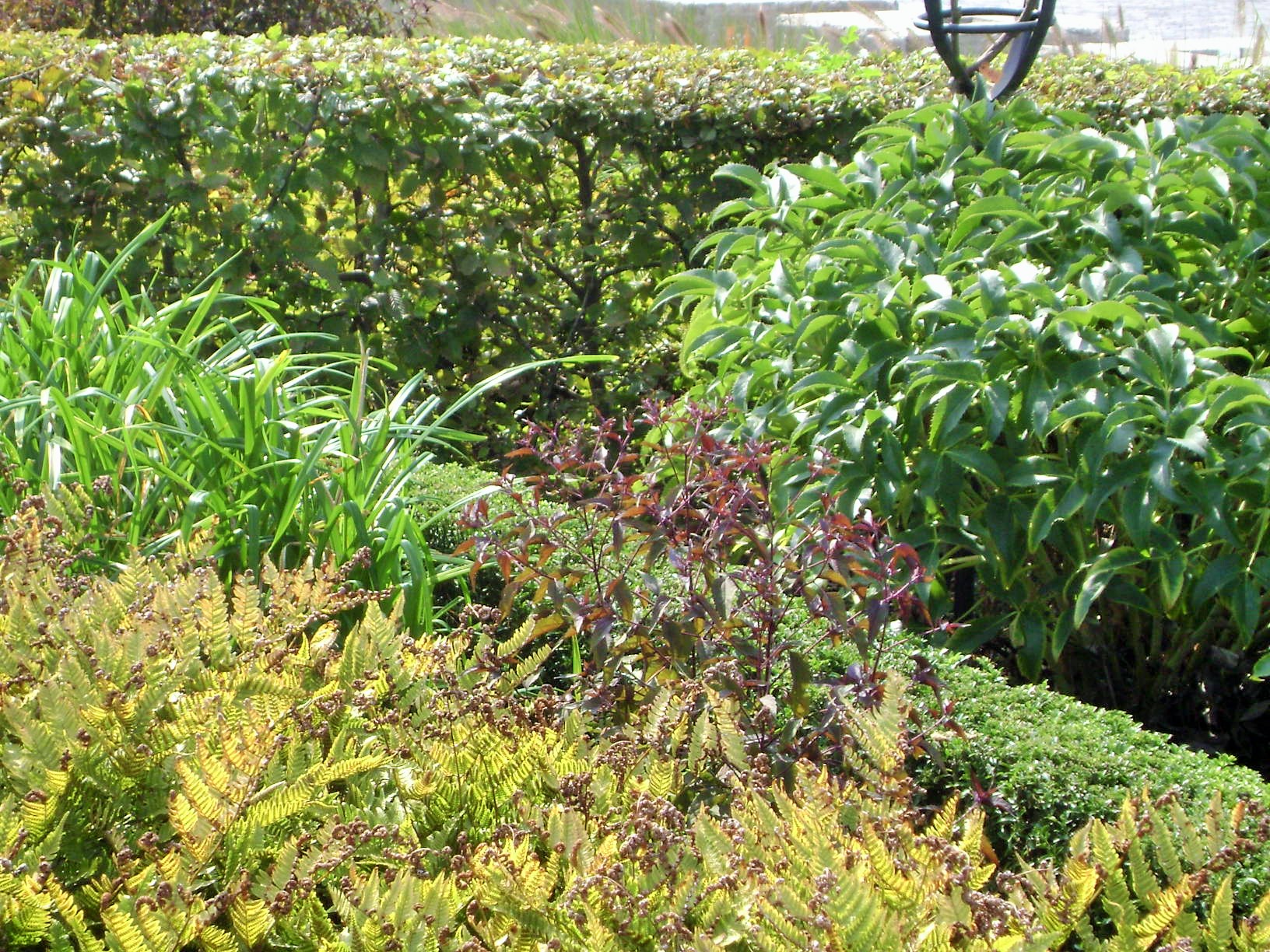
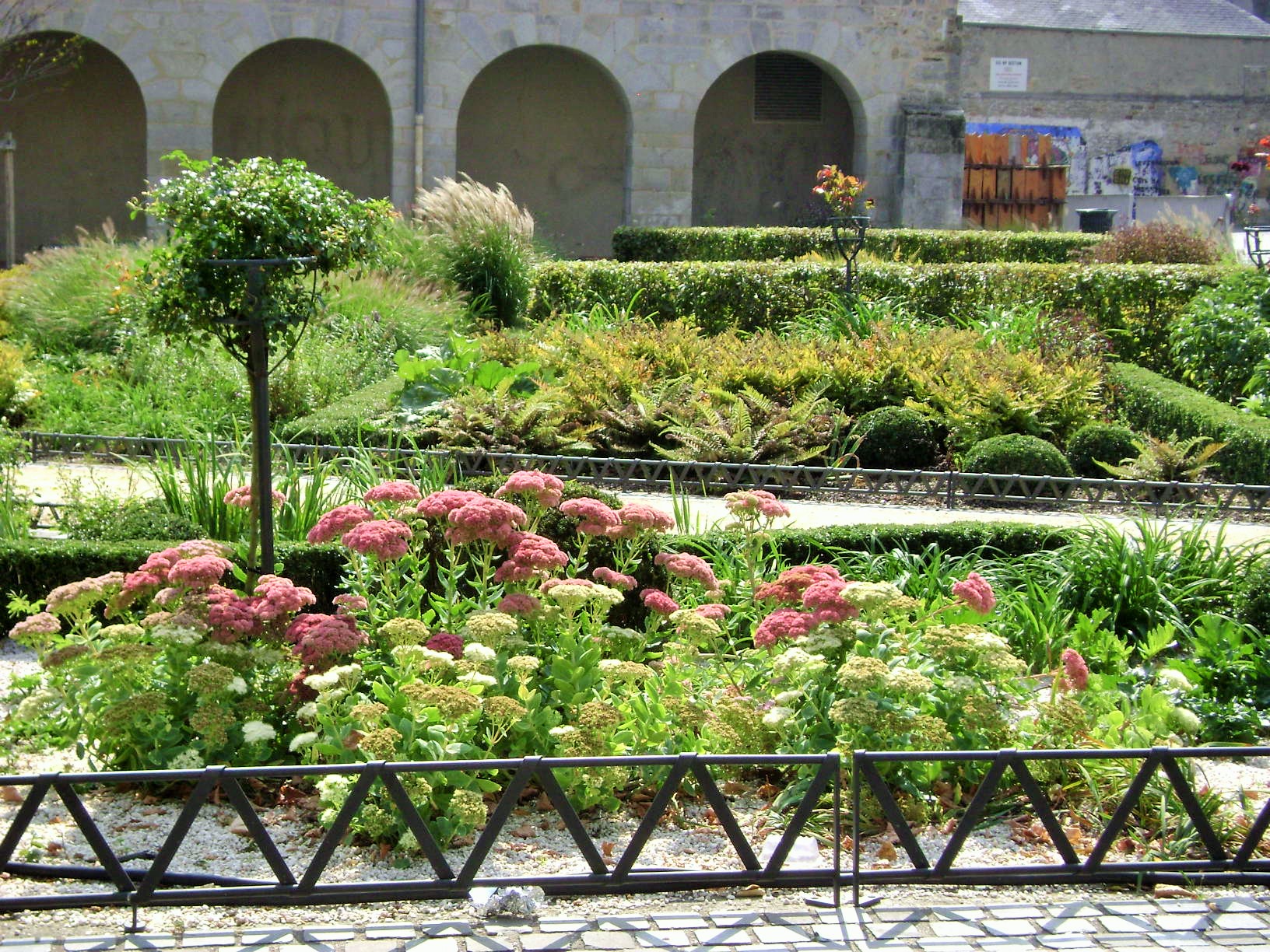
In this third and last post on the Priory gardens of Quimper, I am featuring the back of the garden (shown on the left of the map) where edibles are grown, as well as those plants used for making and coloring clothing.

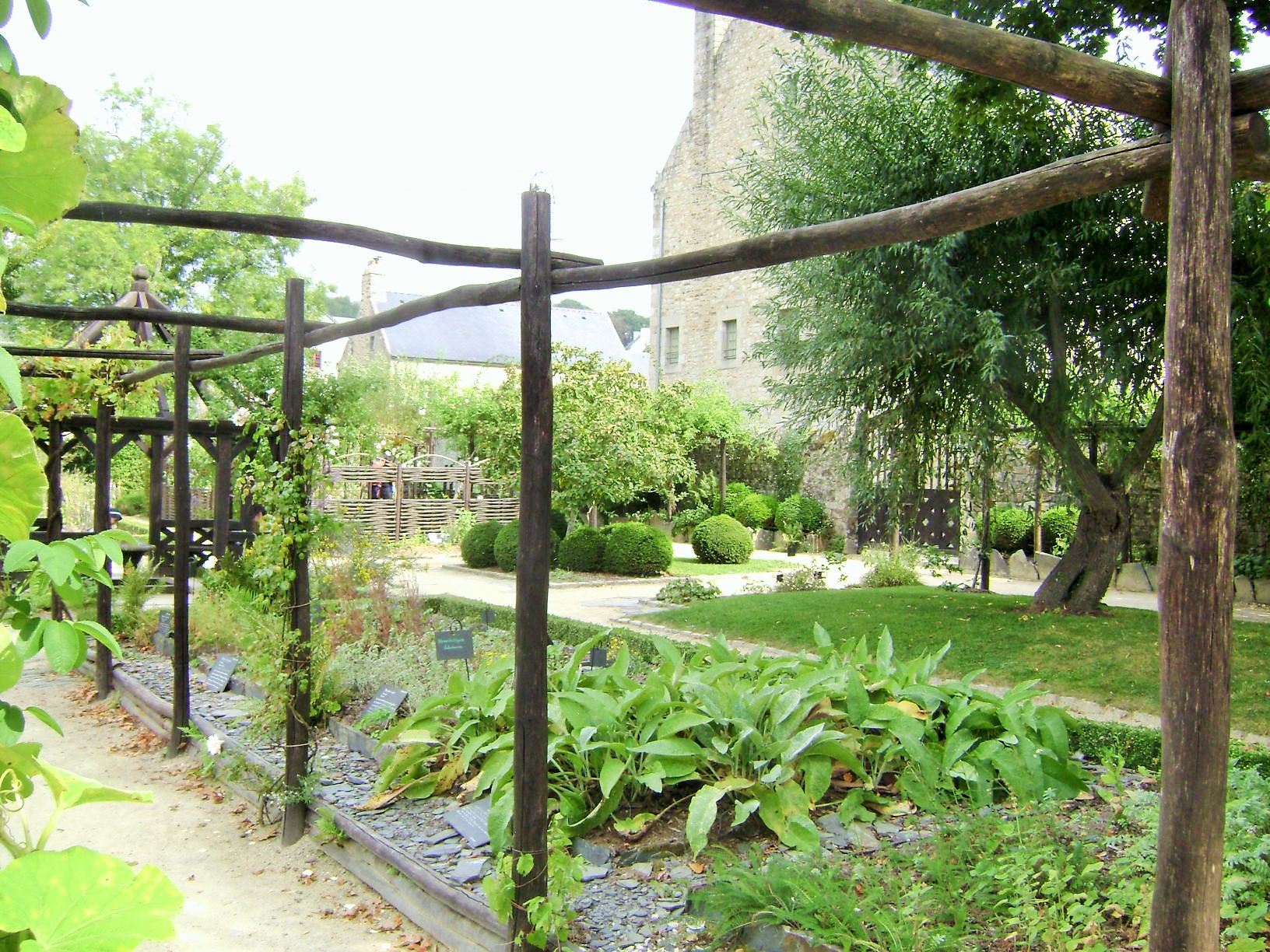
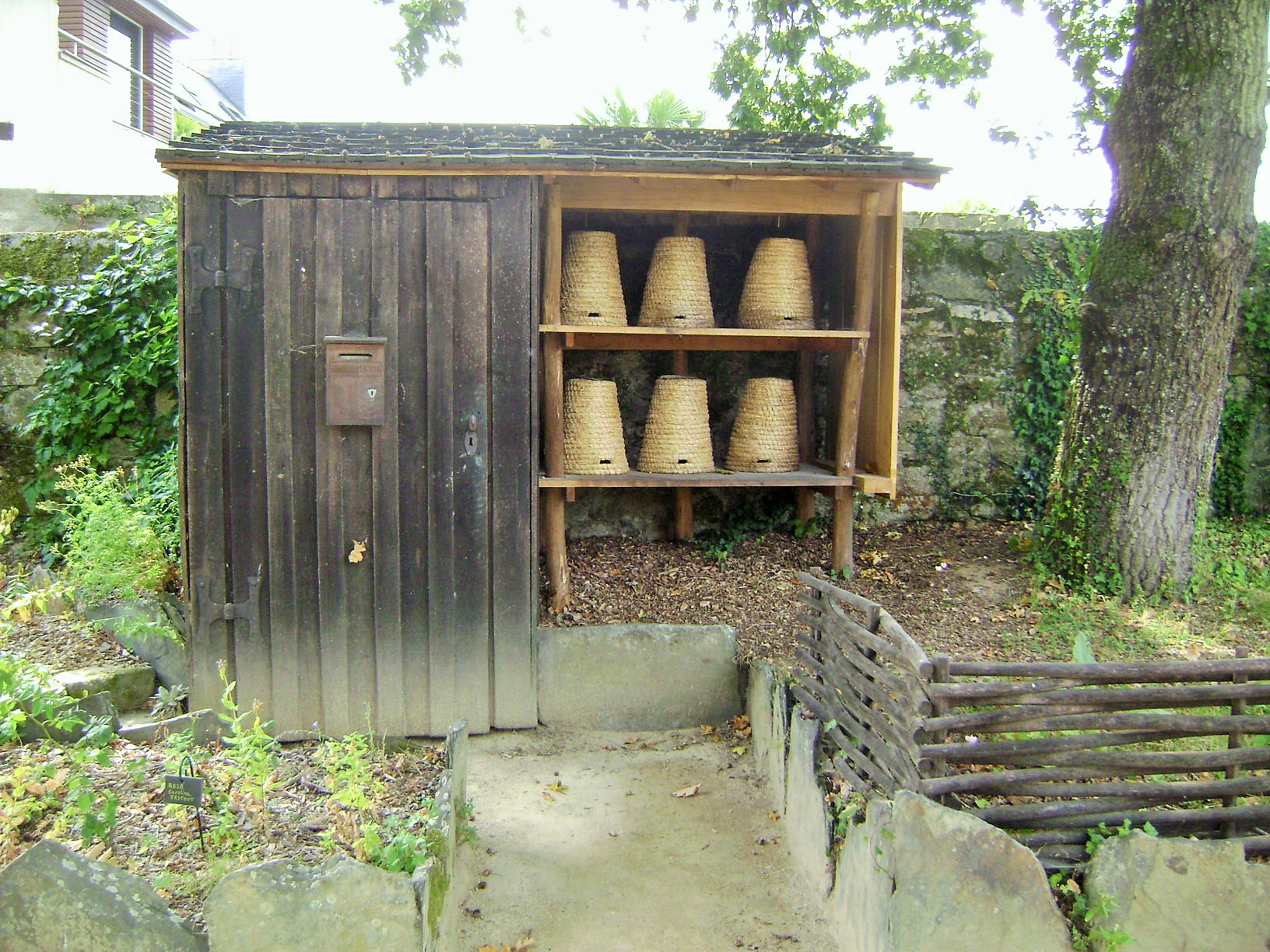

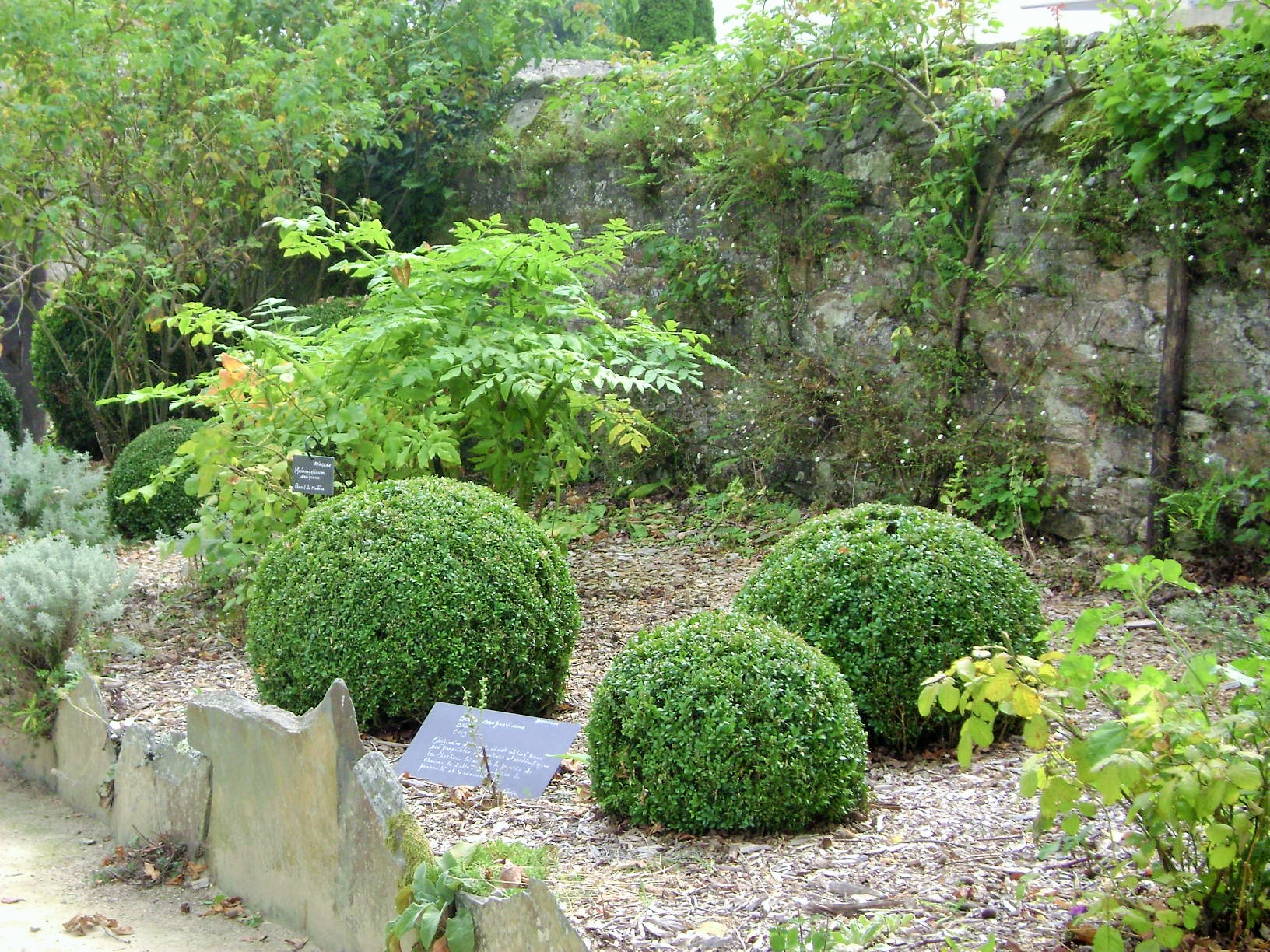
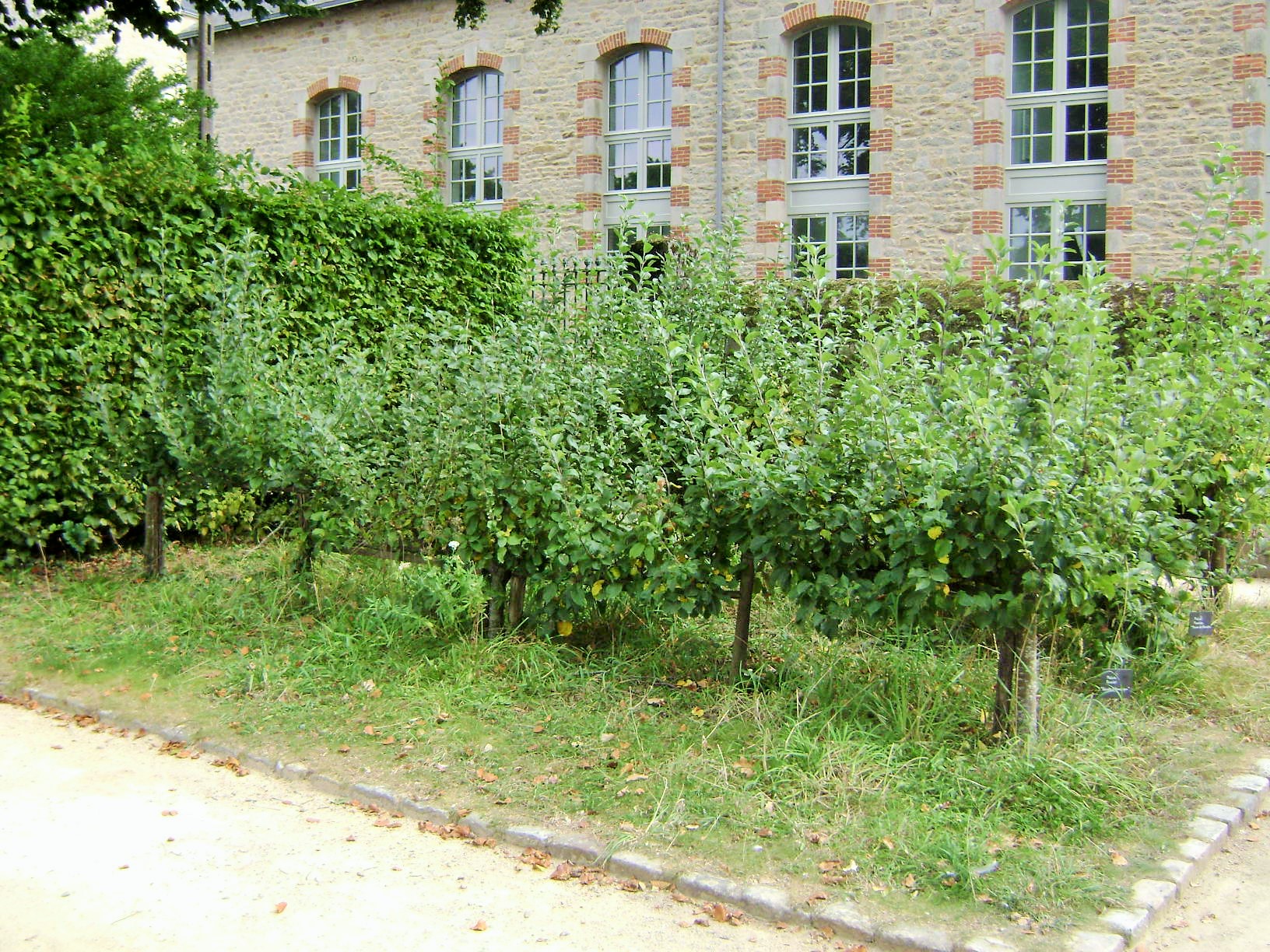


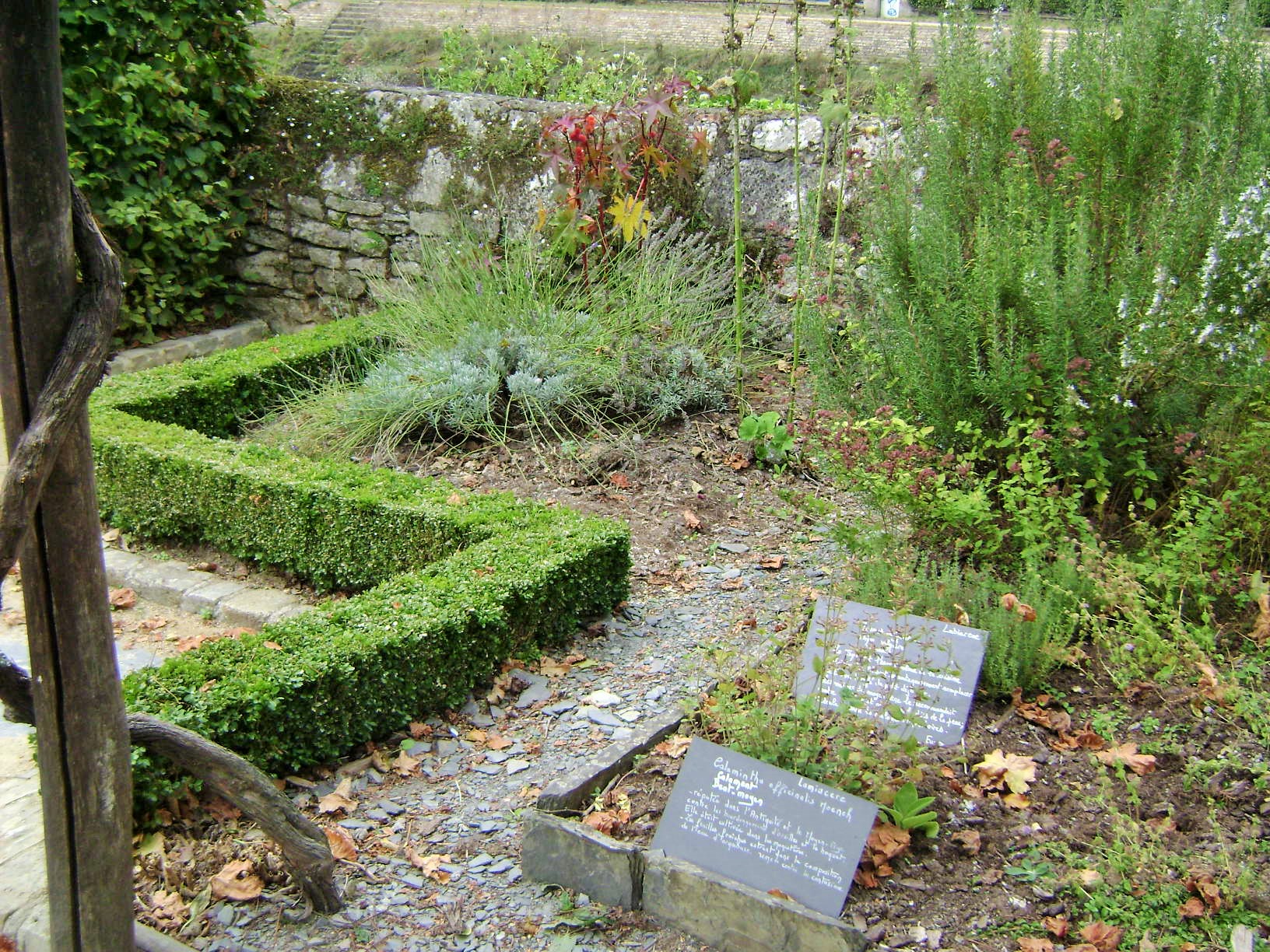


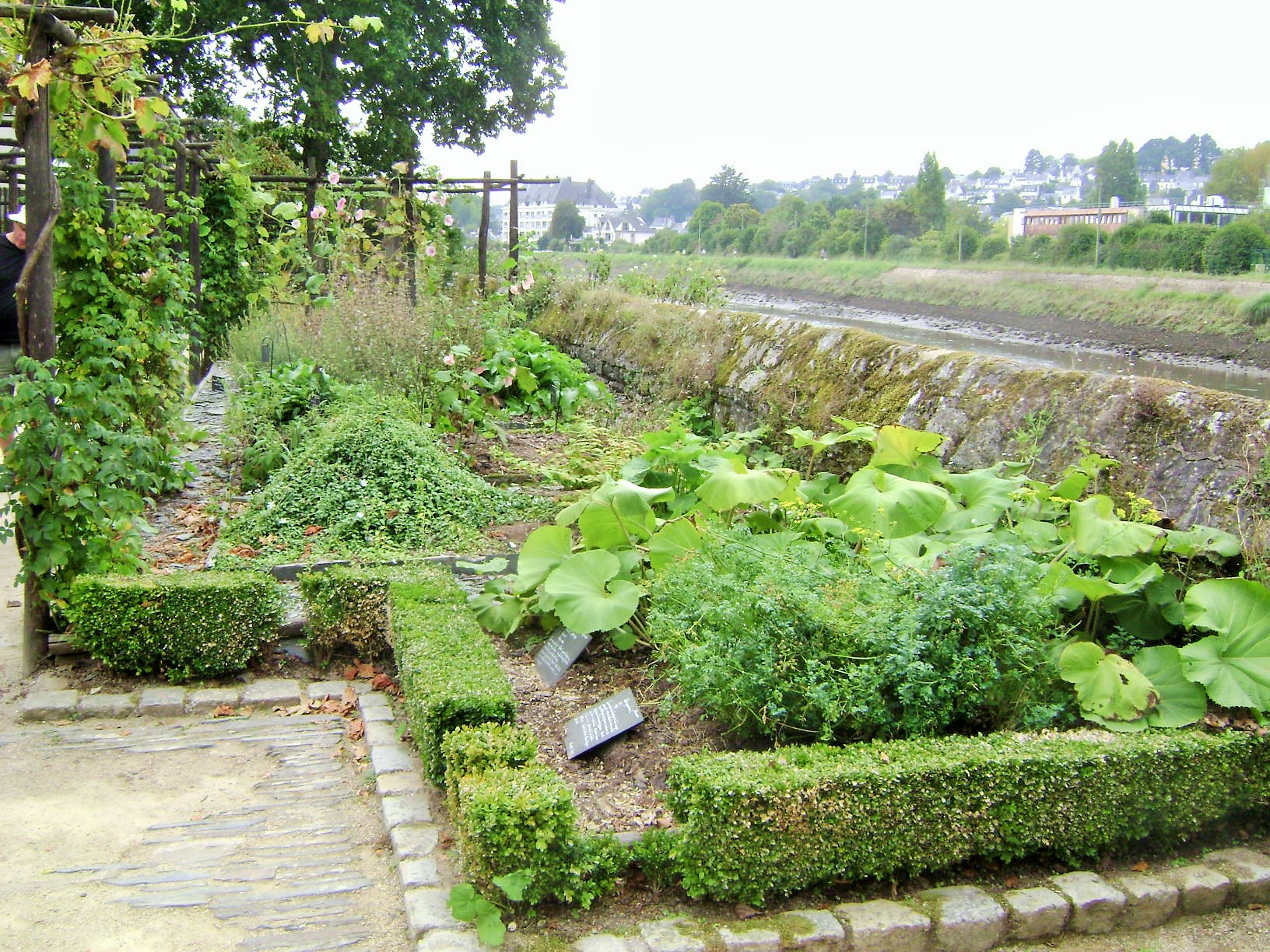
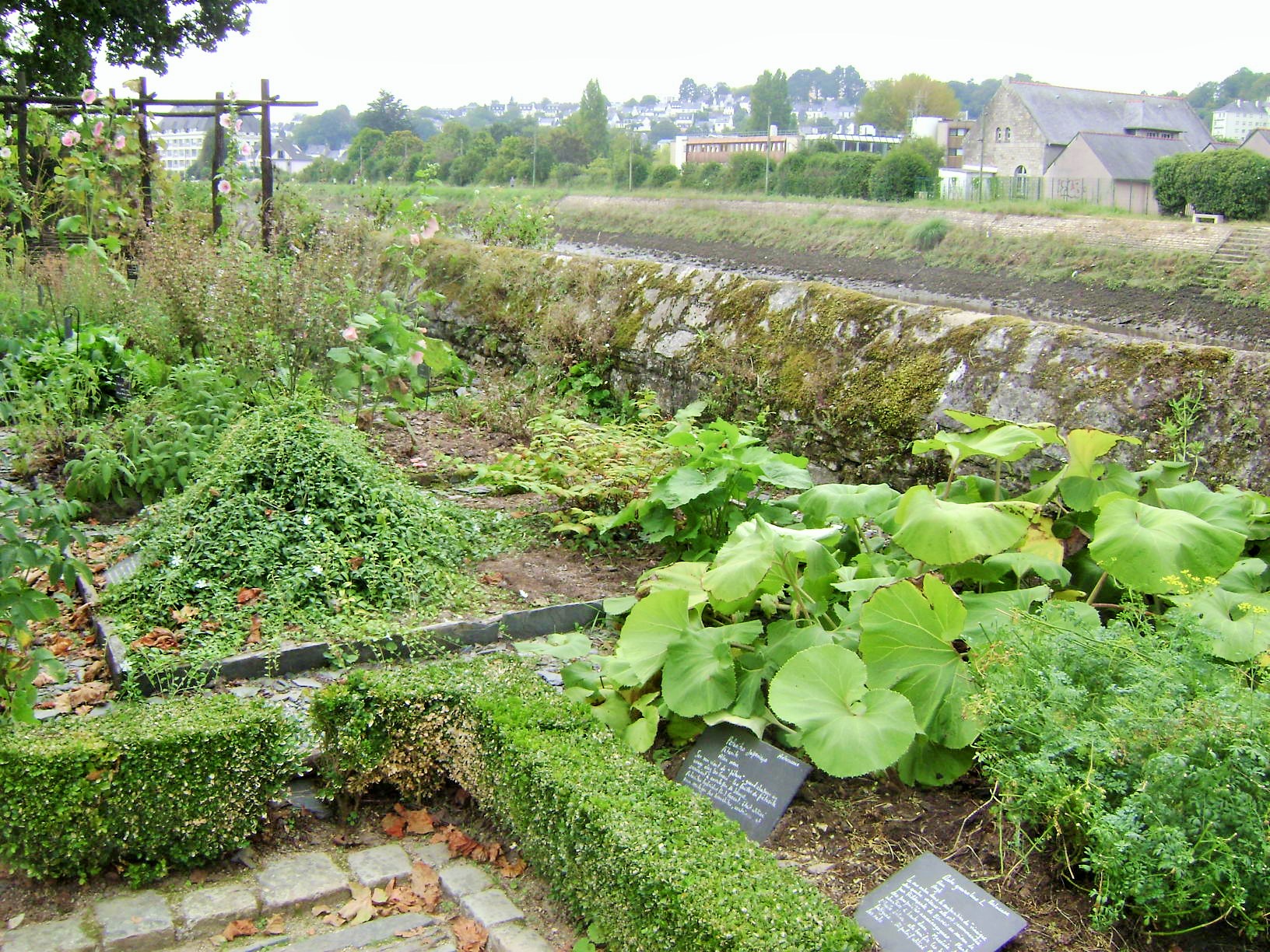

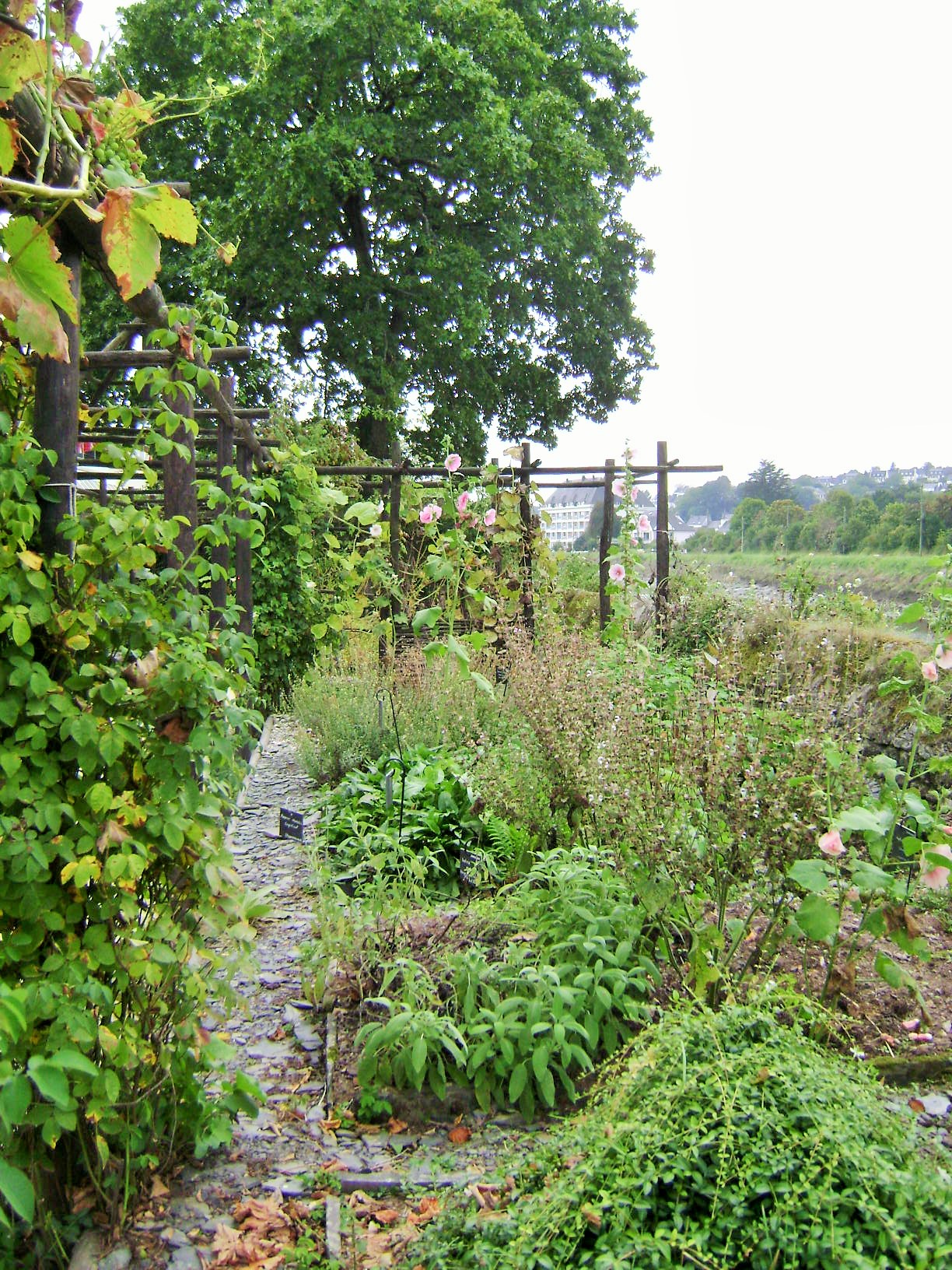

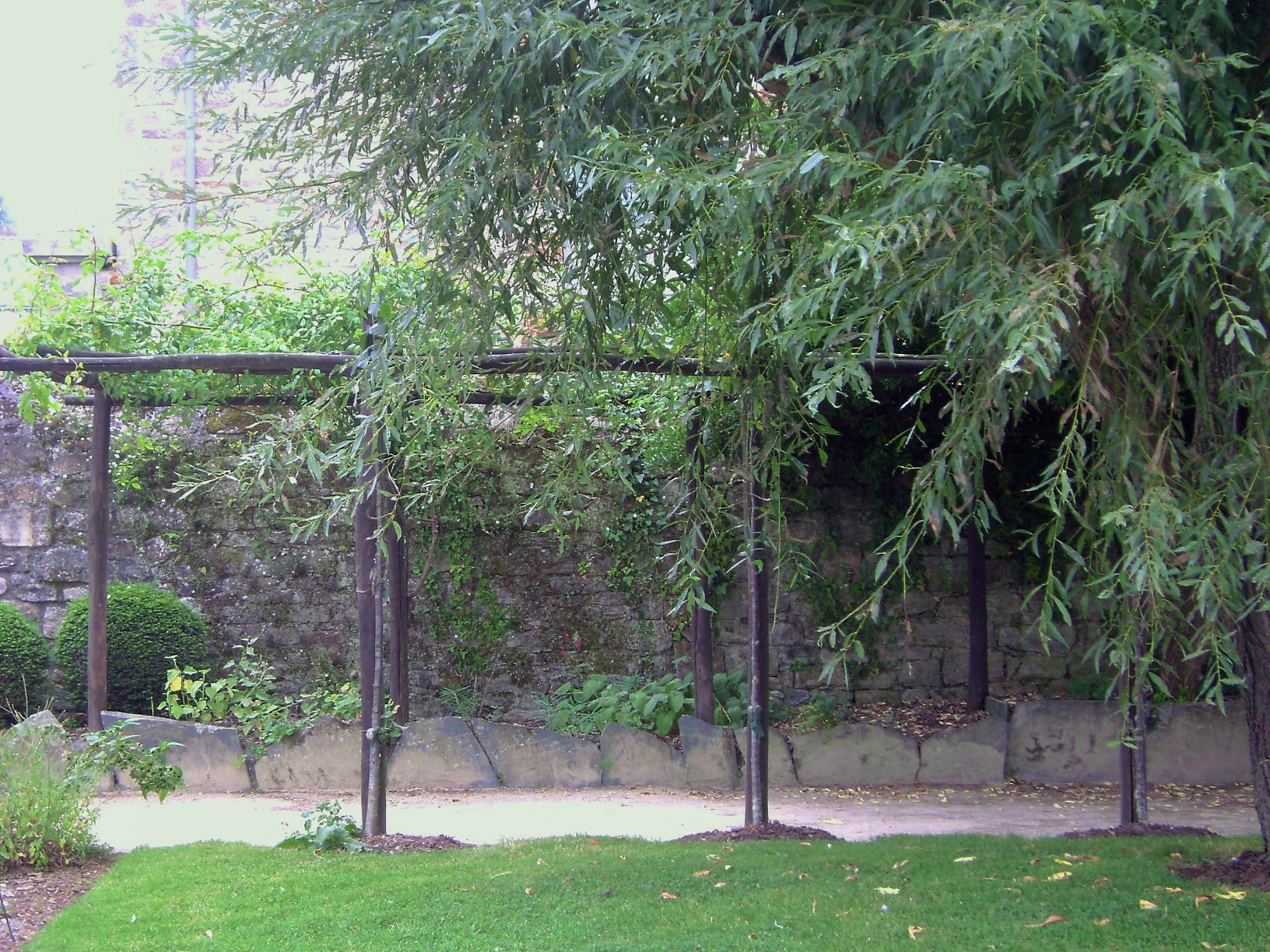


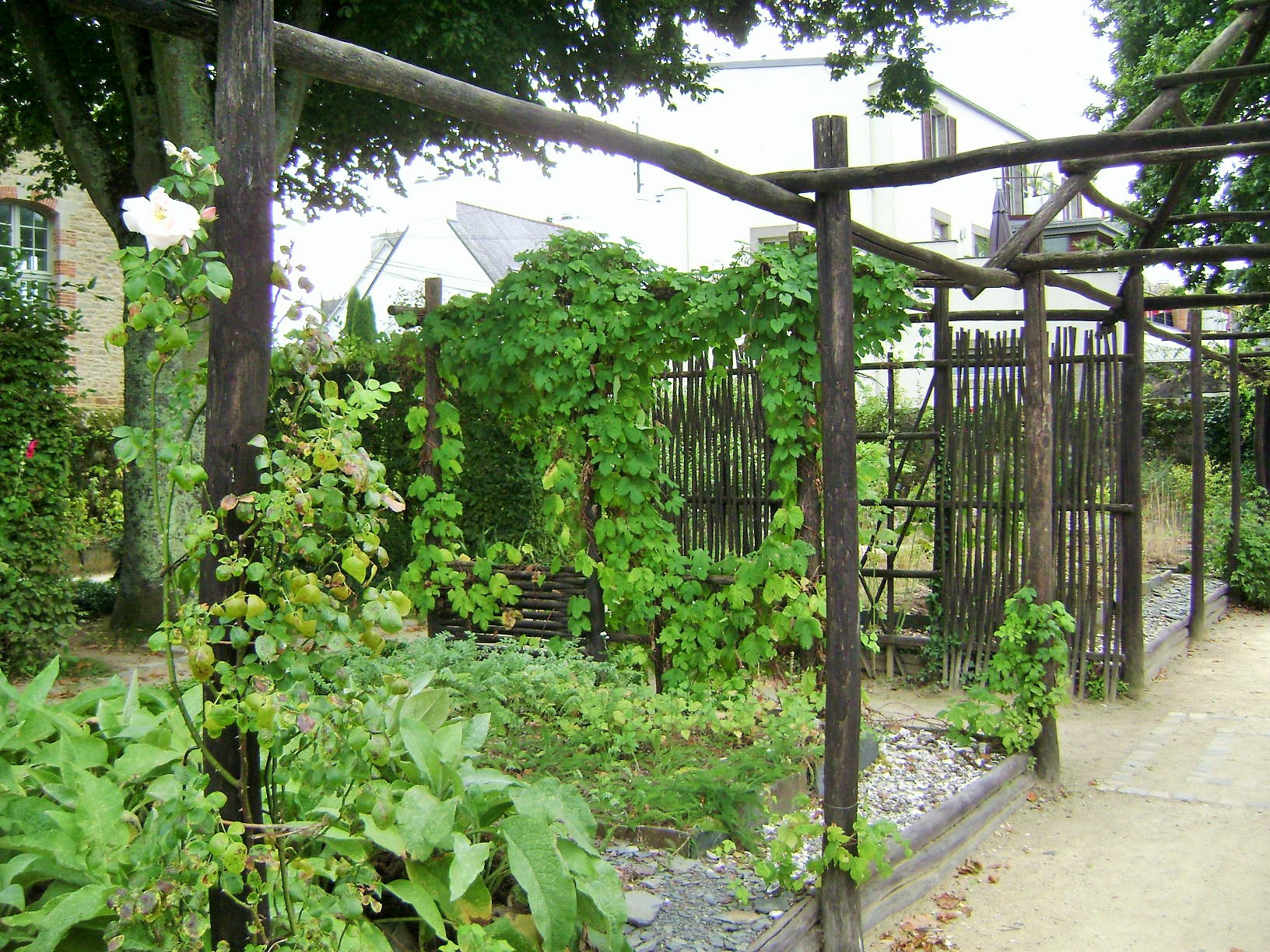
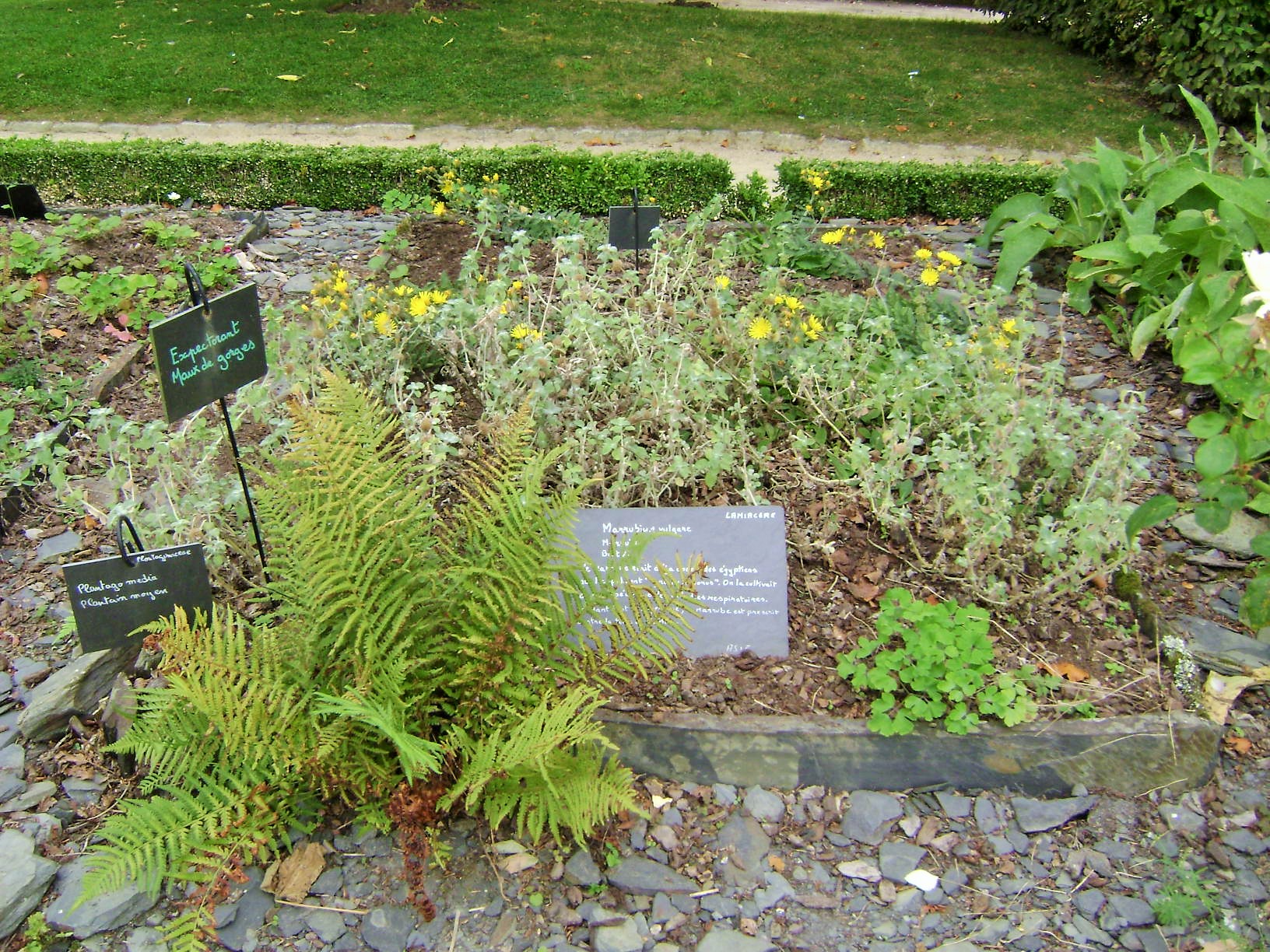
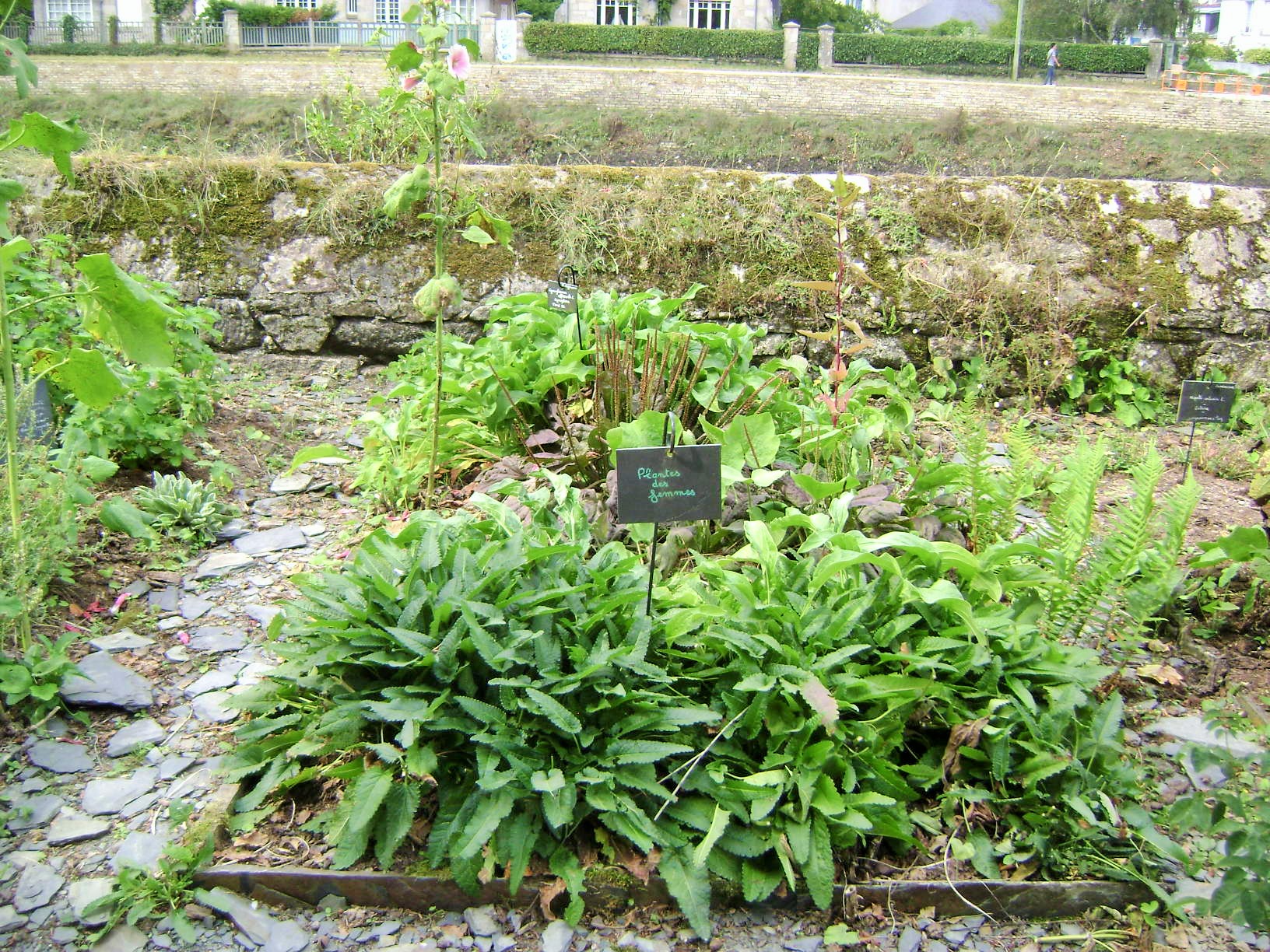
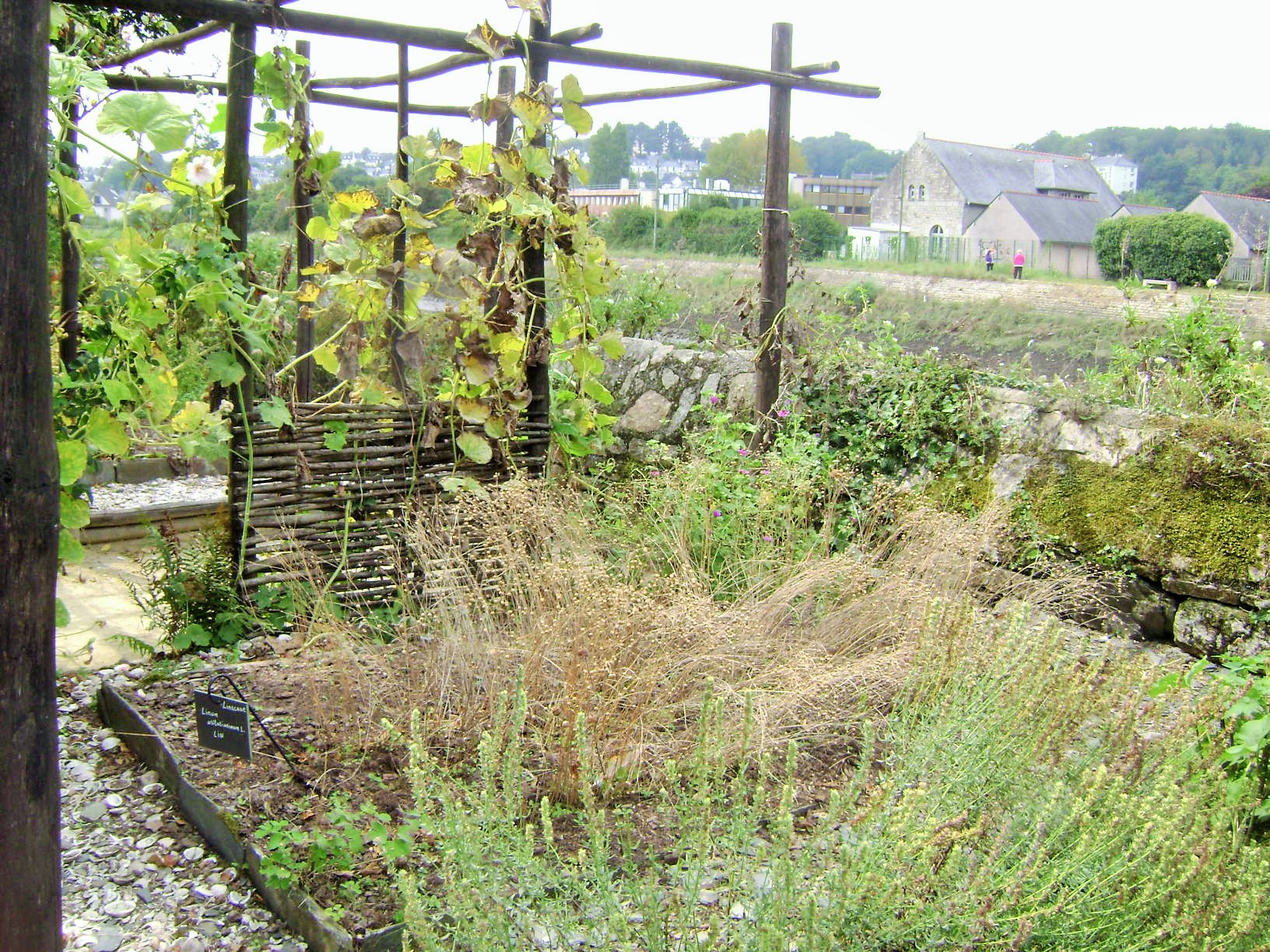
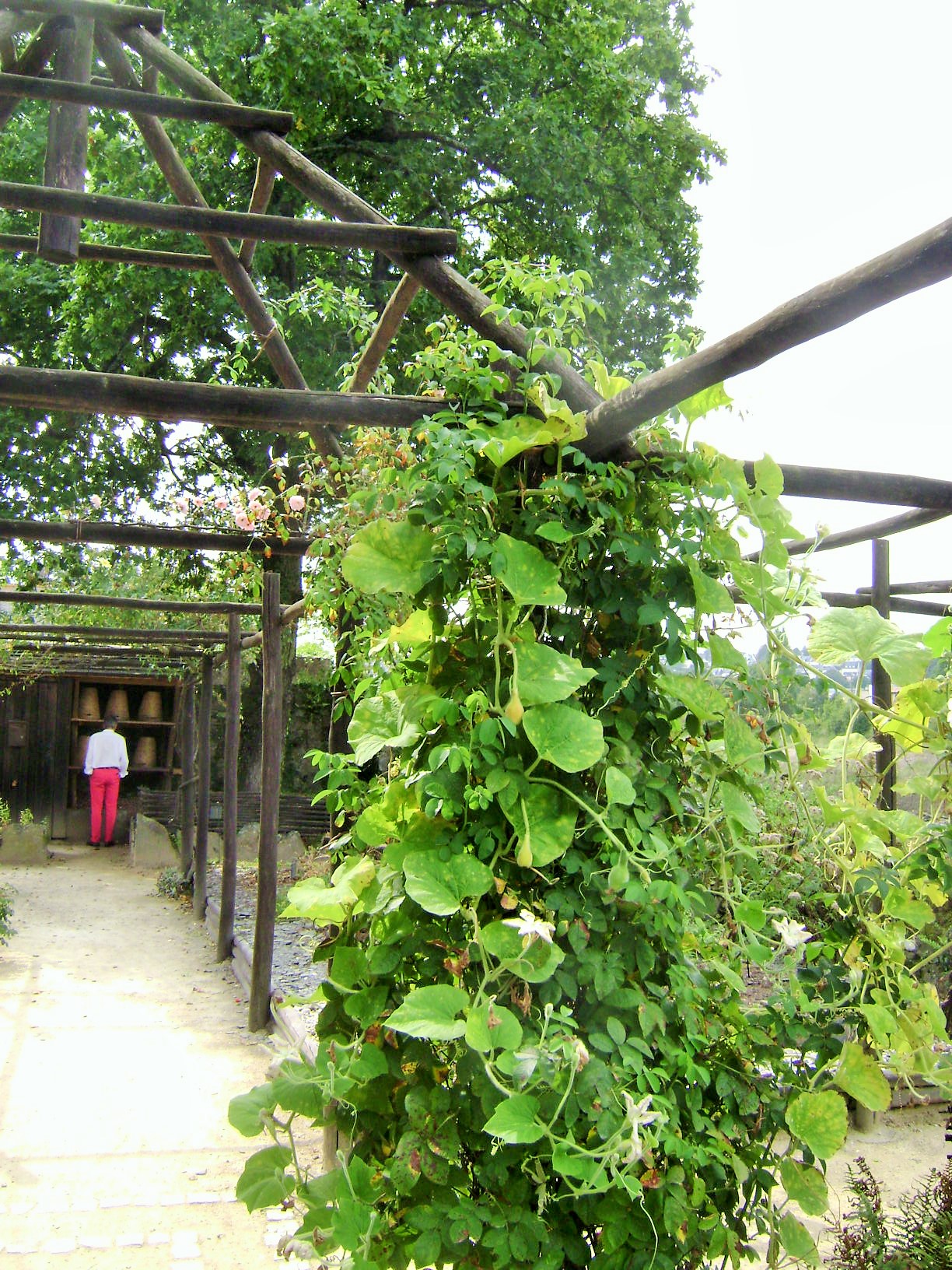

In this third and last post on the Priory gardens of Quimper, I am featuring the back of the garden (shown on the left of the map) where edibles are grown, as well as those plants used for making and coloring clothing.
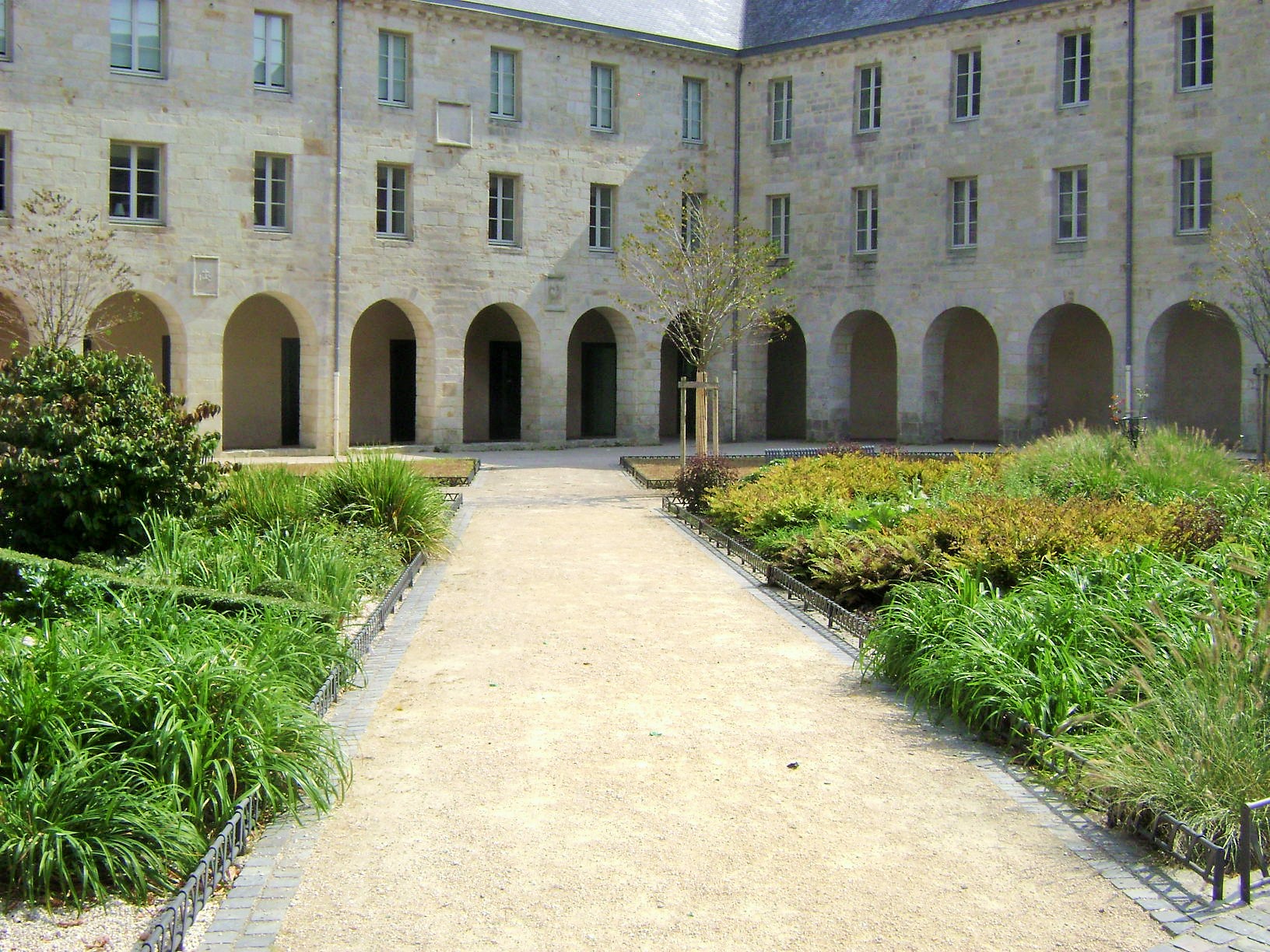
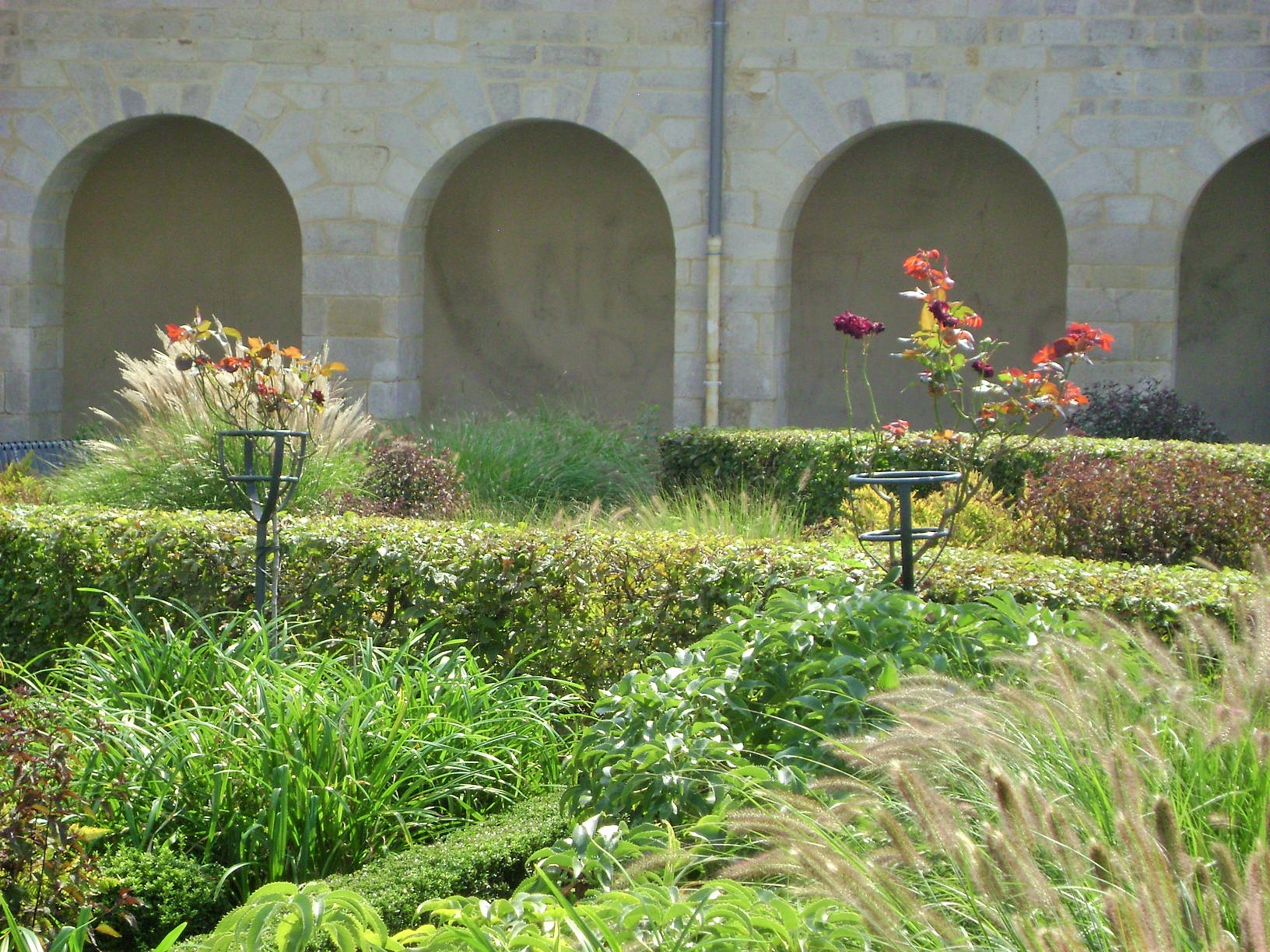
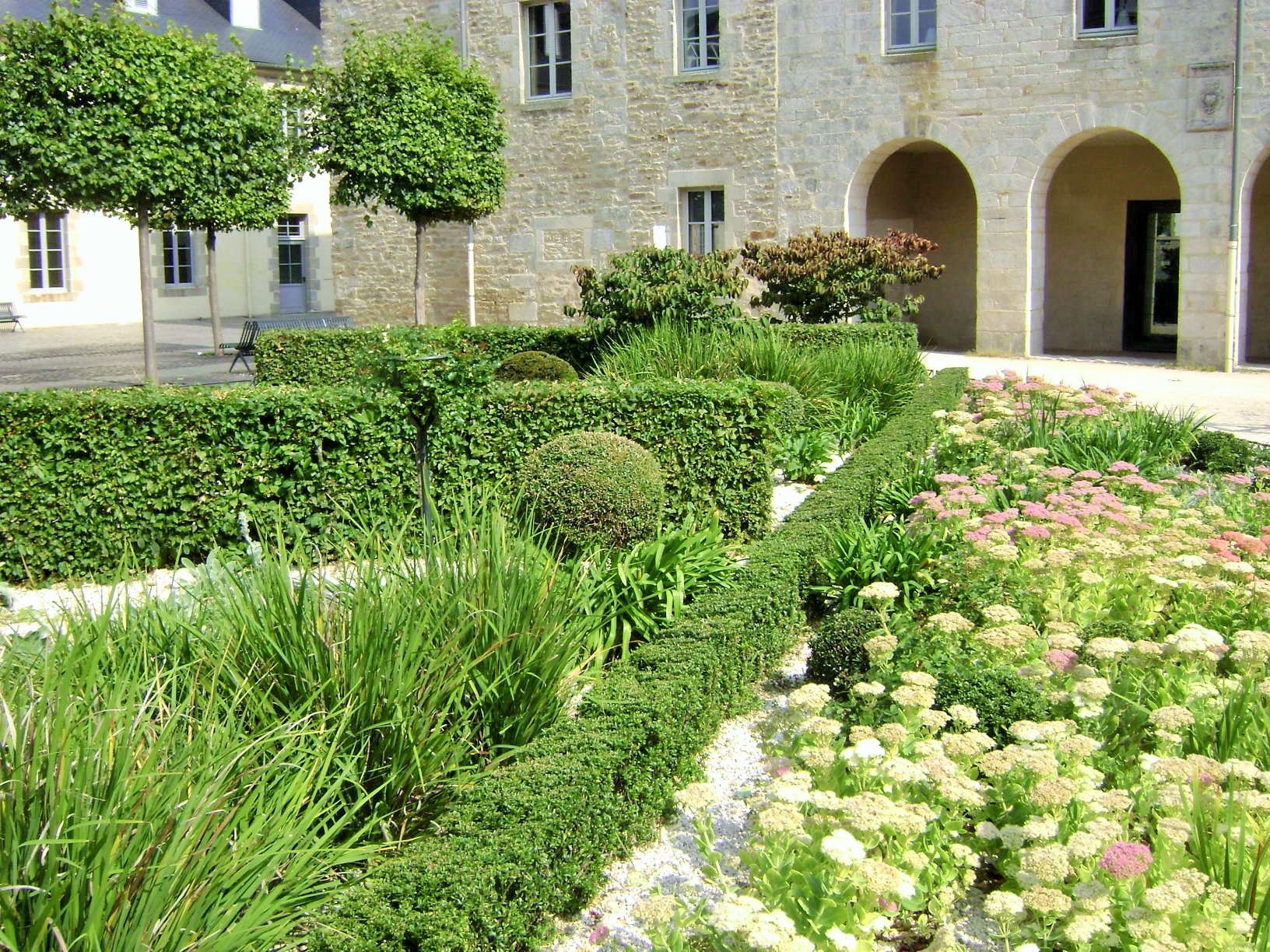
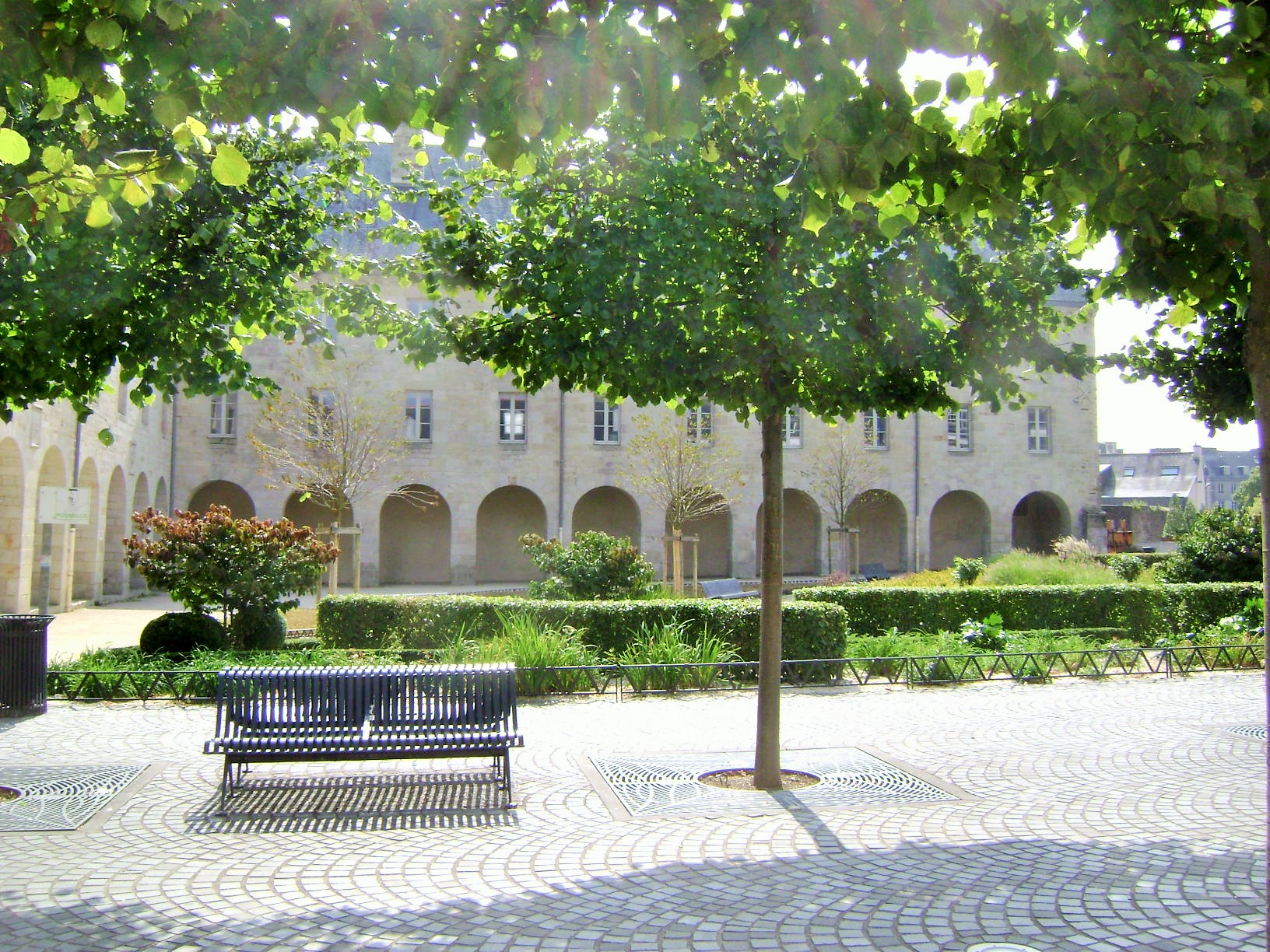
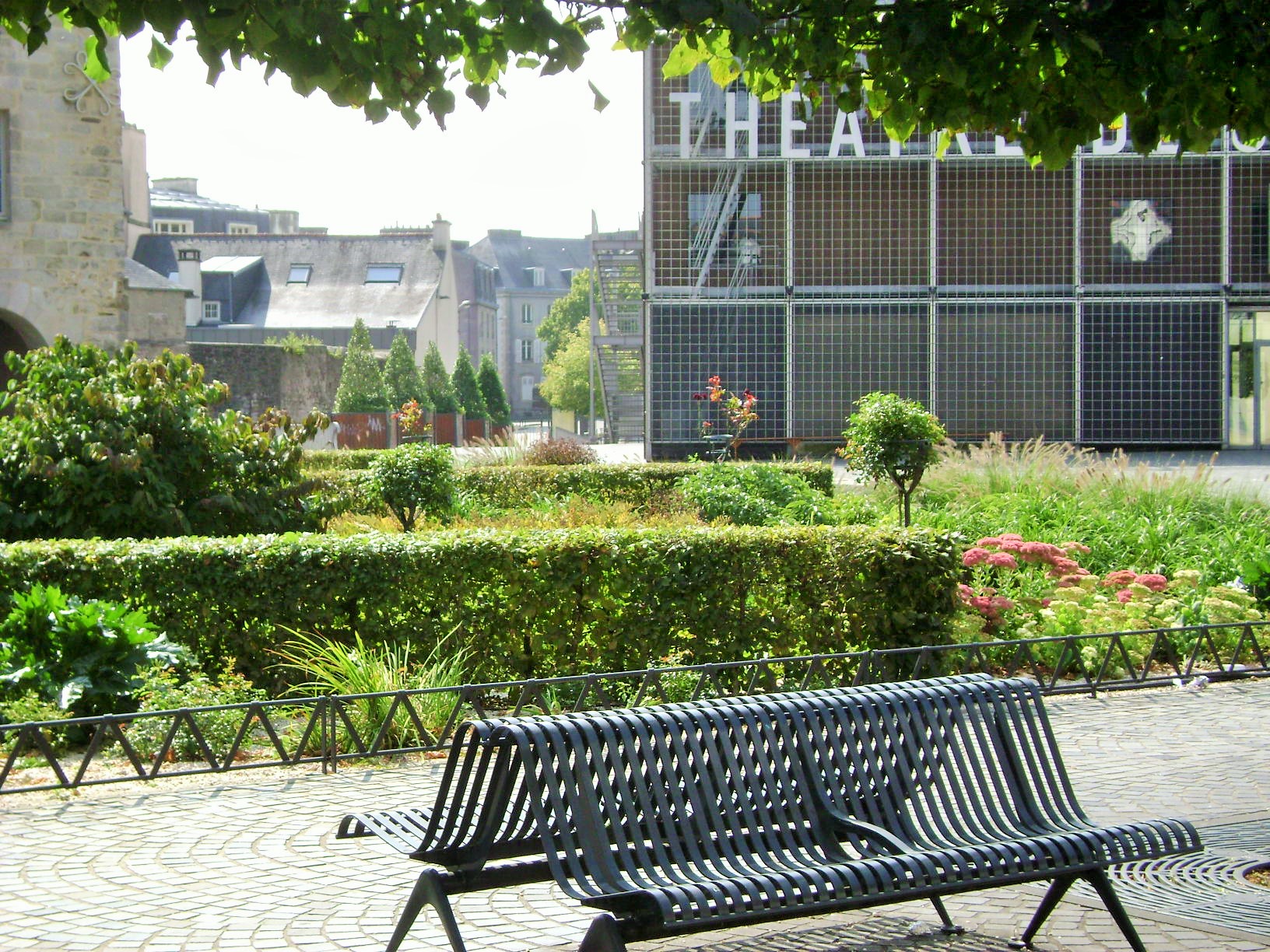
Lined by benches and surrounded by historic buildings and one of Quimper’s premier theatre venues, this formally landscaped garden in the French style provides a sheltered oasis in the old own, to sit on sunny afternoons or bring a picnic.
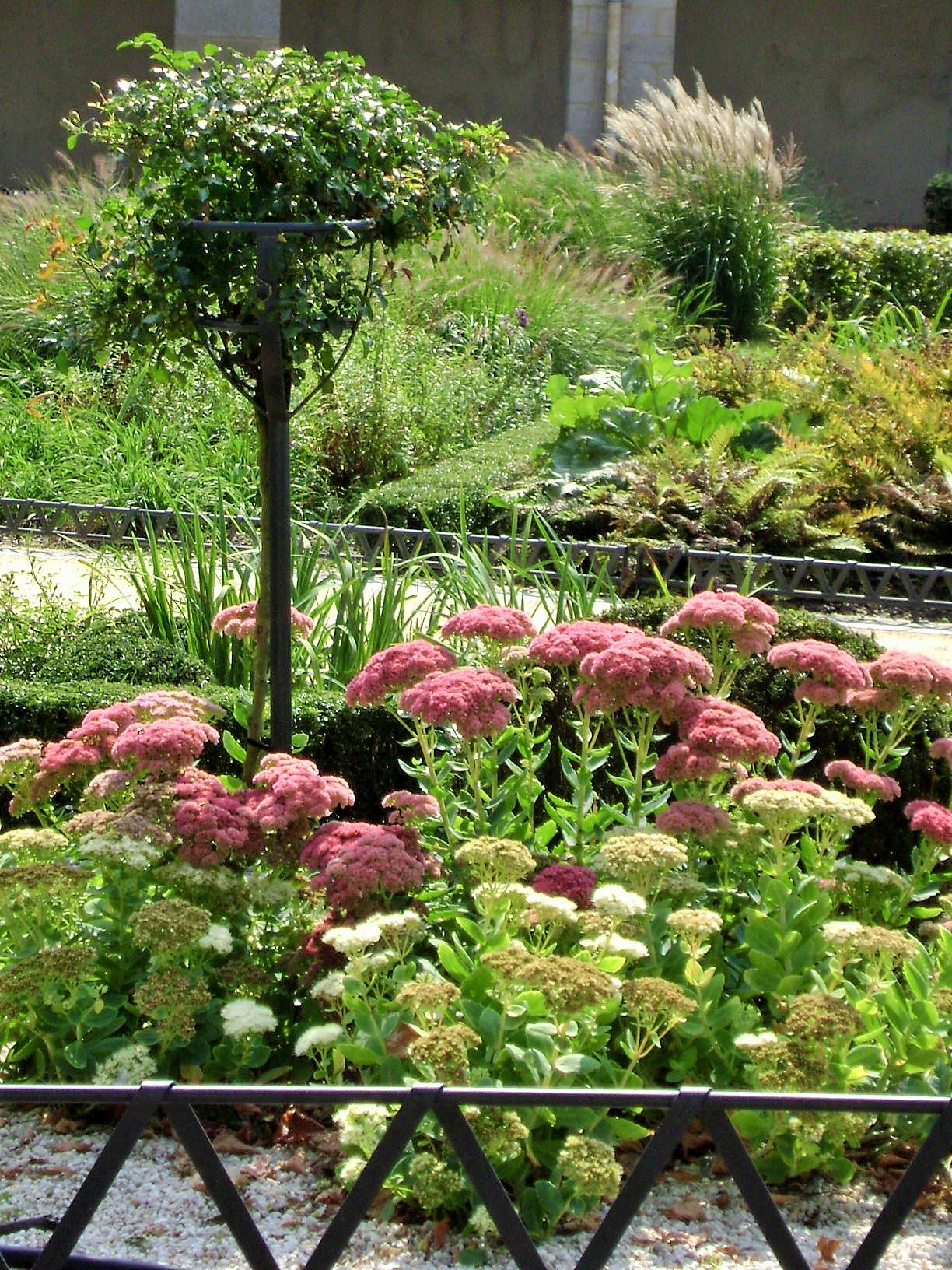
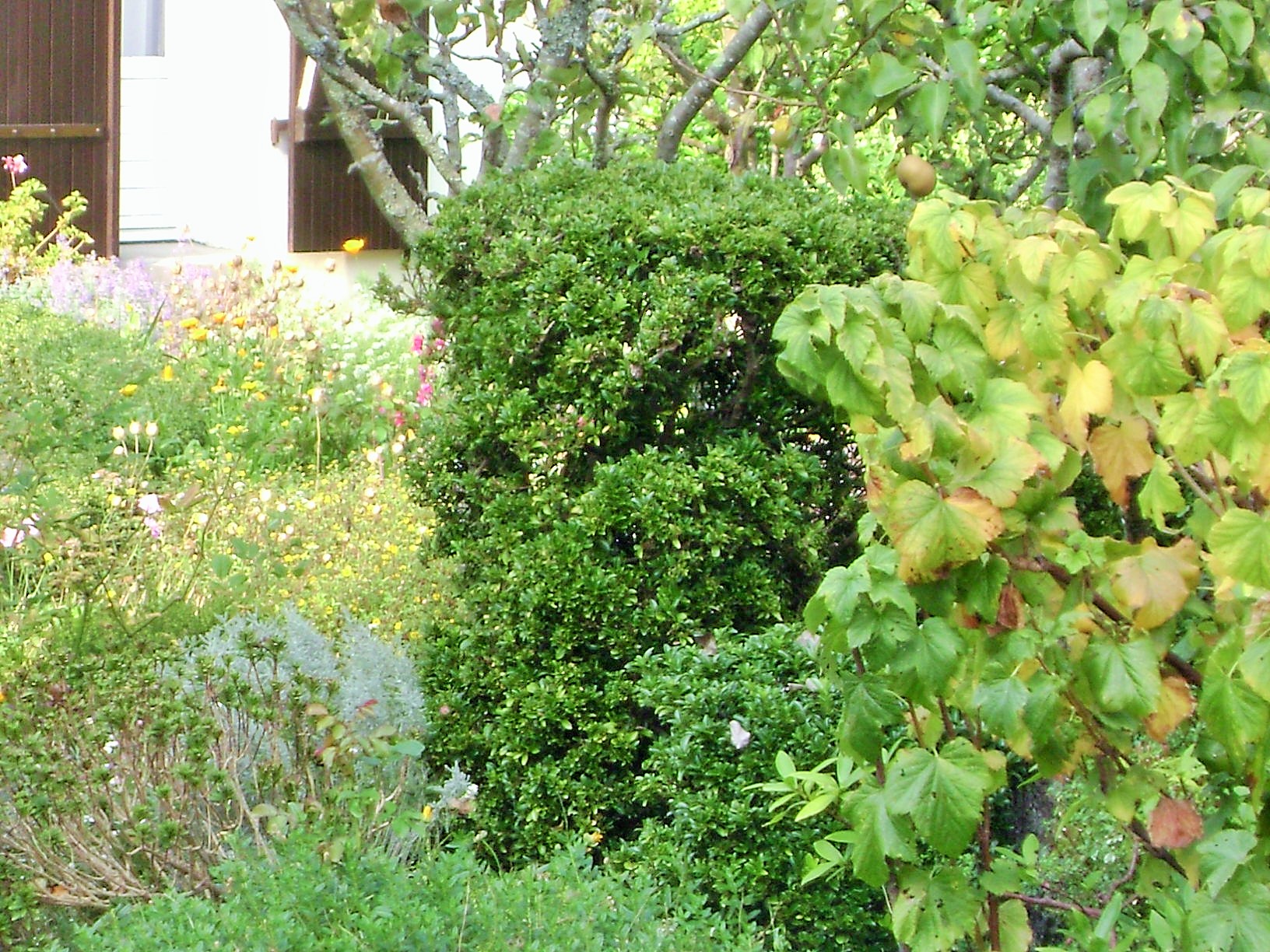
Mixed borders are edged with low trimmed boxwood, and more boxwood and evergreens in round shapes mix with roses, sedums and other plants.








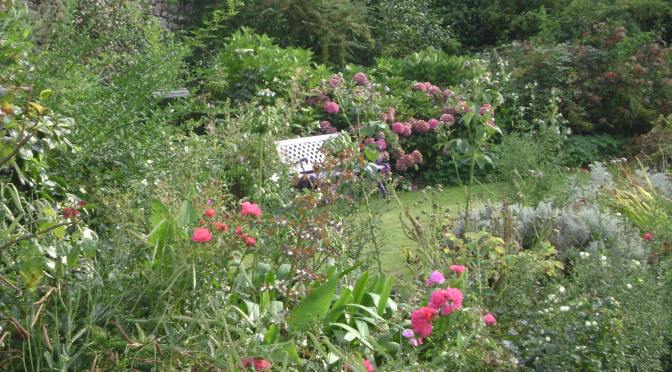
As in one of my previous posts, this cottage garden is also in the coastal village of Landevennec in northern Brittany, France. This garden right by the water puts out a stunning show of fall blooms in September, with a riot of color from hydrangeas, roses, and foliage from grasses and perennials mixed into lush border.


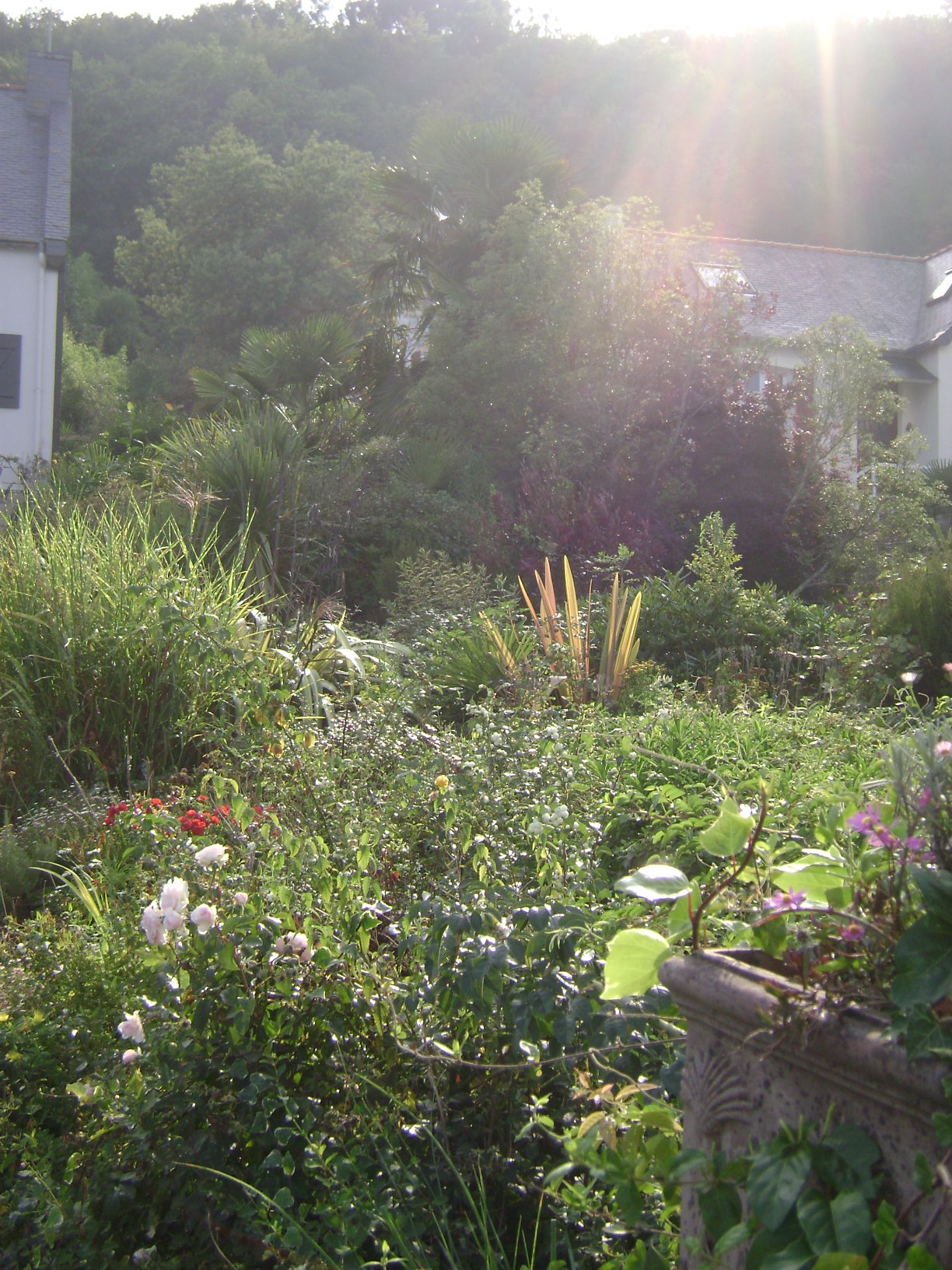

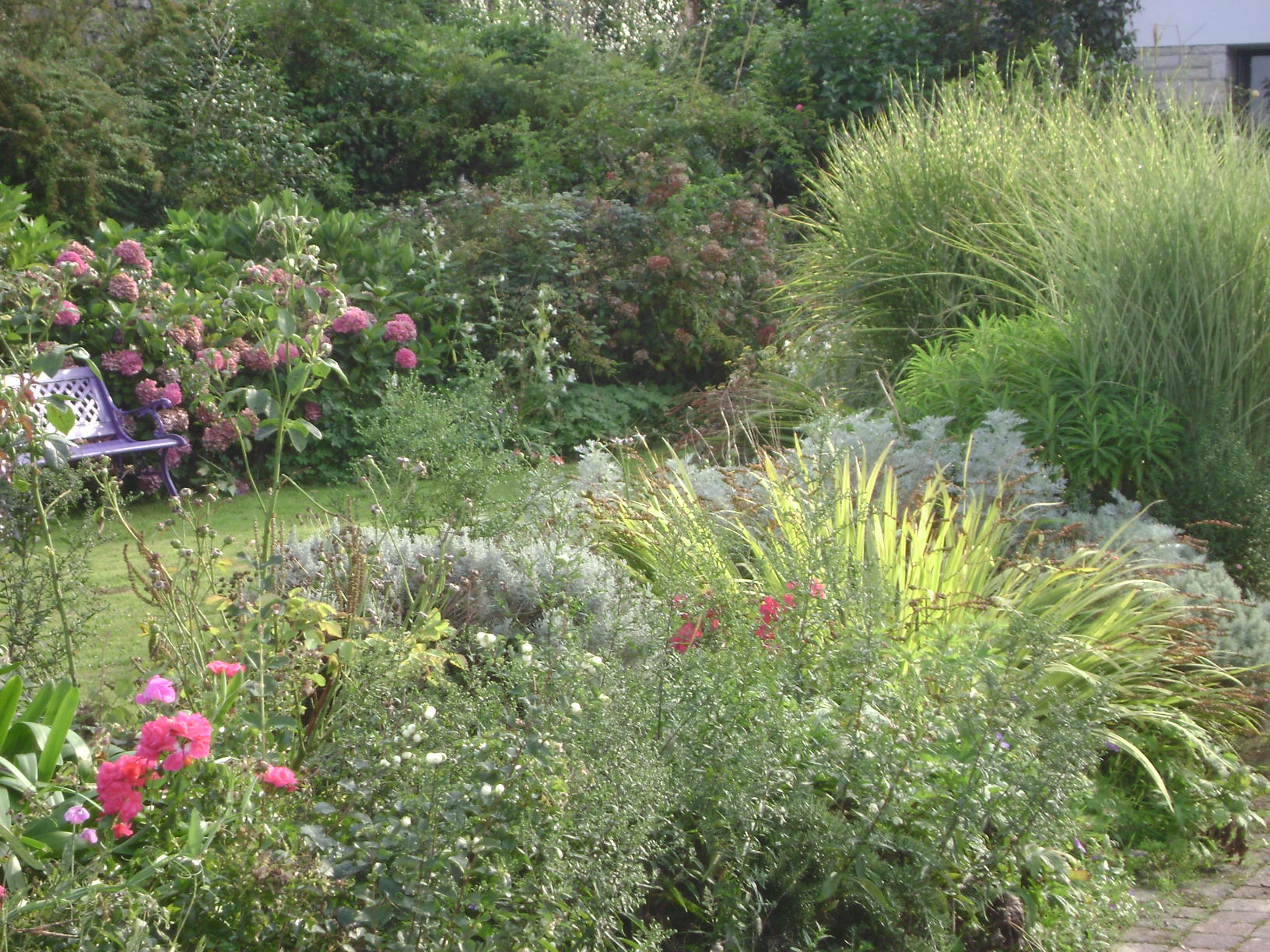
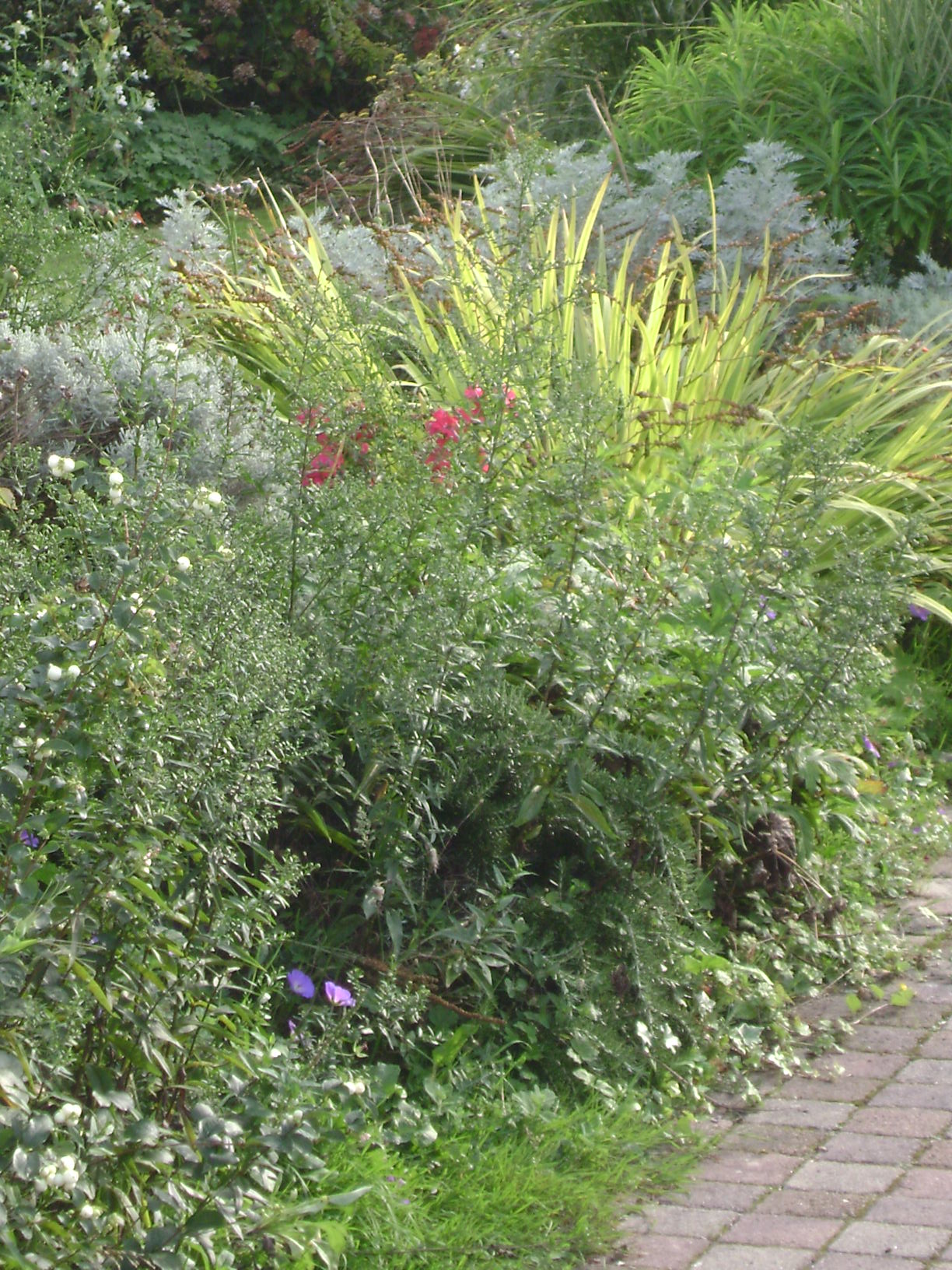
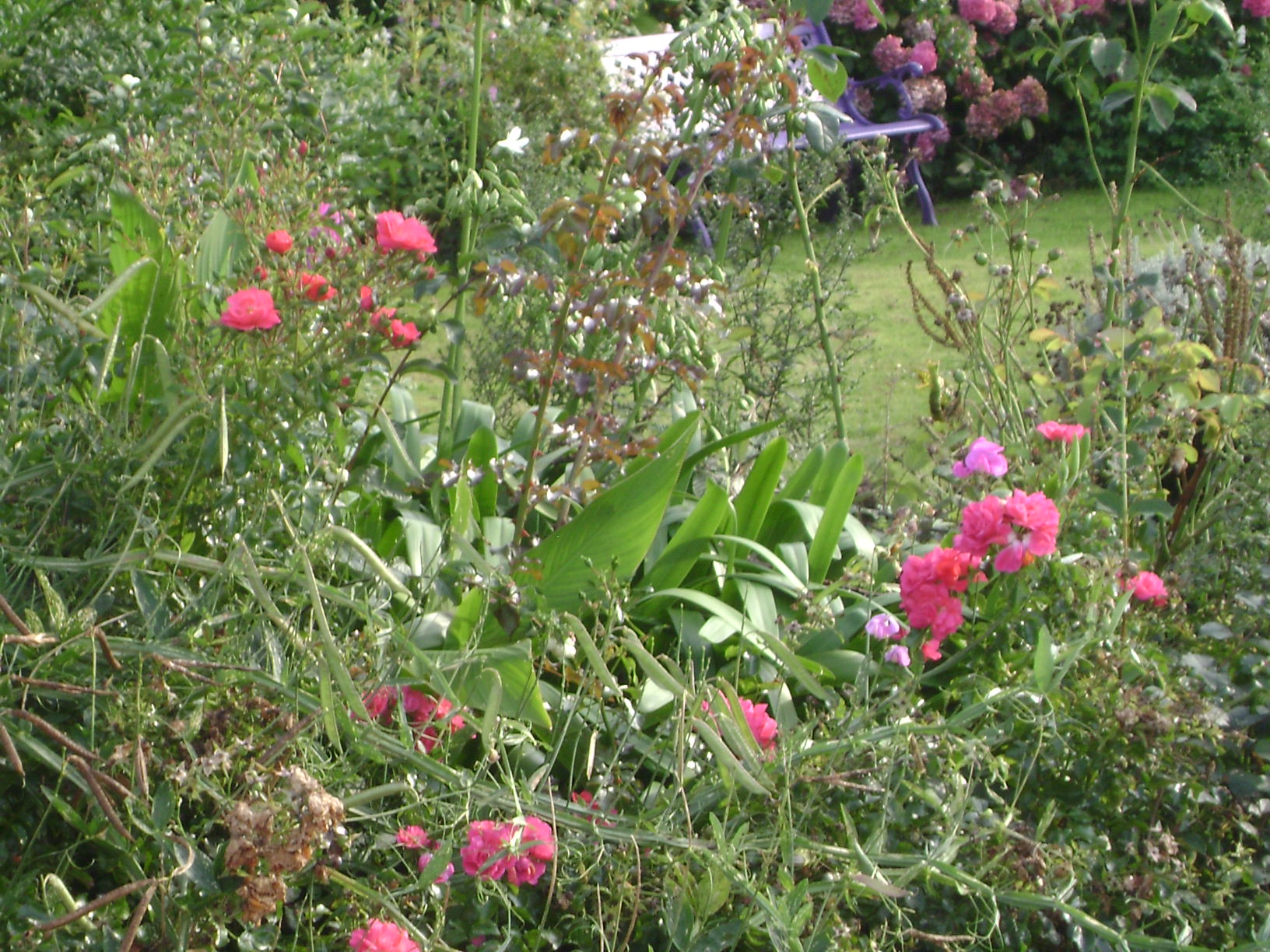


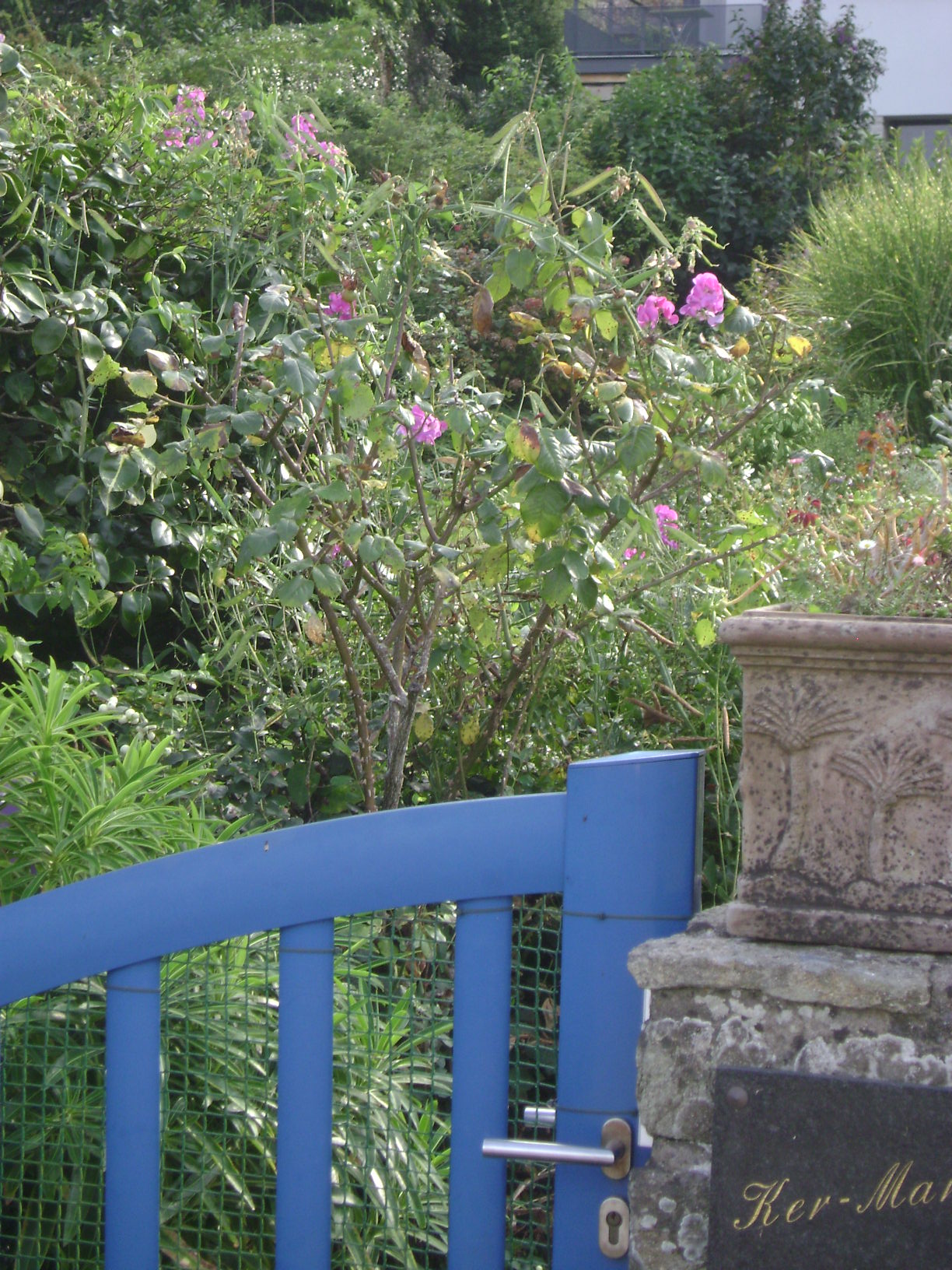


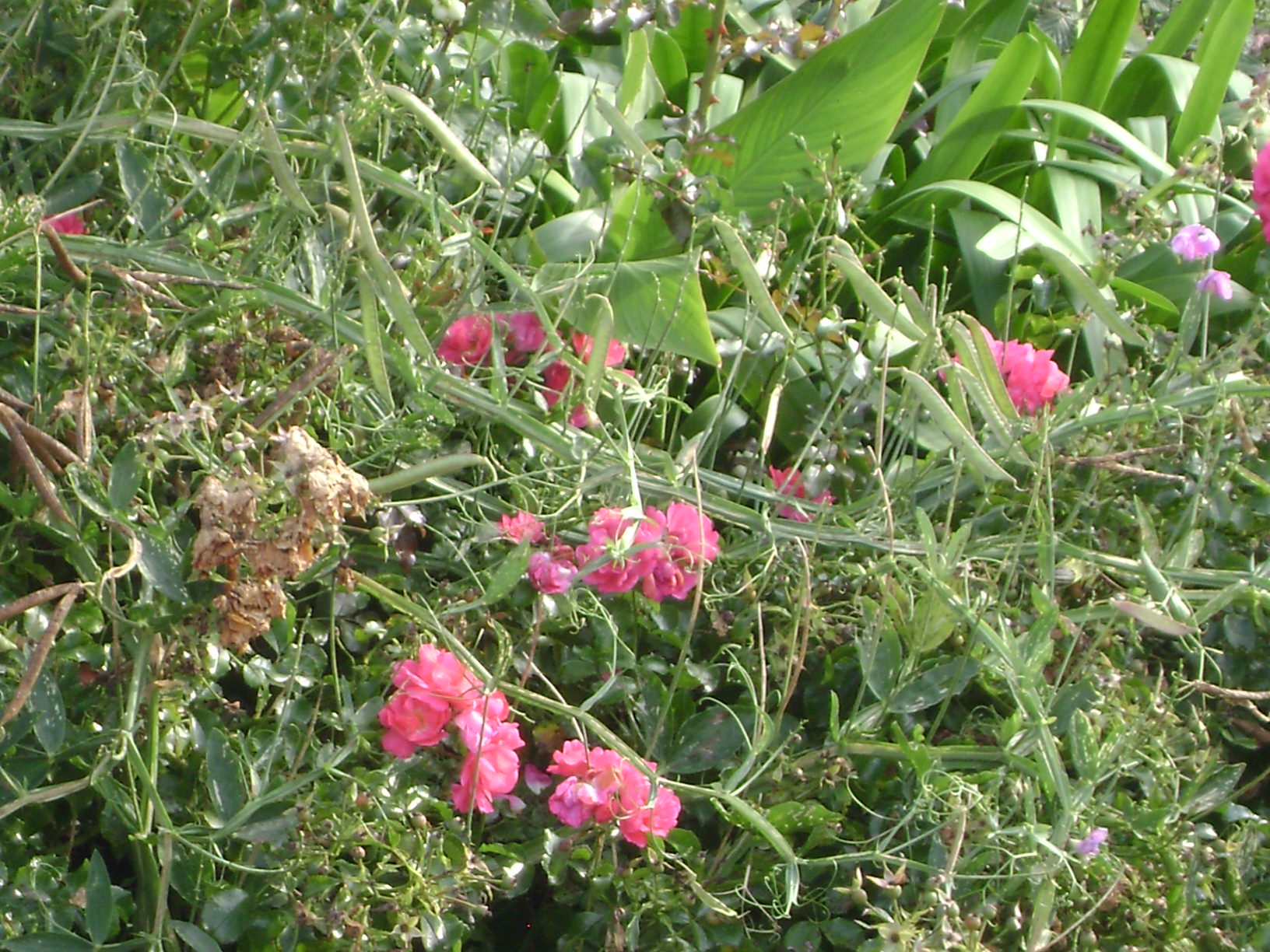
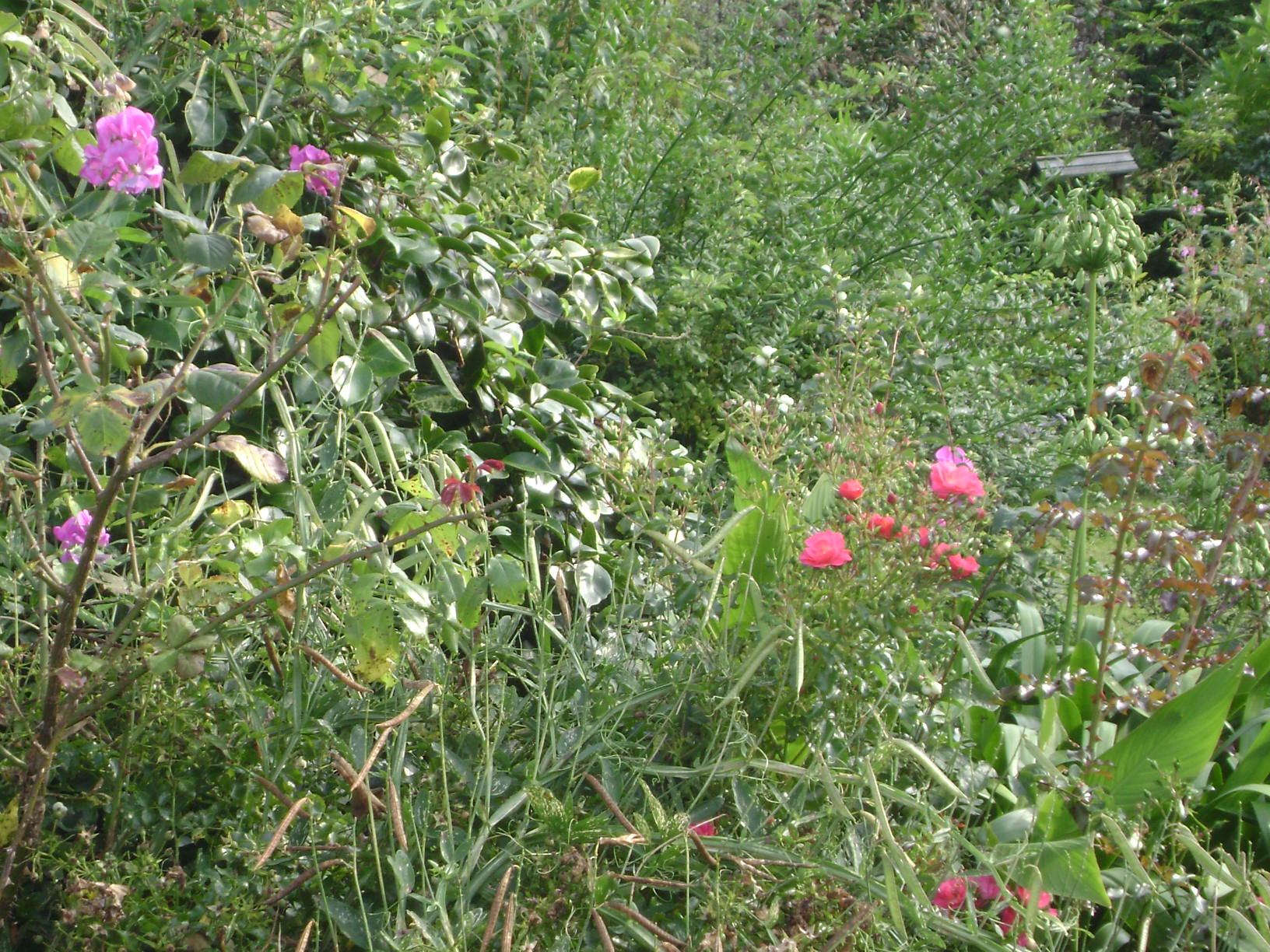


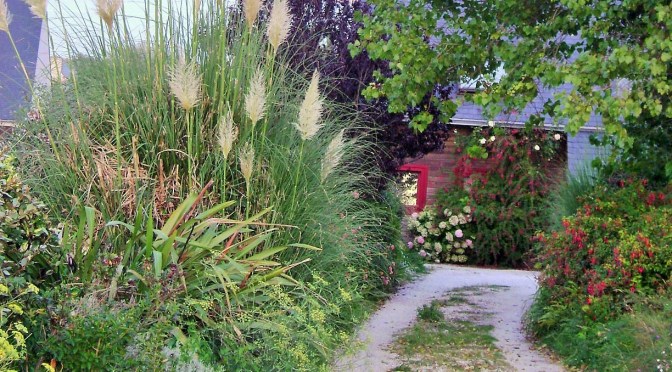
The house in a small French village is sited towards the back of this narrow lot, away from the road, making it look like a woodland cottage nested in all that vegetation.
The plantings are mostly shrubs and perennials with a variety of foliage color and shape for year round interest,
A few trees, including a small pear tree in the front, add structure and make it look like an older, well established garden mixed border. Some of the plantings include fuchsias, pampas grasses, barberry, hydrangeas, roses, black eyed susan, and large patches of pink and white erigeron ground cover.
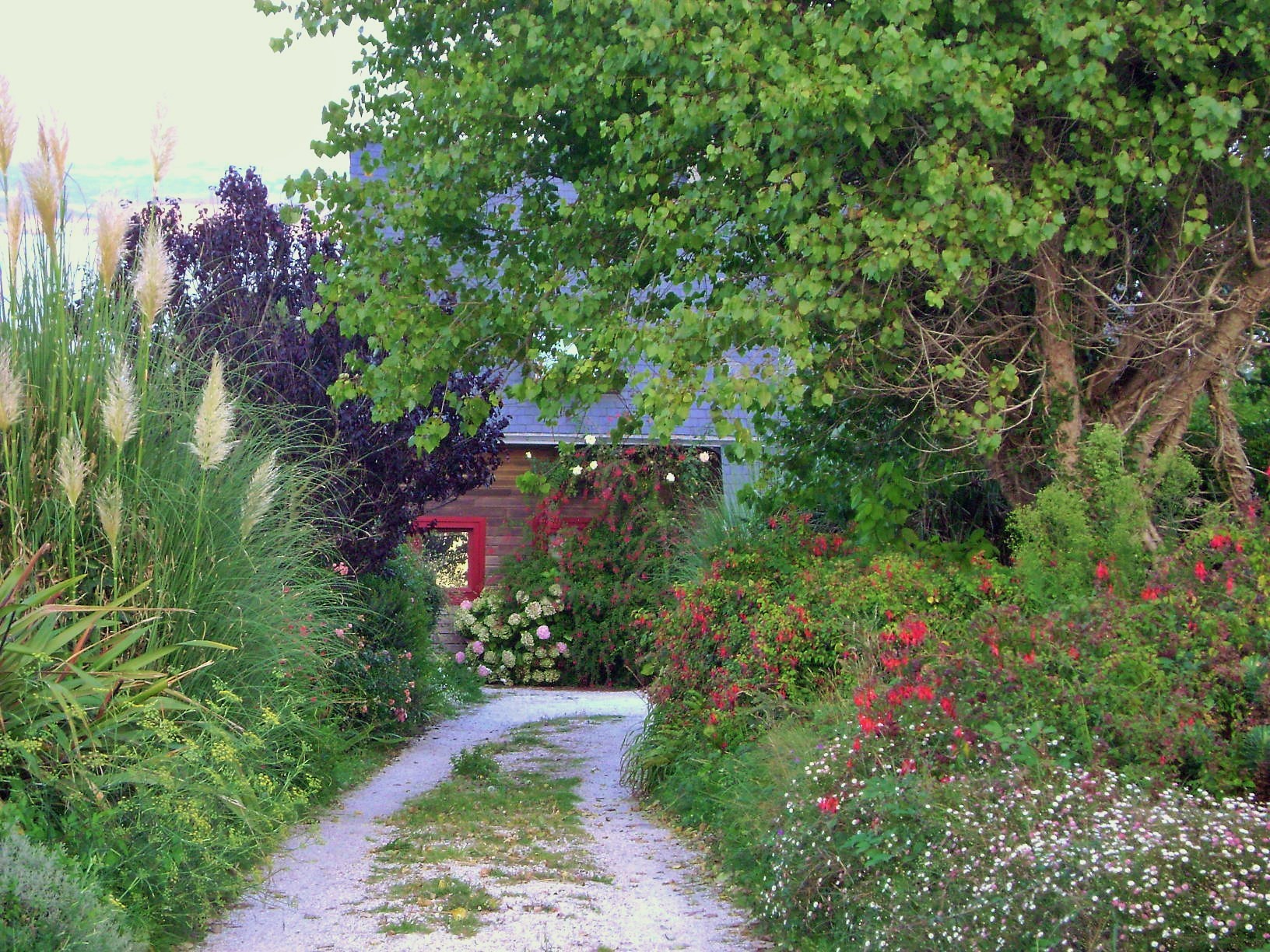


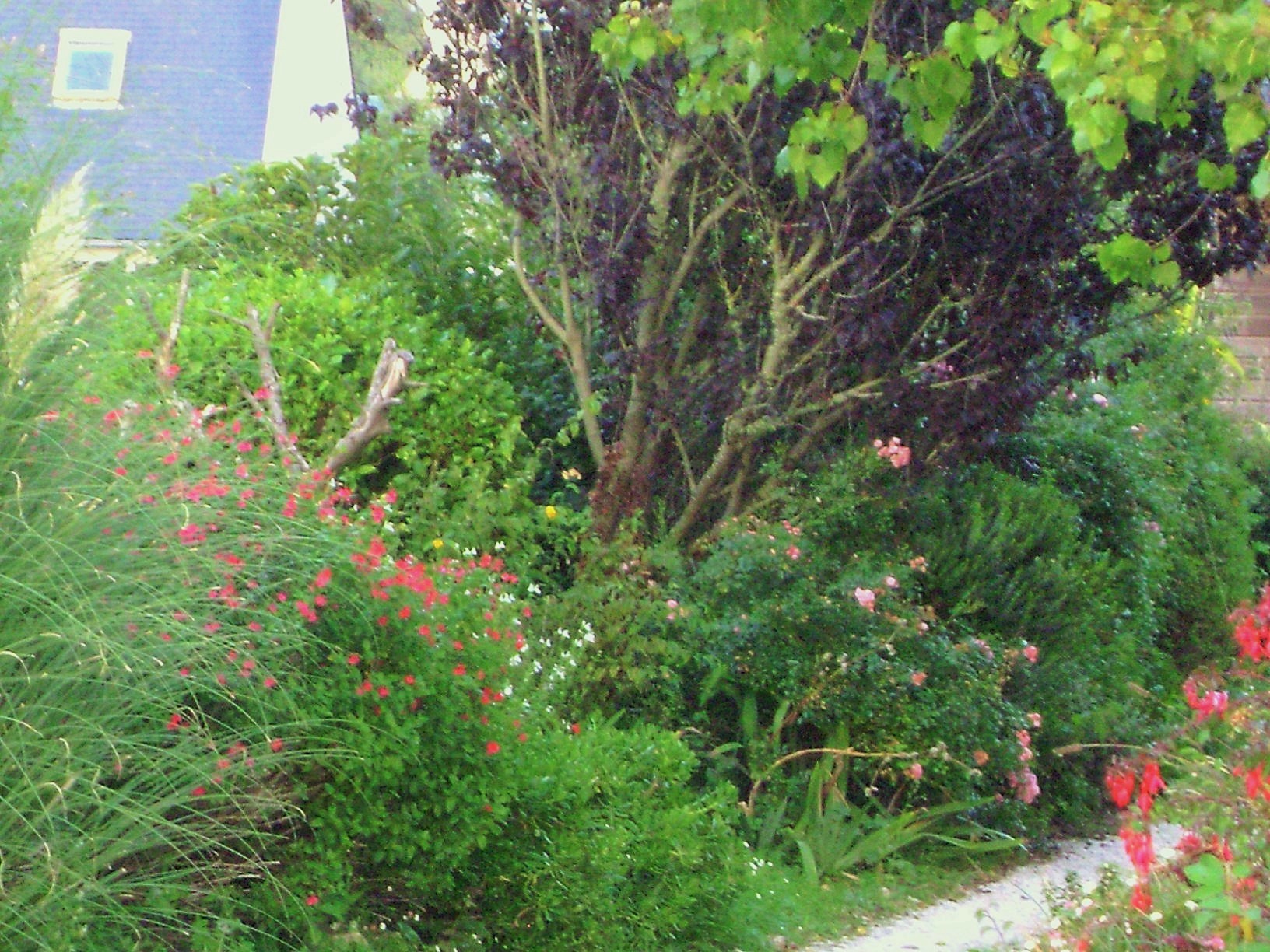
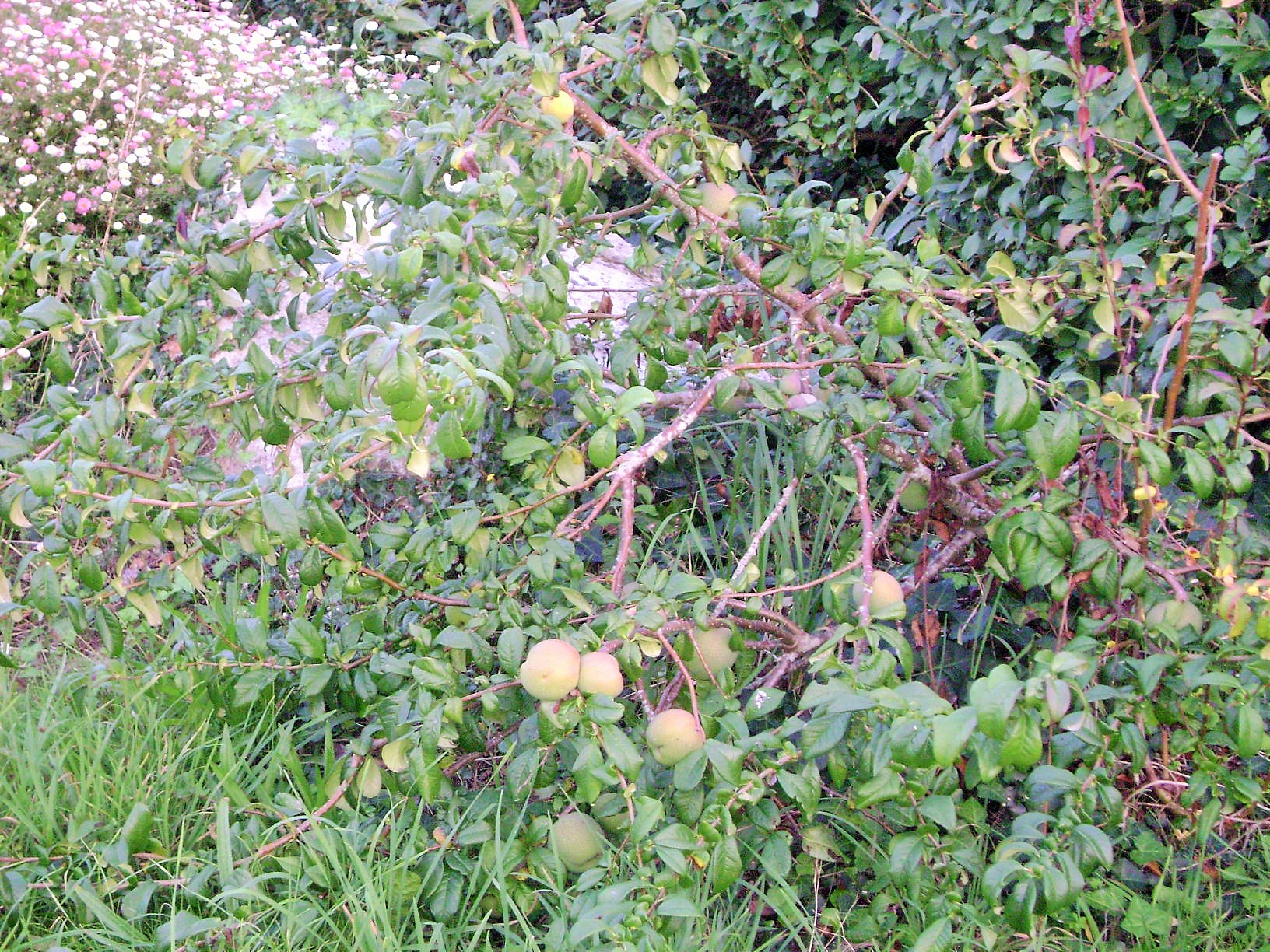

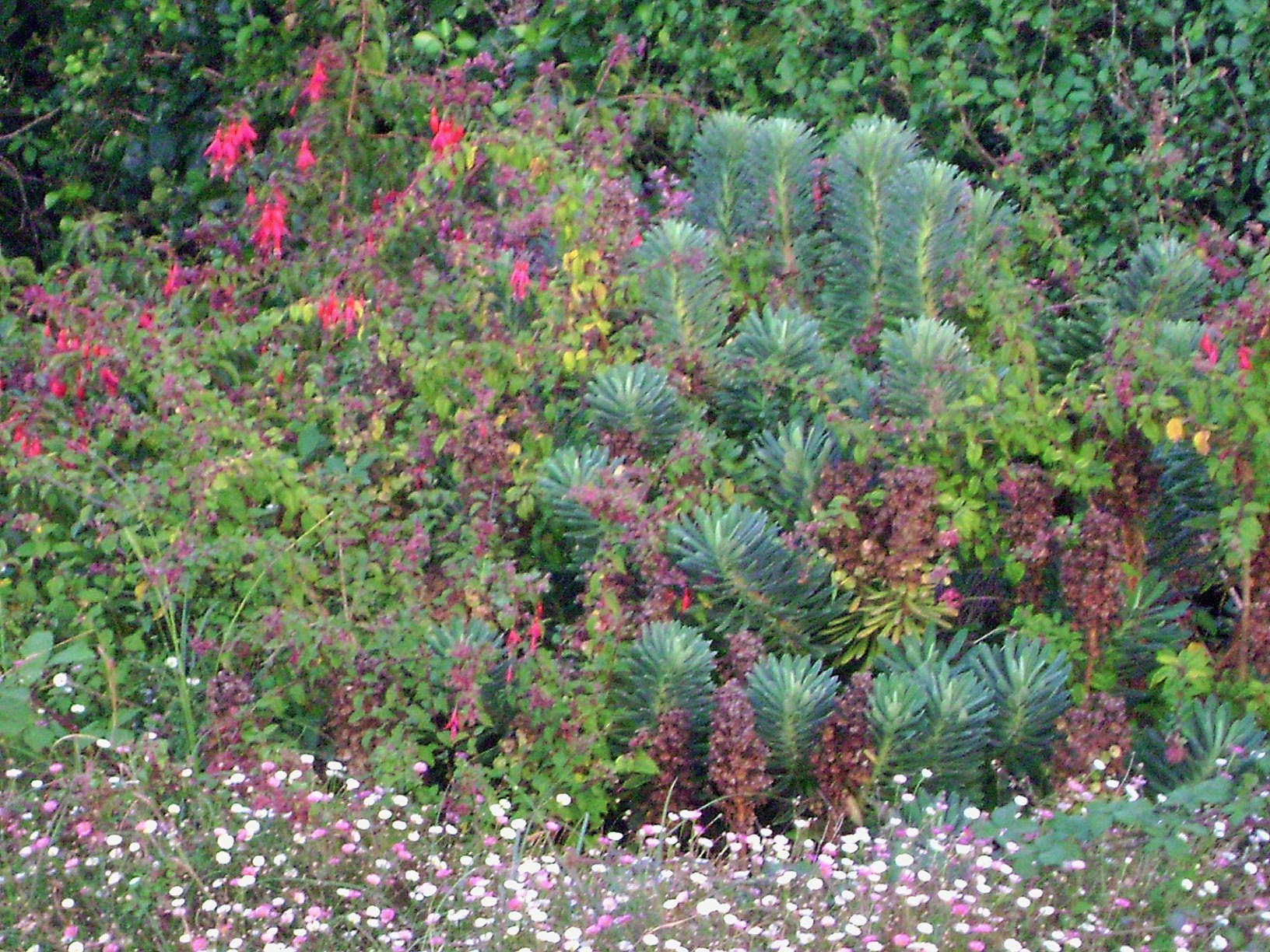

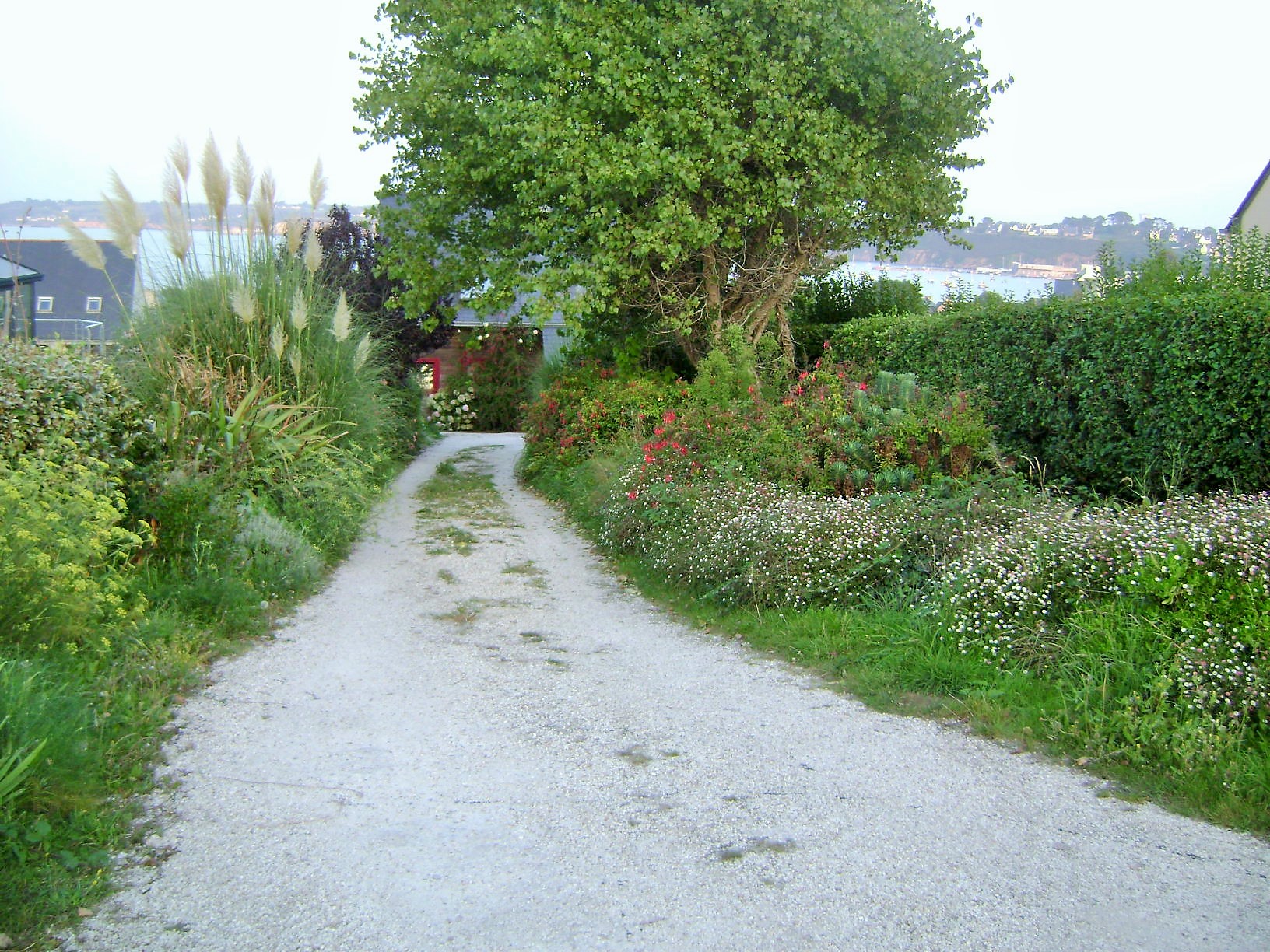
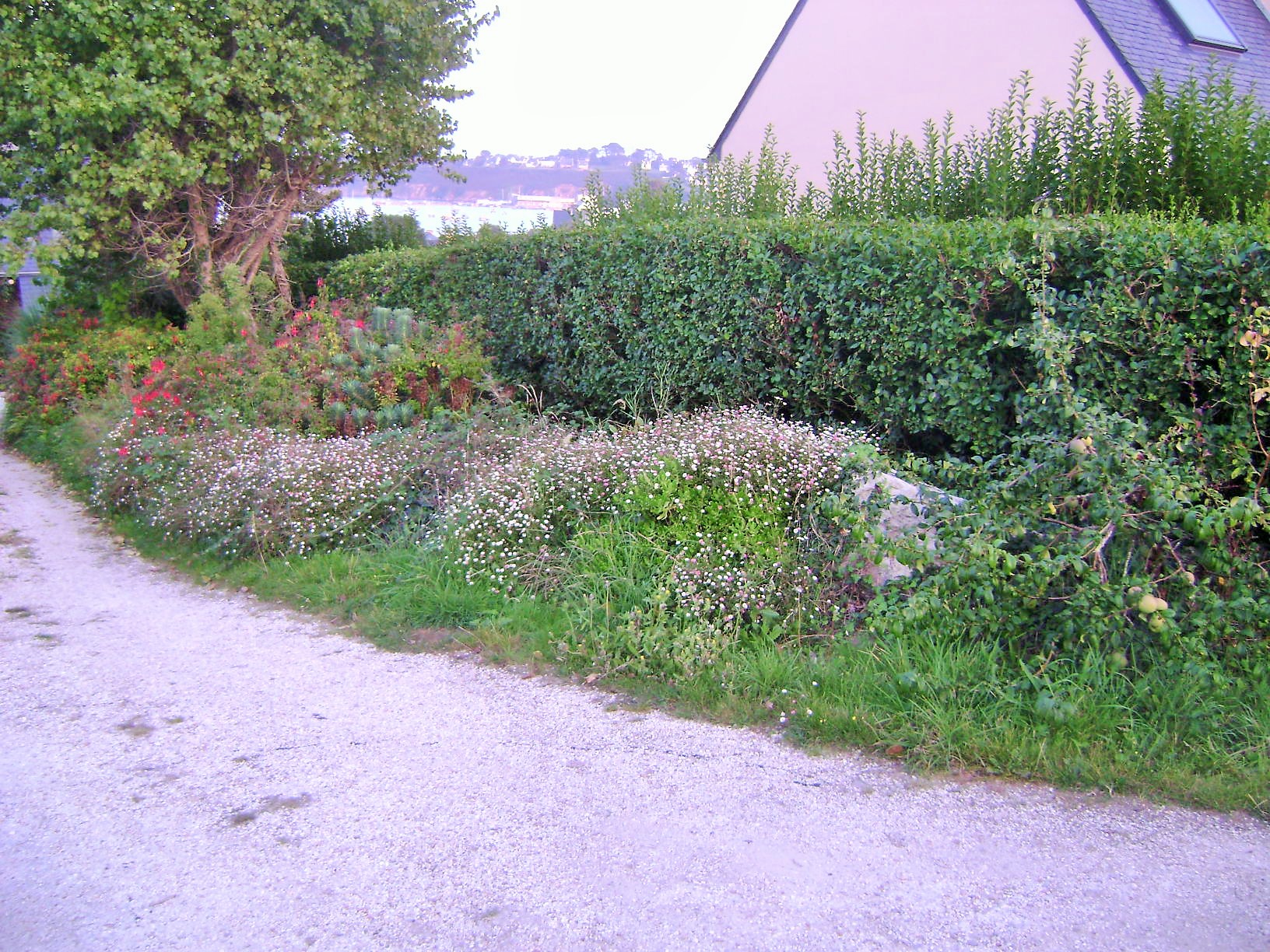
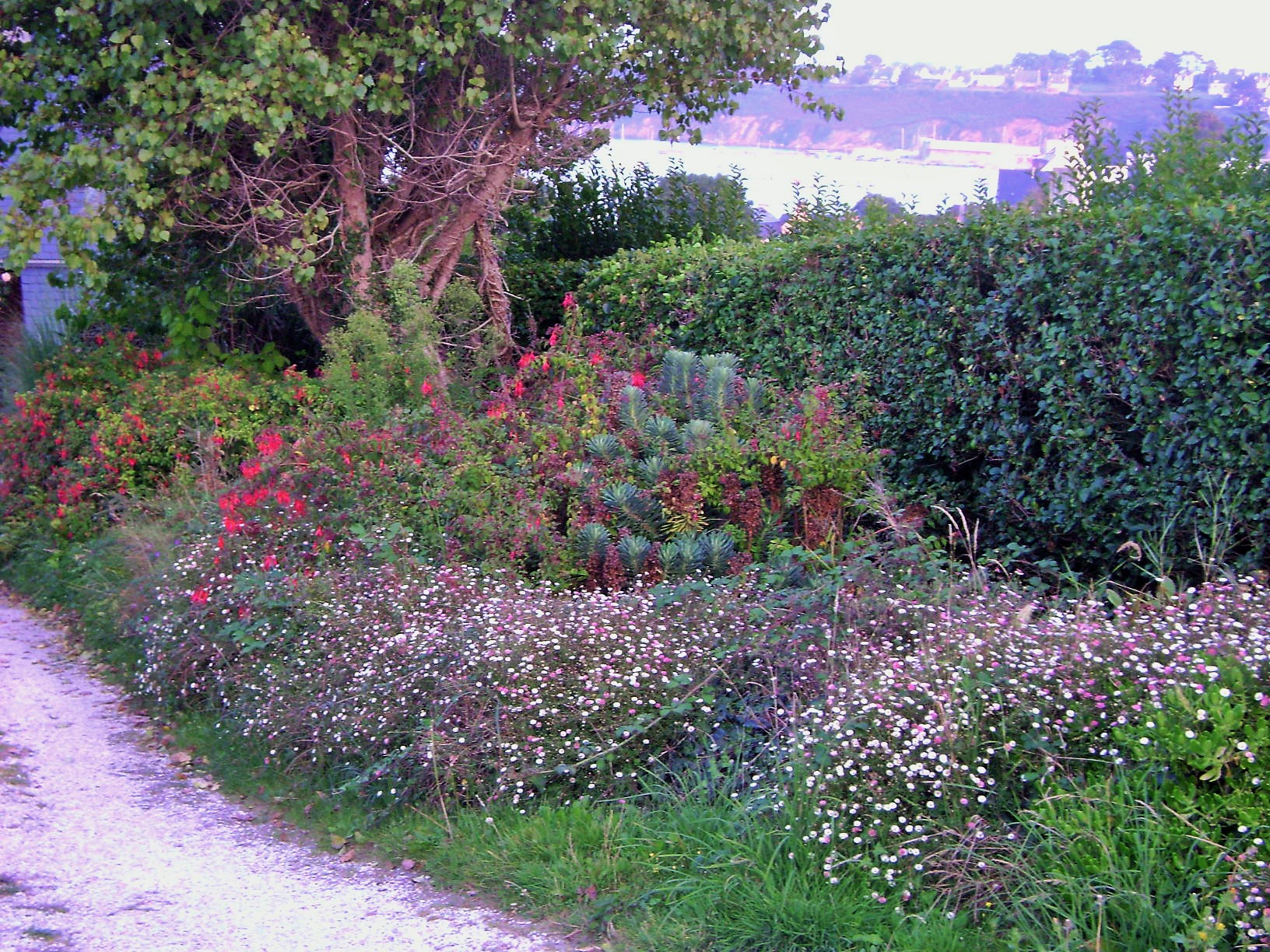
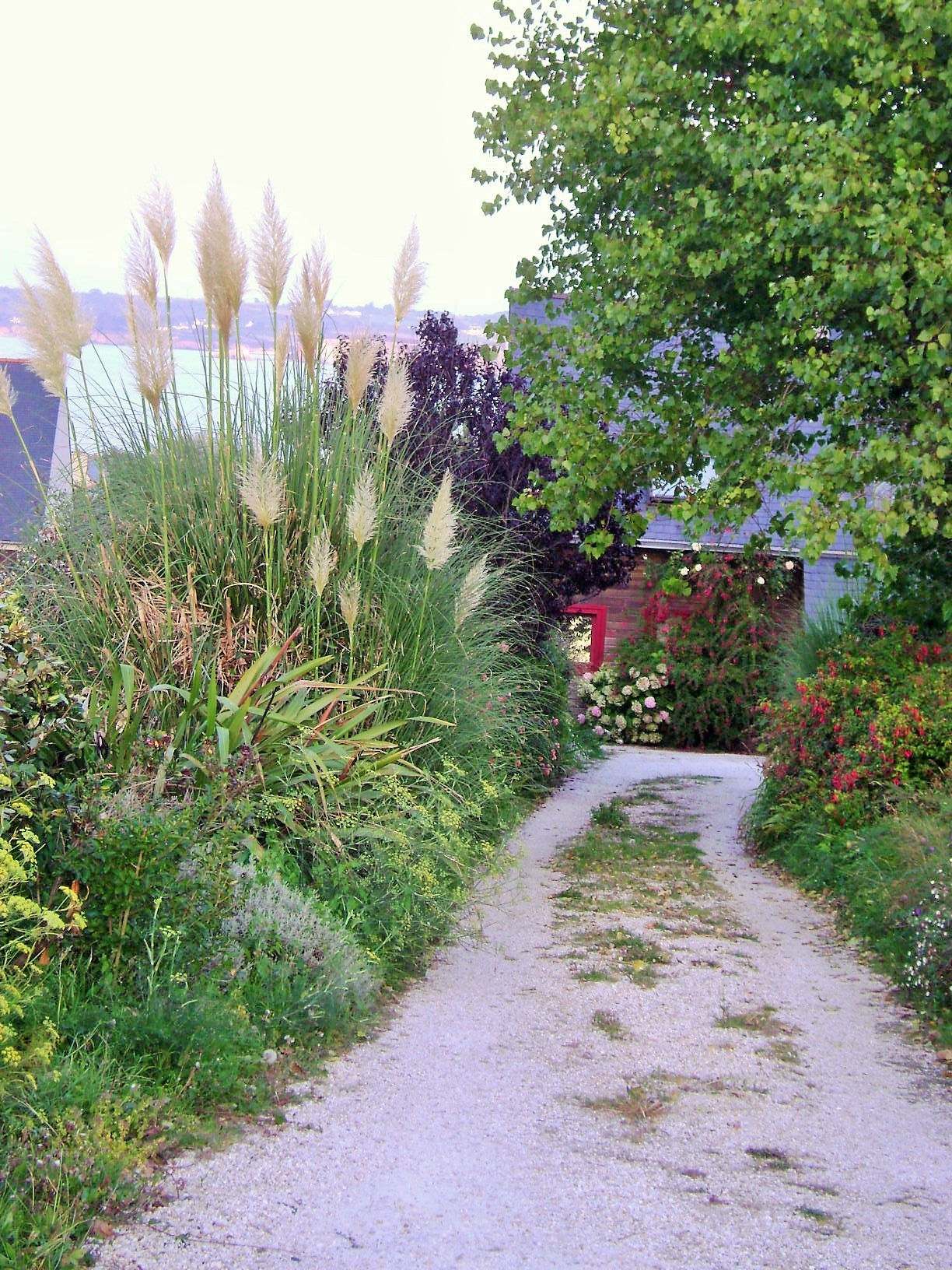


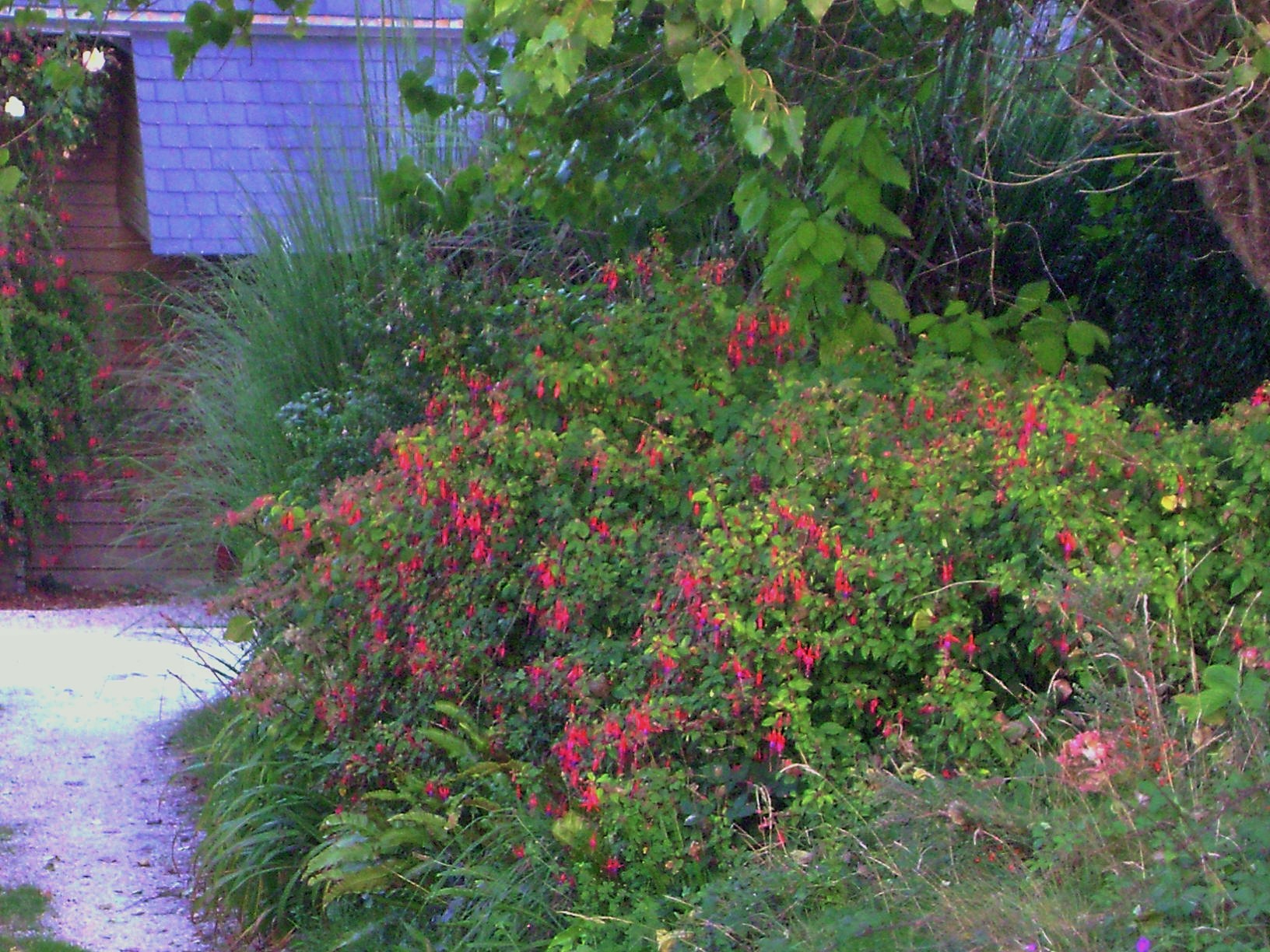

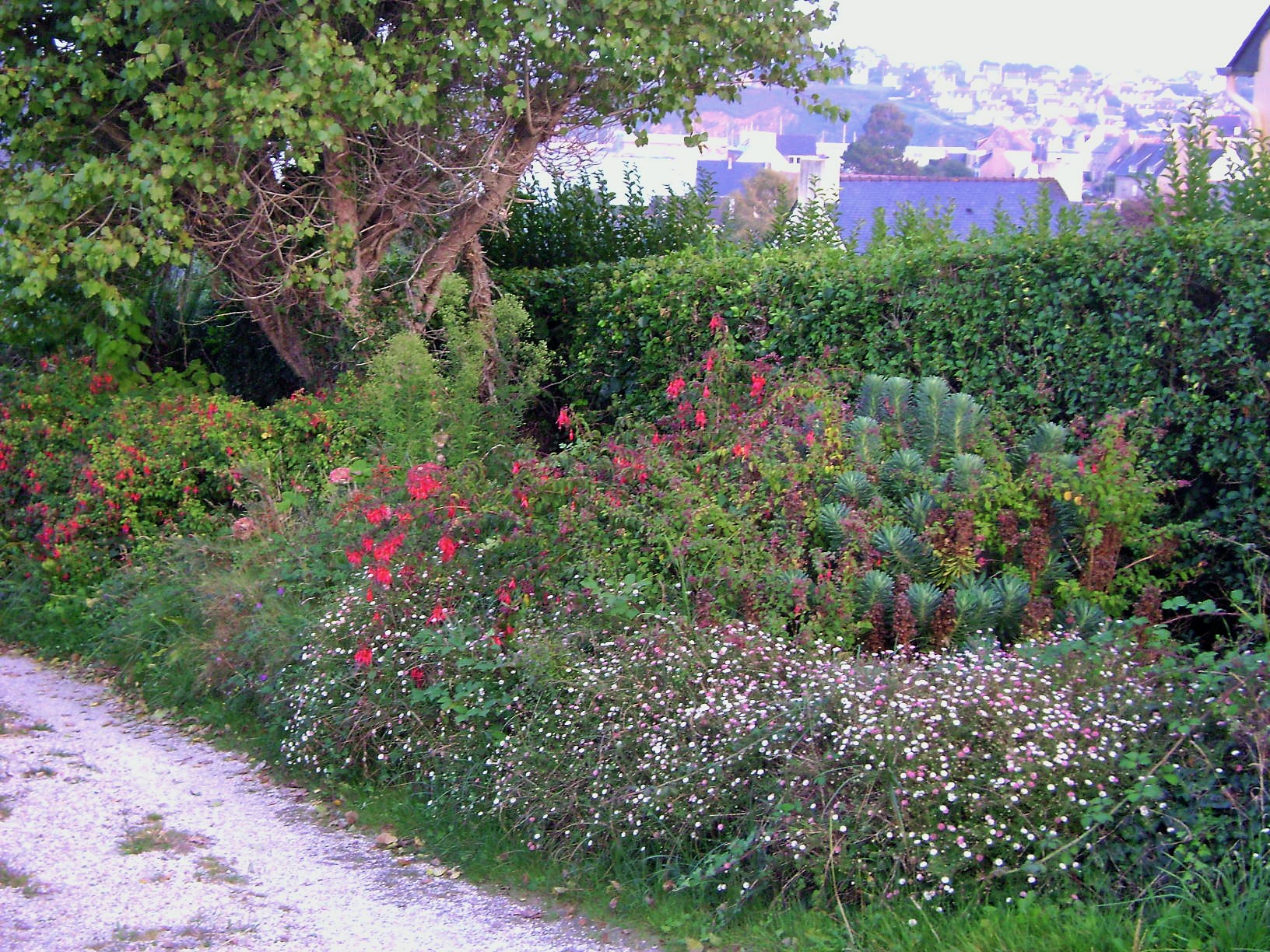

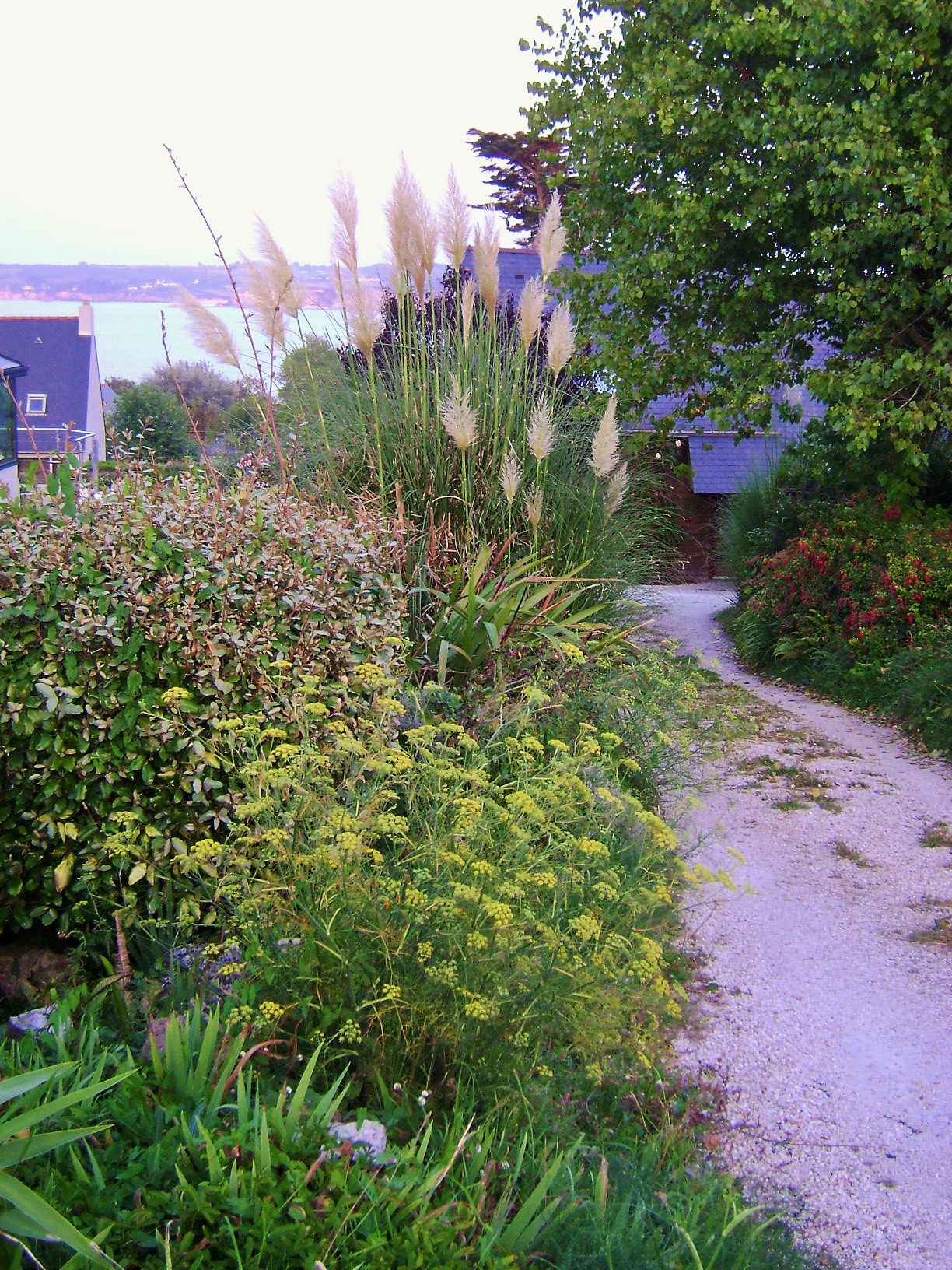
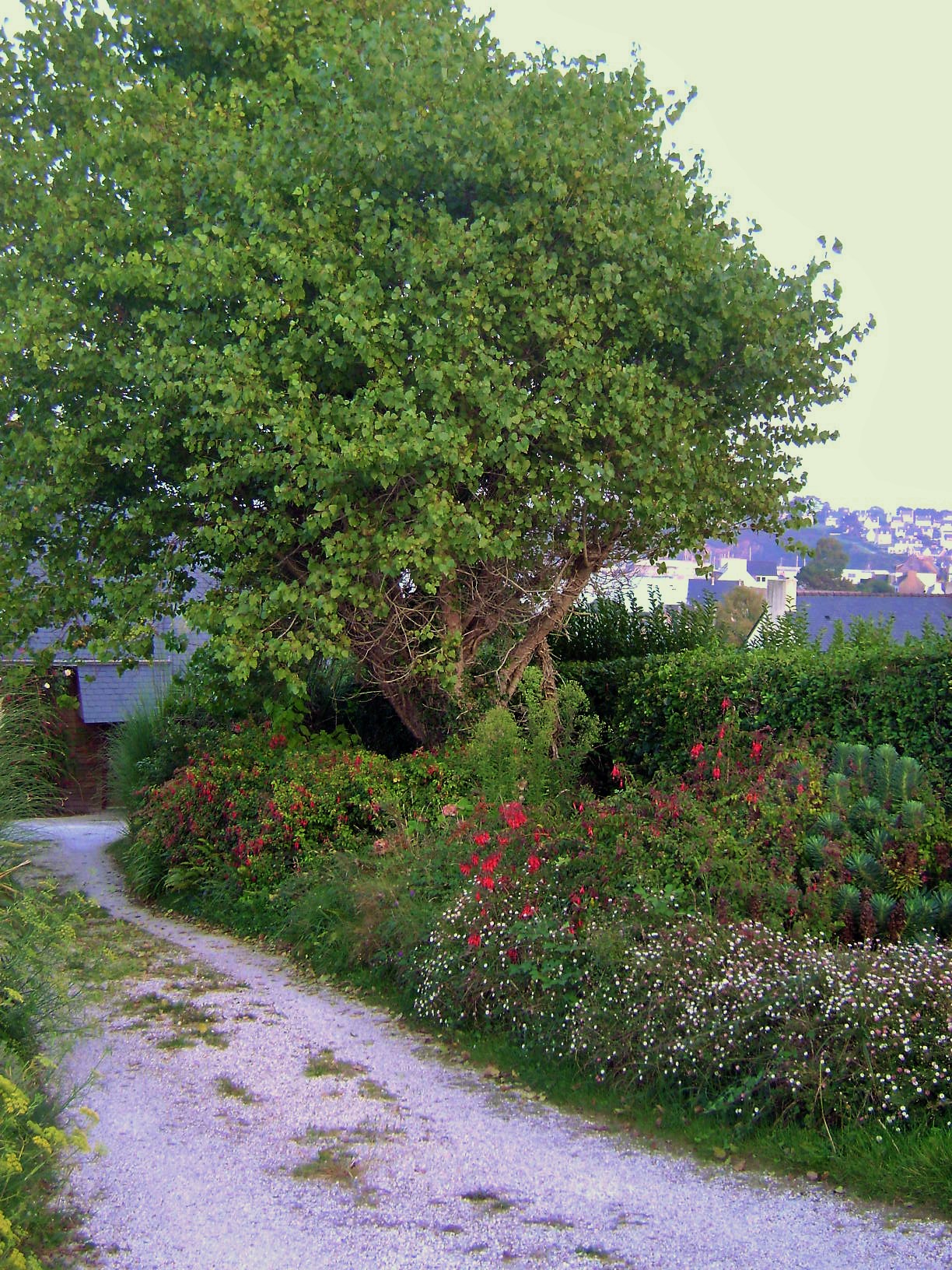
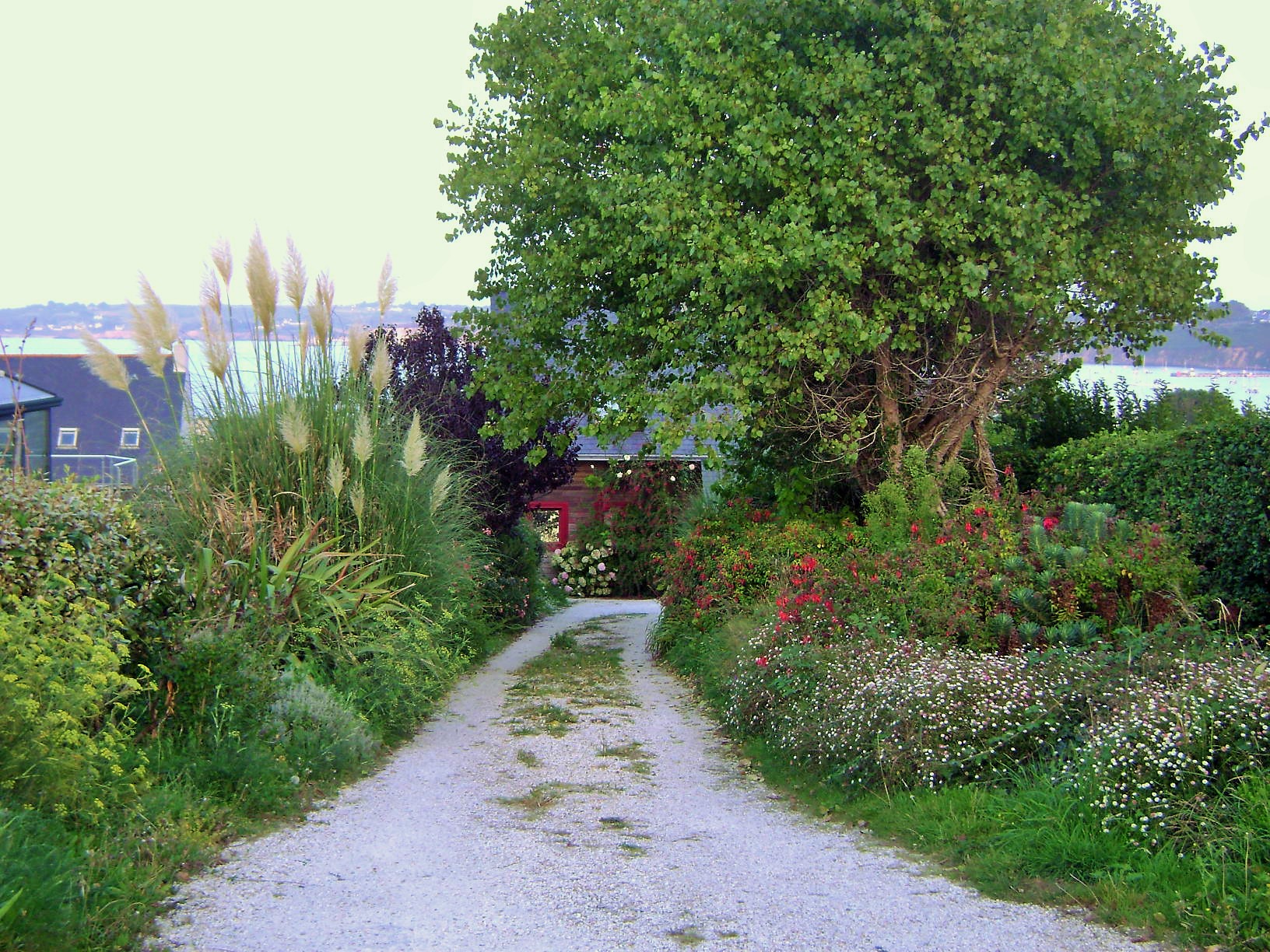
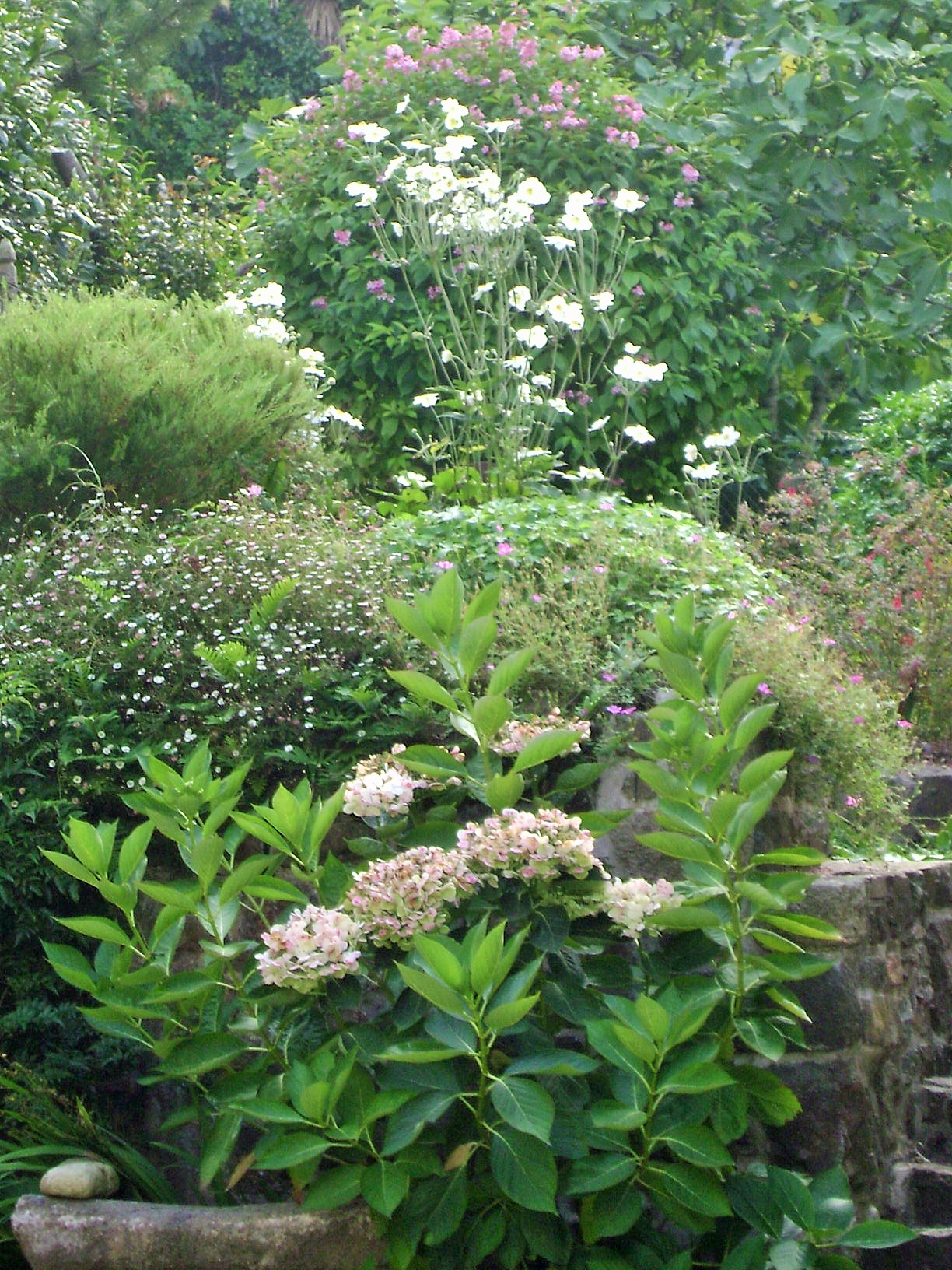
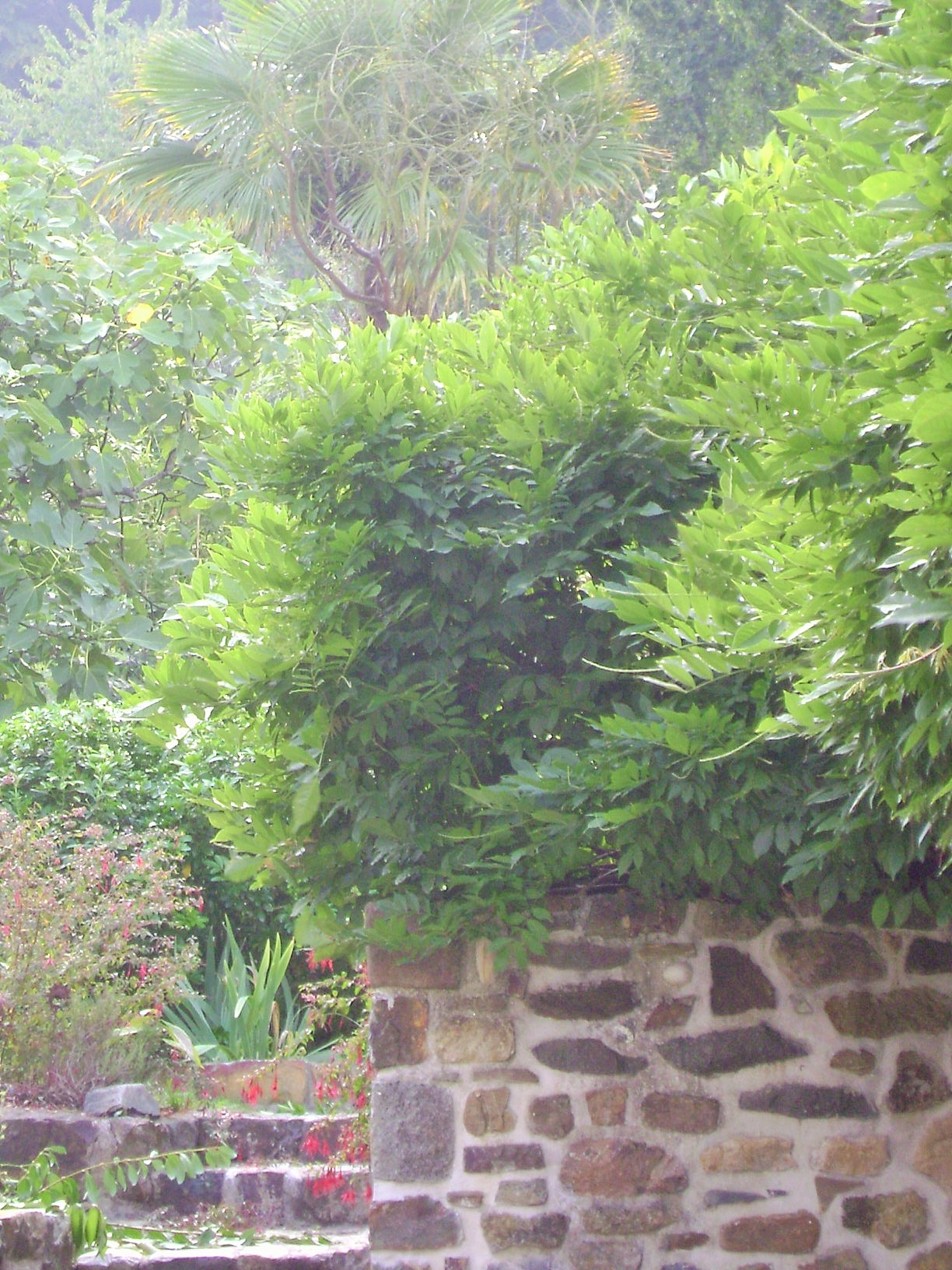
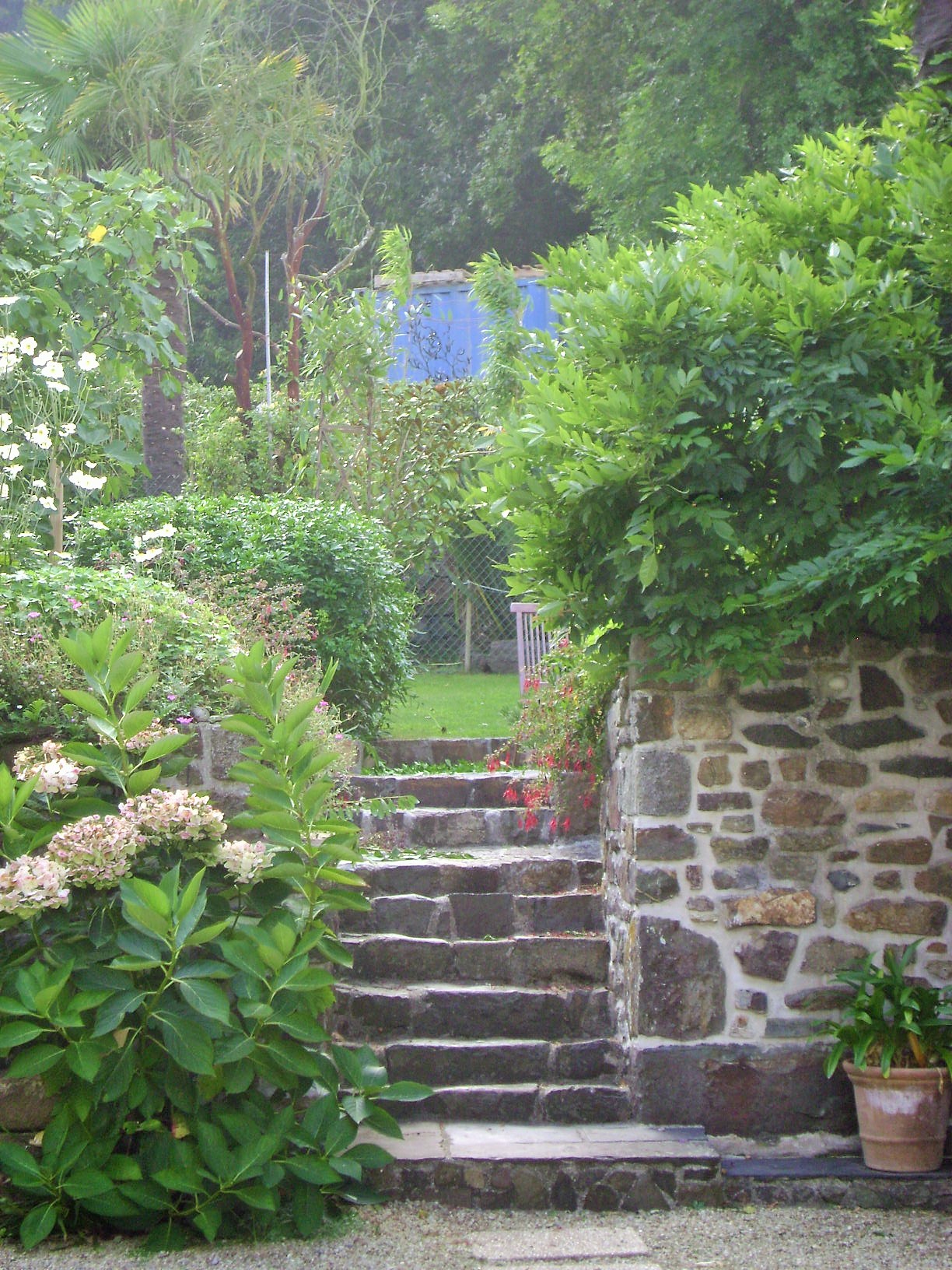
This lovely garden is terraced on a small hill in a picturesque coastal village in norther Brittany, France, with lovely stone retaining walls and steps leading from the house up to the higher levels. It is landscaped with many of the shrubs and perennials that are seen in many other Brittany gardens and are very well suited to the climate: hebe, hydrangeas, roses, wisteria, alyssum, viburnum …
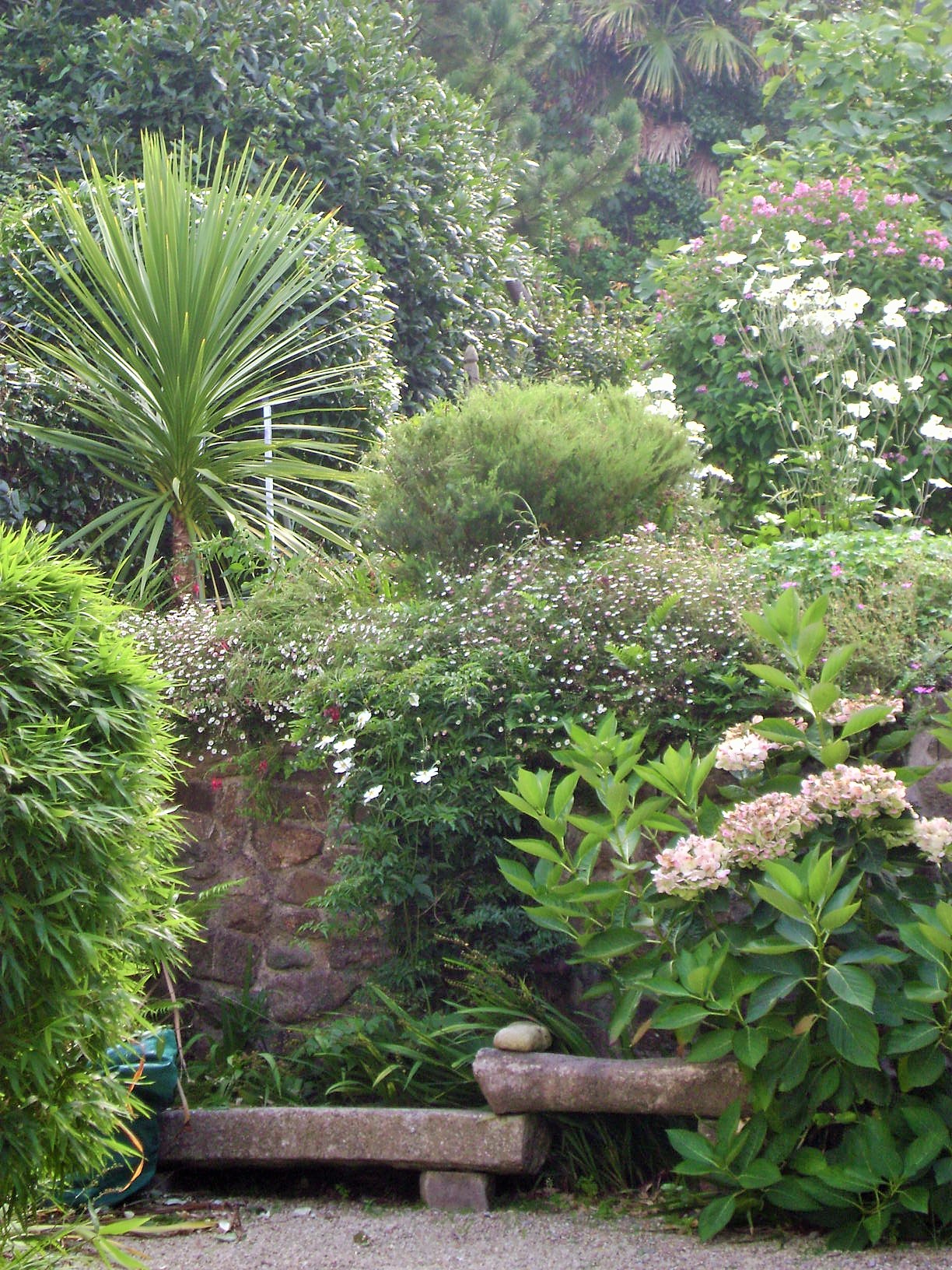


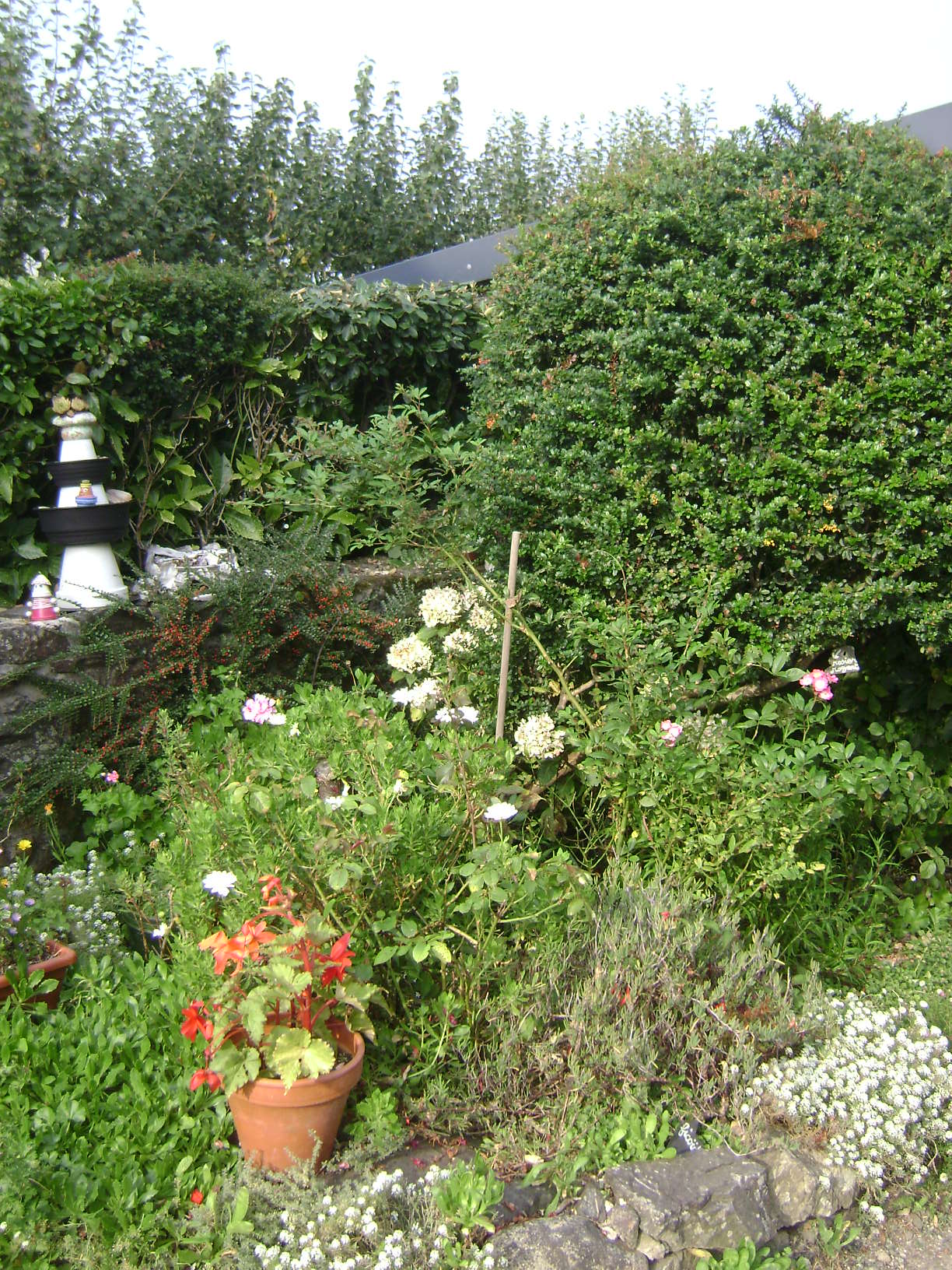
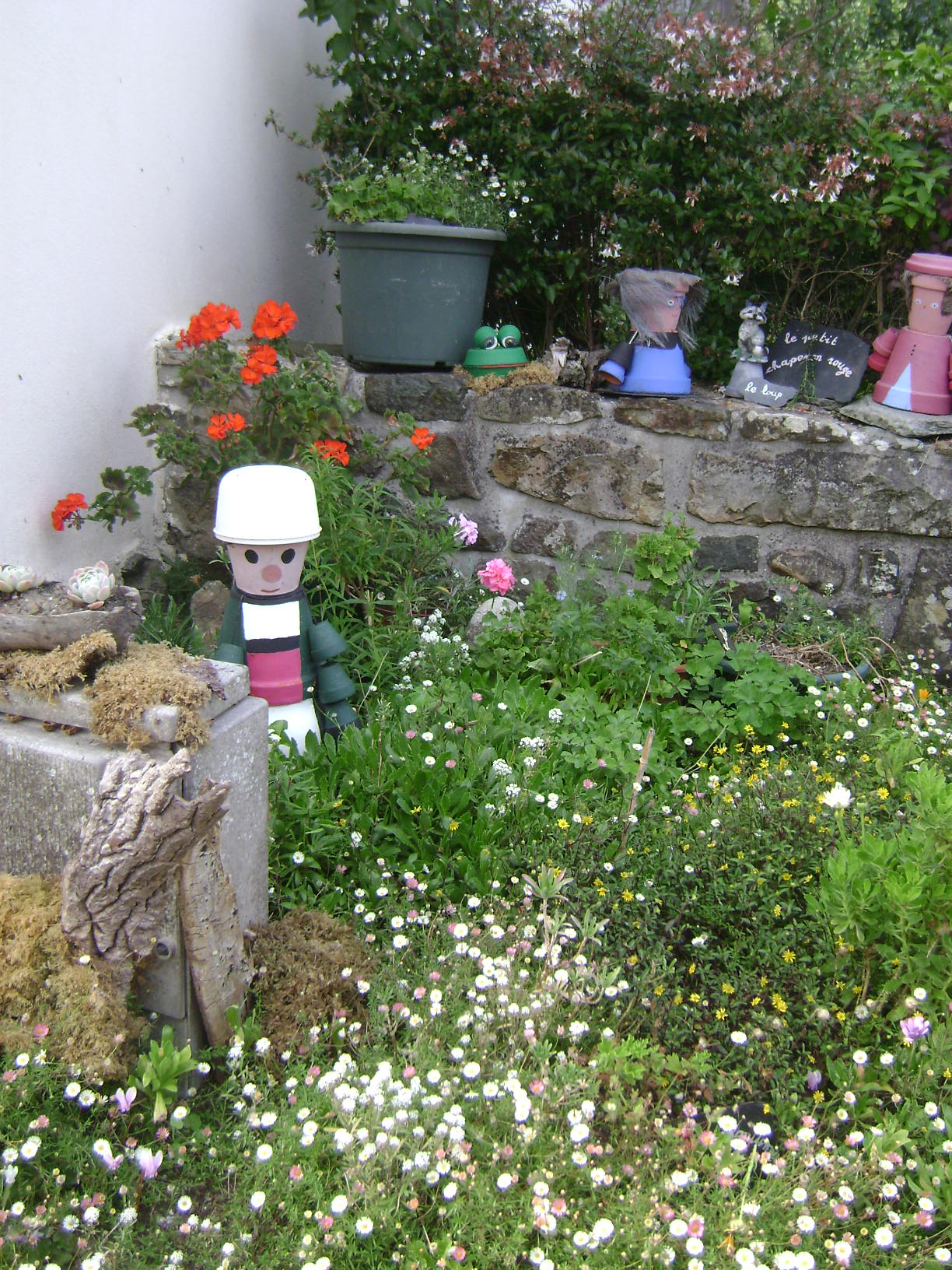
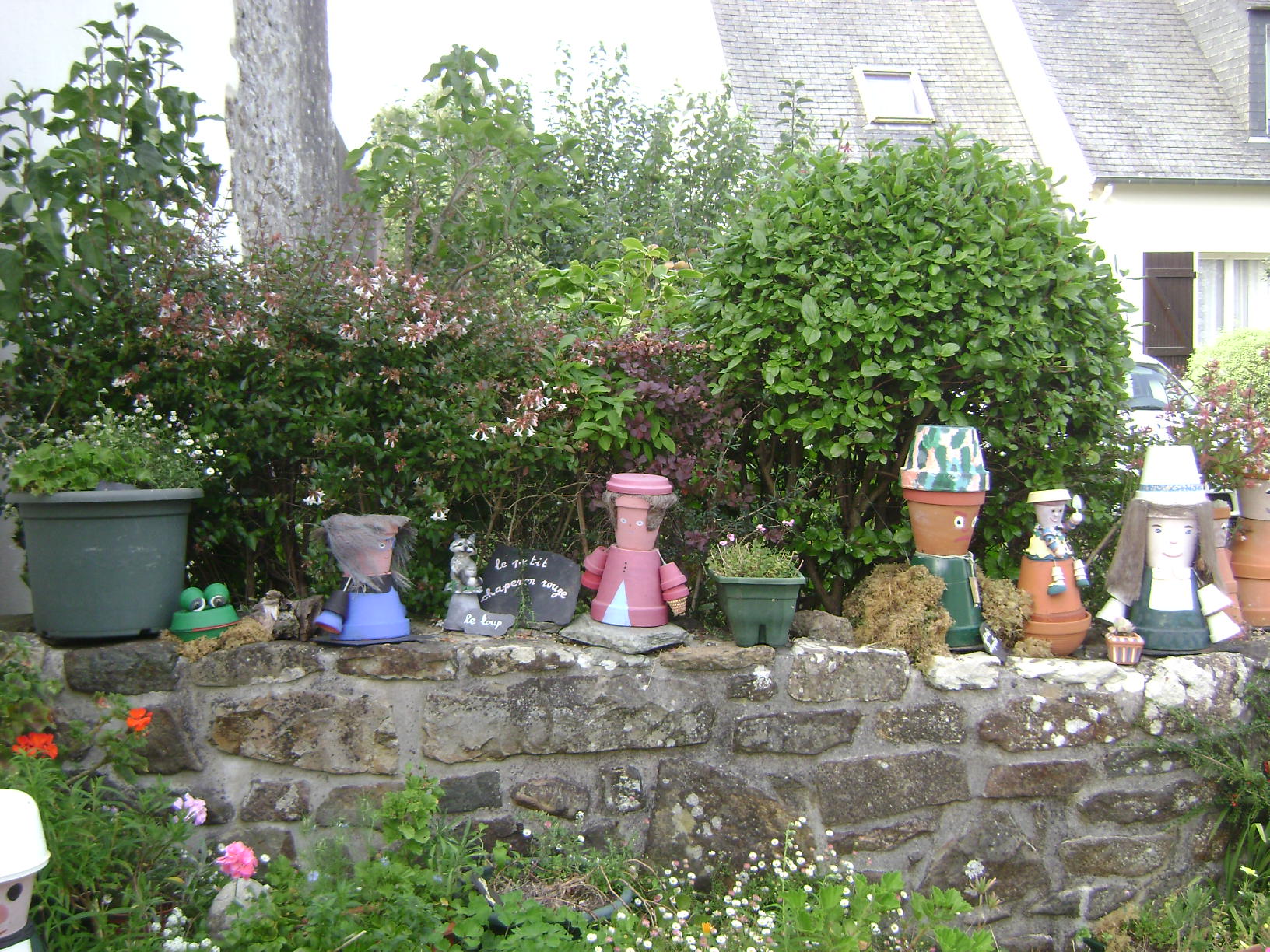
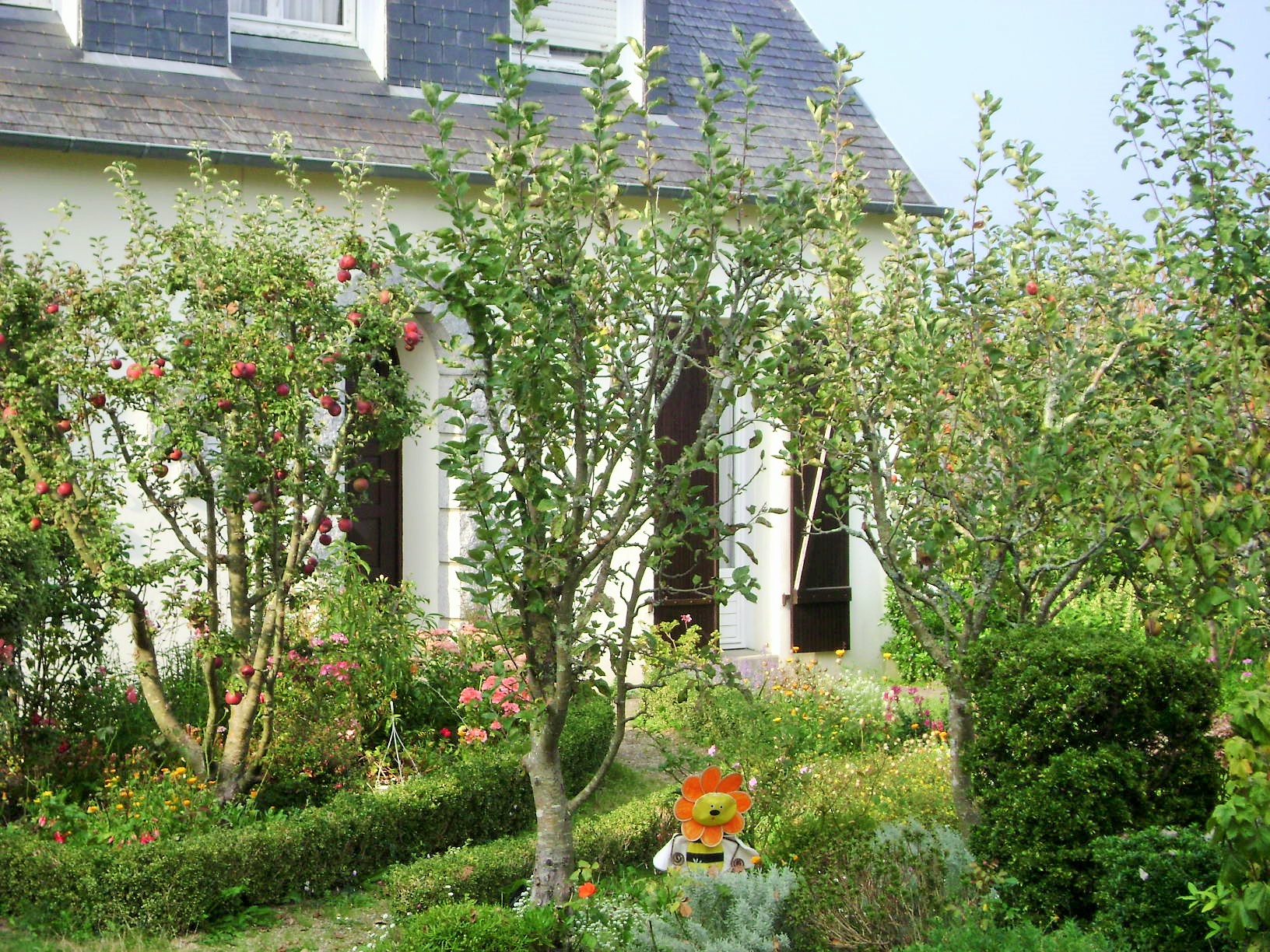
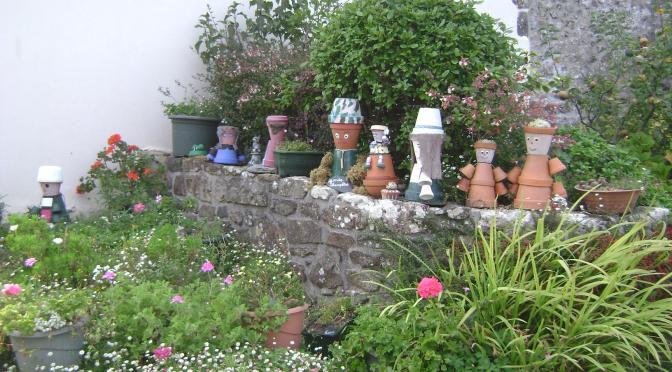
The front display at this garden gate is not for every one, but it certainly stands out. Gardening clay pots are arranged into “sculpture” of story book characters such as Little Red Riding Hood or the French Becassine. The garden itself, while fairly small, has a nice variety of fruit trees underplanted with flowers and perennials, lavender or roses, and in some areas, bordered by small hedges for traditional French style borders.


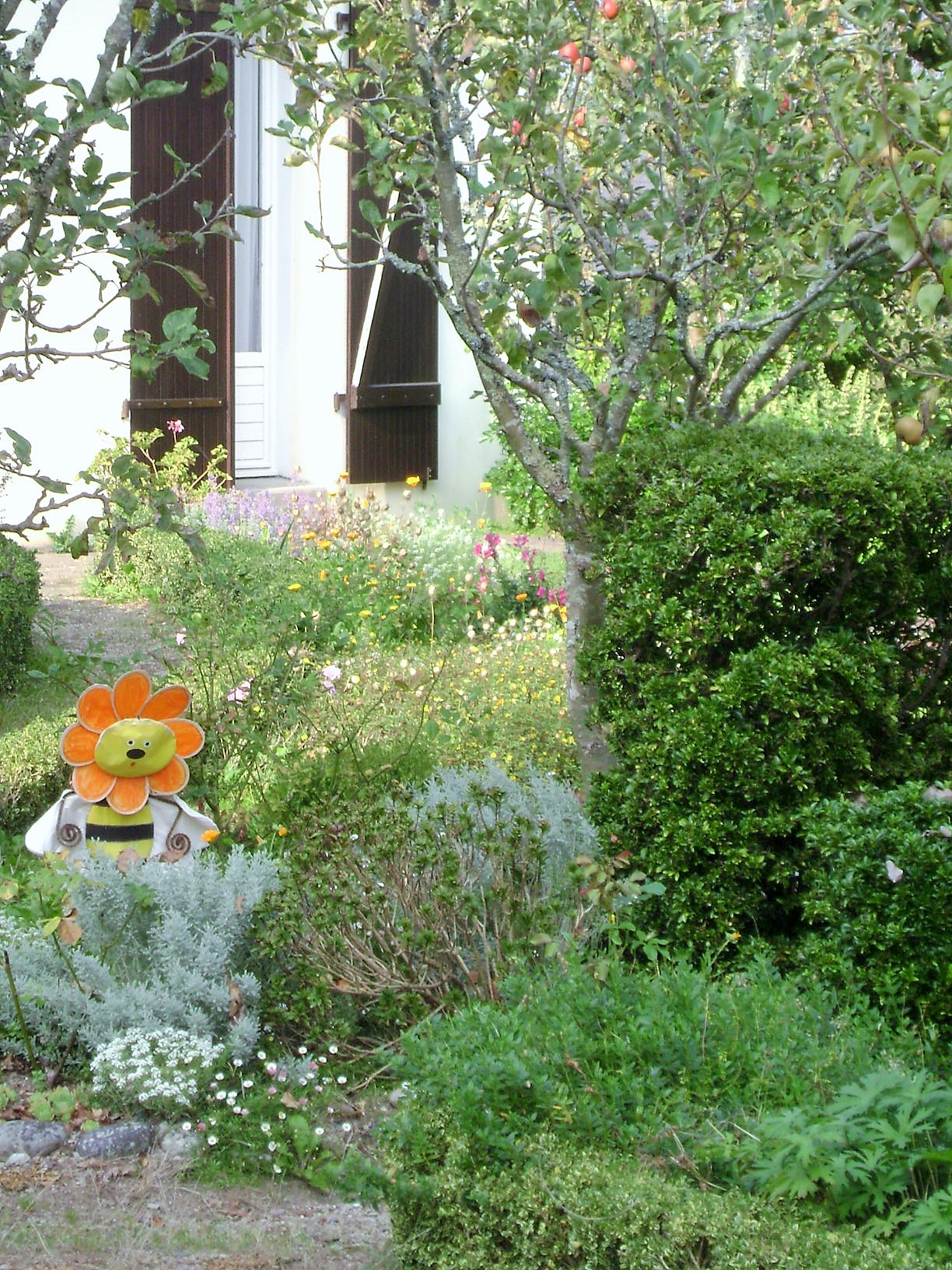
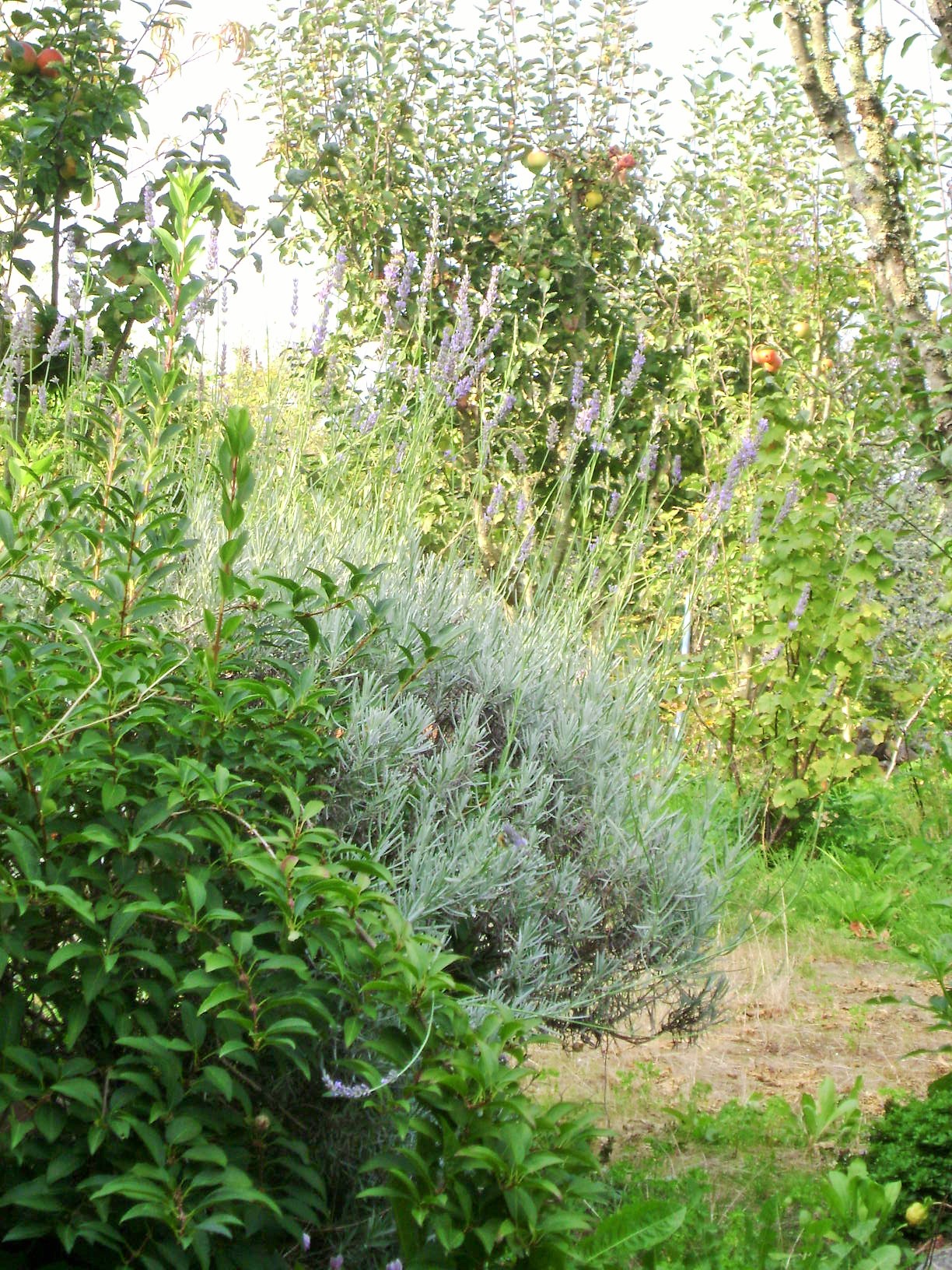

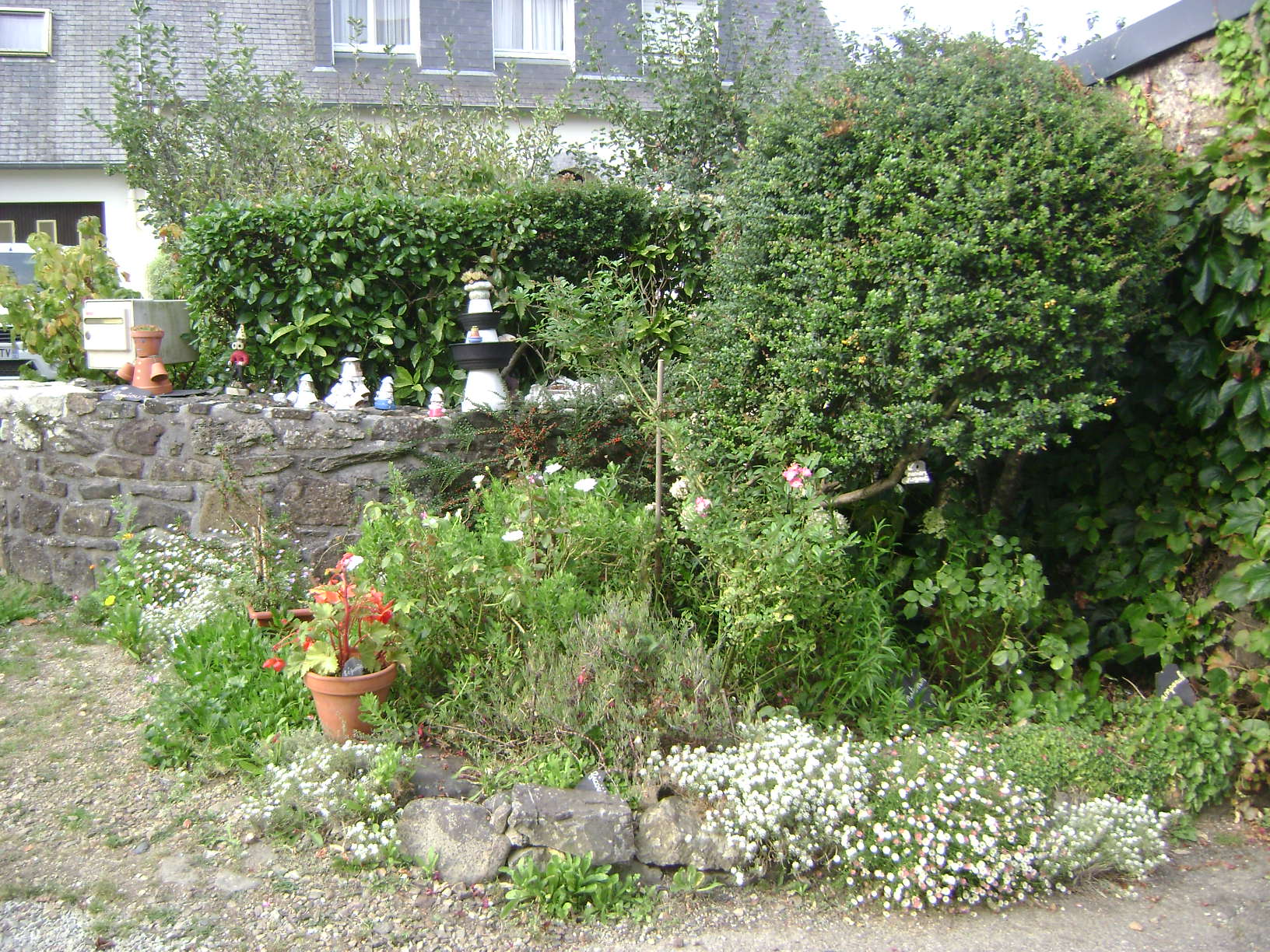



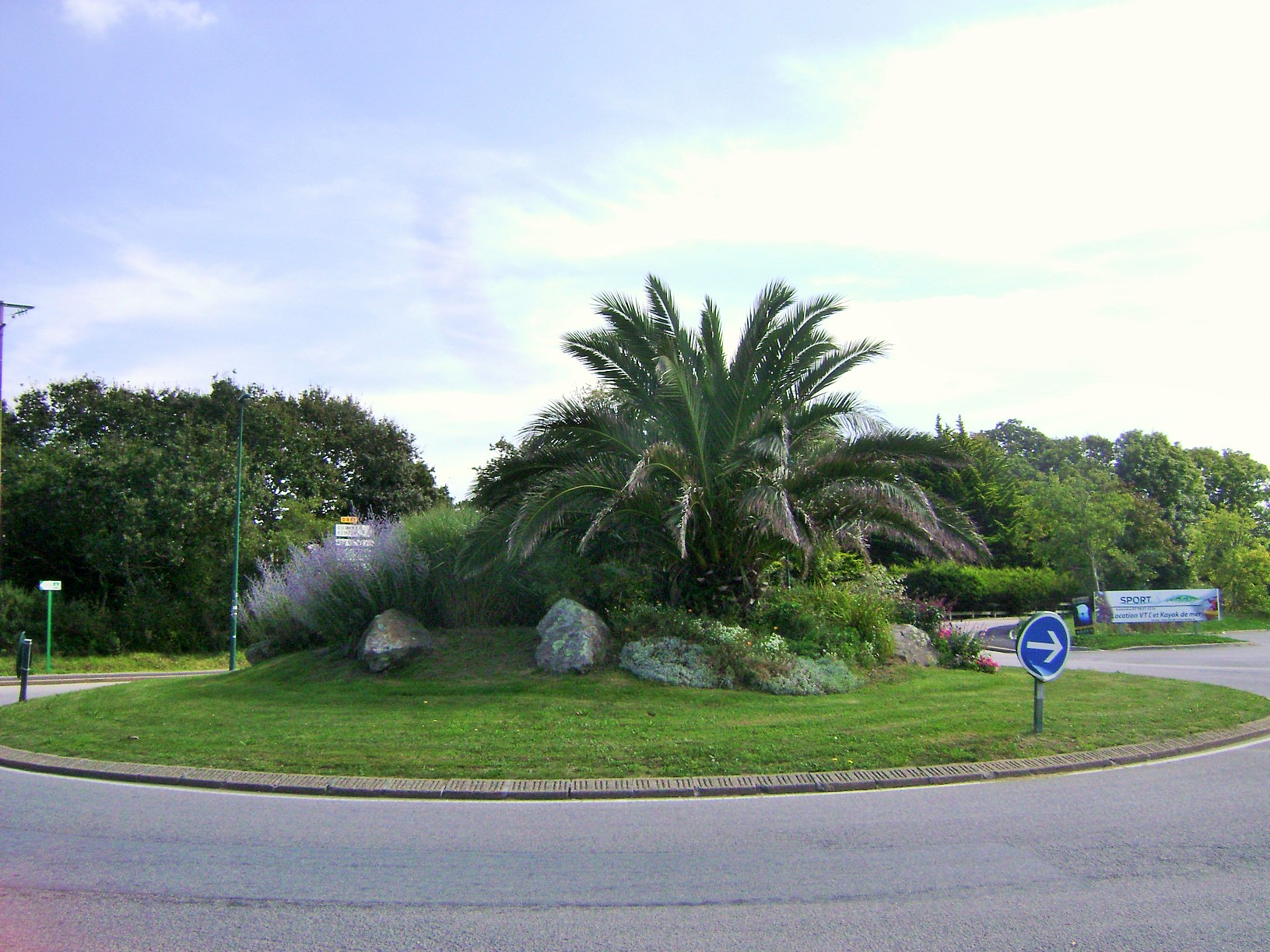
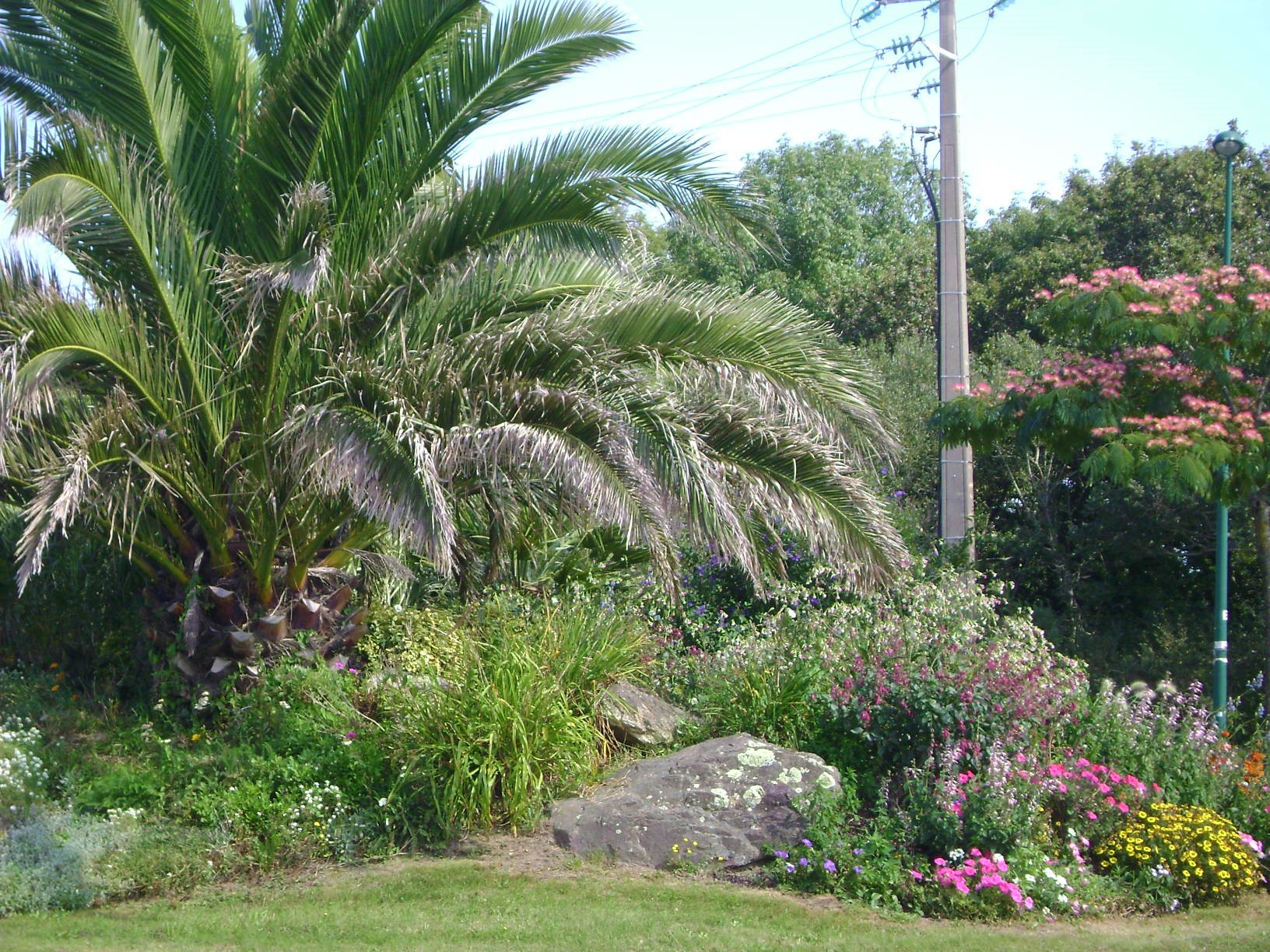
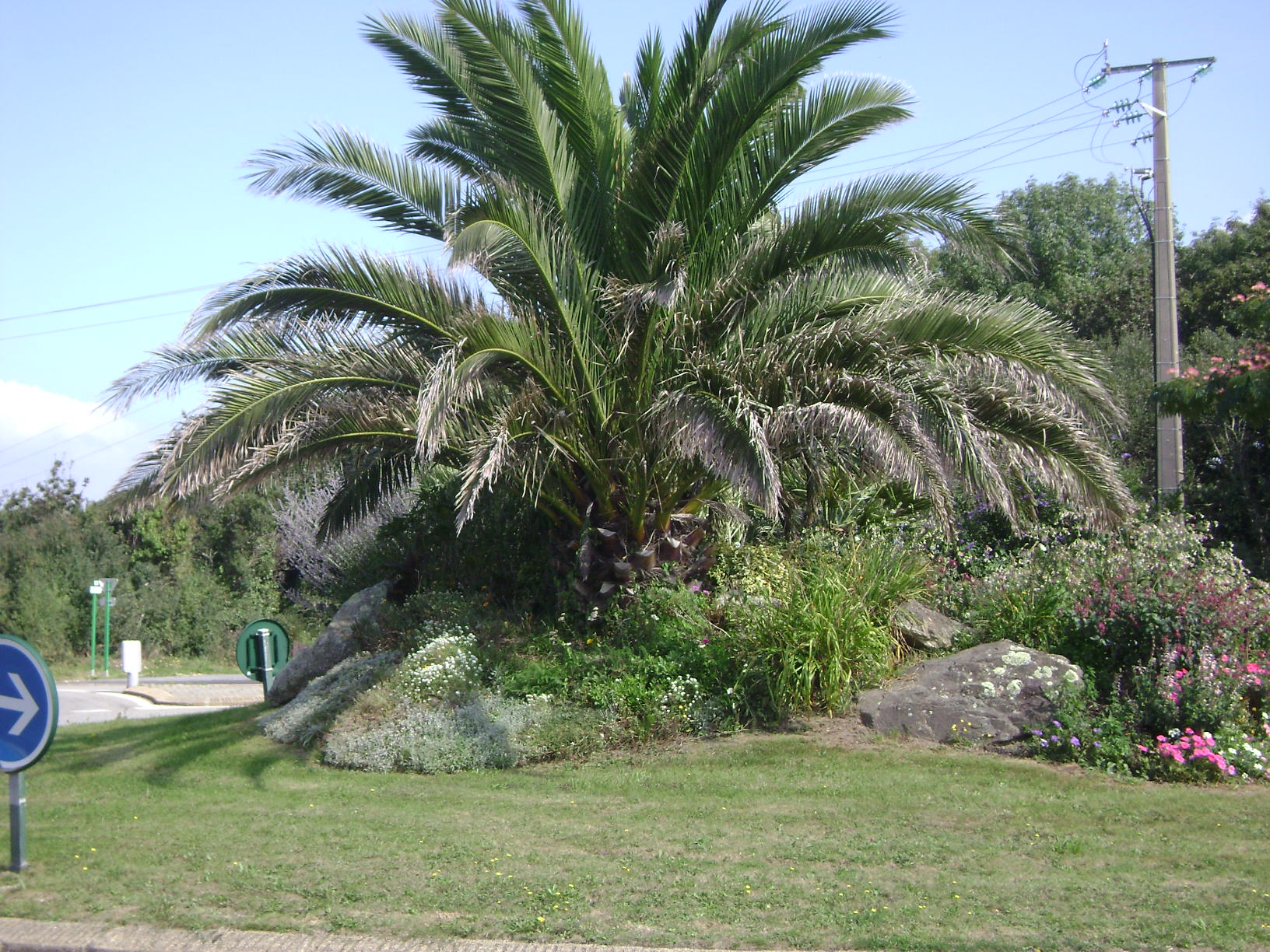
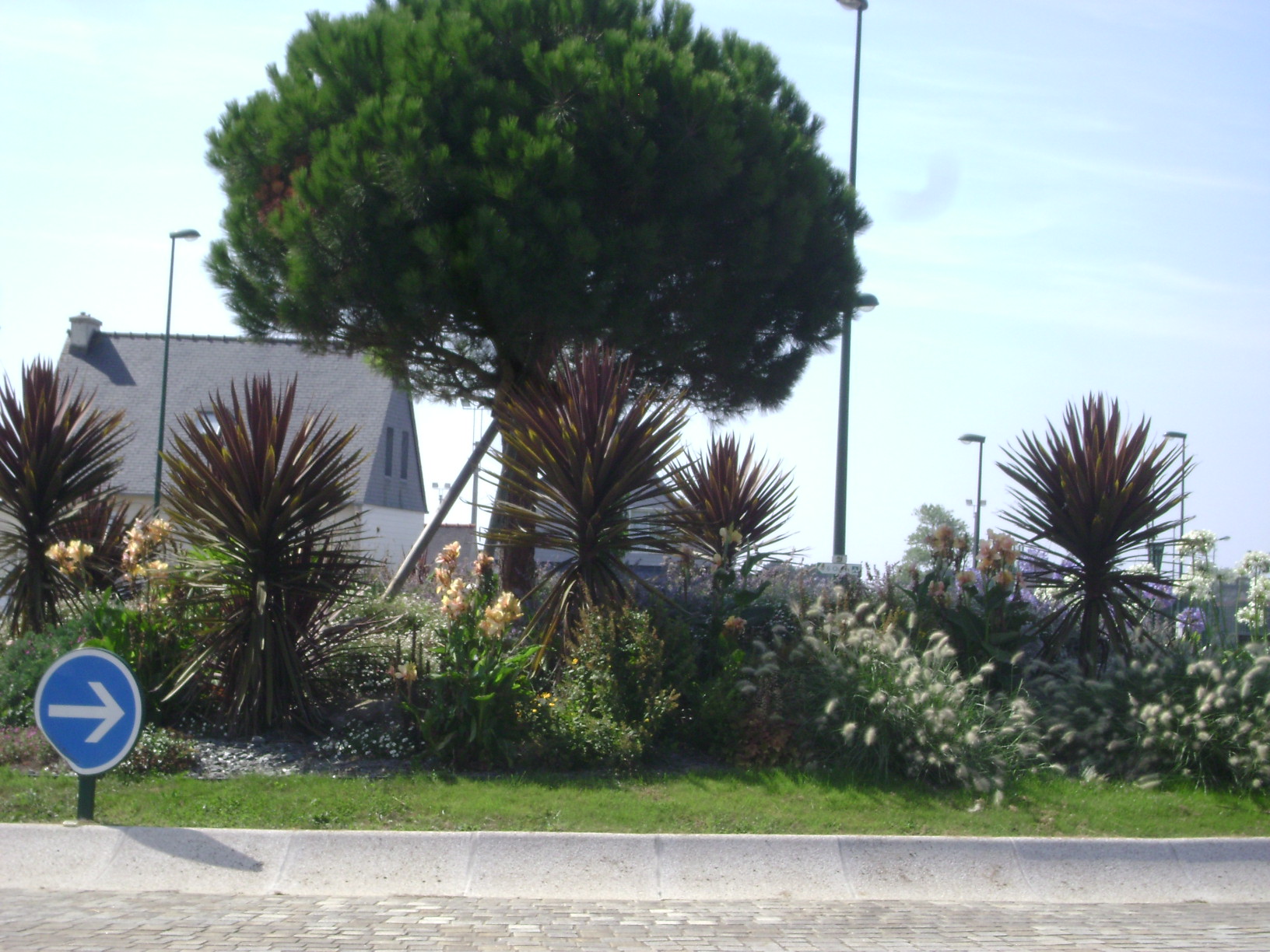
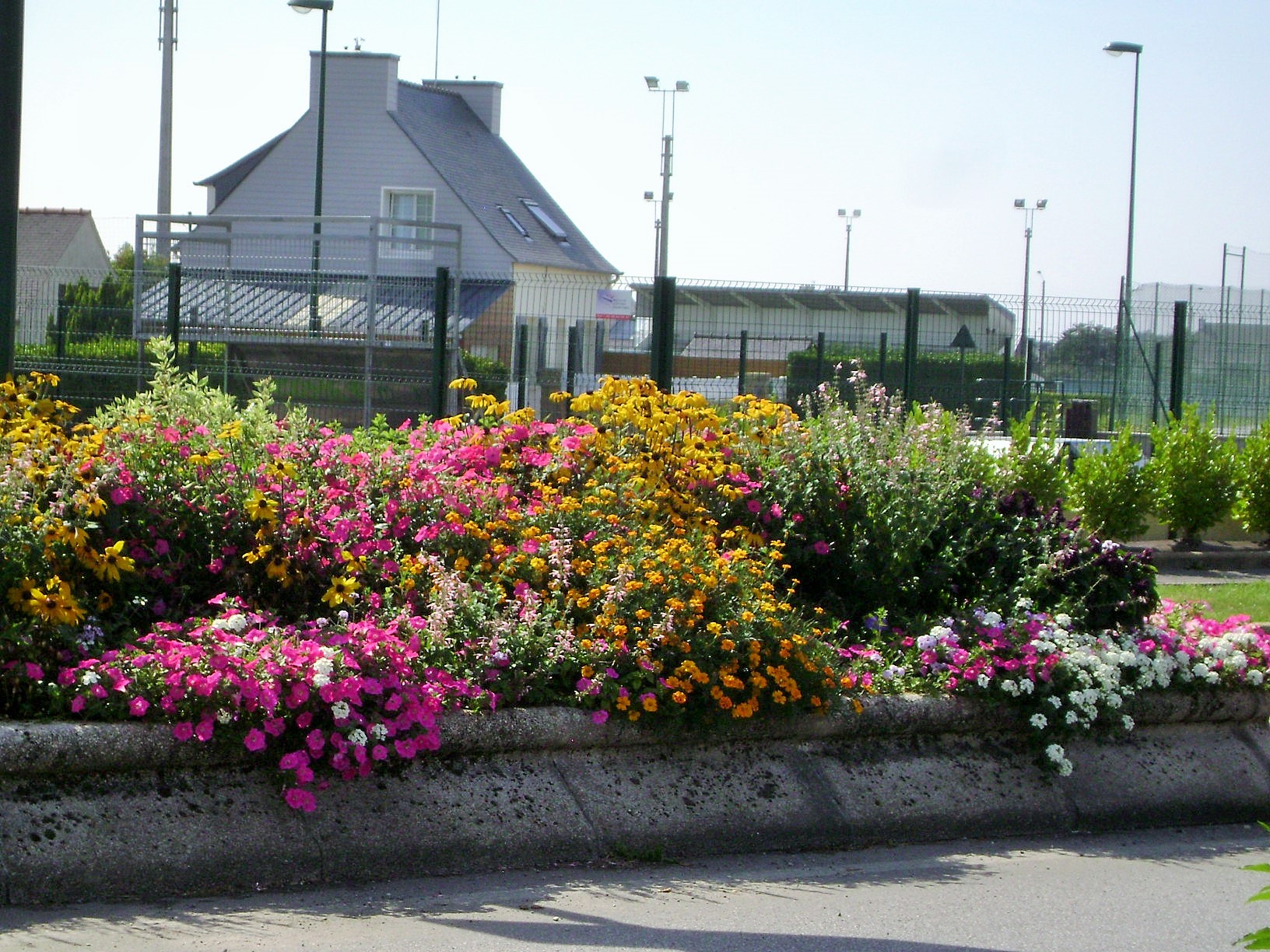
French towns and villages often try to outdo one another with their floral displays and borders throughout. One area where they particularly excel is the roundabouts.
Roundabouts are the French version of the intersection, and particularly where the road enter the town, will plant a lavish mini garden in the middle of the roundabout. I wrote about one already that was done as a Japanese rock garden. At each end of the small town of Crozon is a roundabout: the first one is more tropical, the second is paired with a mixed border along the median for a lavish floral display.
Tropical Roundabout:


Floral Roundabout and Border:




If you have ever travelled through a village France and noticed a group of people having a heated discussion looking at balls on a dirt patch, you have seen petanque. It is a very simple game where each player has three metal balls and tries to throw them as closely as possible to the small wooden one called the “cochonnet”. It is usually played in teams, and while the rules are simple, the unevenness of the terrain must be taken into account, and there is skill involved in trying to hit the opponents ball to get it out of the way for example.
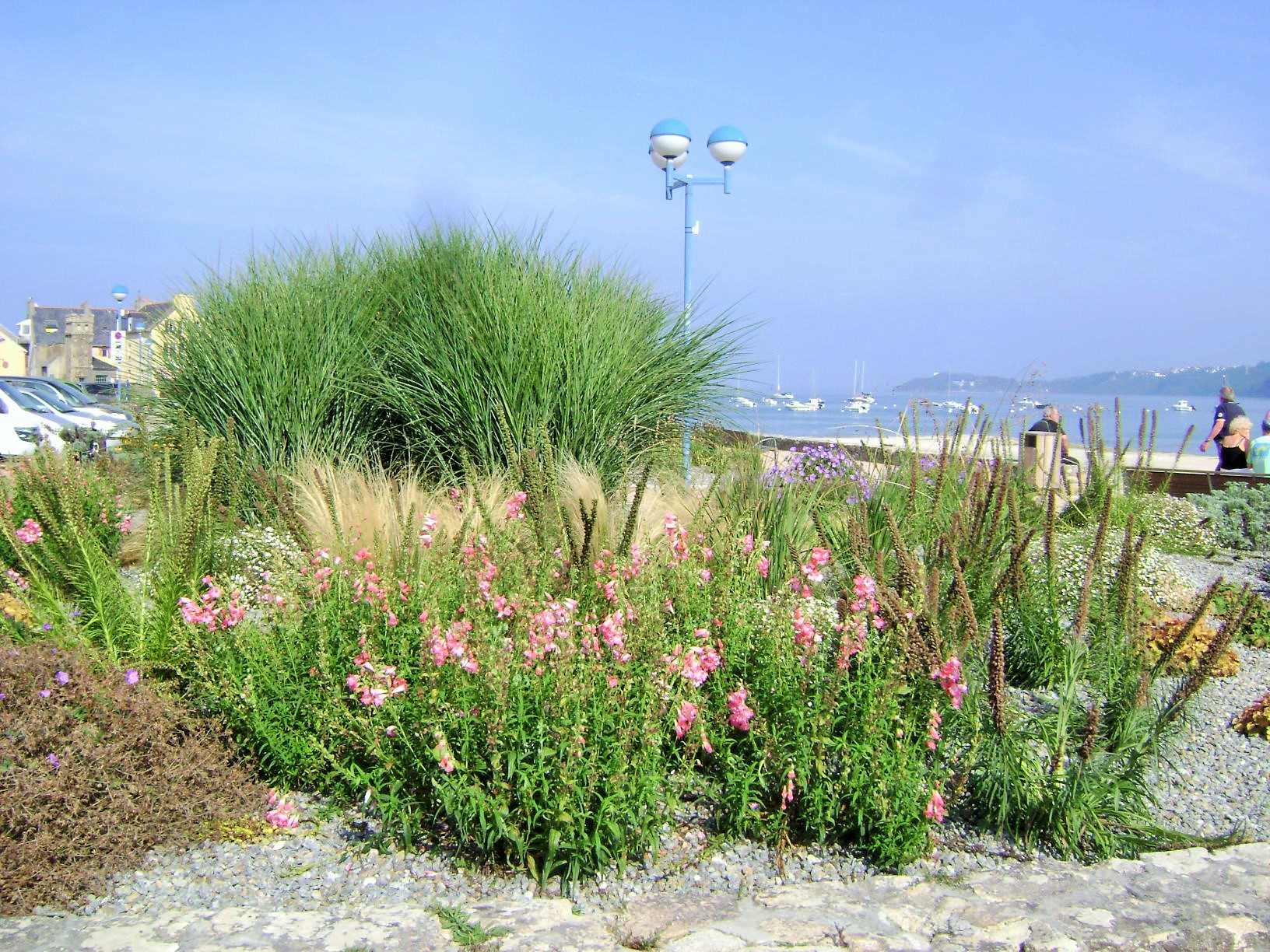
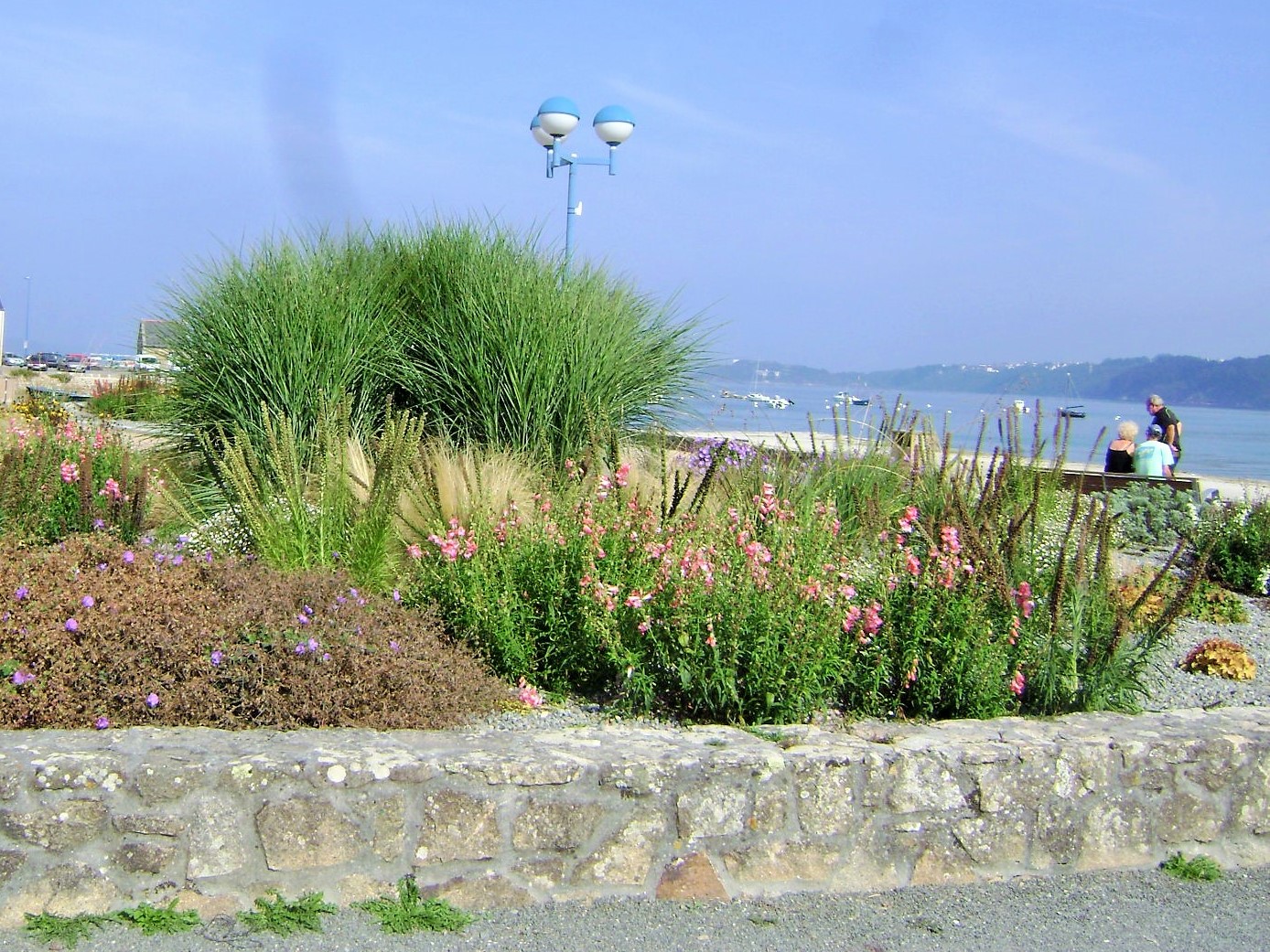
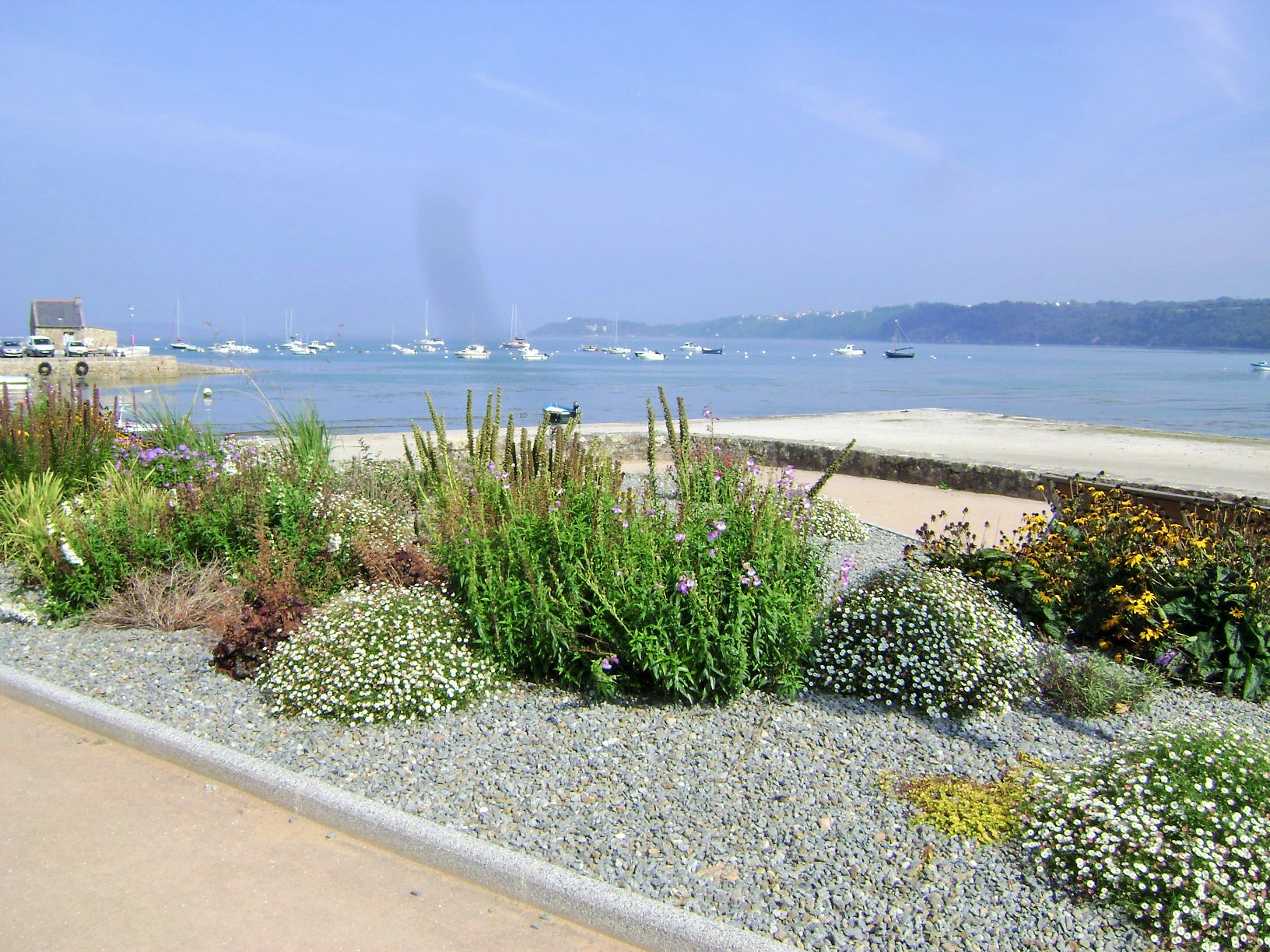
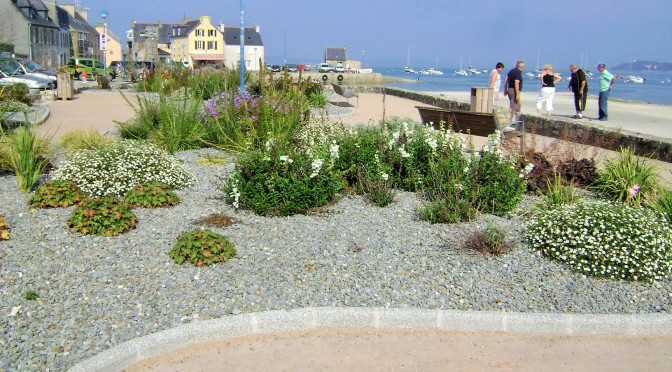
This small petanque terrain in Brittany couldn’t want for a more idyllic location, right on the water and surrounded with a small park!








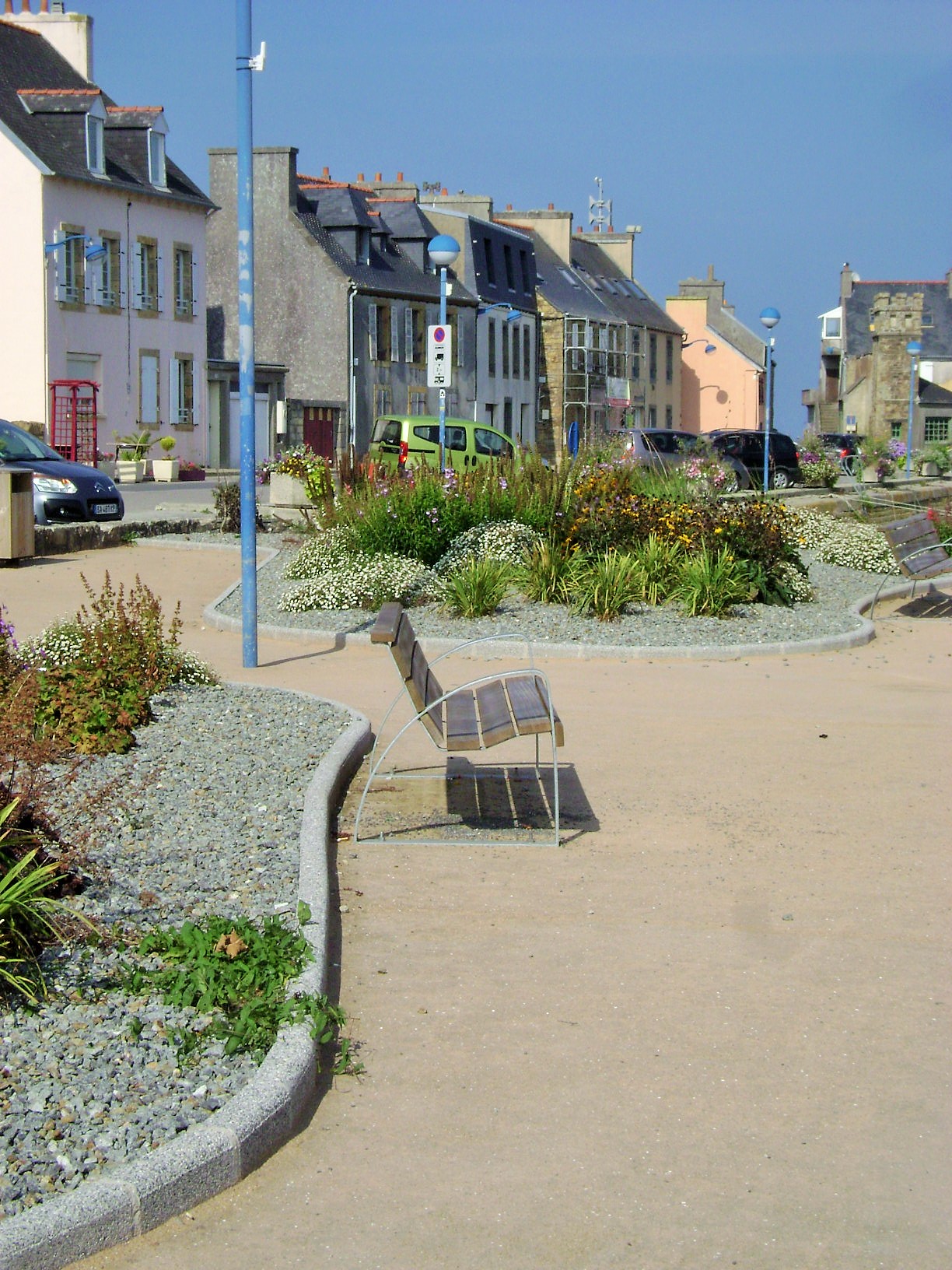
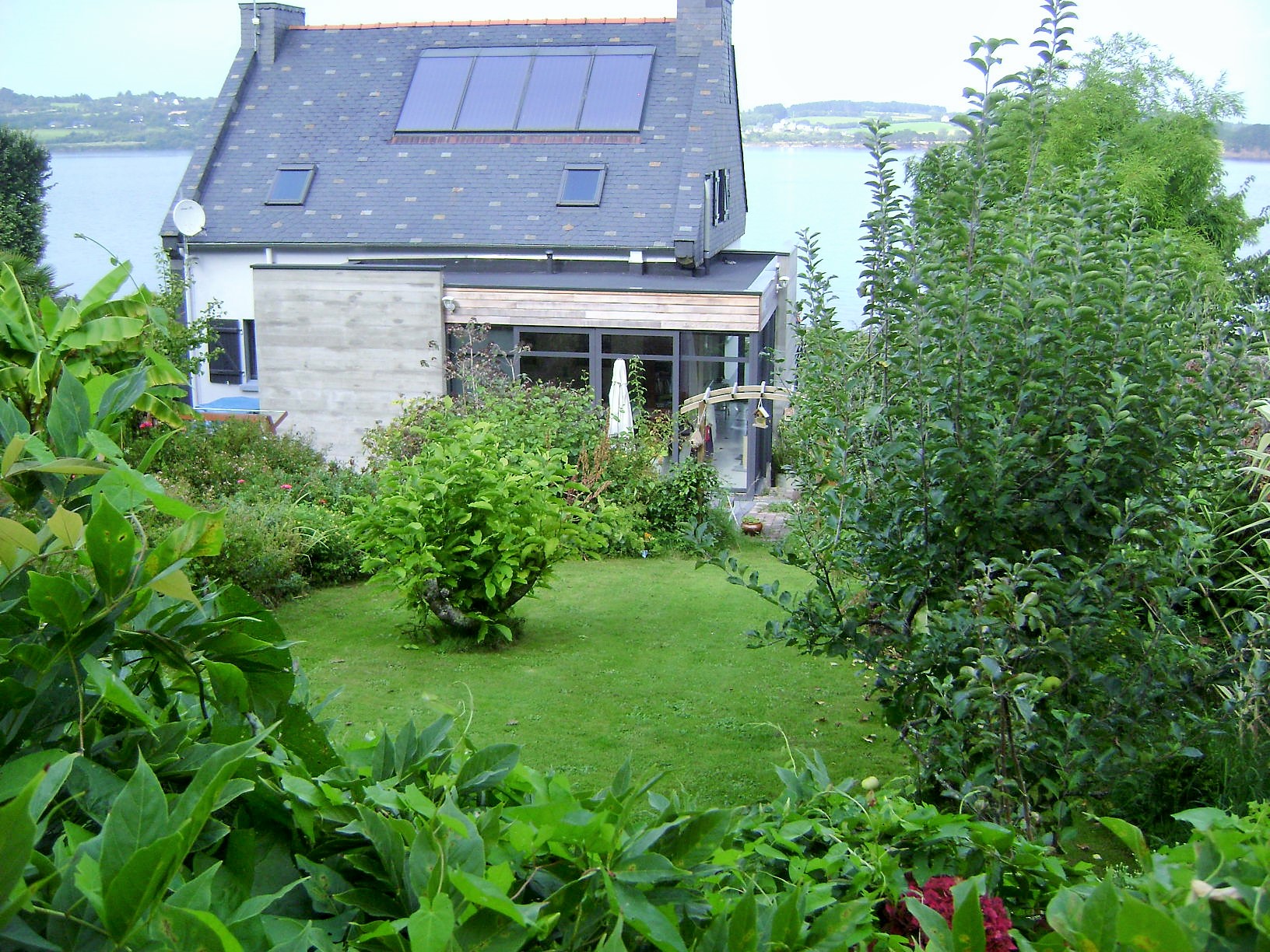
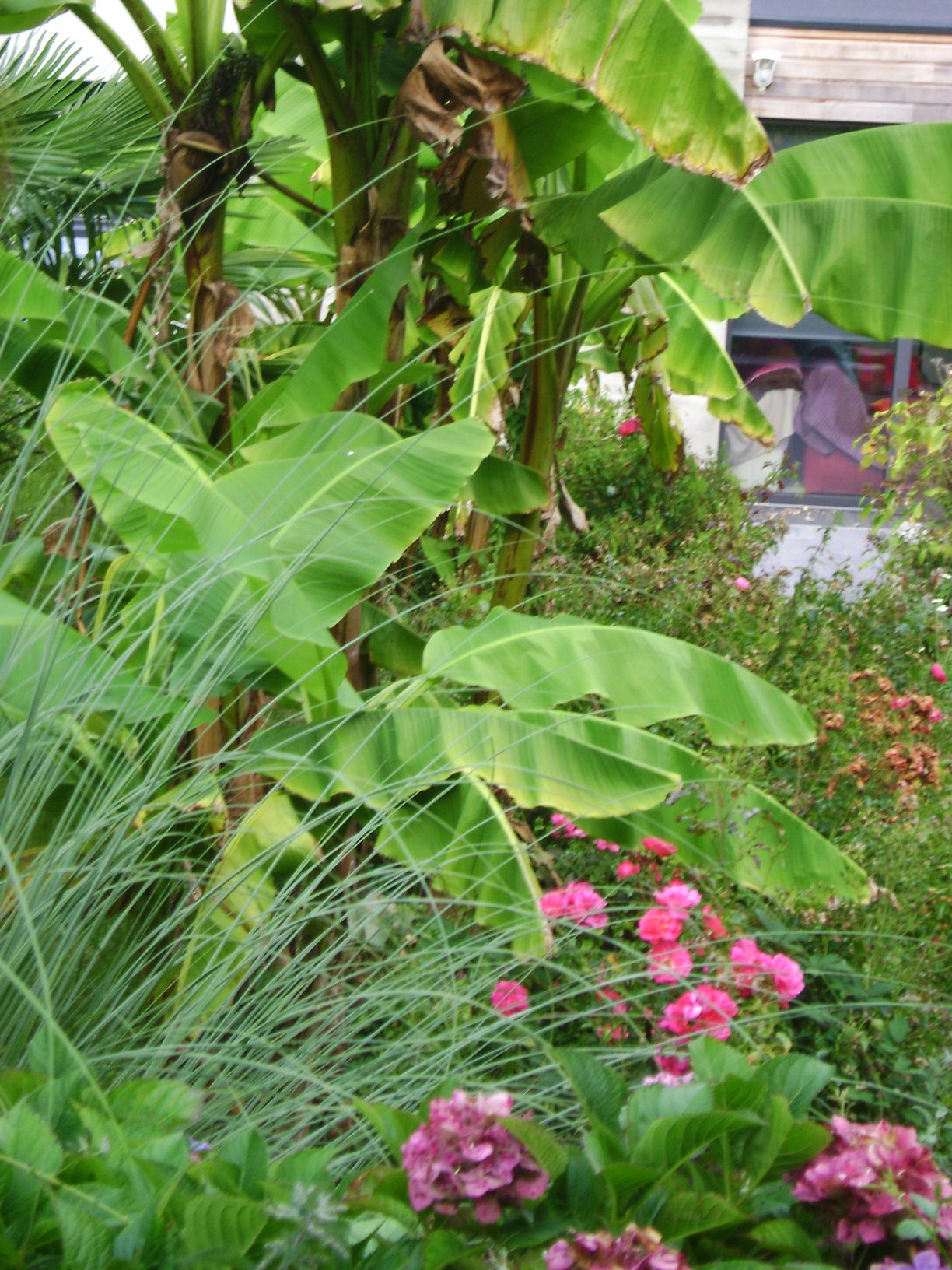
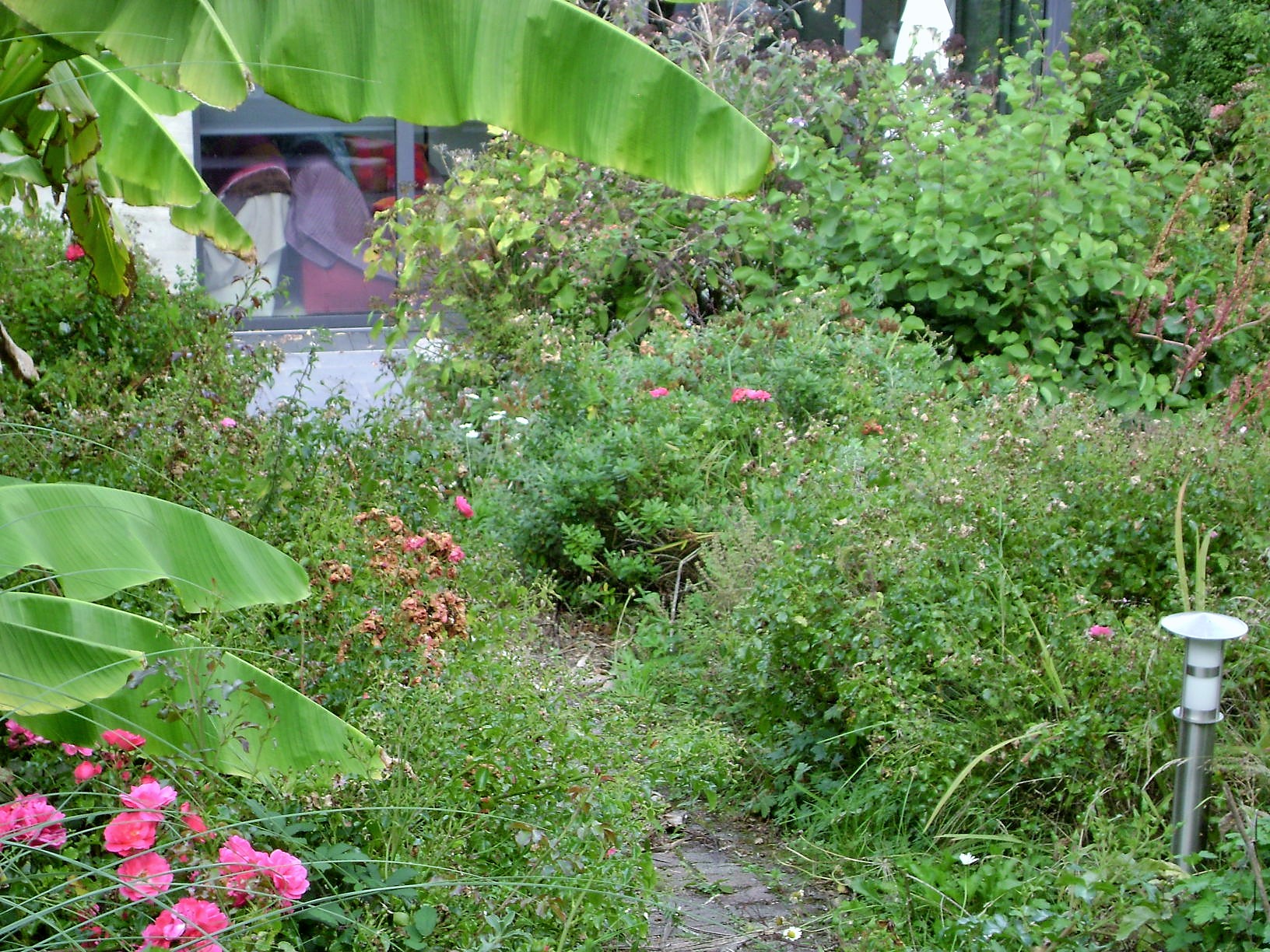
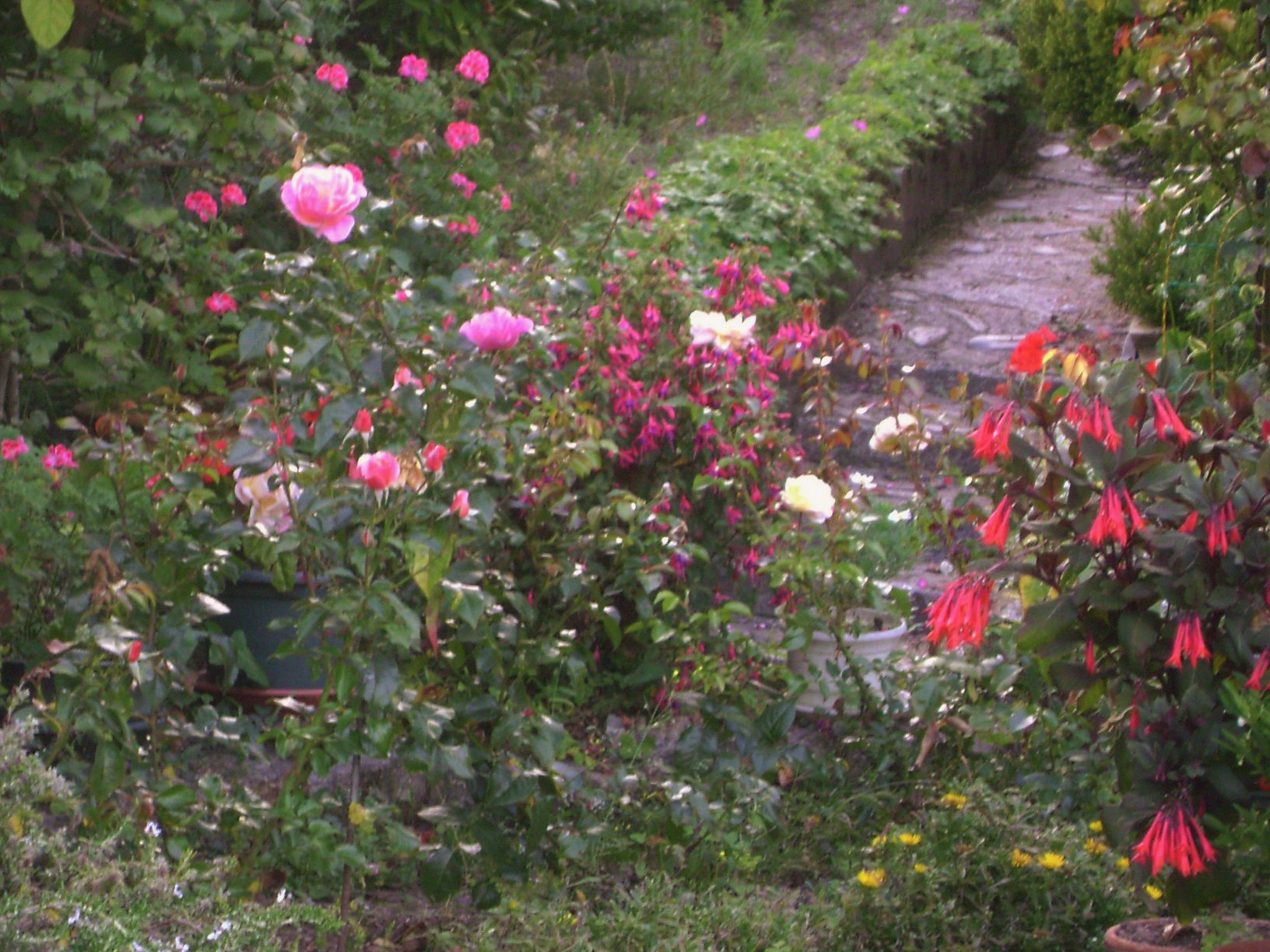
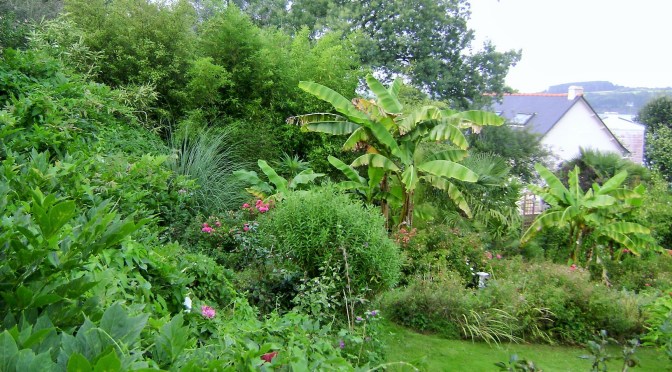
This garden lies behind the house on a hill up from the waterfront. It has the feel of a tropical retreat with lush banana trees and bamboos offering a lush backdrop for the many perennials such as hydrangeas or roses found in so many Britttany gardens.
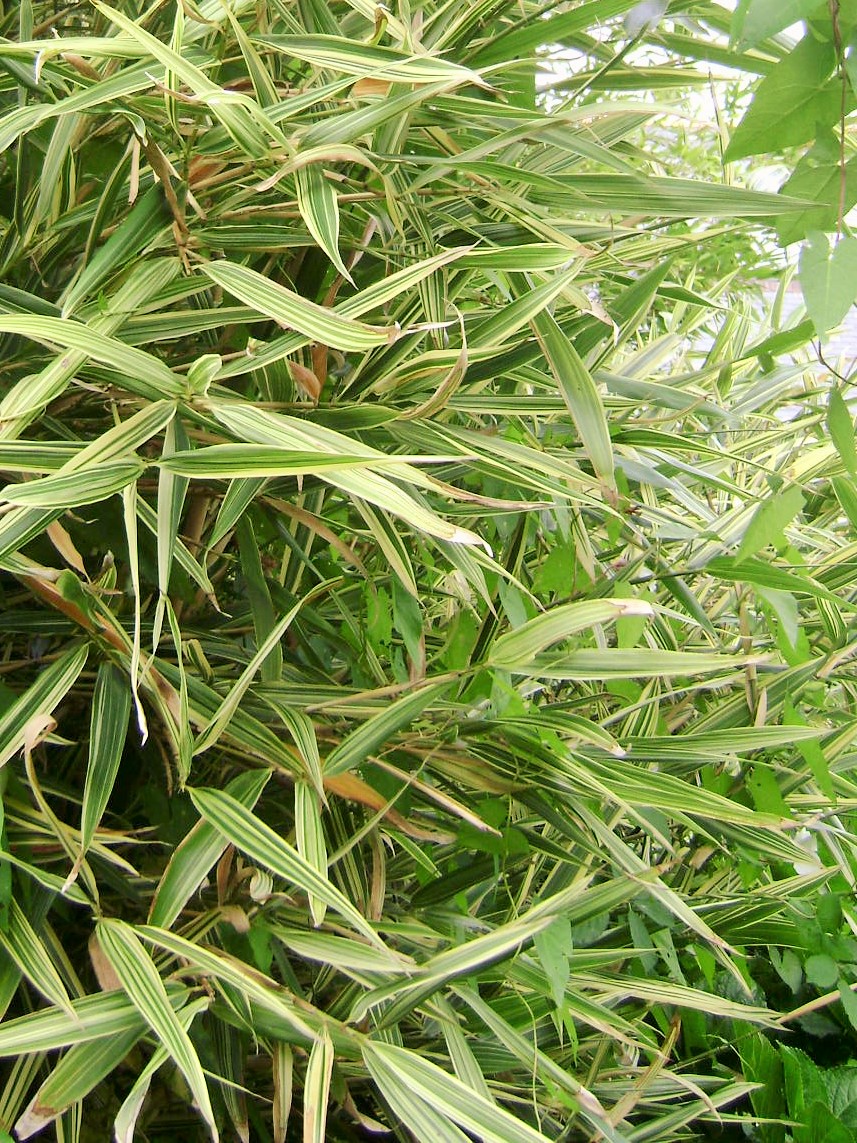

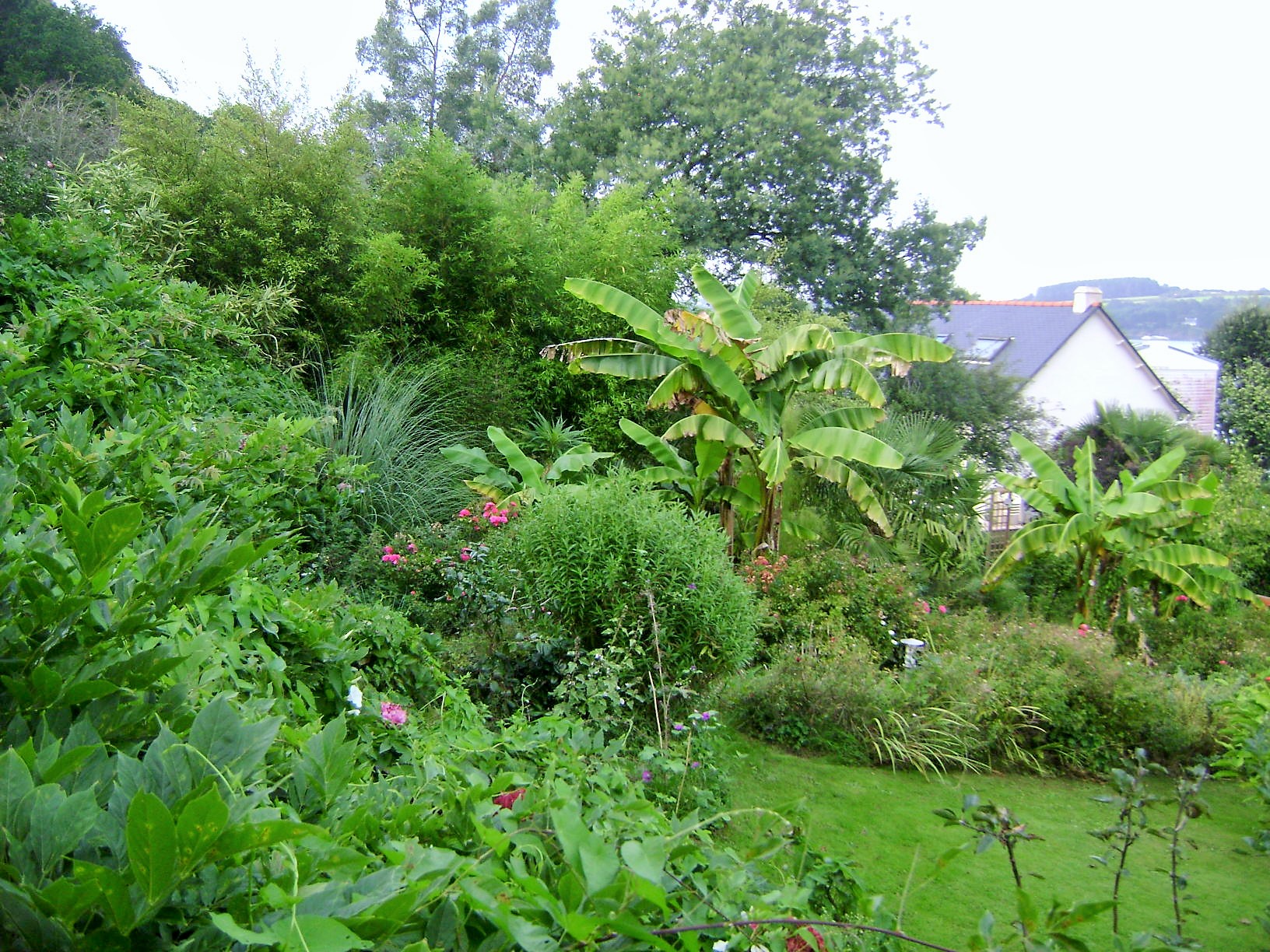
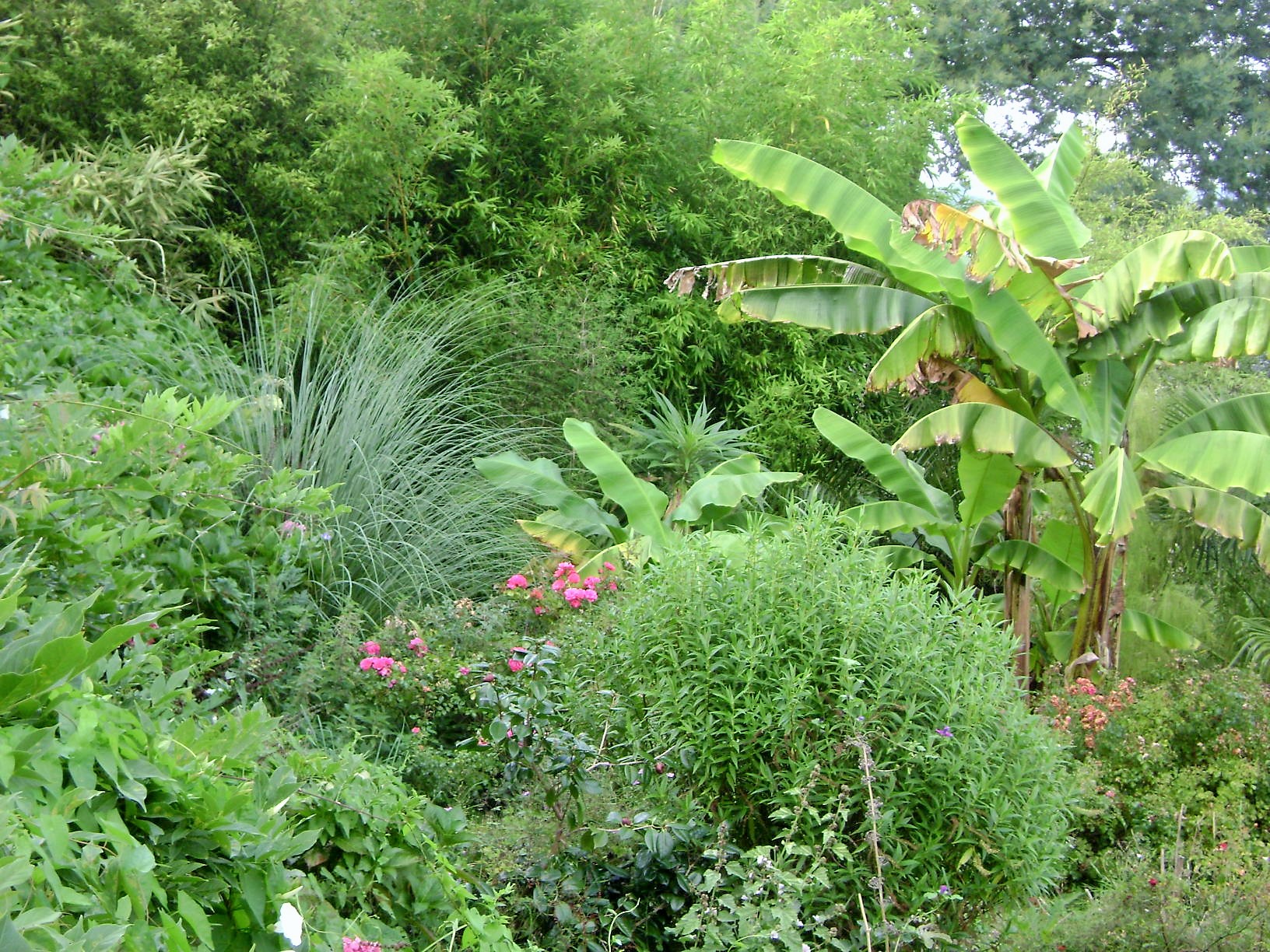
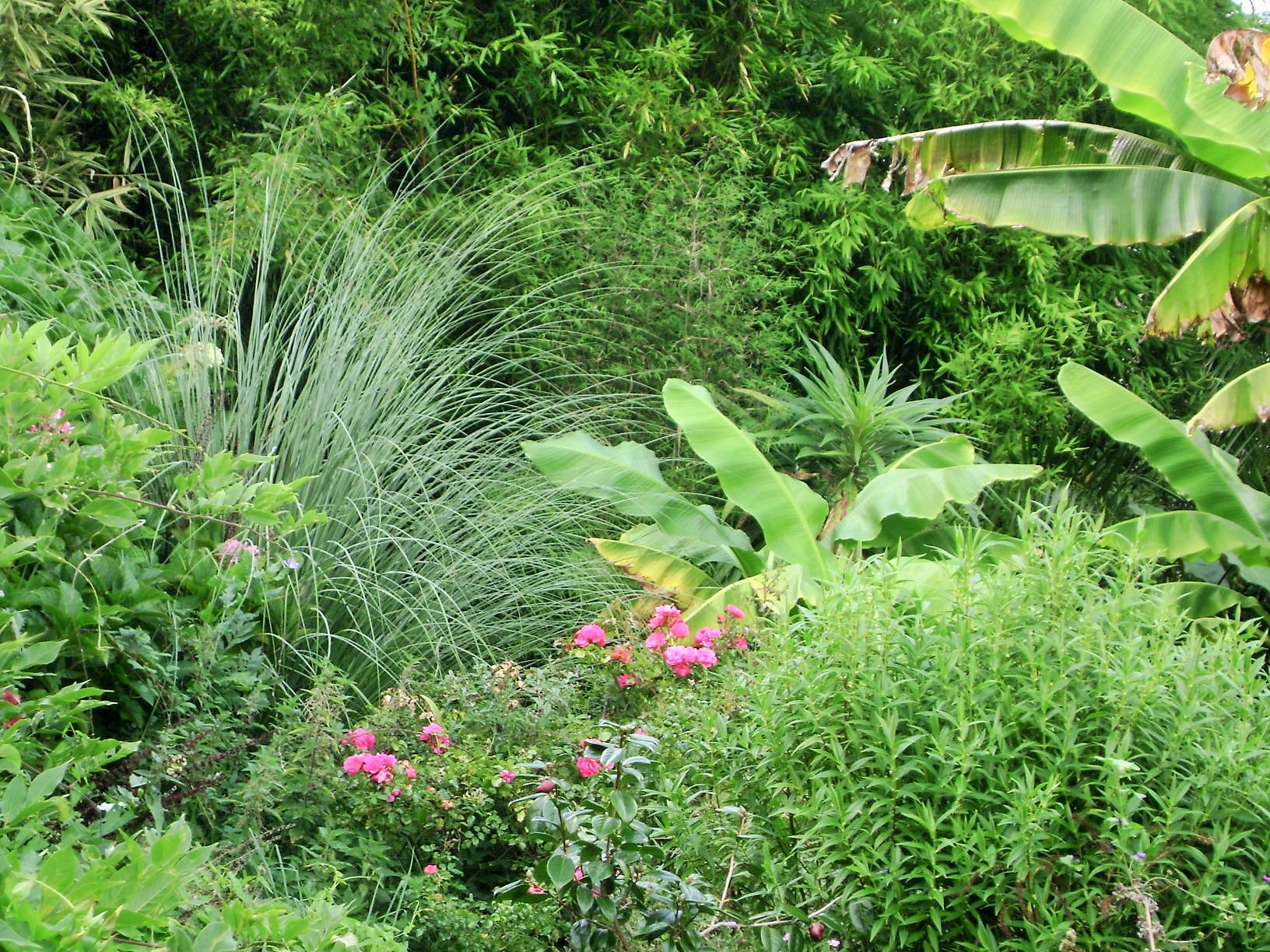


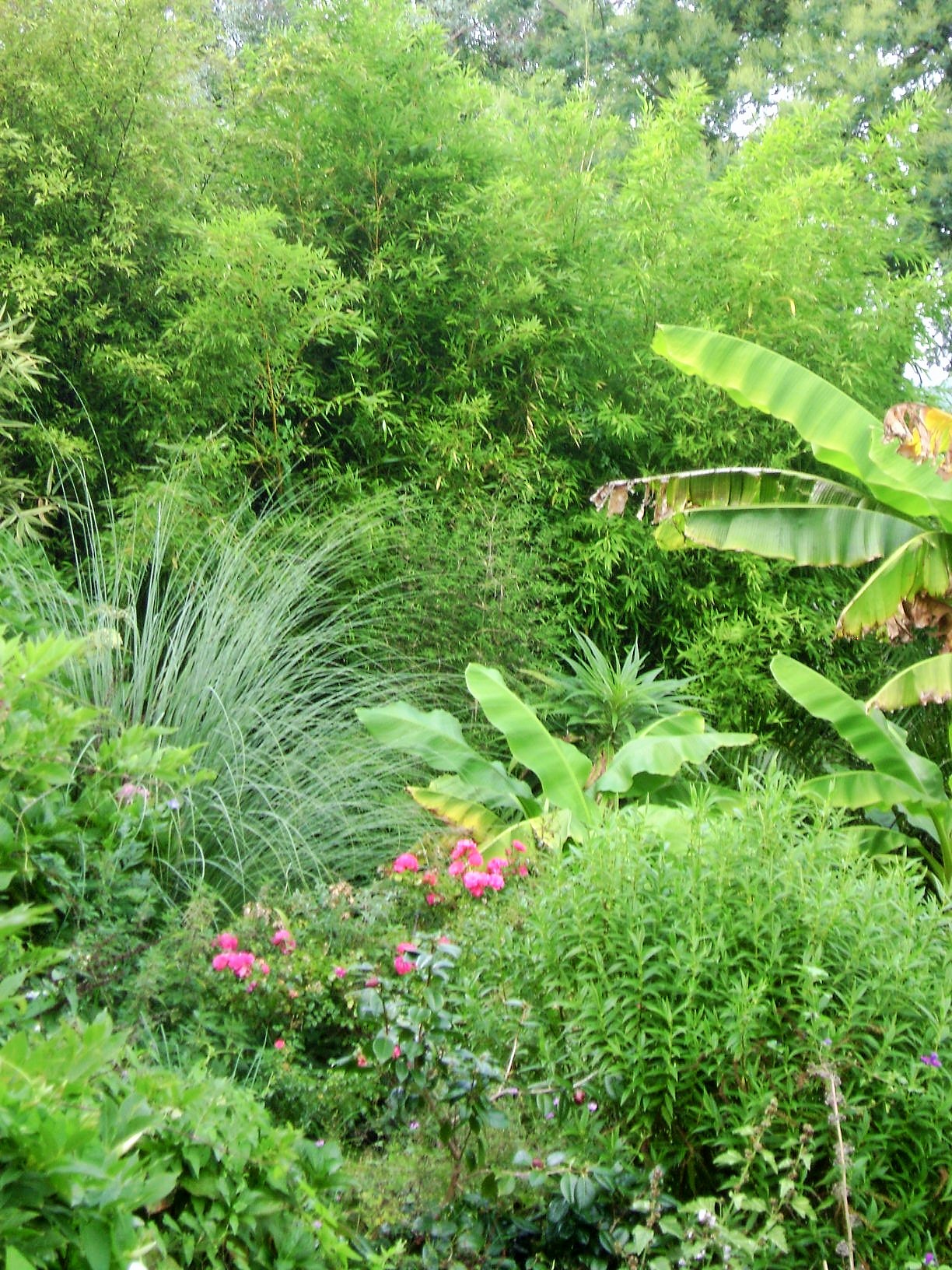



Camaret is a small fishing village on the northern coast of Brittany, France, where a mild microclimate in this coastal region allows for an unusually large number of plants to thrive in local gardens.
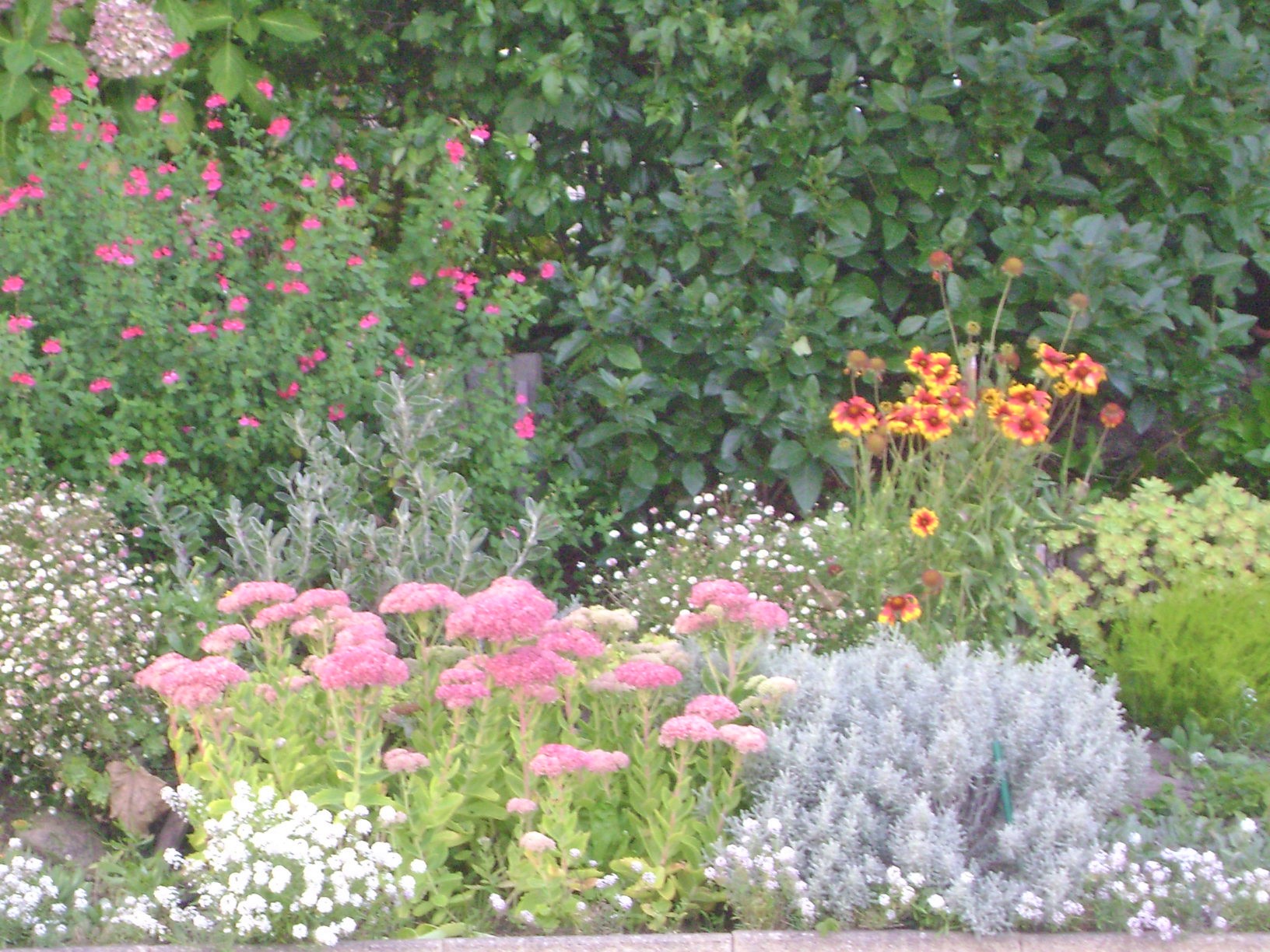
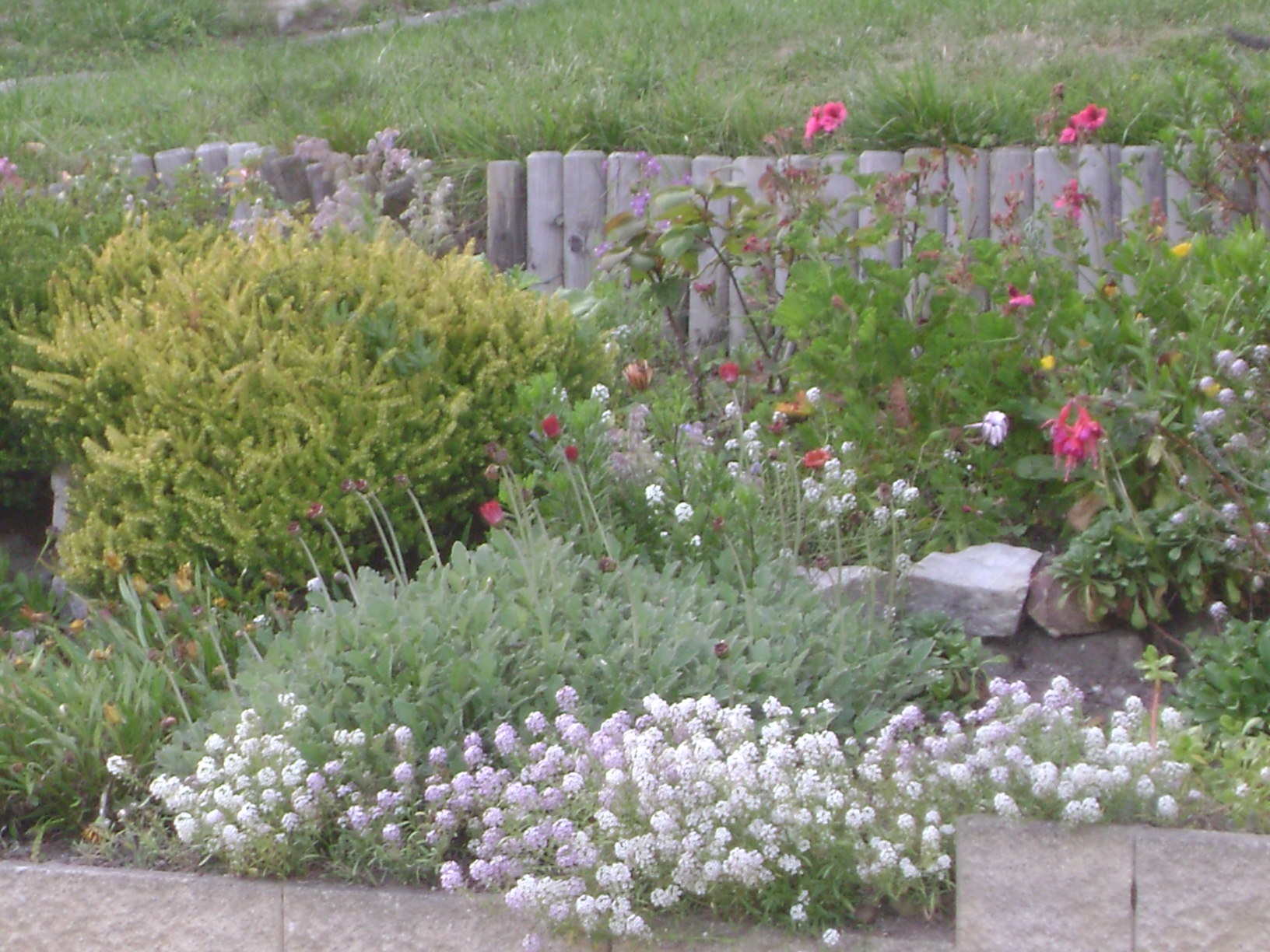
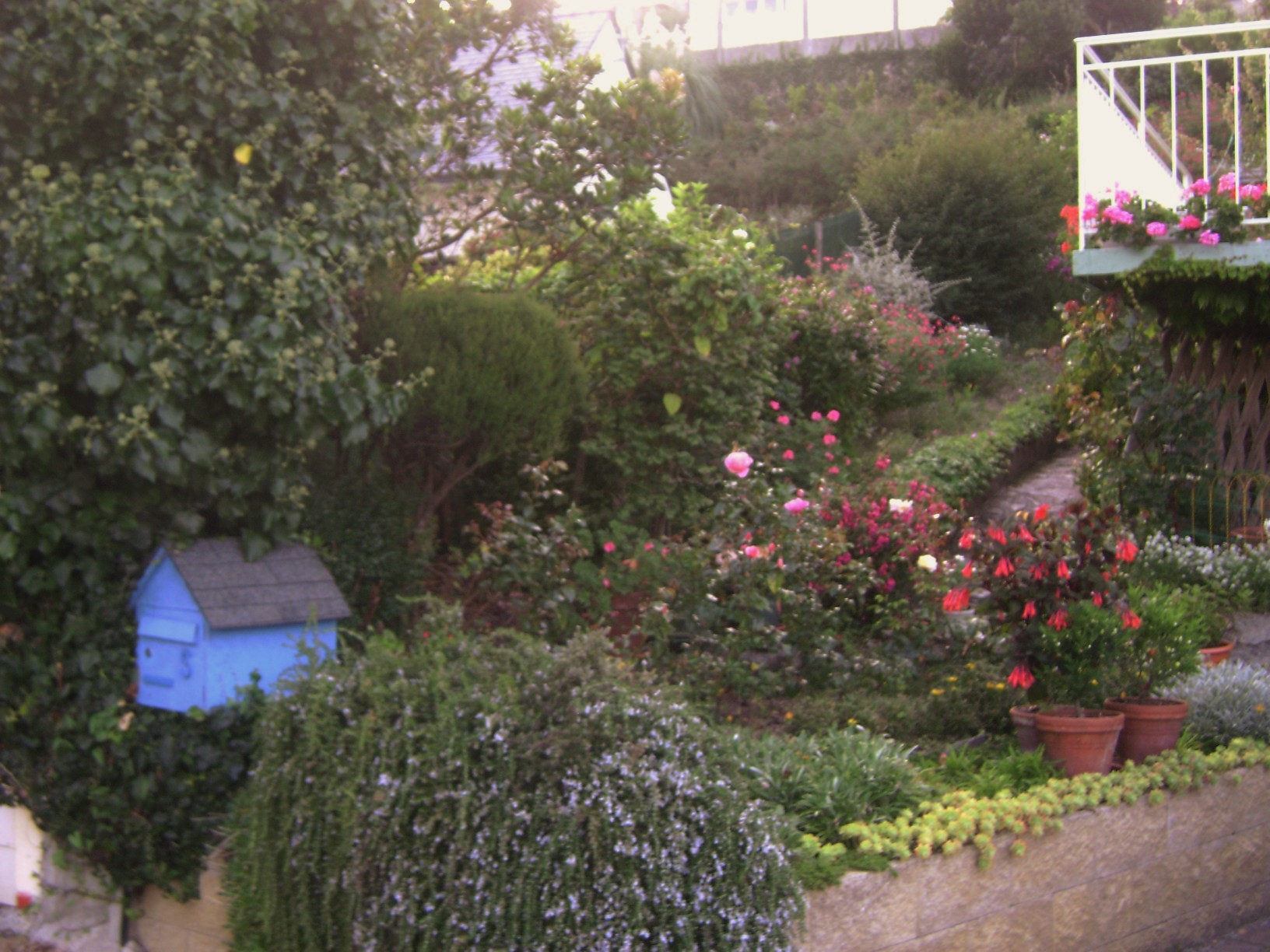
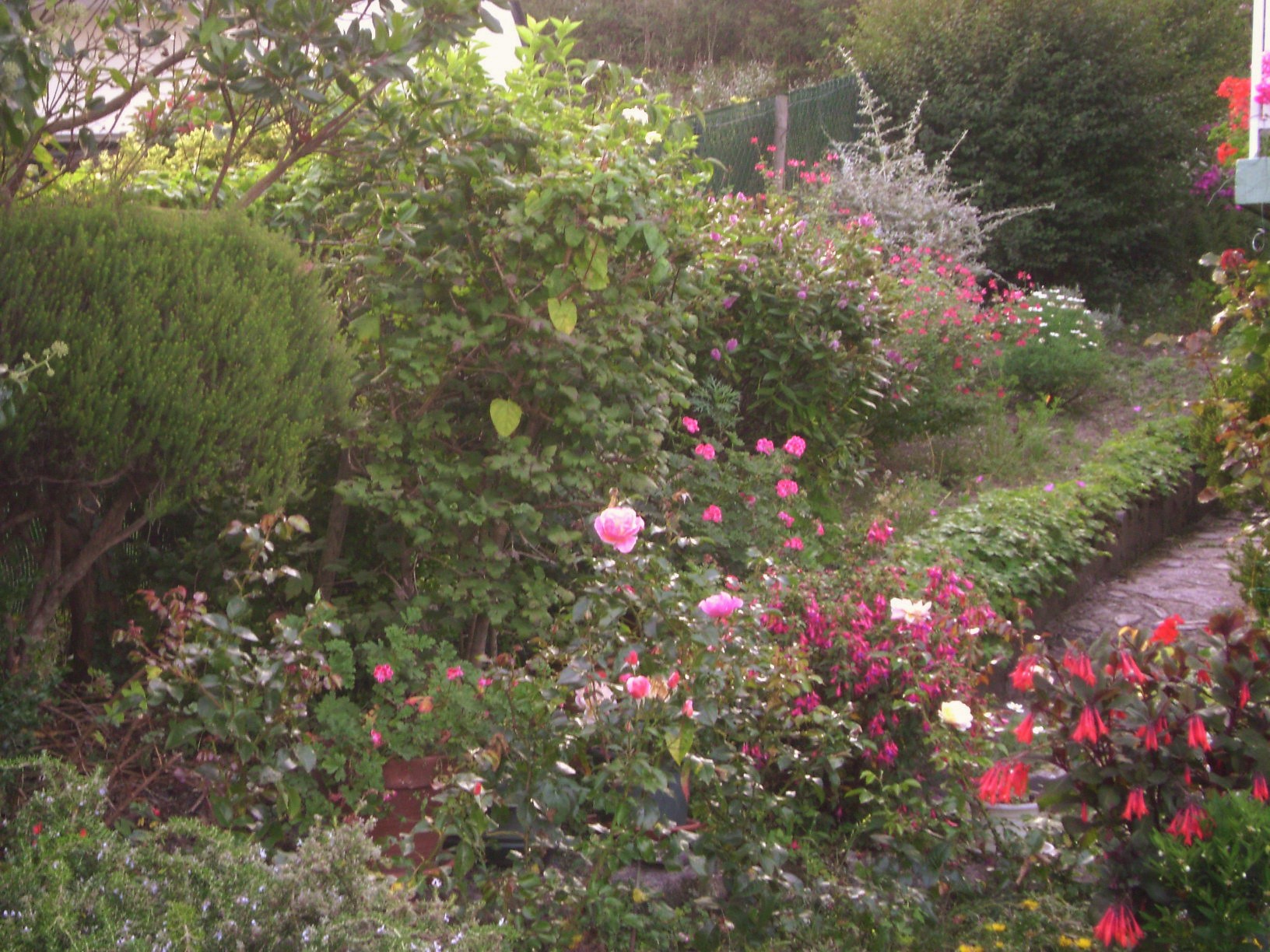
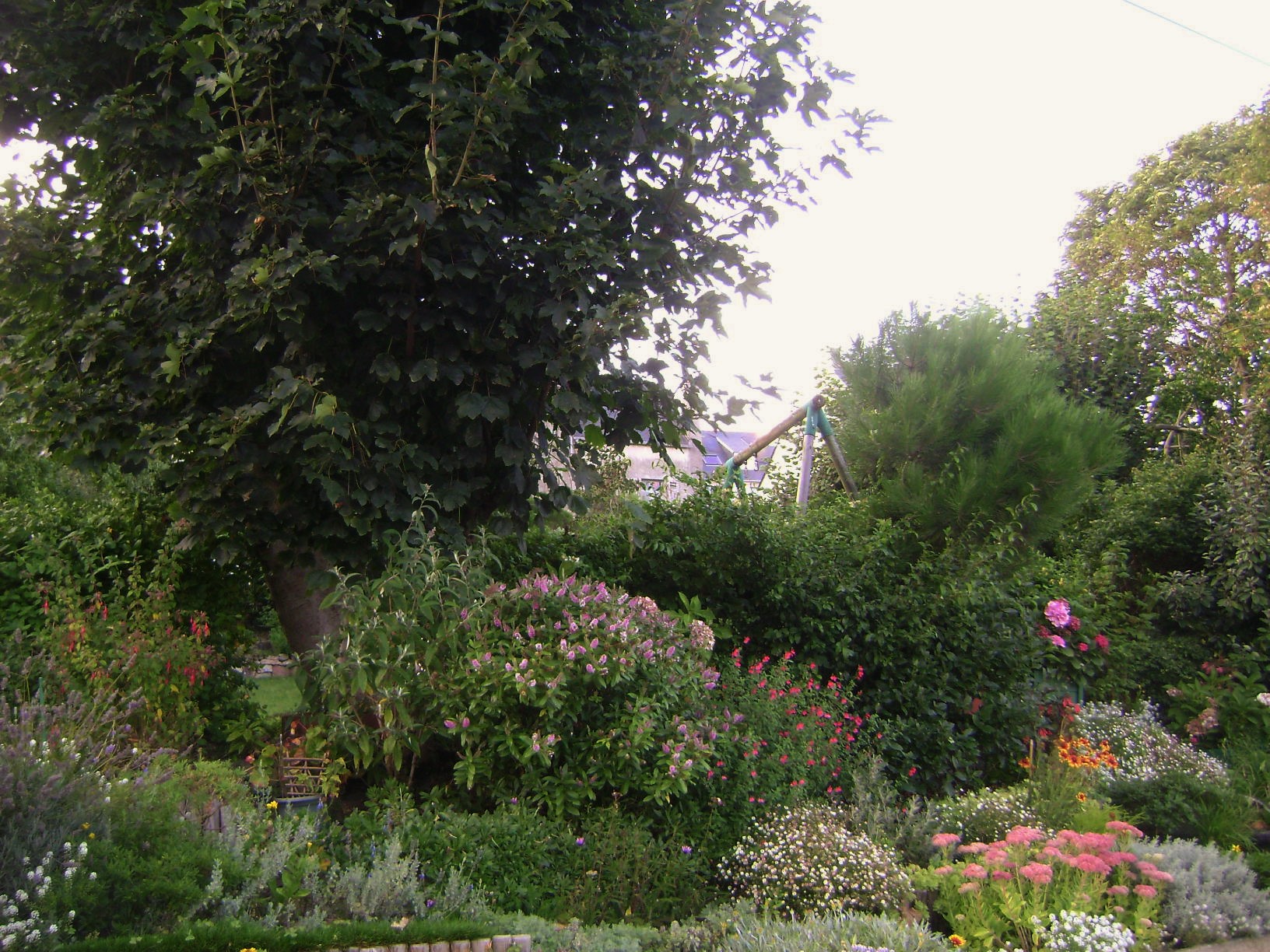
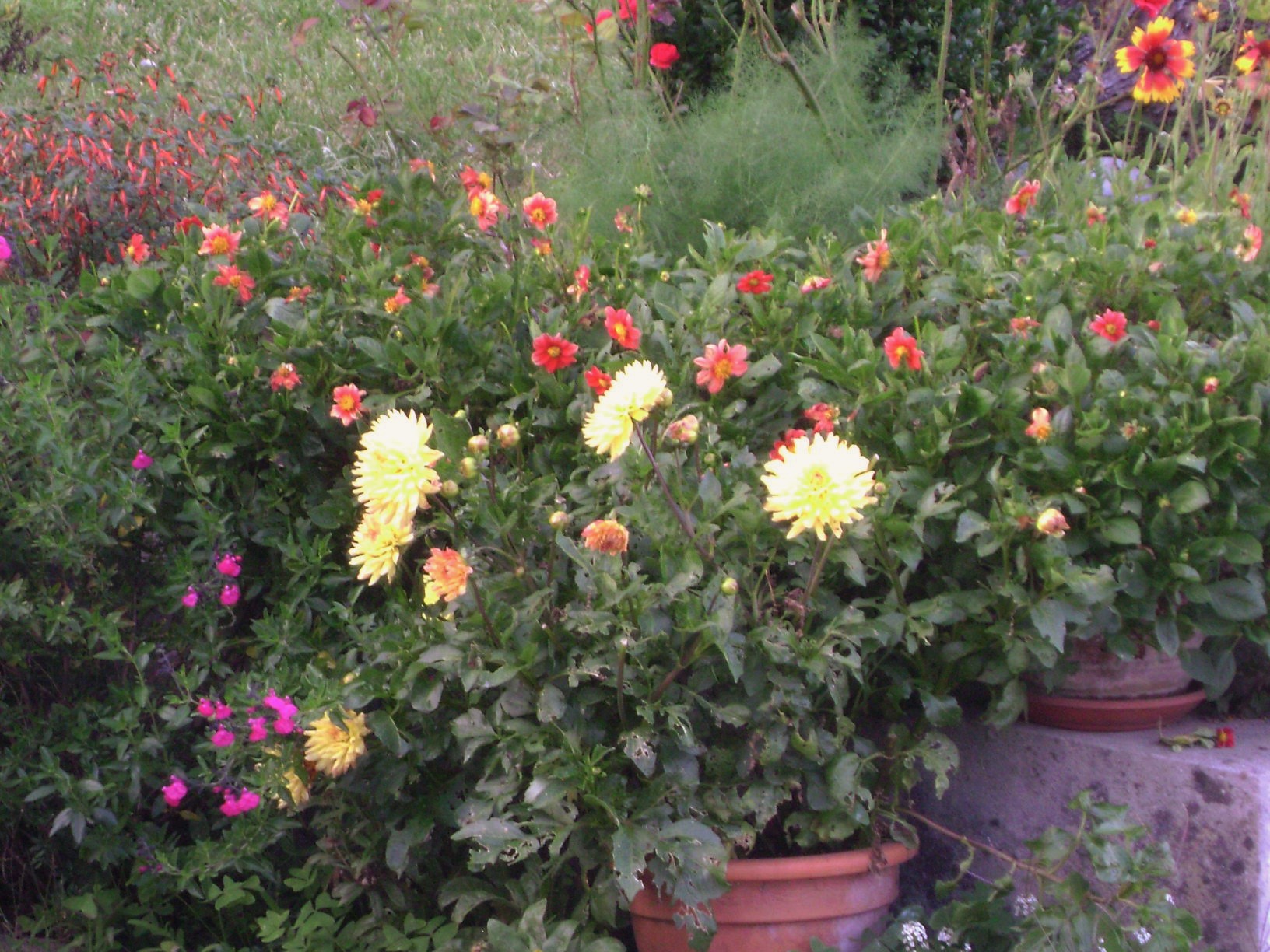
It is impossible to pass this garden without stopping to admire the extravagant display of annuals, perennials, flowering and foliage shrubs, specimen plants, climbing roses, shrub roses, potted arrangements and water features.










 Globetrotting Gardener