Category Archives: Historic gardens

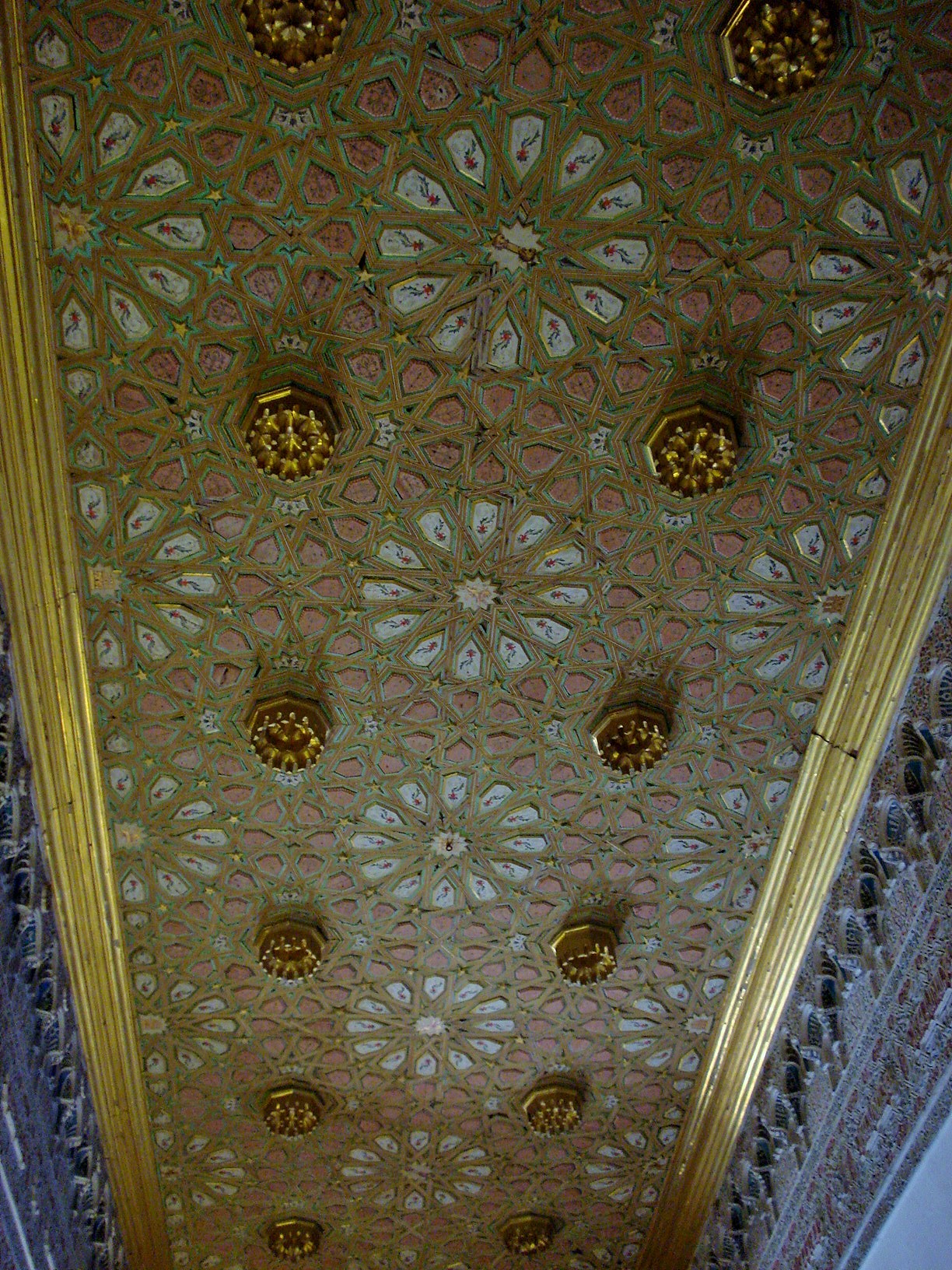
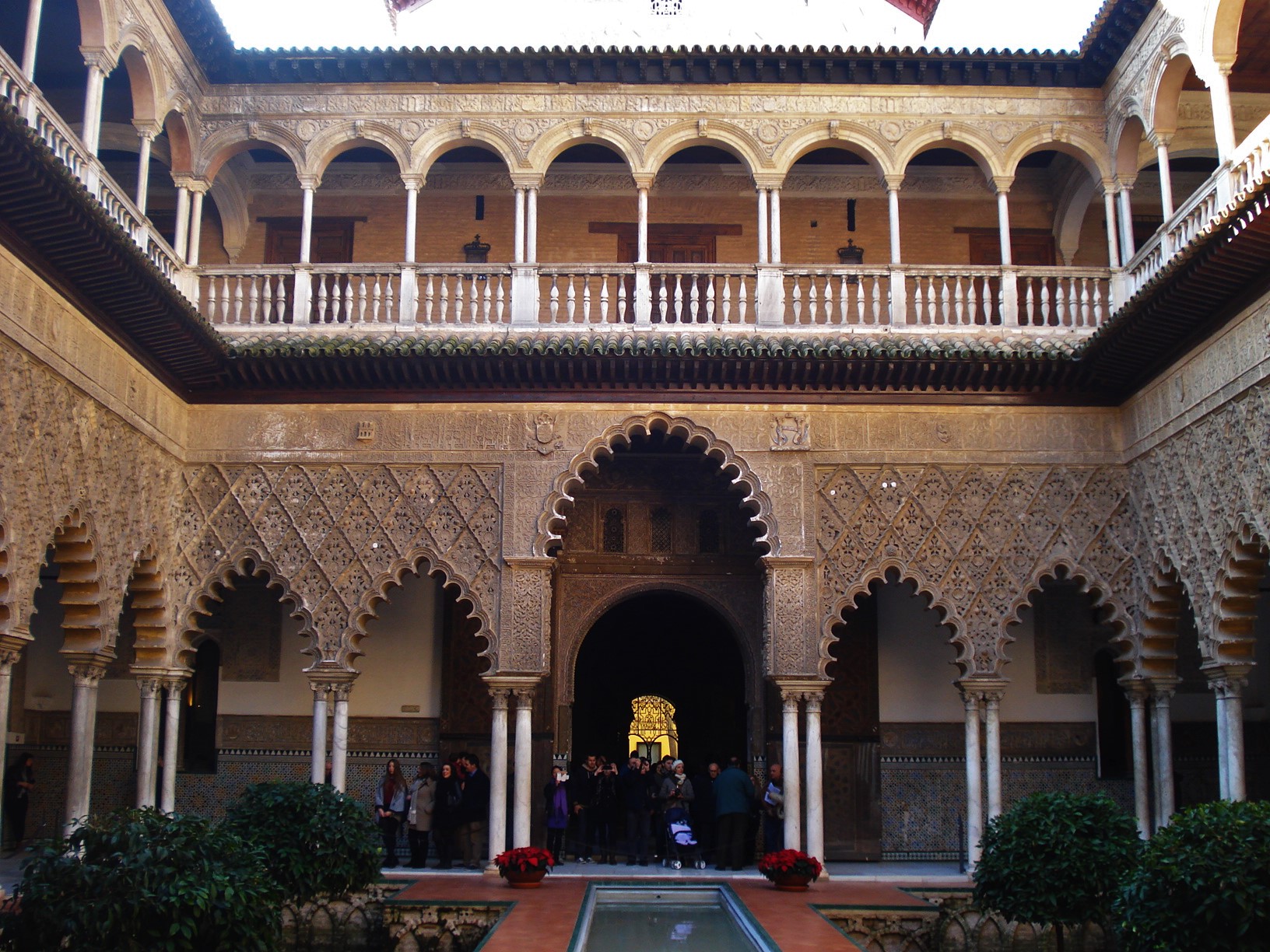
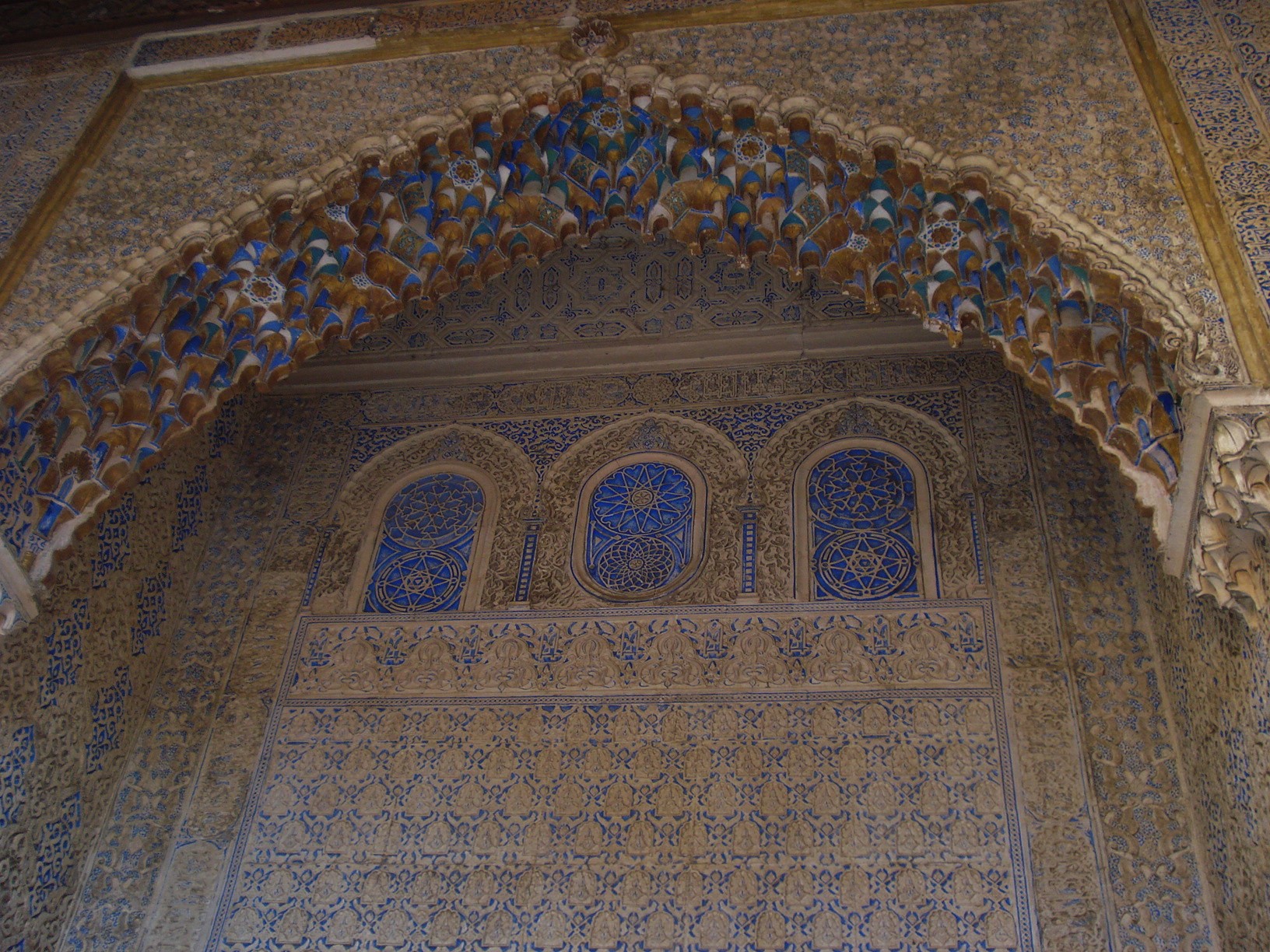
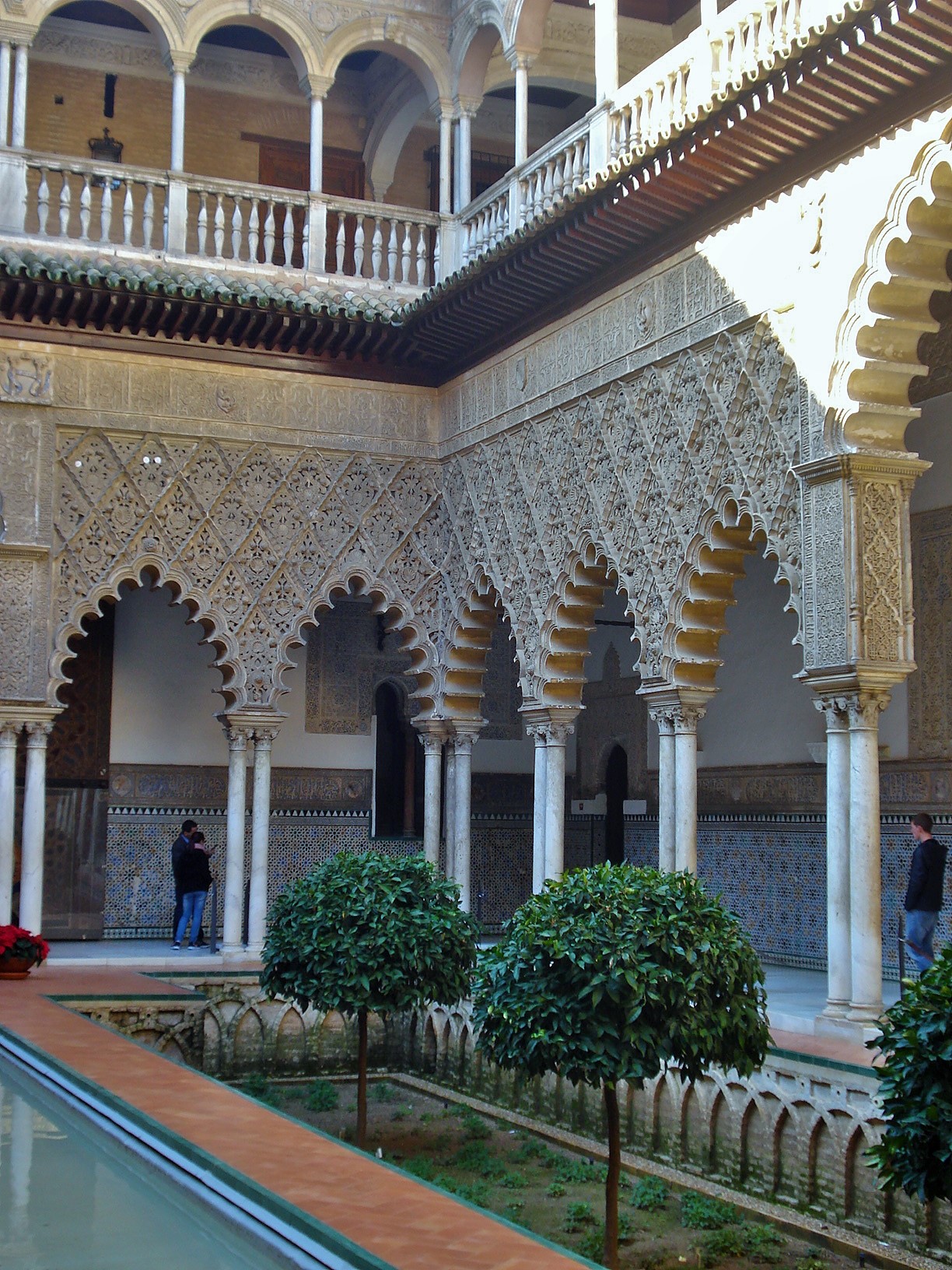
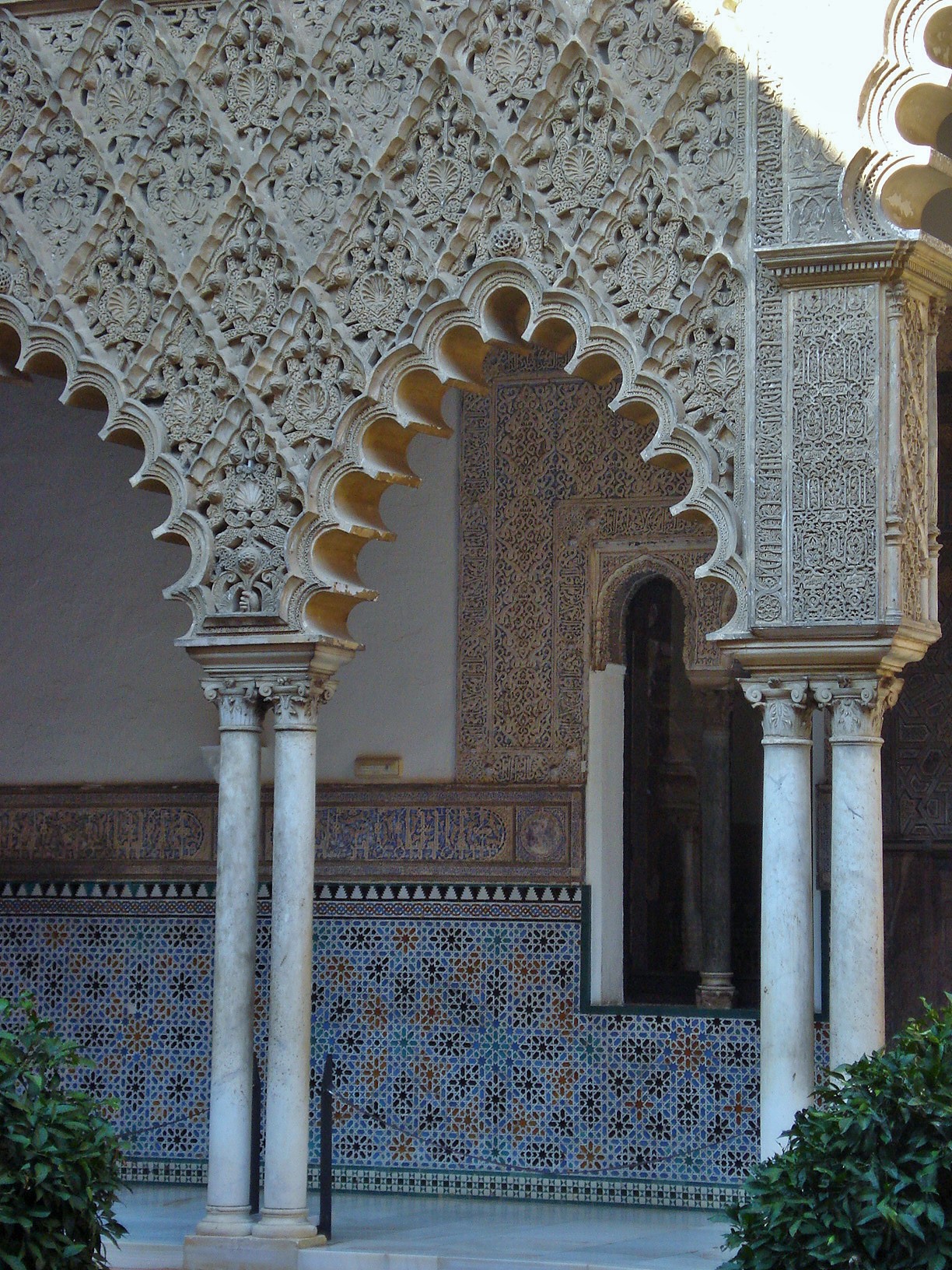
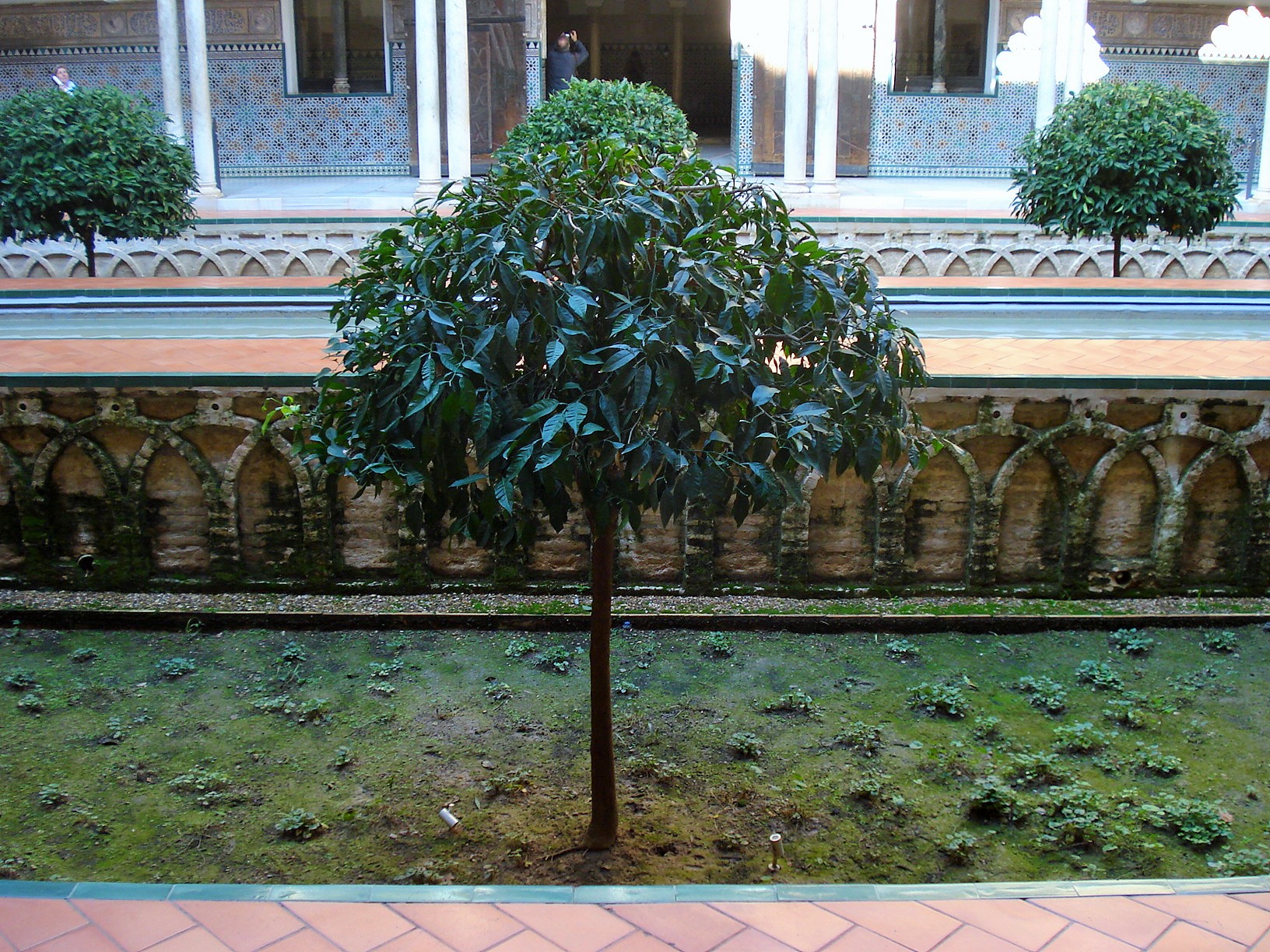
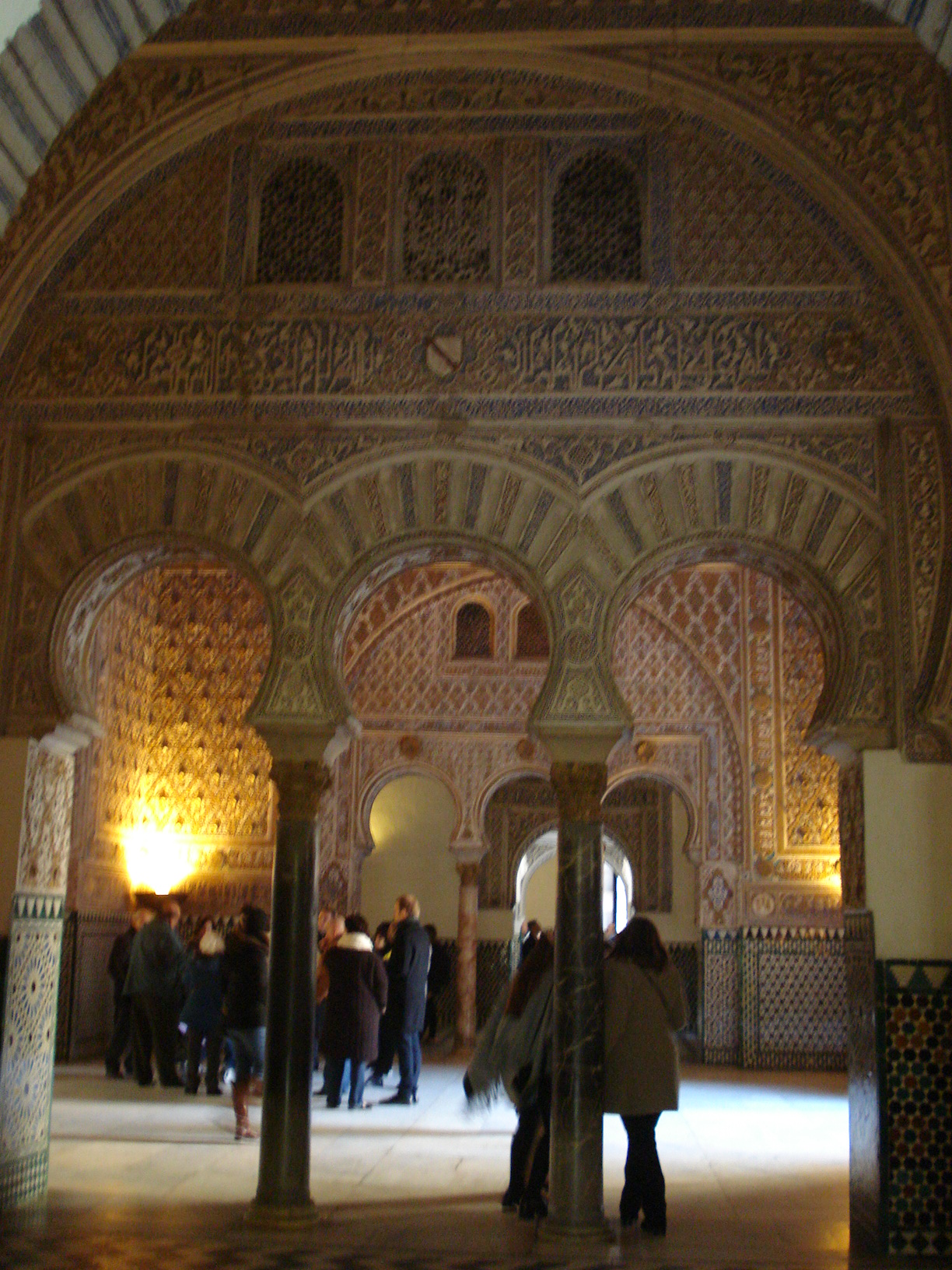
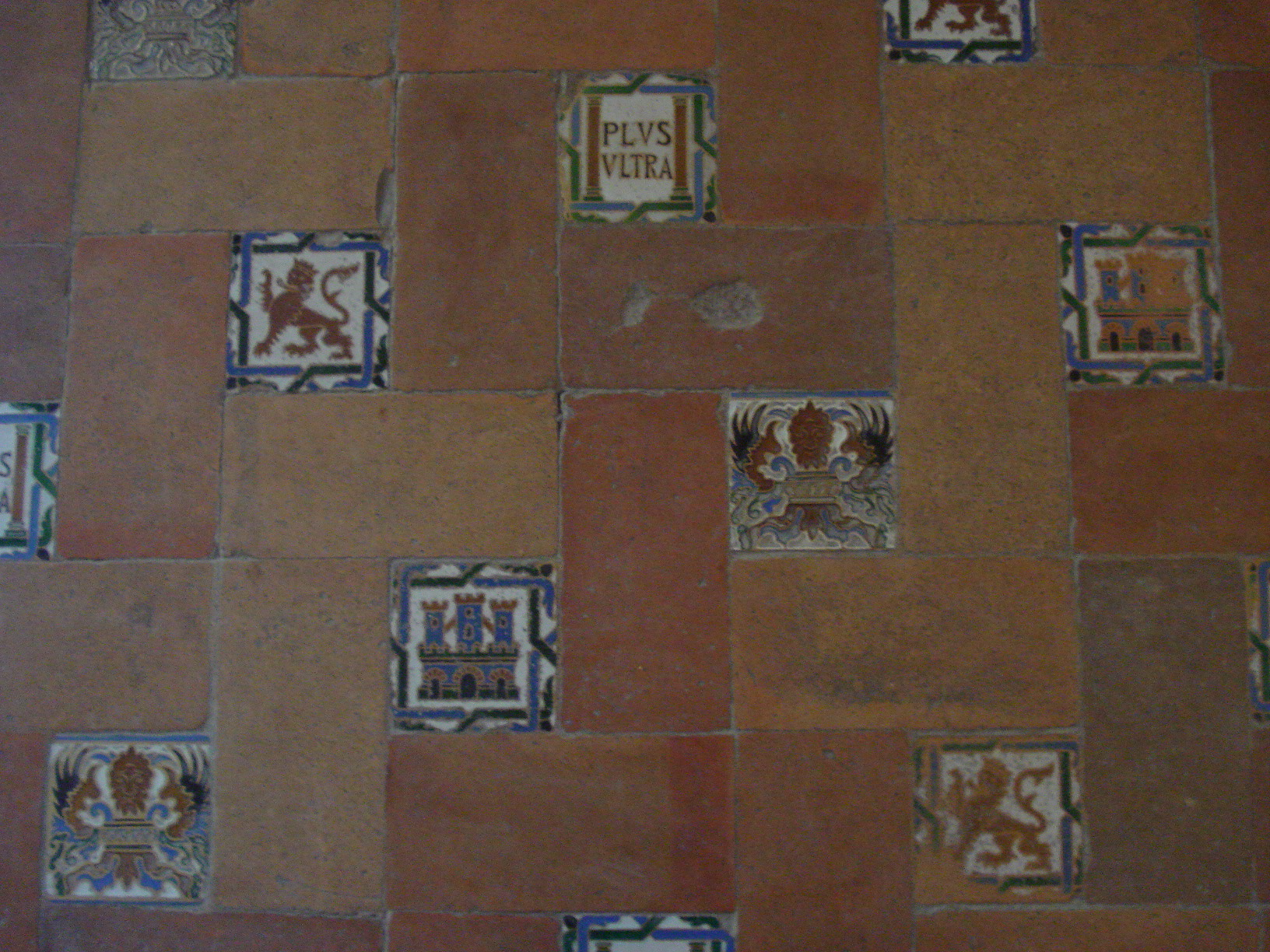
Sevilla’s Alcazar: The Courtyard of the Maidens

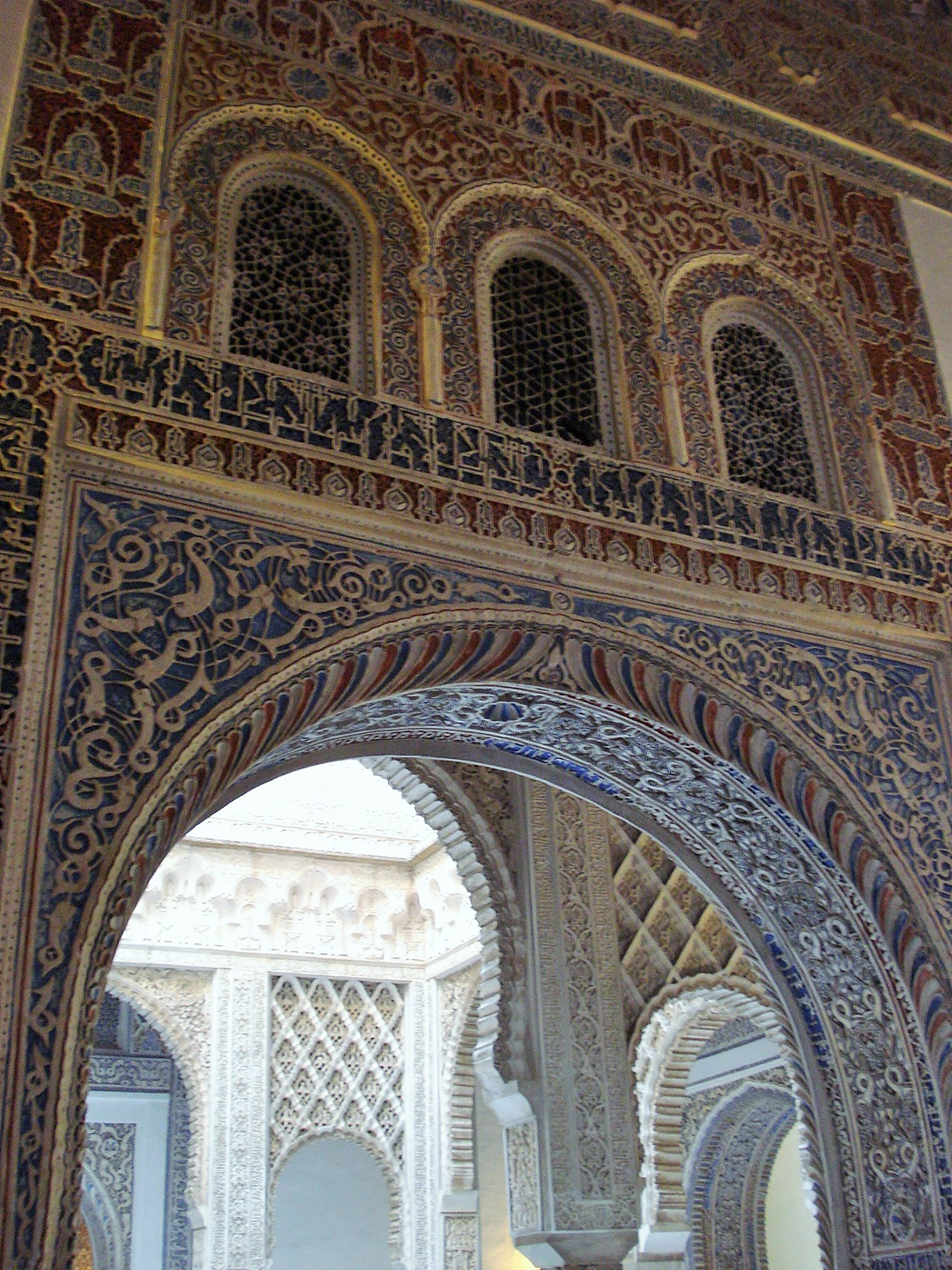
The Alcazar of Sevilla is an outstanding example of Mudejar architecture and one of the most beautiful palaces of Andalusia. Originally built by the Almohades dynasty, it was expanded upon by later rulers through the Middle Ages until the Reconquista by the Catholica rulers, who subsequently added to the palace as well until the 19th century. The Alcazar remains to this day the official residence of the King of Spain in Sevilla.

The gardens were developed in the Moorish style as an integral part of the palace design, with extensive patios, fruit orchards, produce gardens and landscaped grounds, to produce food for the palace as well as aesthetic pleasure. As with all moorish gardens, water features are everywhere.

This post concentrates on the  Patio de las Doncellas. According to wikipedia :

“The name, meaning “The Courtyard of the Maidens”, refers to the legend that the Moors demanded 100 virgins every year as tribute from Christian kingdoms in Iberia.

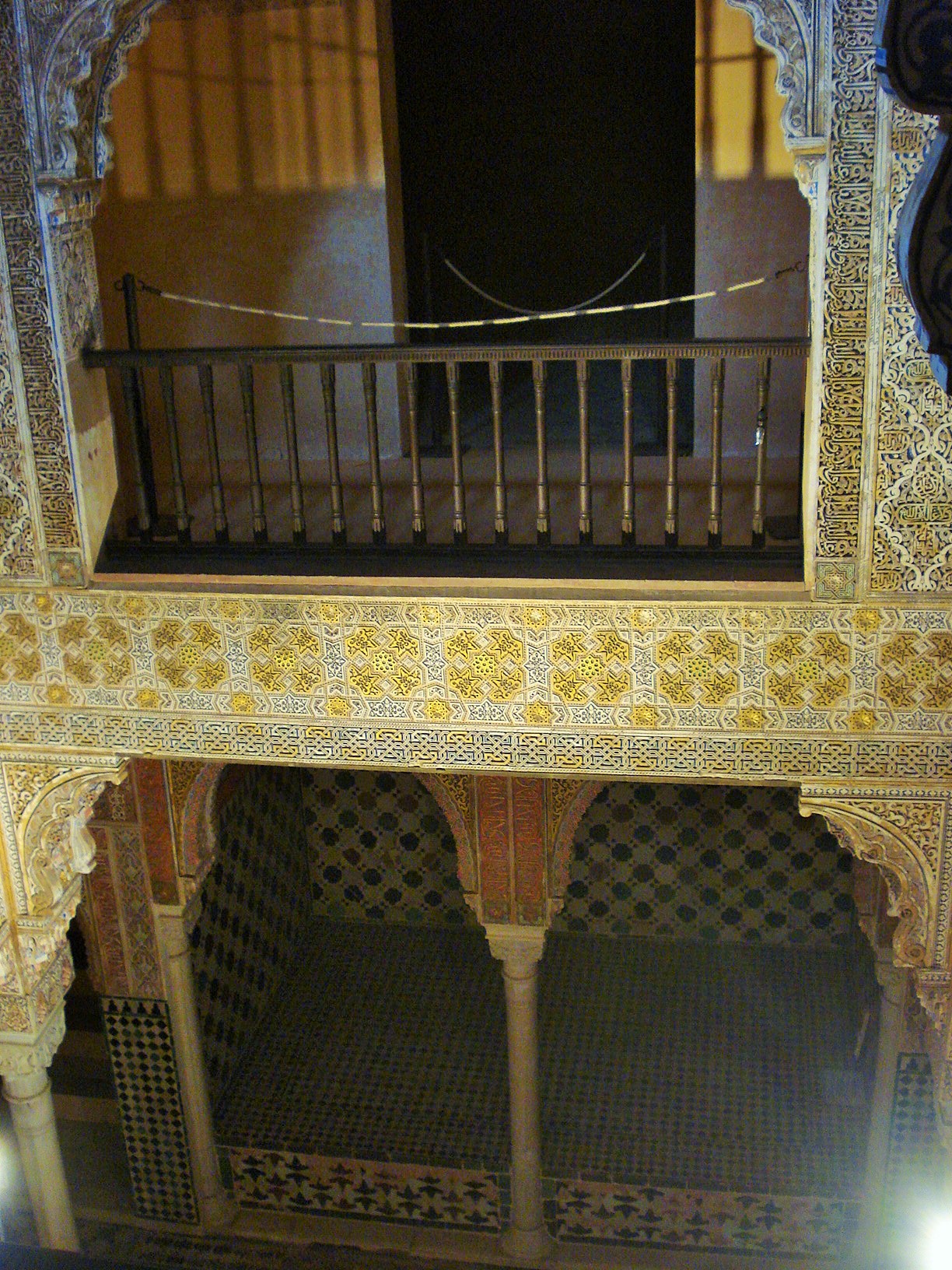
The lower level of the Patio was built for King Peter I and includes inscriptions describing Peter as a “sultan”. Various lavish reception rooms are located on the sides of the Patio. In the center is a large, rectangular reflecting pool with sunken gardens on either side. For many years, the courtyard was entirely paved in marble with a fountain in the center. However, historical evidence showed the gardens and the reflecting pool were the original design and this arrangement was restored. However, soon after this restoration, the courtyard was temporarily paved with marble once again at the request of movie director Ridley Scott. Scott used the paved courtyard as the set for the court of the King of Jerusalem in his movie Kingdom of Heaven. The courtyard arrangement was converted once more after the movie’s production.

The upper story of the Patio was an addition made by Charles V. The addition was designed by Luis de Vega in the style of the Italian Renaissance although he did include both Renaissance and mudéjar plaster work in the decorations. Construction of the addition began in 1540 and ended in 1572.”

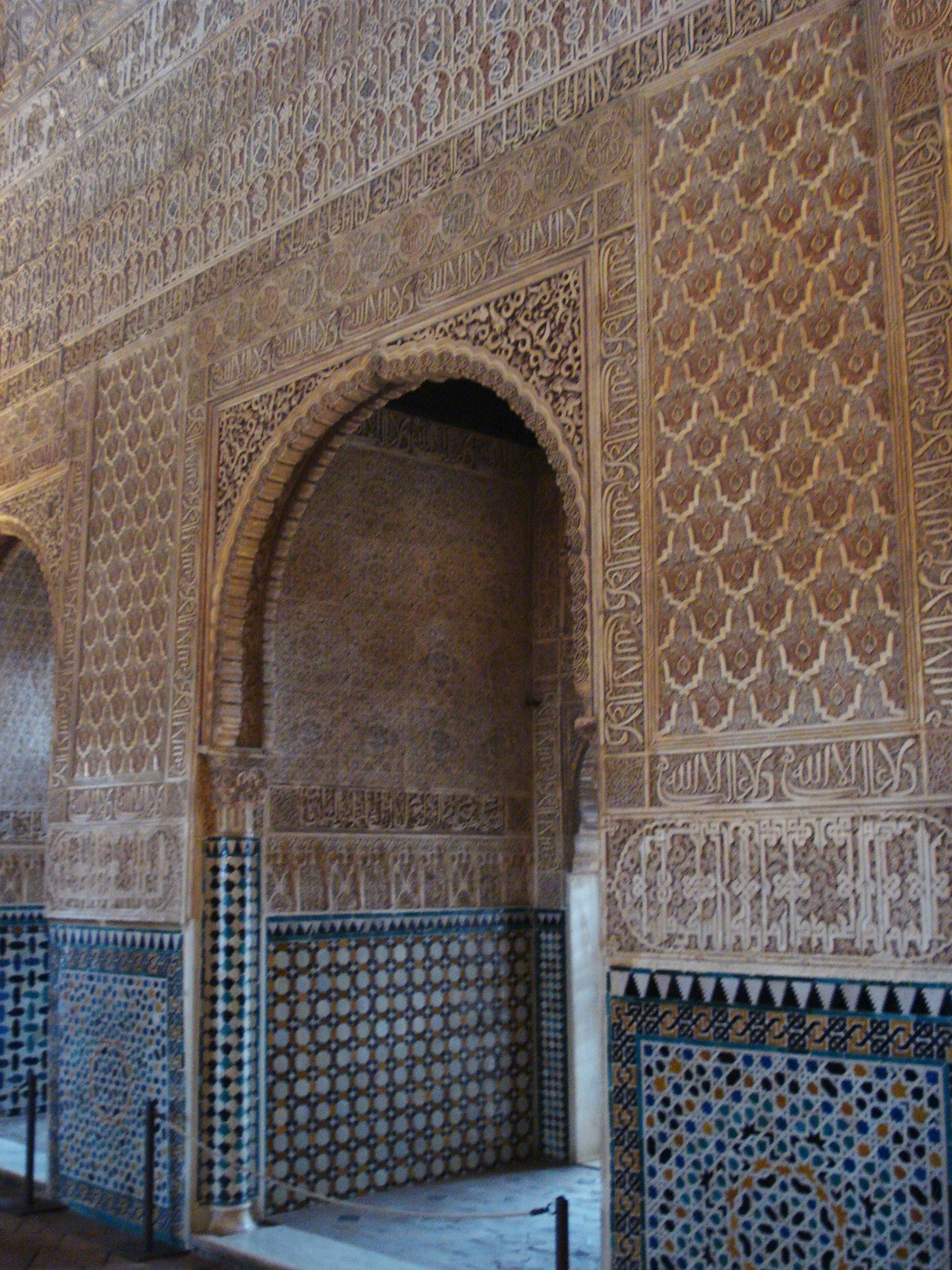
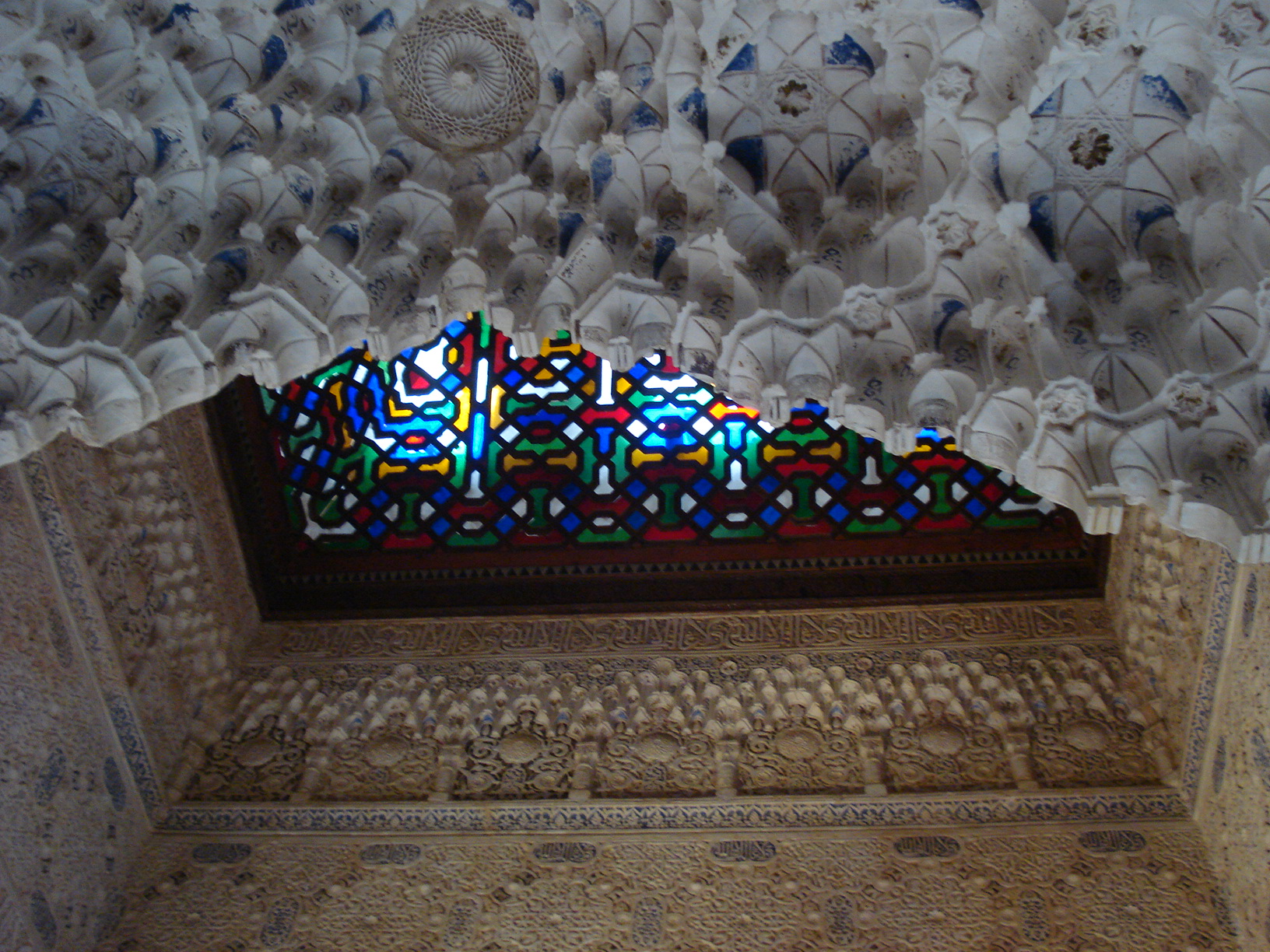
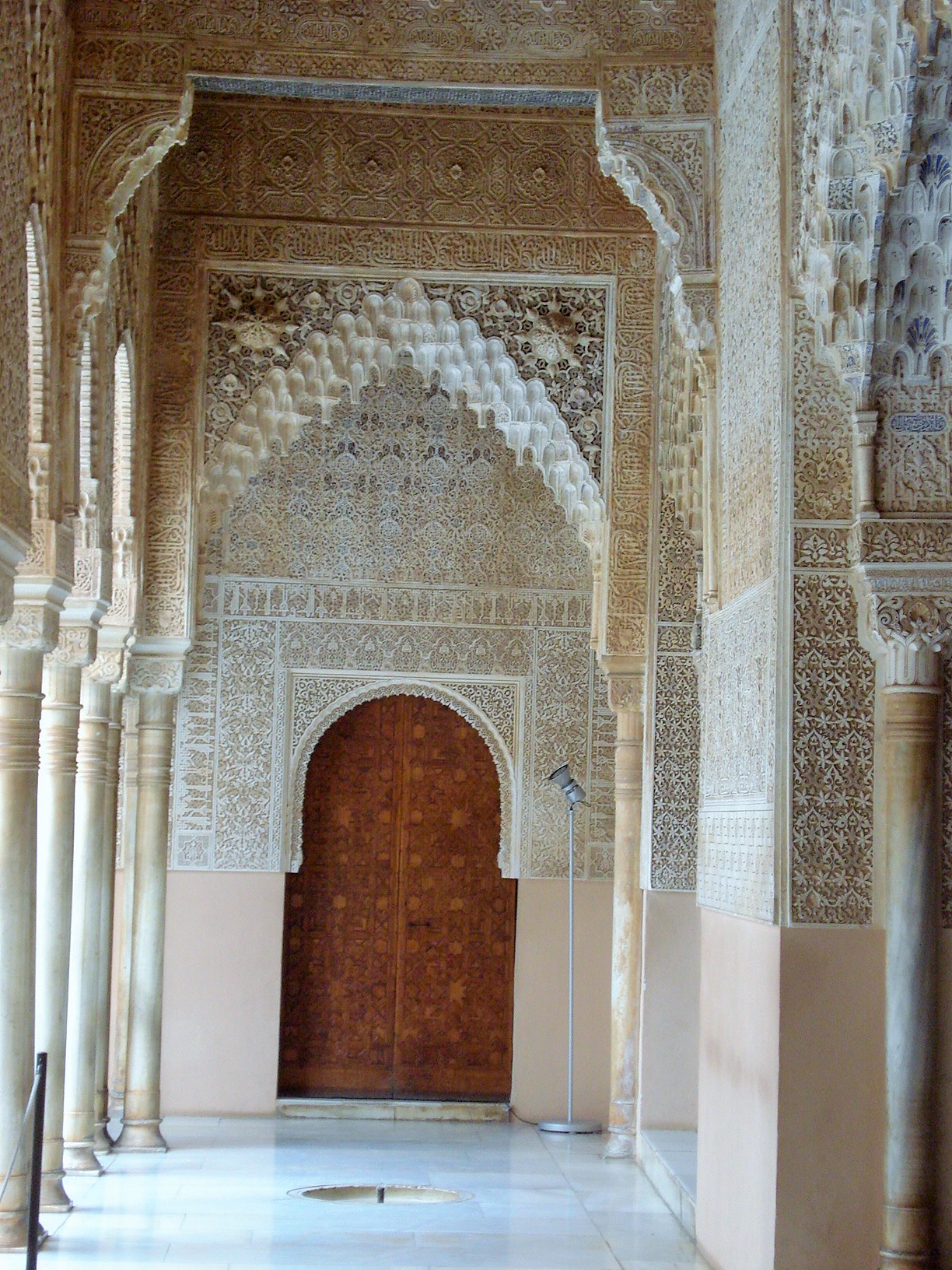
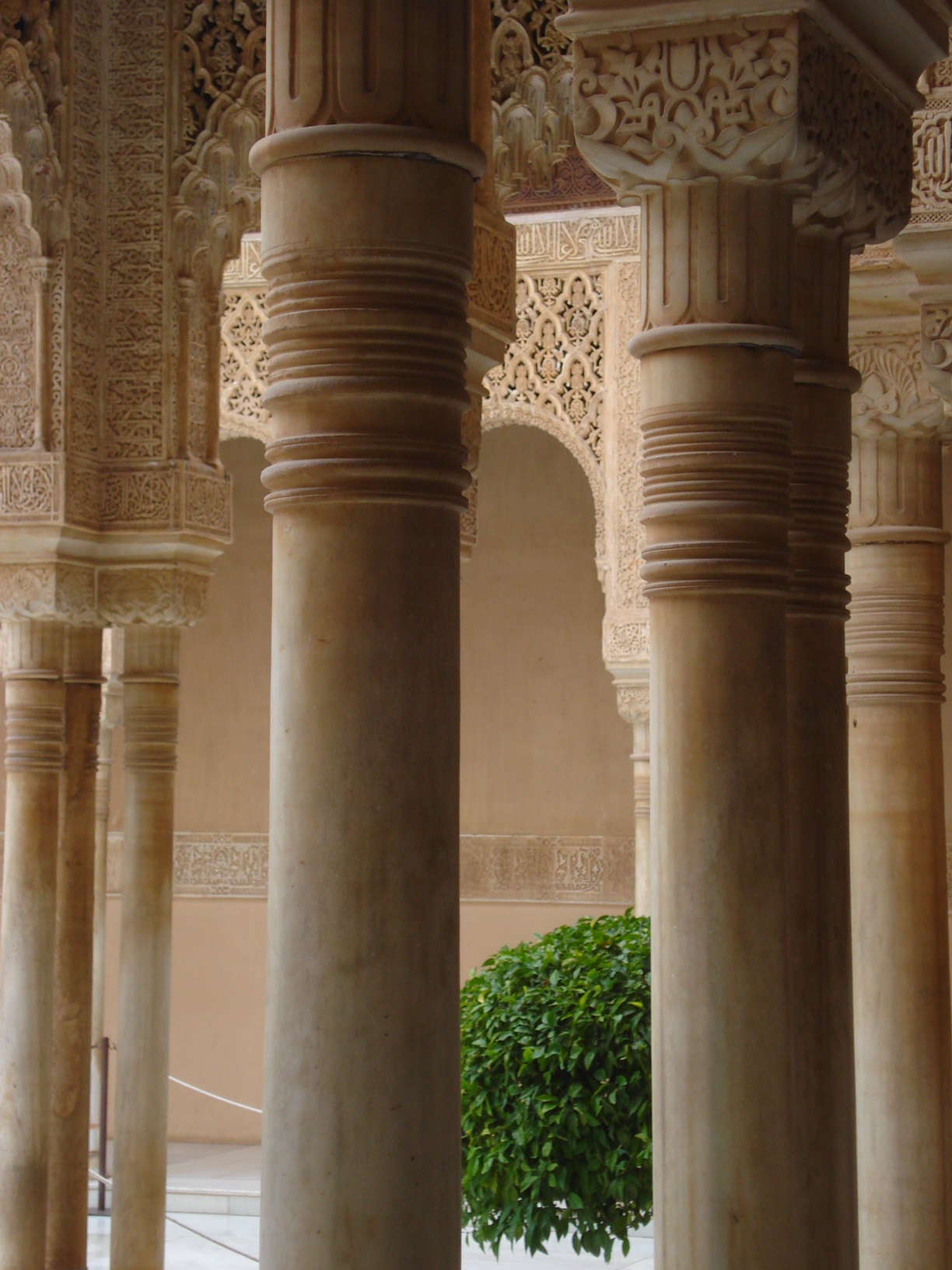
More so probably than any other part of the Alcazar, the Courtyard of the Doncellas and surrounding rooms in the distinctly ornate Moorish style are reminiscent of the grandeur of the Alhambra in Granada and its patios.

Alcazar Palace and Gardens, Courtyard of the Maidens, Sevilla

Alcazar Palace and Gardens, Courtyard of the Maidens, Sevilla Alcazar Palace and Gardens, Courtyard of the Maidens, Sevilla Alcazar Palace and Gardens, Courtyard of the Maidens, Sevilla Alcazar Palace and Gardens, Courtyard of the Maidens, Sevilla Alcazar Palace and Gardens, Courtyard of the Maidens, Sevilla Alcazar Palace and Gardens, Courtyard of the Maidens, Sevilla Alcazar Palace and Gardens, Courtyard of the Maidens, Sevilla Alcazar Palace and Gardens, Courtyard of the Maidens, Sevilla Alcazar Palace and Gardens, Courtyard of the Maidens, Sevilla Alcazar Palace and Gardens, Courtyard of the Maidens, Sevilla Alcazar Palace and Gardens, Courtyard of the Maidens, Sevilla Alcazar Palace and Gardens, Courtyard of the Maidens, Sevilla Alcazar Palace and Gardens, Courtyard of the Maidens, Sevilla Alcazar Palace and Gardens, Courtyard of the Maidens, Sevilla Alcazar Palace and Gardens, Courtyard of the Maidens, Sevilla Alcazar Palace and Gardens, Courtyard of the Maidens, Sevilla Alcazar Palace and Gardens, Courtyard of the Maidens, Sevilla Alcazar Palace and Gardens, Courtyard of the Maidens, Sevilla Alcazar Palace and Gardens, Courtyard of the Maidens, Sevilla Alcazar Palace and Gardens, Courtyard of the Maidens, Sevilla Alcazar Palace and Gardens, Courtyard of the Maidens, Sevilla Alcazar Palace and Gardens, Courtyard of the Maidens, Sevilla Alcazar Palace and Gardens, Courtyard of the Maidens, Sevilla Alcazar Palace and Gardens, Courtyard of the Maidens, Sevilla Alcazar Palace and Gardens, Courtyard of the Maidens, Sevilla Alcazar Palace and Gardens, Courtyard of the Maidens, Sevilla Alcazar Palace and Gardens, Courtyard of the Maidens, Sevilla Alcazar Palace and Gardens, Courtyard of the Maidens, Sevilla Alcazar Palace and Gardens, Courtyard of the Maidens, Sevilla

The Alhambra’s Parador in Granada: The Gardens

Granada, in southern Spain,  is of course most famous for the Alhambra and Generalife gardens.  The patios of the Alhambra are iconic images of Granada and the best known gardens are those of the Generalife, the vacation palace on the other side of the Alhambra complex.
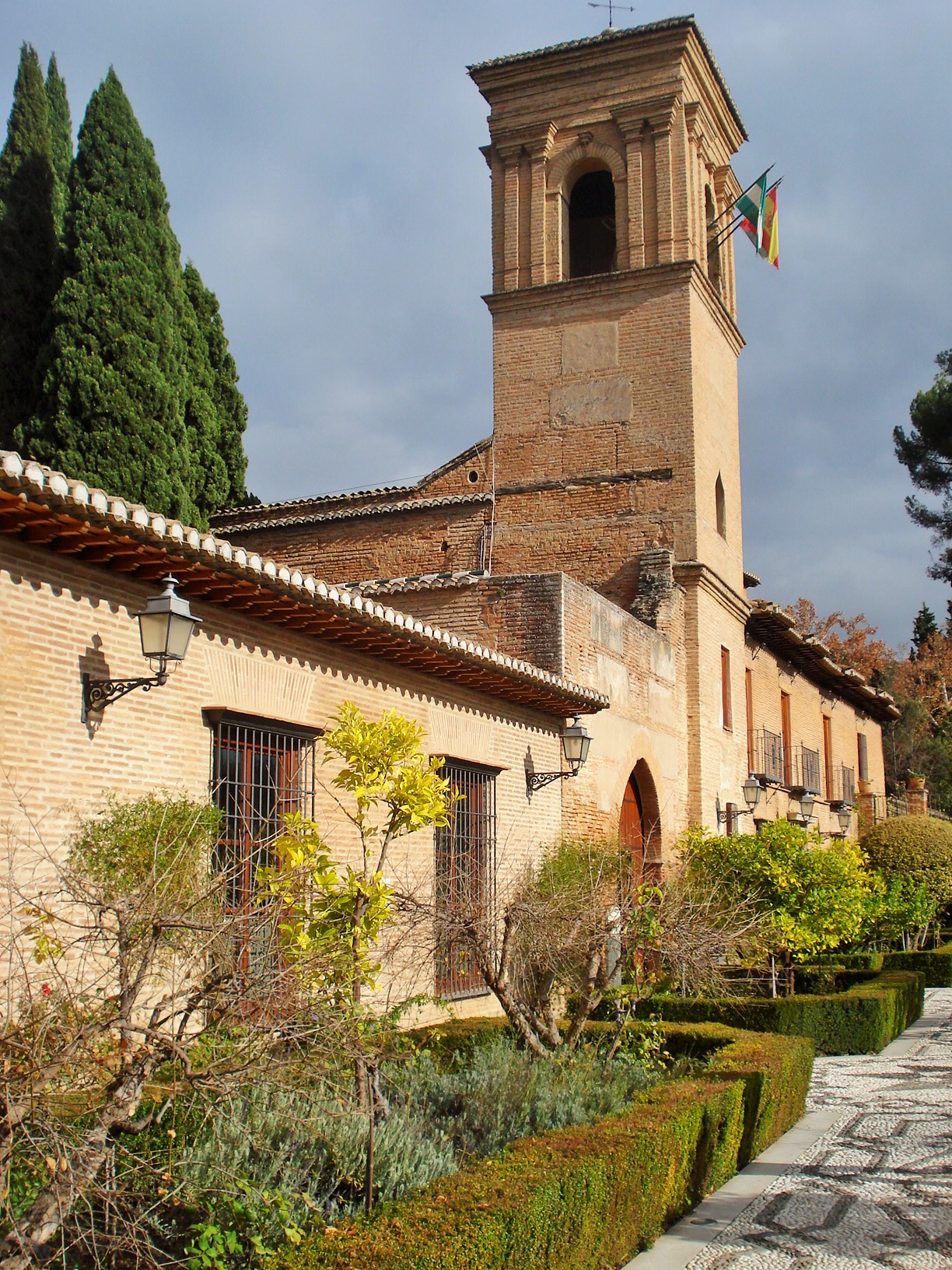
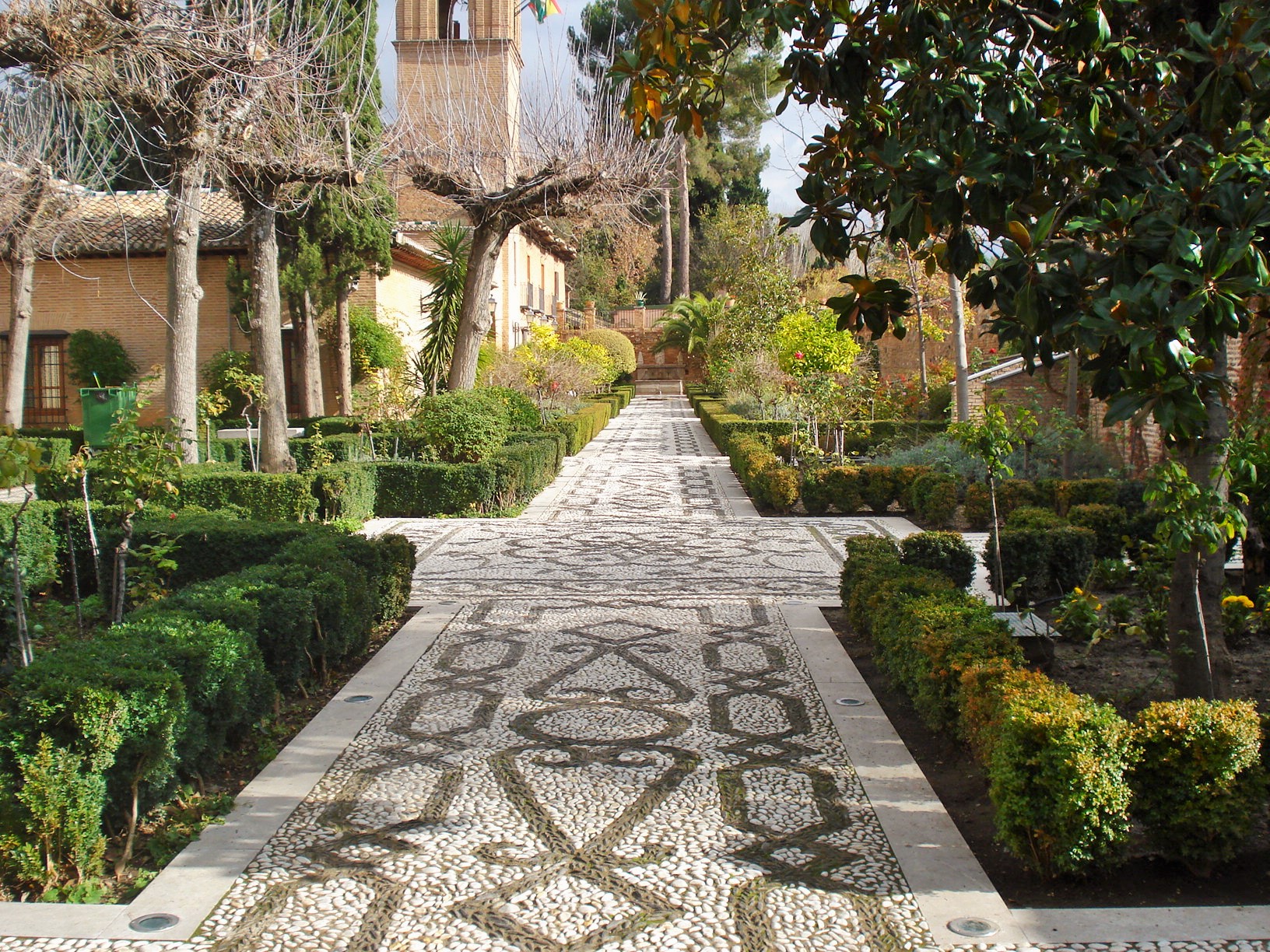
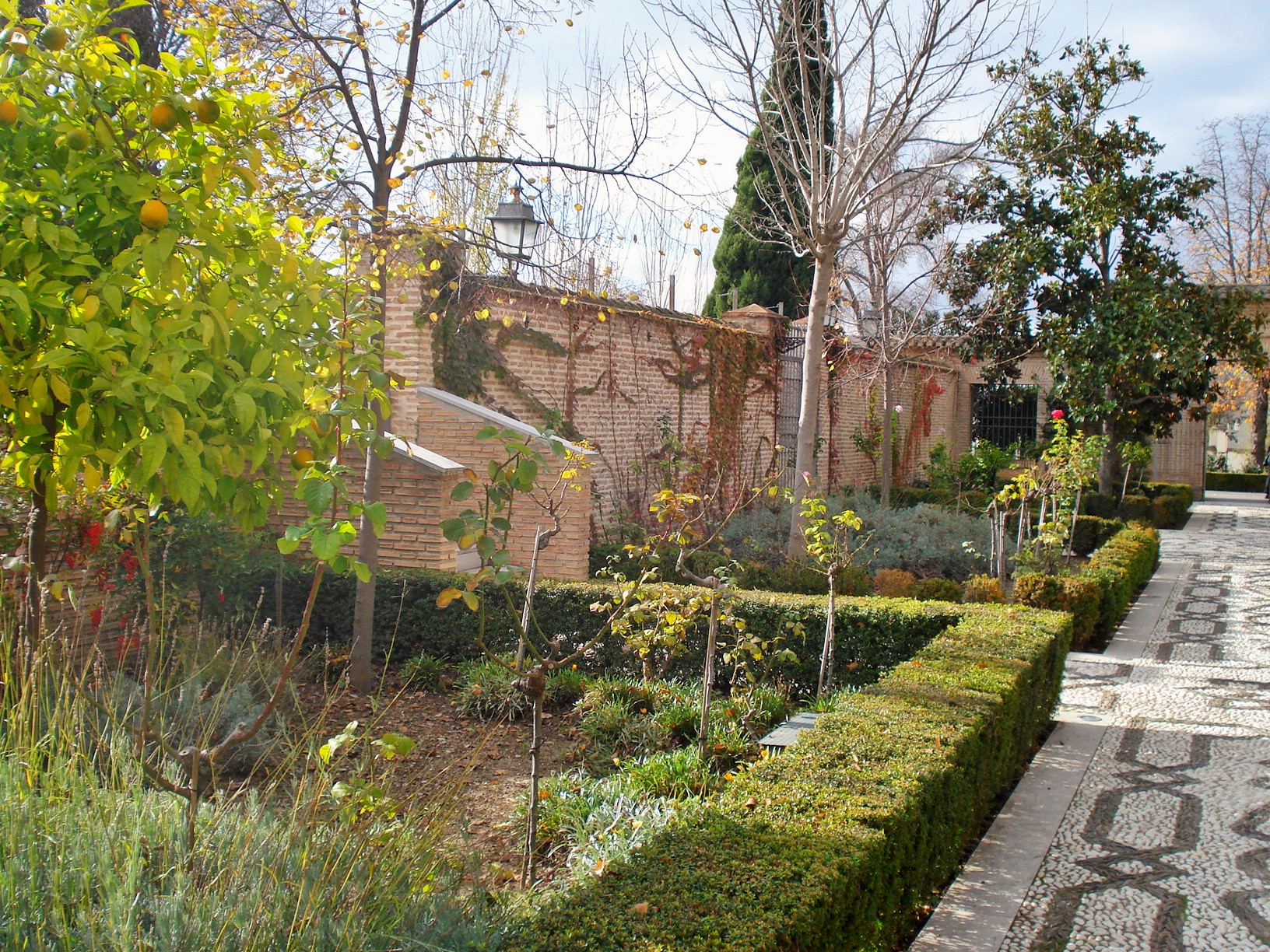
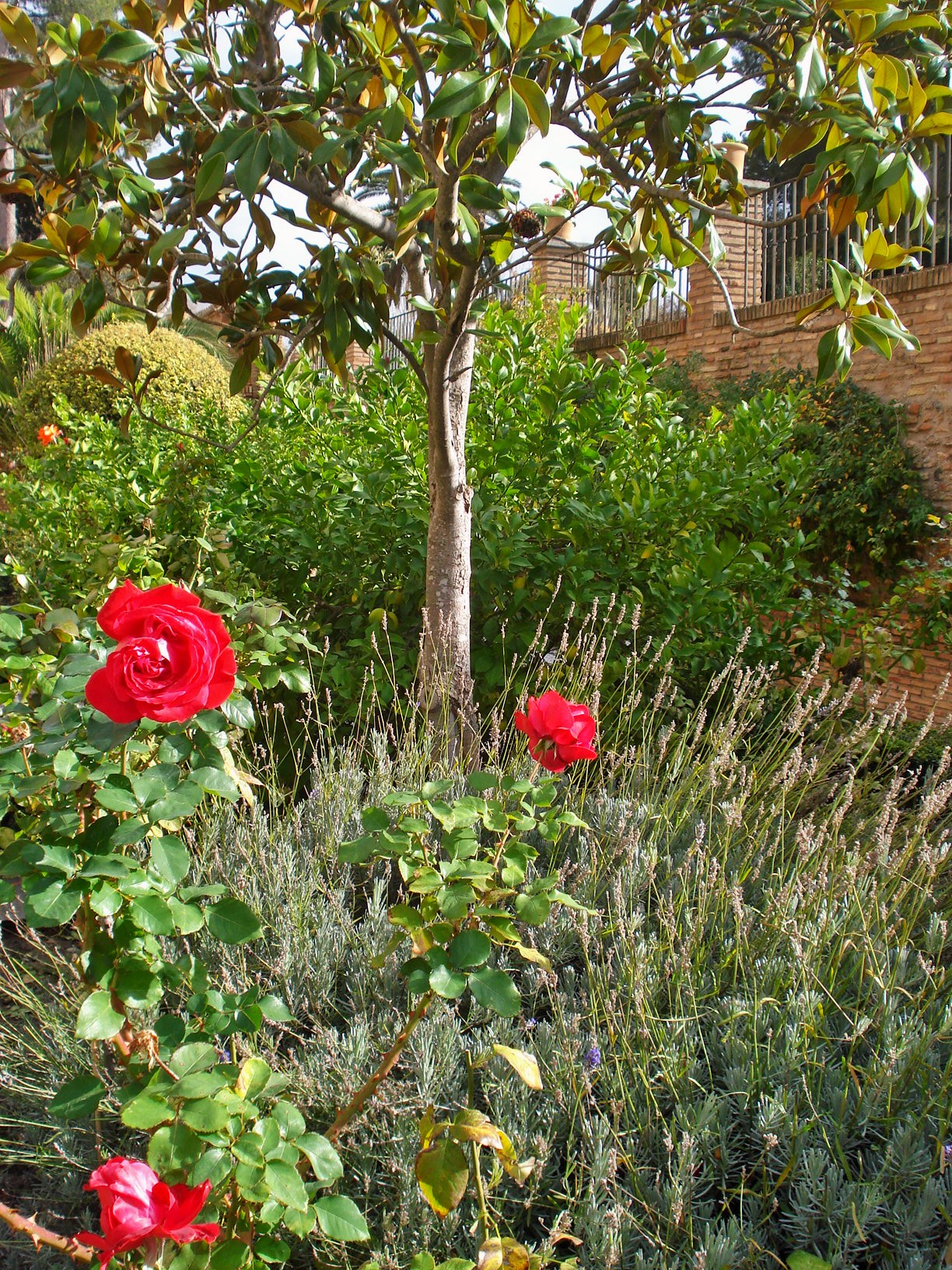
In the vast complex of palaces that is the Alhambra, this former monastery has been converted into one of the Paradors, Spain’s government-owned luxury hotels set in historic landmarks. In addition to the Alhambra gardens it overlooks, the Parador has its own gardens with a distinctly Mediterranean feel to them and lush plantings of lavender, rosemary, roses and irises.
DSC00591 DSC00578 DSC00579 DSC00580 DSC00581 DSC00582 DSC00583 DSC00584 DSC00585 DSC00586 DSC00587 DSC00588 DSC00589 DSC00590

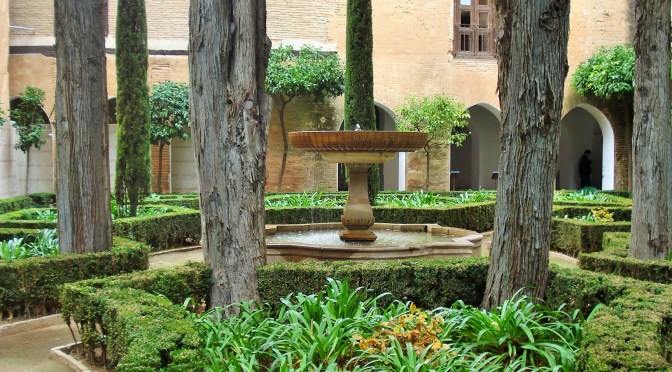
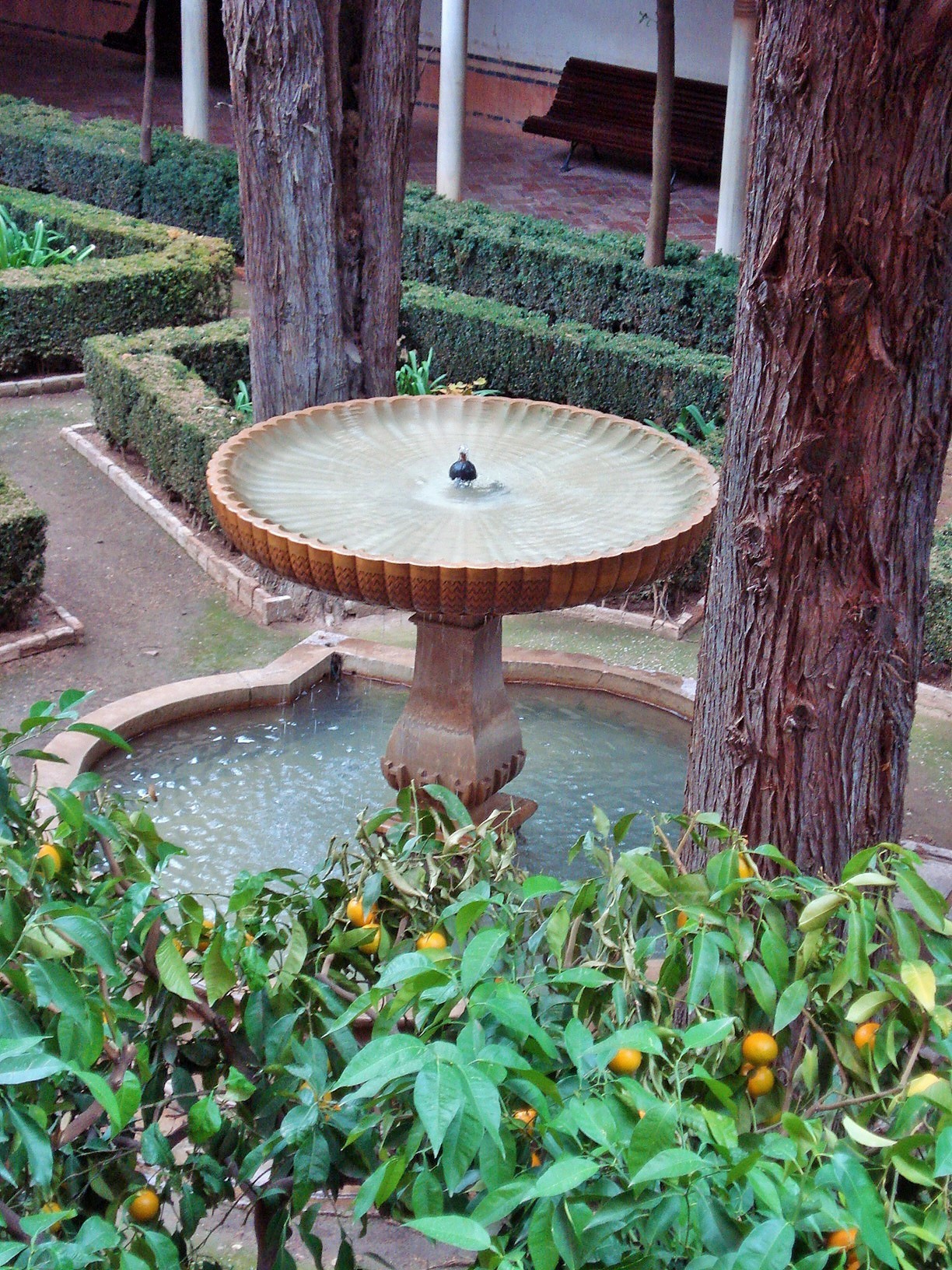
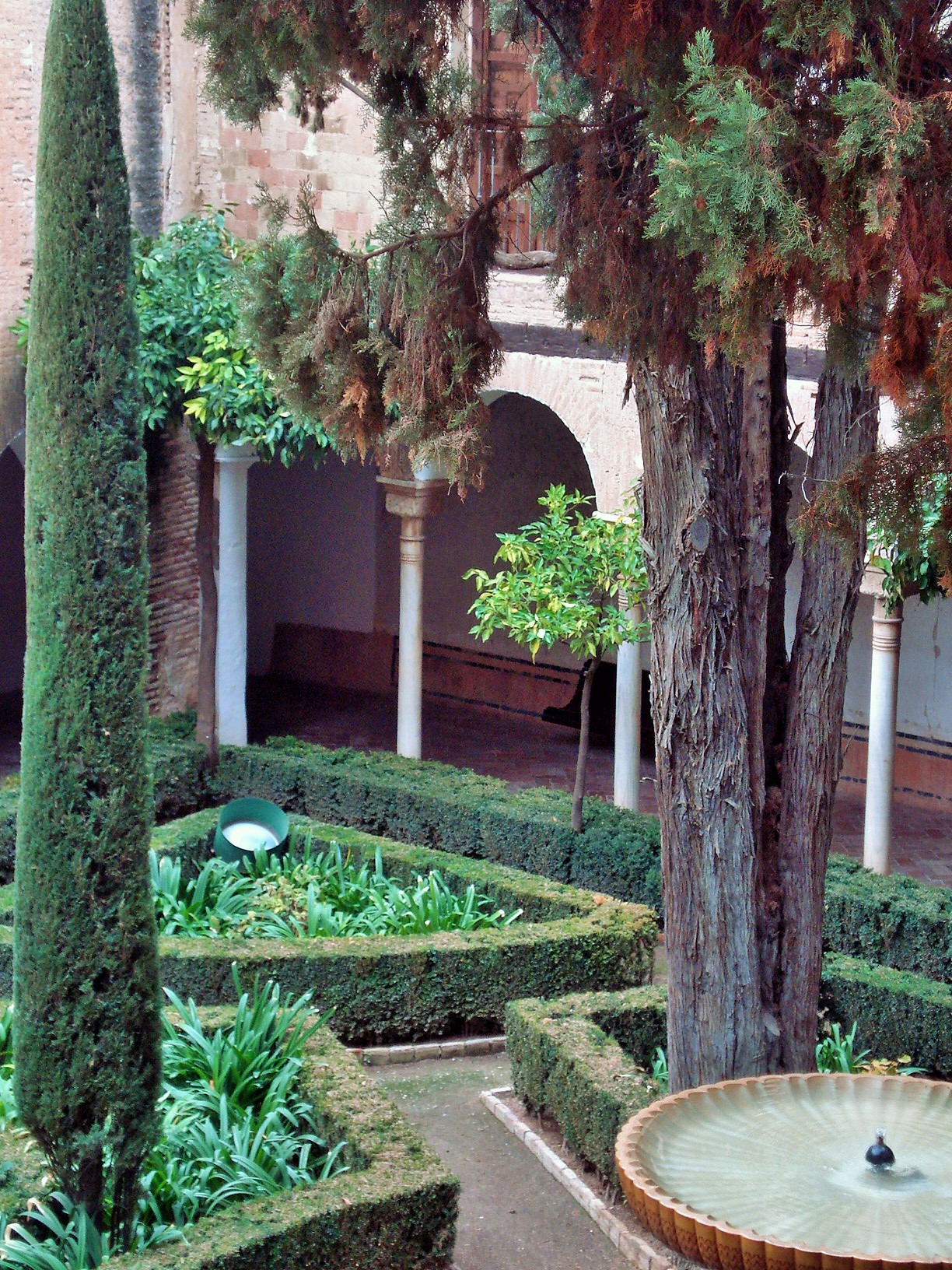
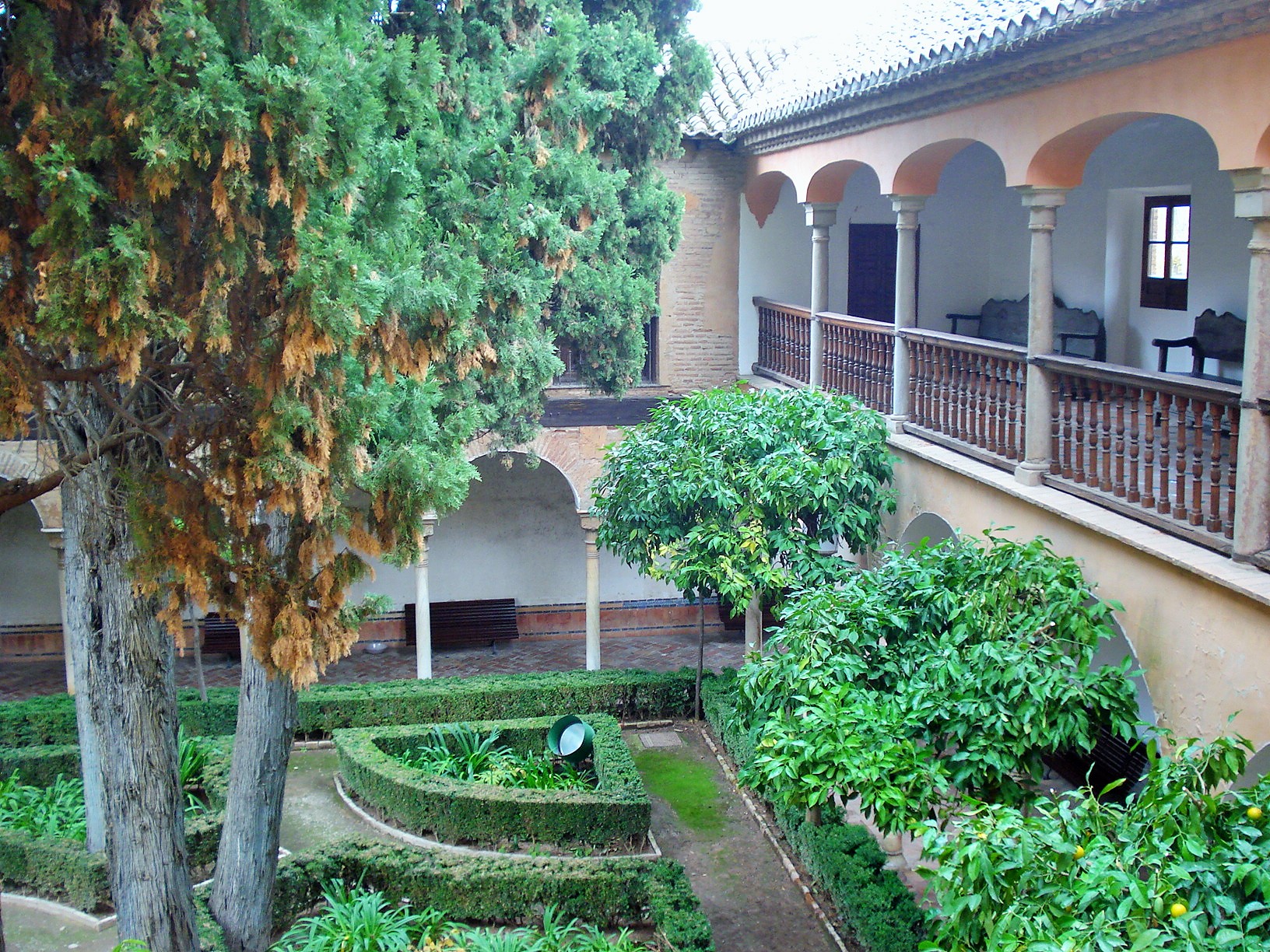
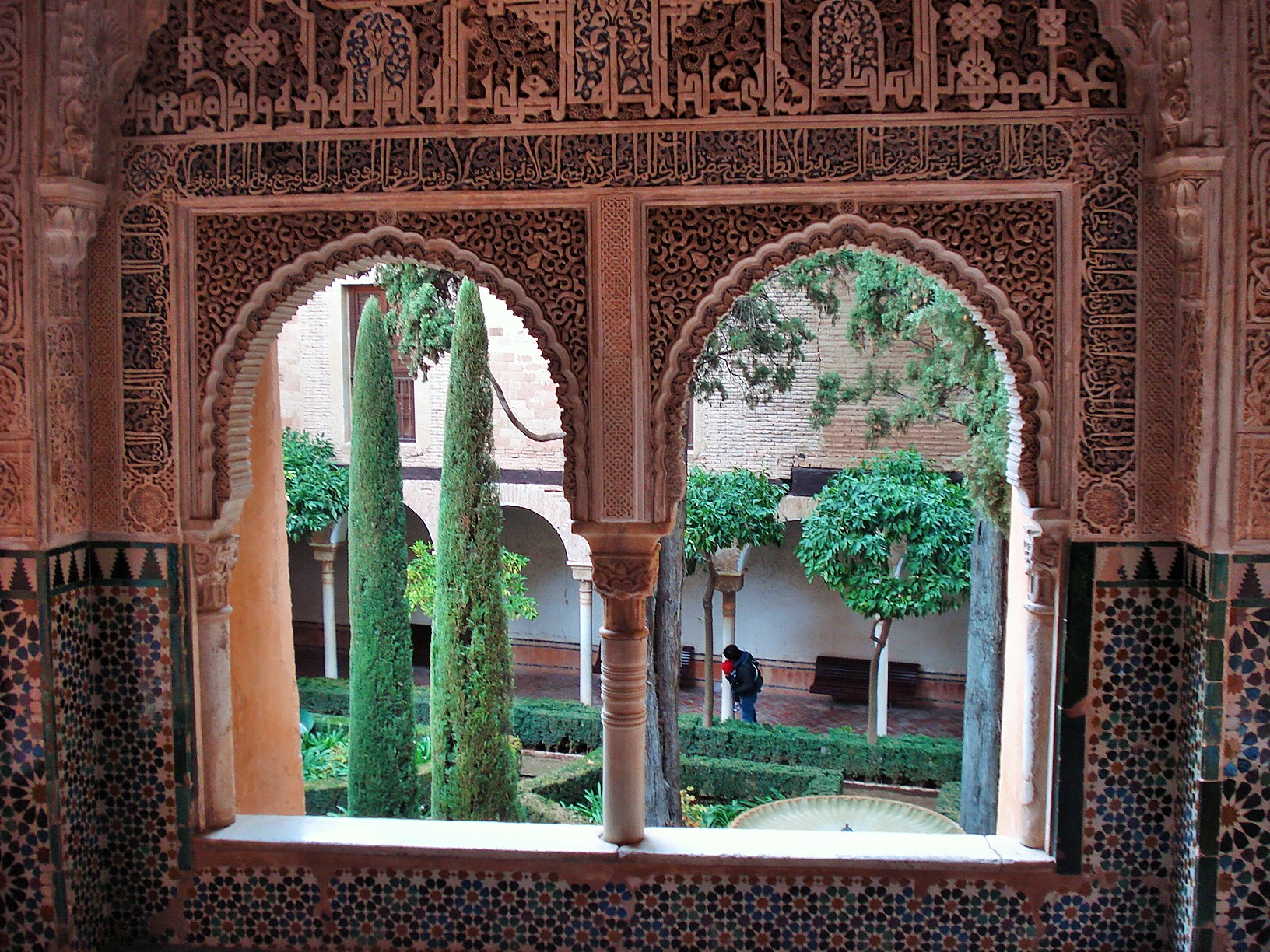
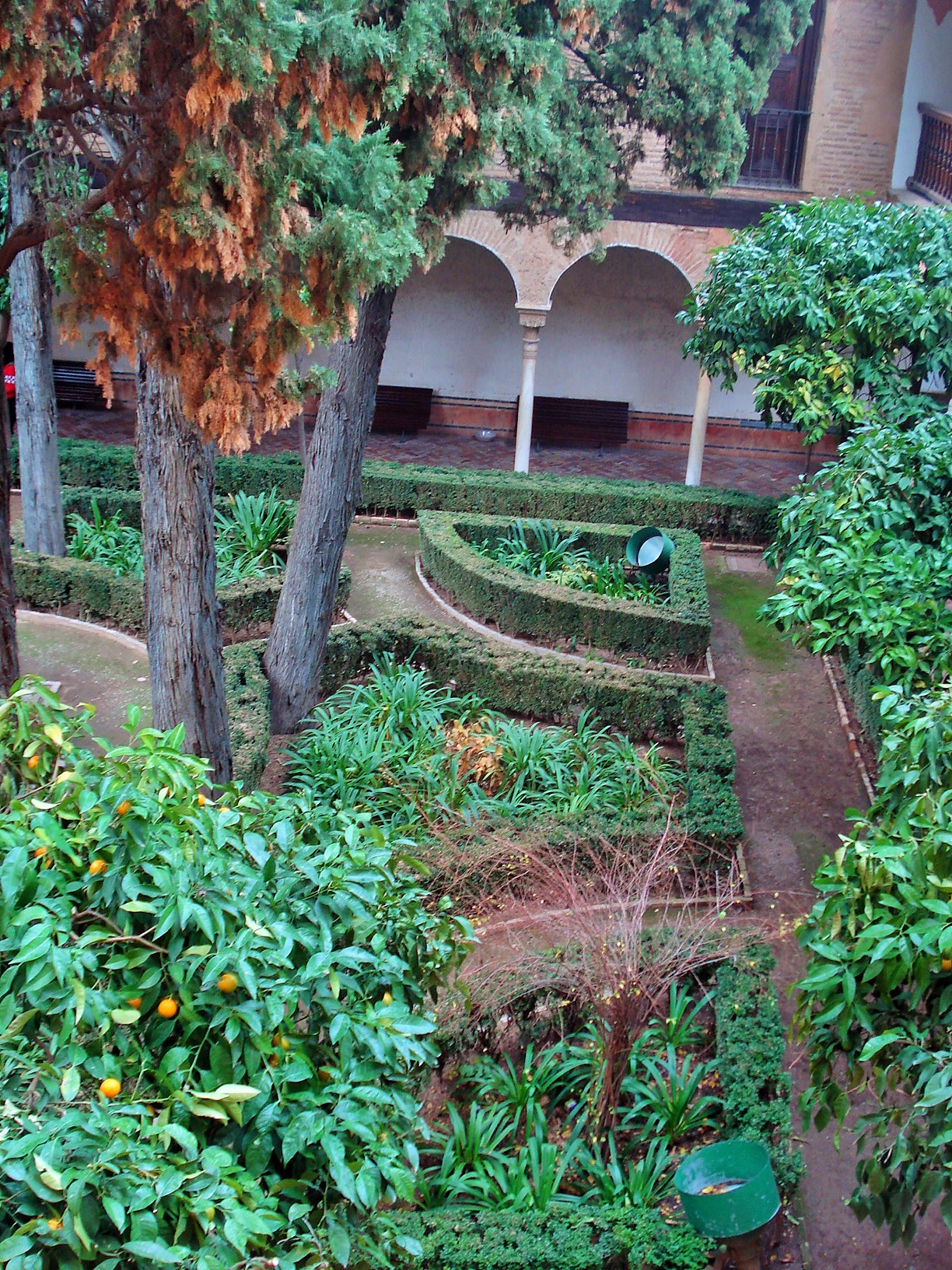
Alhambra’s Patio de Lindaraja: Courtyards in Granada, Spain

Granada, in southern Spain,  is of course most famous for the Alhambra and Generalife gardens.  The patios of the Alhambra are iconic images of Granada.  While not as famous as the Patio de los Leones, the Patio de Lindaraja is the most garden-like of the patios and a green oasis in this stunning palace. It is enclosed by arched columns and ornate galleries above, from which a sweeping view of the city below can be seen. From the garden below, the effect is almost monastic.

DSC00506 DSC00507 DSC00509 DSC00510 DSC00512 DSC00513 DSC00515 DSC00516 DSC00518 DSC00520 DSC00521 DSC00522 DSC00523 DSC00502 DSC00503 DSC00504 DSC00505


Alhambra’s Iconic Patios & Courtyards in Granada, Spain

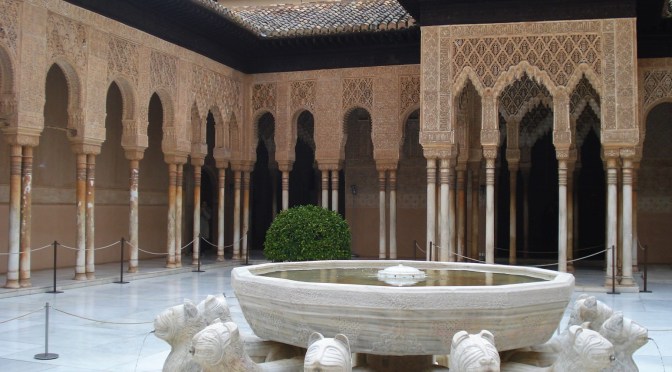
Granada, in southern Spain,  is of course most famous for the Alhambra and Generalife gardens.  The patios of the Alhambra are iconic images of Granada.  Best known are the Patio the los Mirtos and the Patio de los Leones.

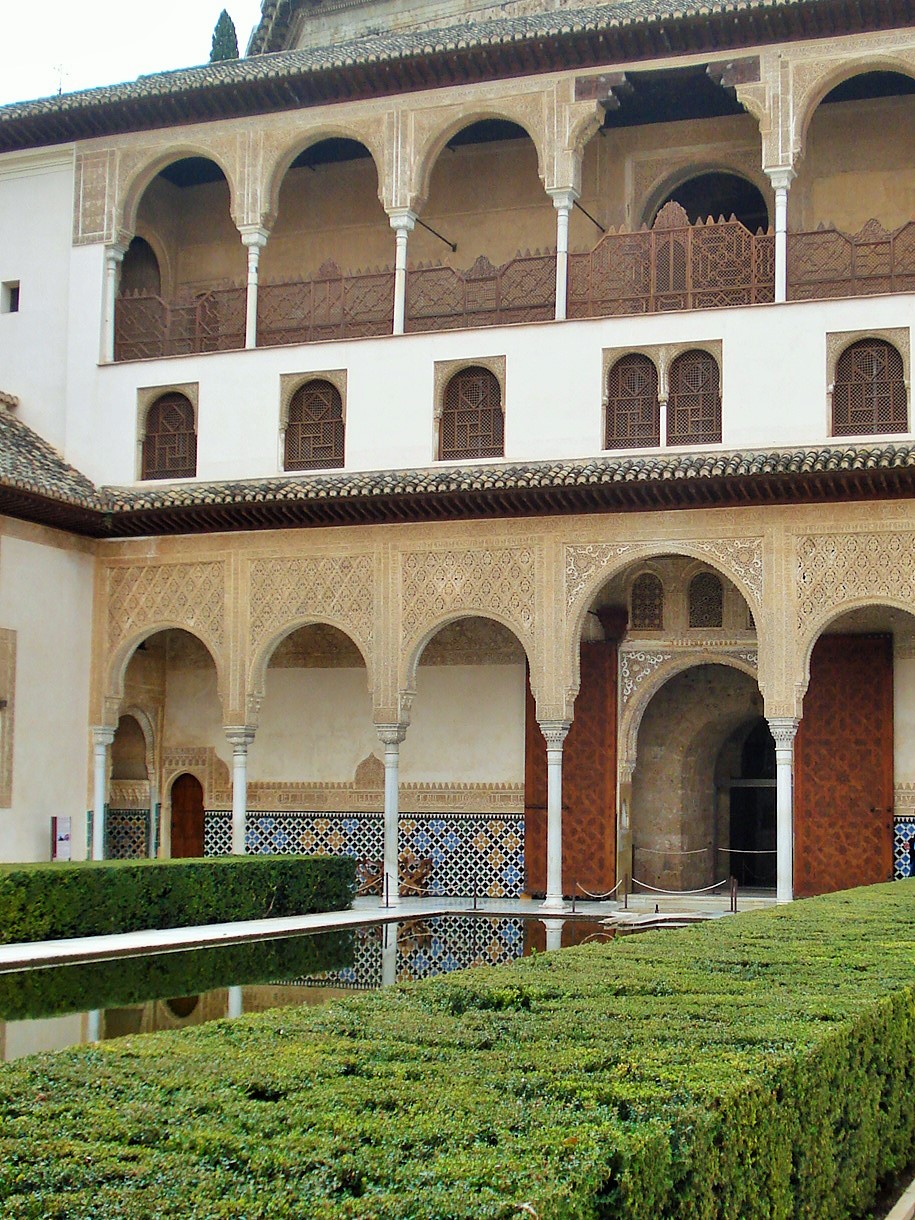
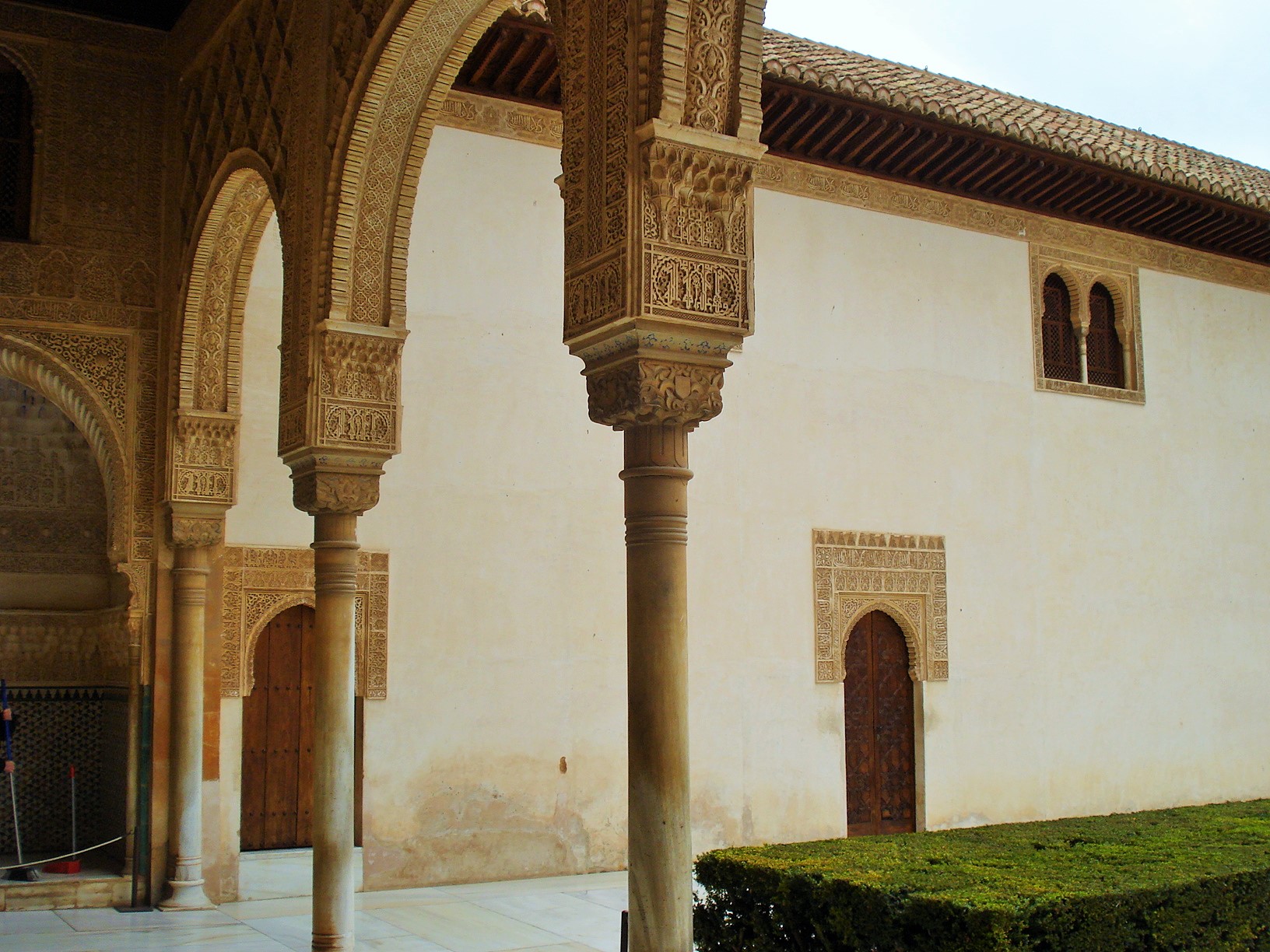
According to Wikipedia, “The Court of the Myrtles (Patio de los Arrayanes) is part of the palace and fortress complexe of the Alhambra. It is located east of the “Guilded Room” (Cuarto Dorado) and west of the “Patio of the Lions” and the Baths. Its current name is due to the myrtle bushes that surround the central pond and the bright green colour of which contrasts with the white marble of the patio. It was also called the Patio of the Pondor or the Reservoir (Patio del Estanque o de la Alberca) because of the central pond, which is 34 metres long and 7,10 meters wide.[1] The patio is divided in two sides by the pond, which receives its water from two fountains. The espace has chambers and porticoes around it. These porticoes rest on columns with cubic capitals, which have seven semicircular arches decorated with fretwork rhombuses and inscriptions praising God. The central arch is greater than the other six and has solid scallops decorated with stylised vegetal forms and capitals of mocarabes.”

DSC00460

DSC00461 DSC00463 DSC00464 DSC00465 DSC00466 DSC00467 DSC00470 DSC00472 DSC00473 DSC00474 DSC00475

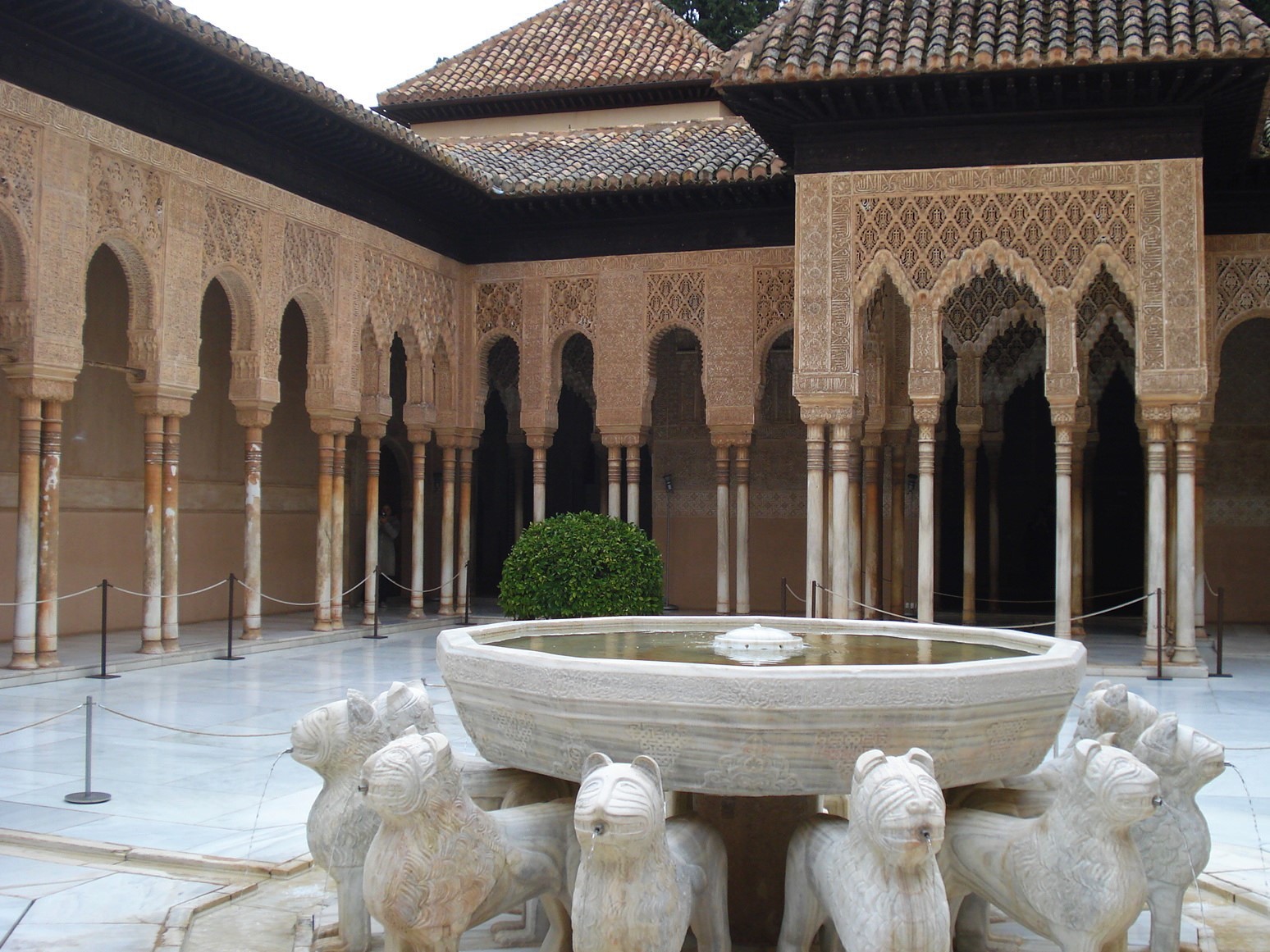
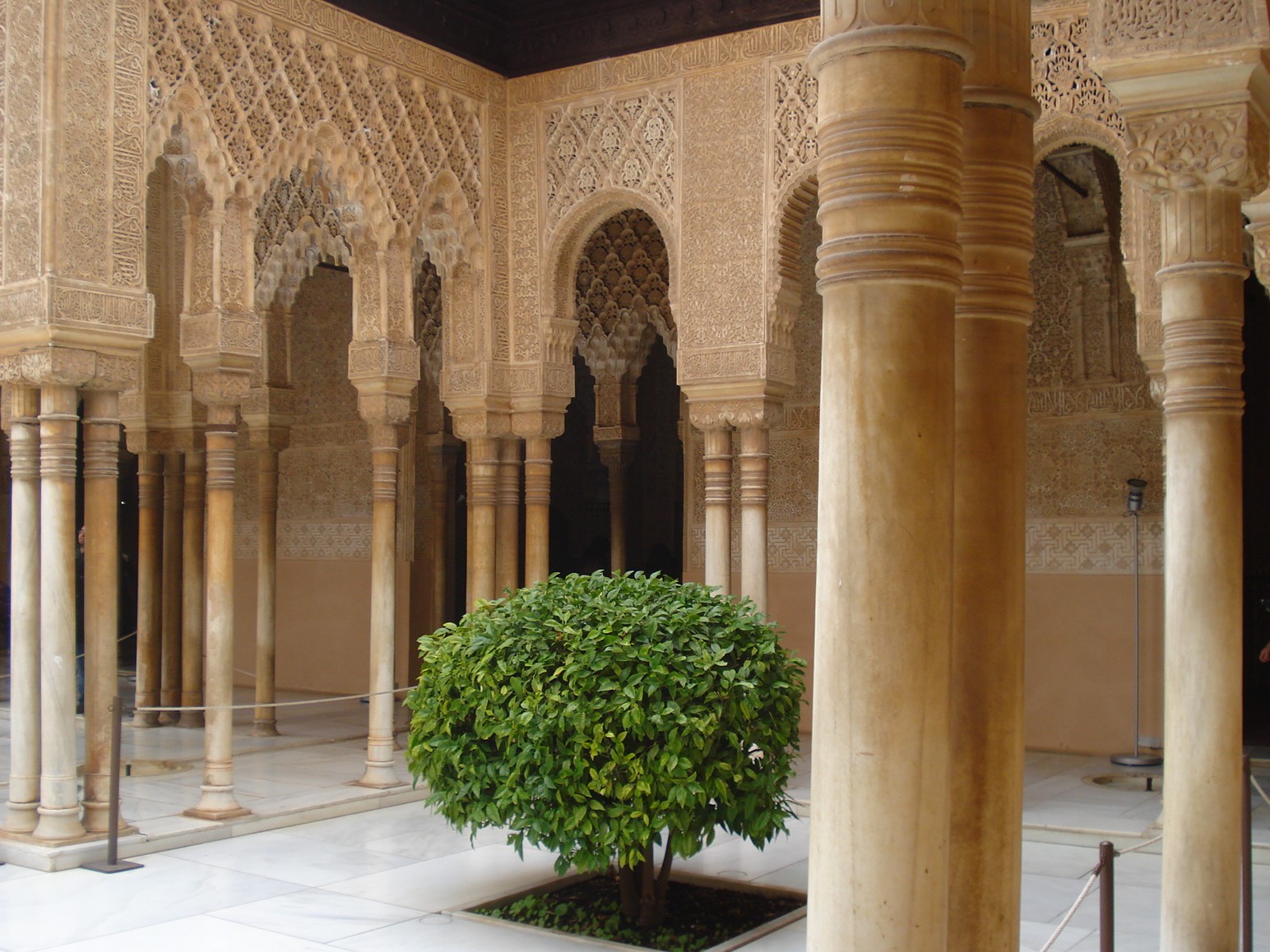
Also in Wikepedia, “The Courtyard of the Lions is an oblong courtyard, 35 m in length and 20 m in width, surrounded by a low gallery supported on 124 white marble columns. A pavilion projects into the courtyard at each extremity, with filigree walls and light domed roof, elaborately ornamented. The square is paved with coloured tiles, and the colonnade with white marble; while the walls are covered 1.5 m up from the ground with blue and yellow tiles, with a border above and below enamelled blue and gold. The columns supporting the roof and gallery are irregularly placed, with a view to artistic effect; and the general form of the piers, arches and pillars is most graceful. They are adorned by varieties of foliage, etc.; above each arch there is a large square of arabesques; and over the pillars is another square of filigree work. In the center of the courtyard is the celebrated Fountain of Lions, a magnificent alabaster basin supported by the figures of twelve lions in white marble. ”

DSC00501 DSC00479 DSC00480 DSC00481 DSC00485 DSC00488 DSC00489 DSC00493 DSC00495


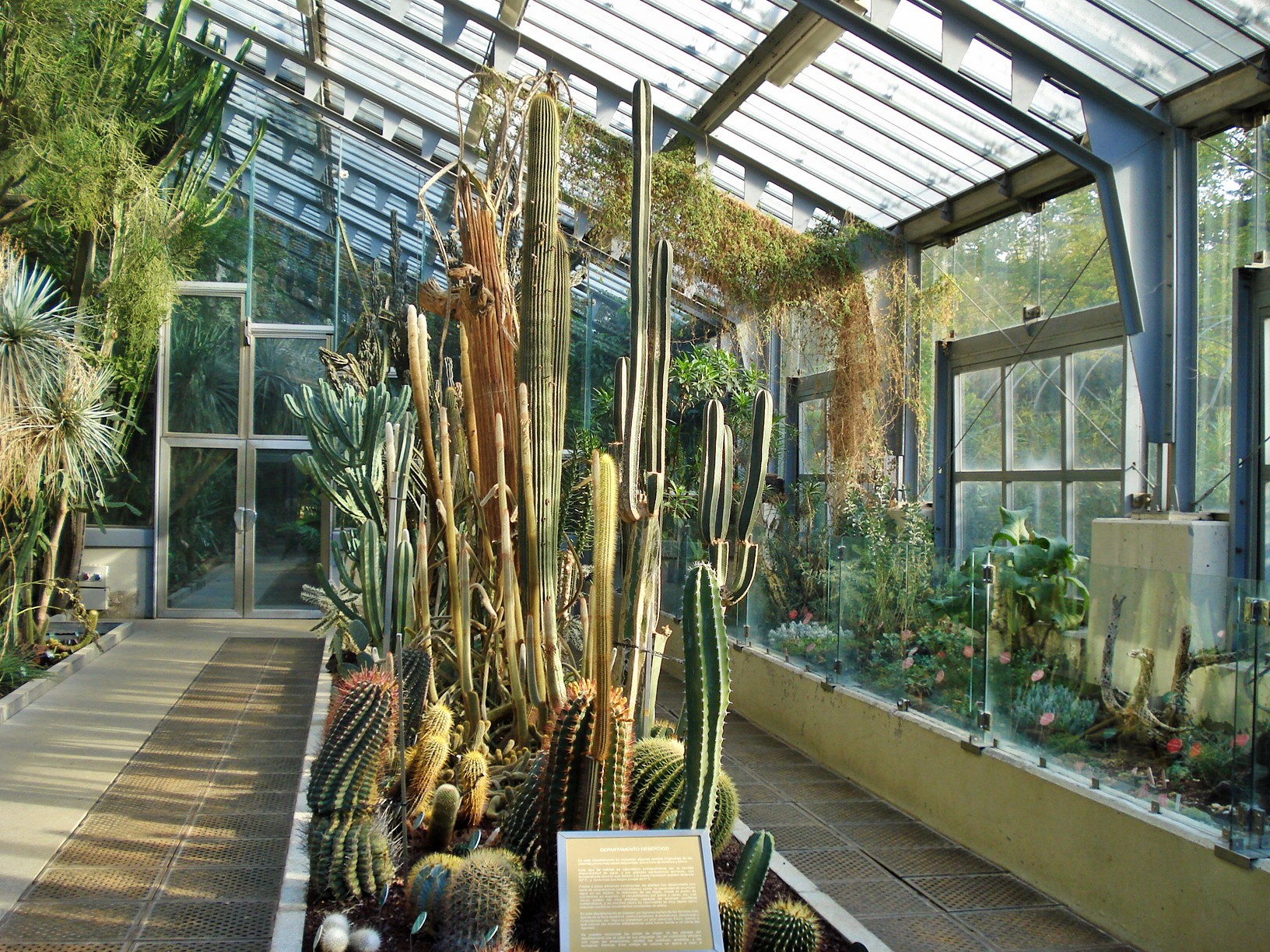
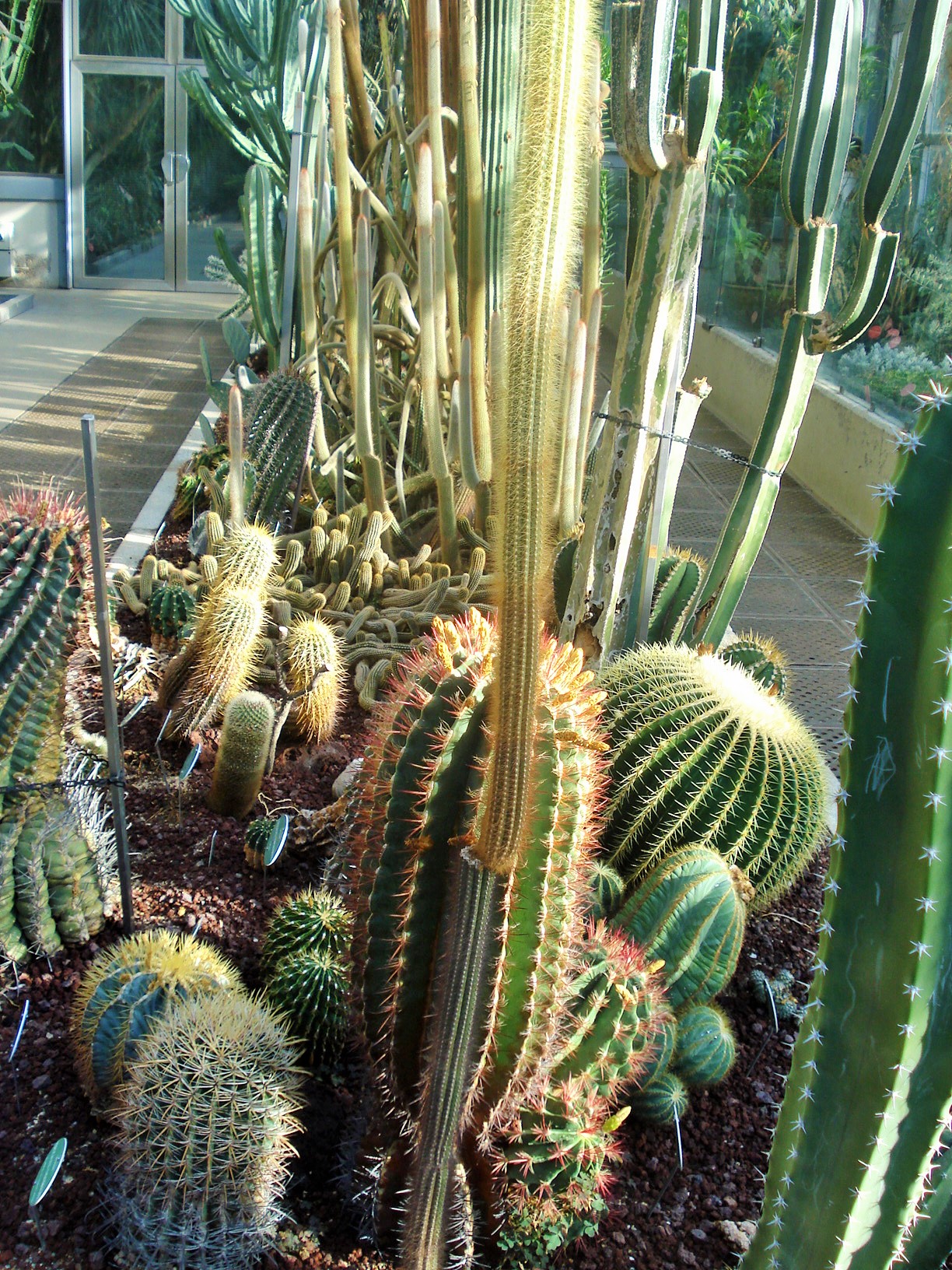
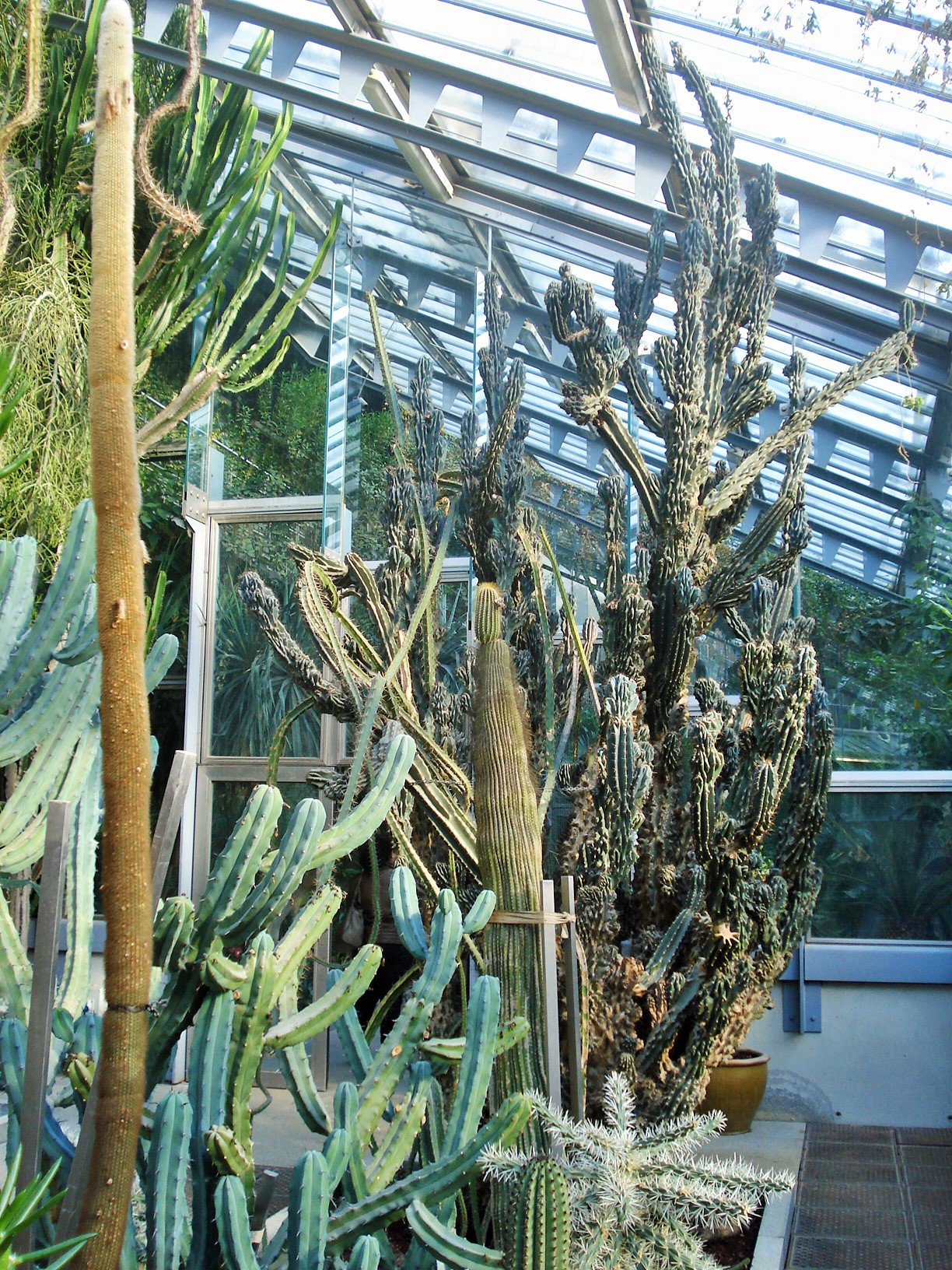
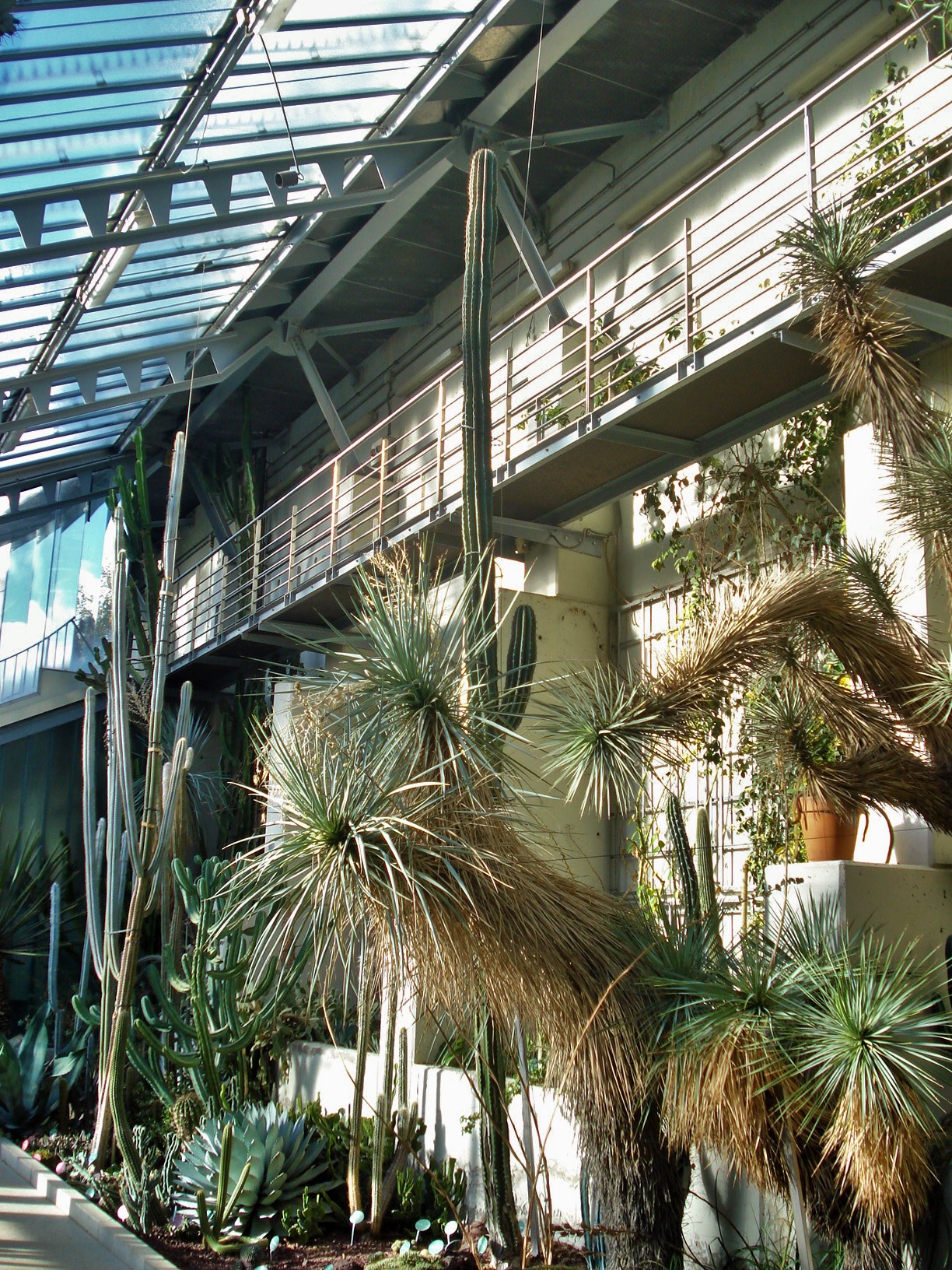
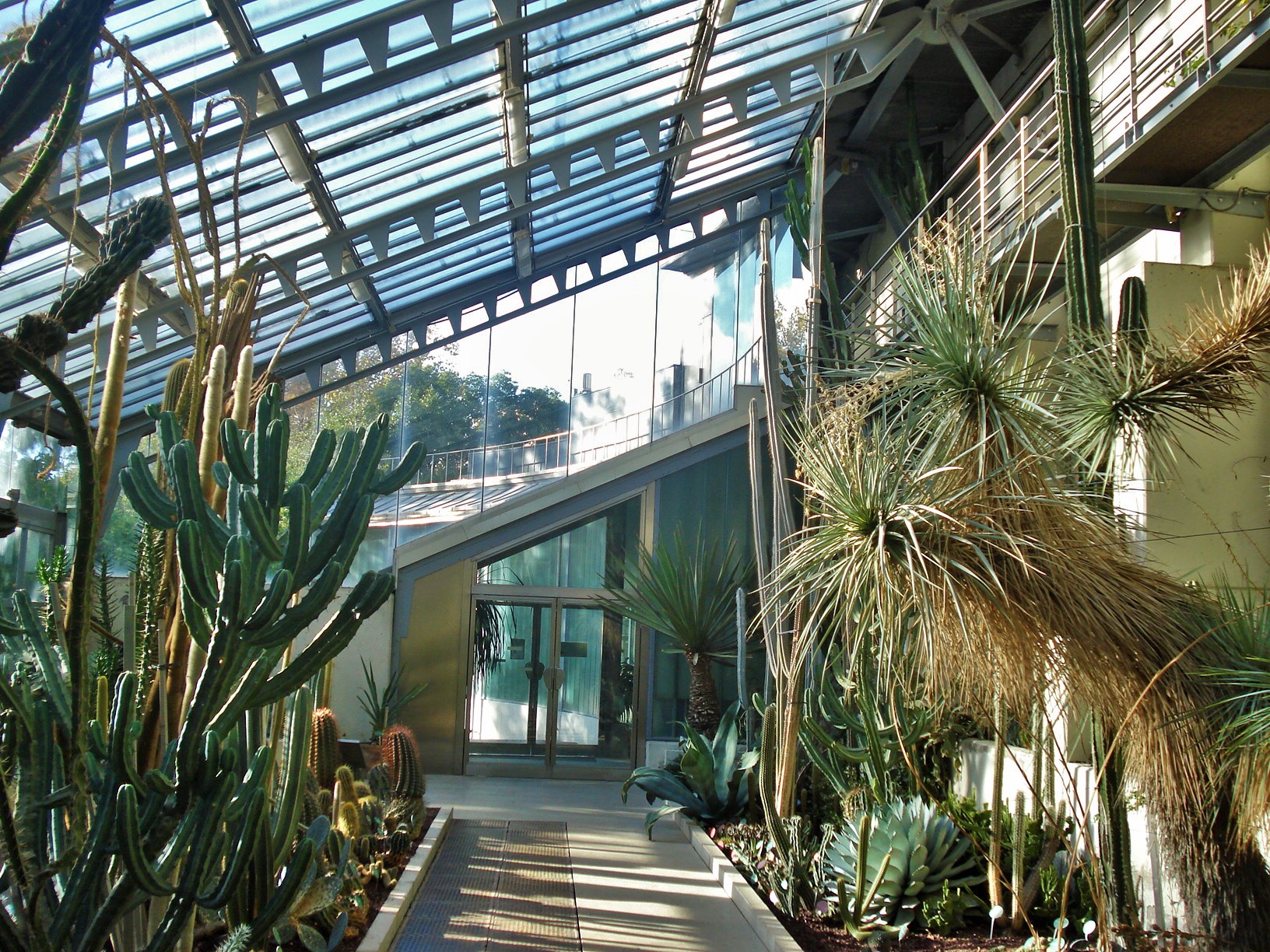
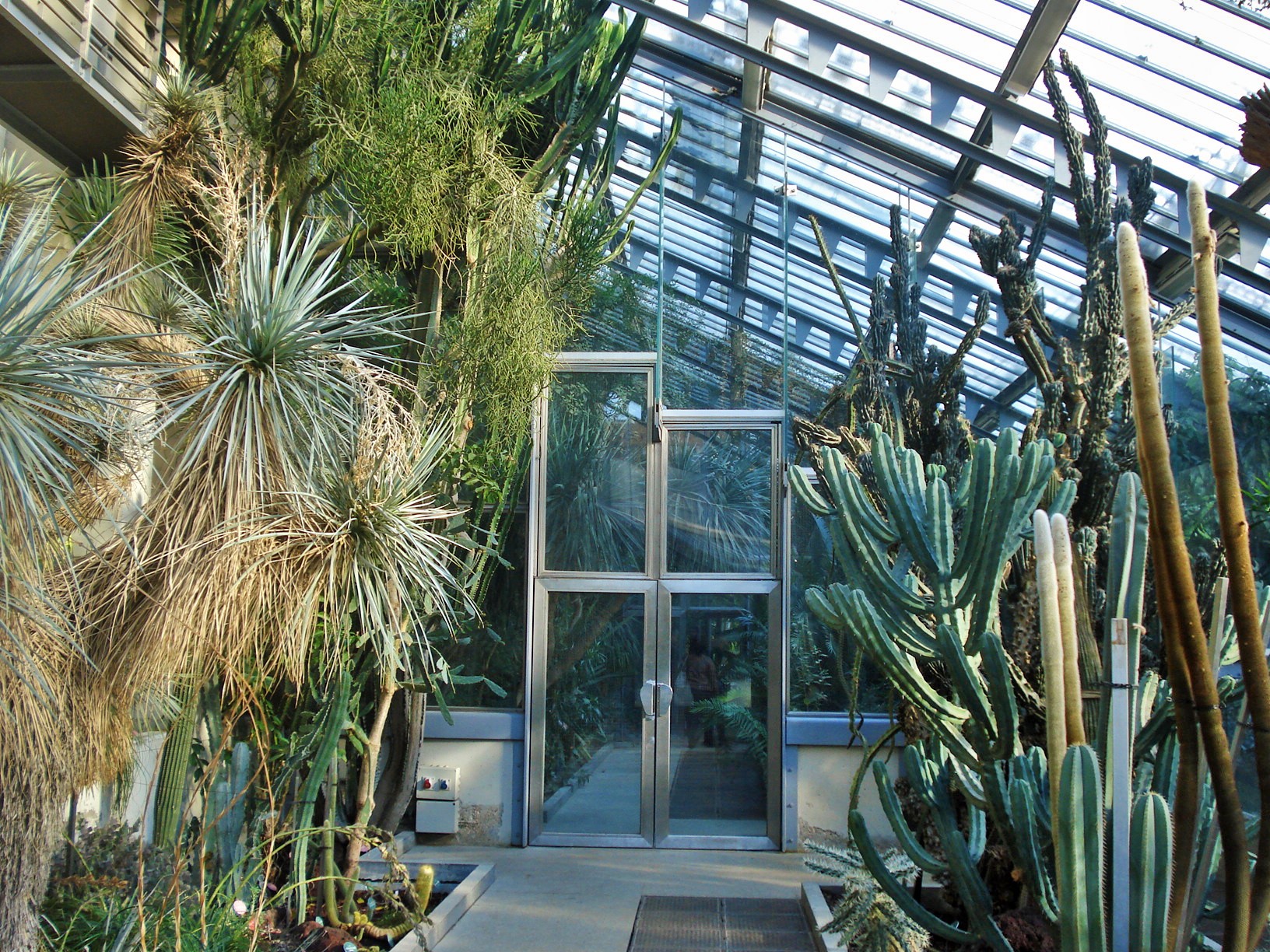
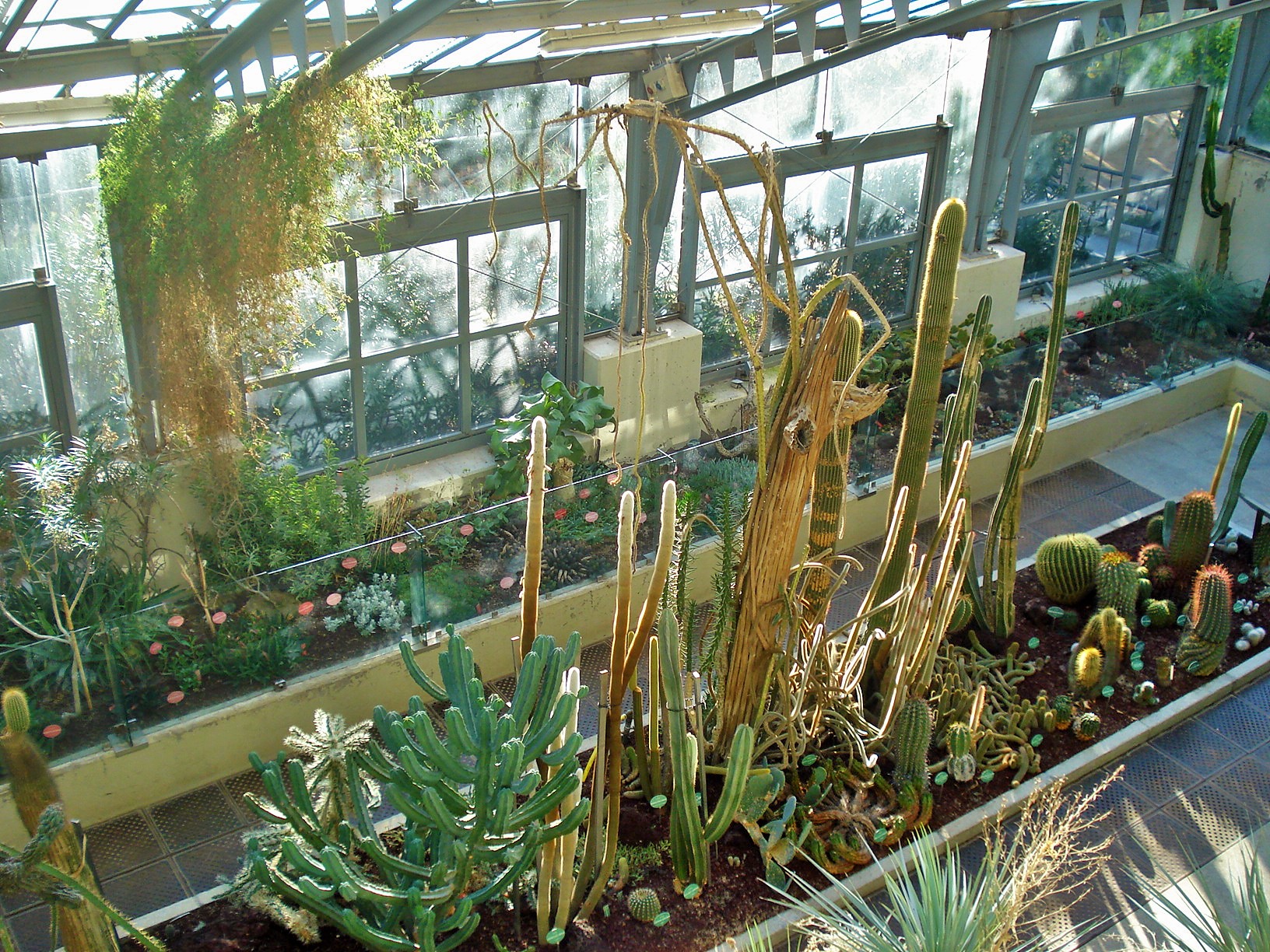
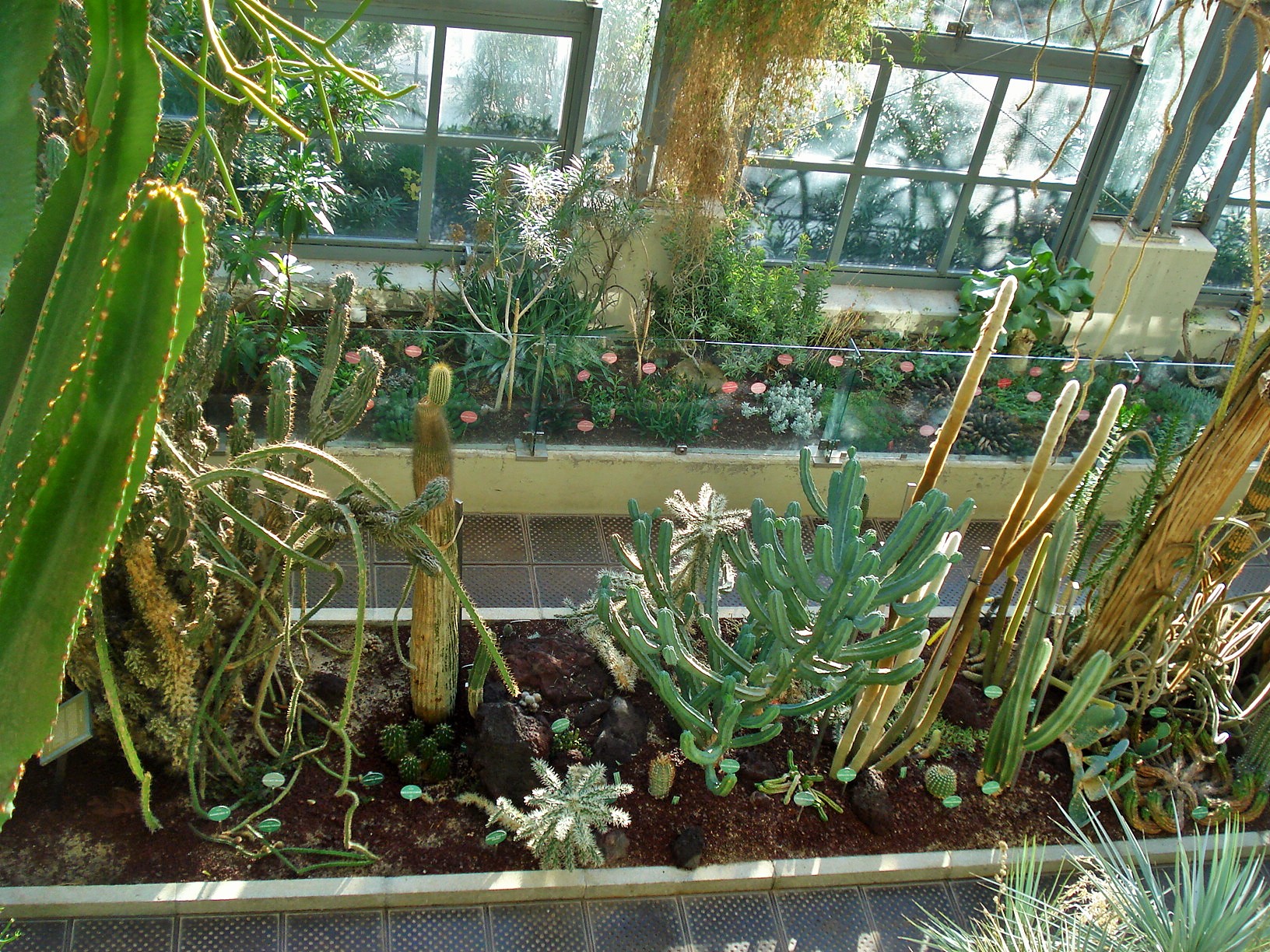
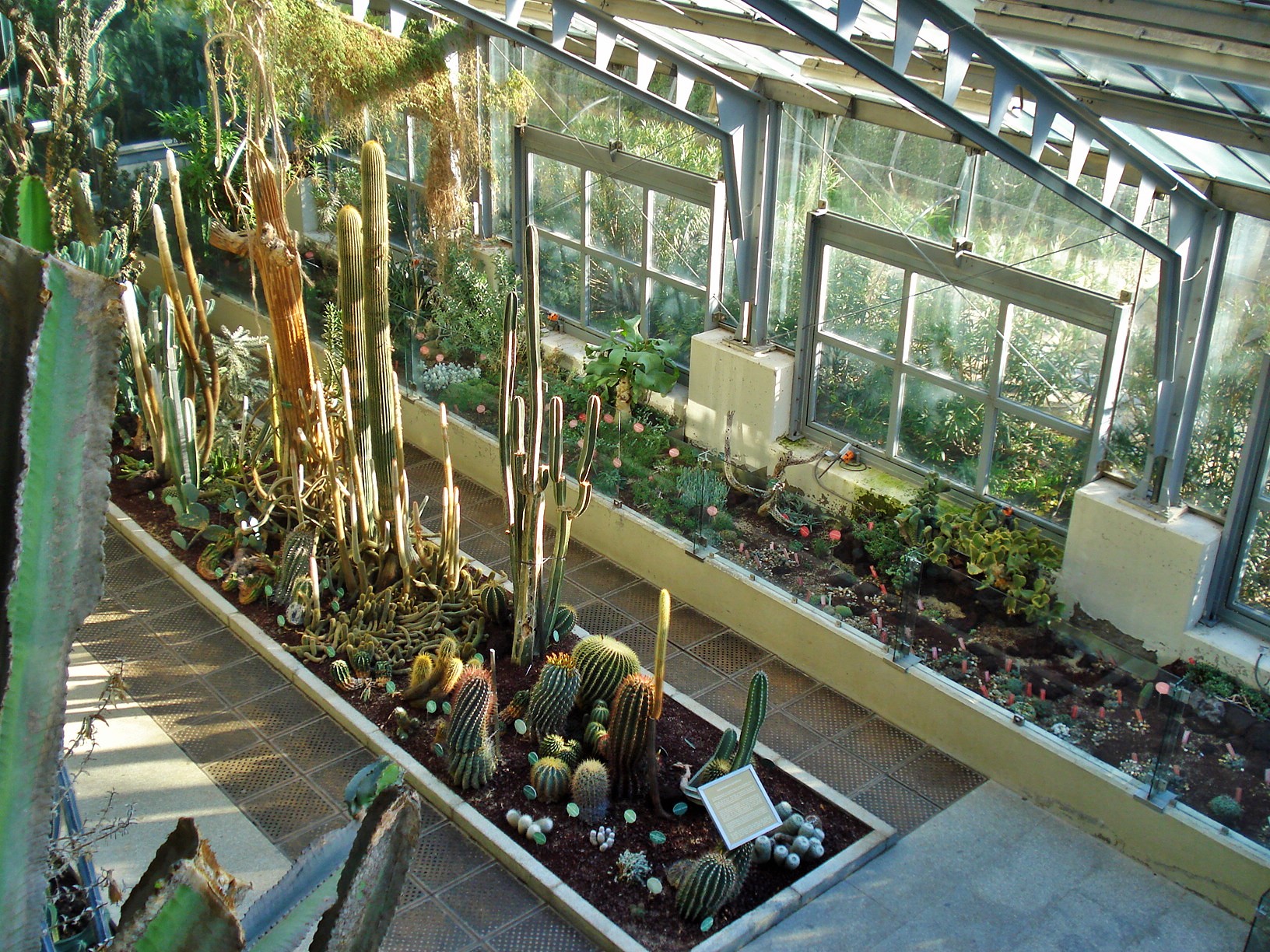
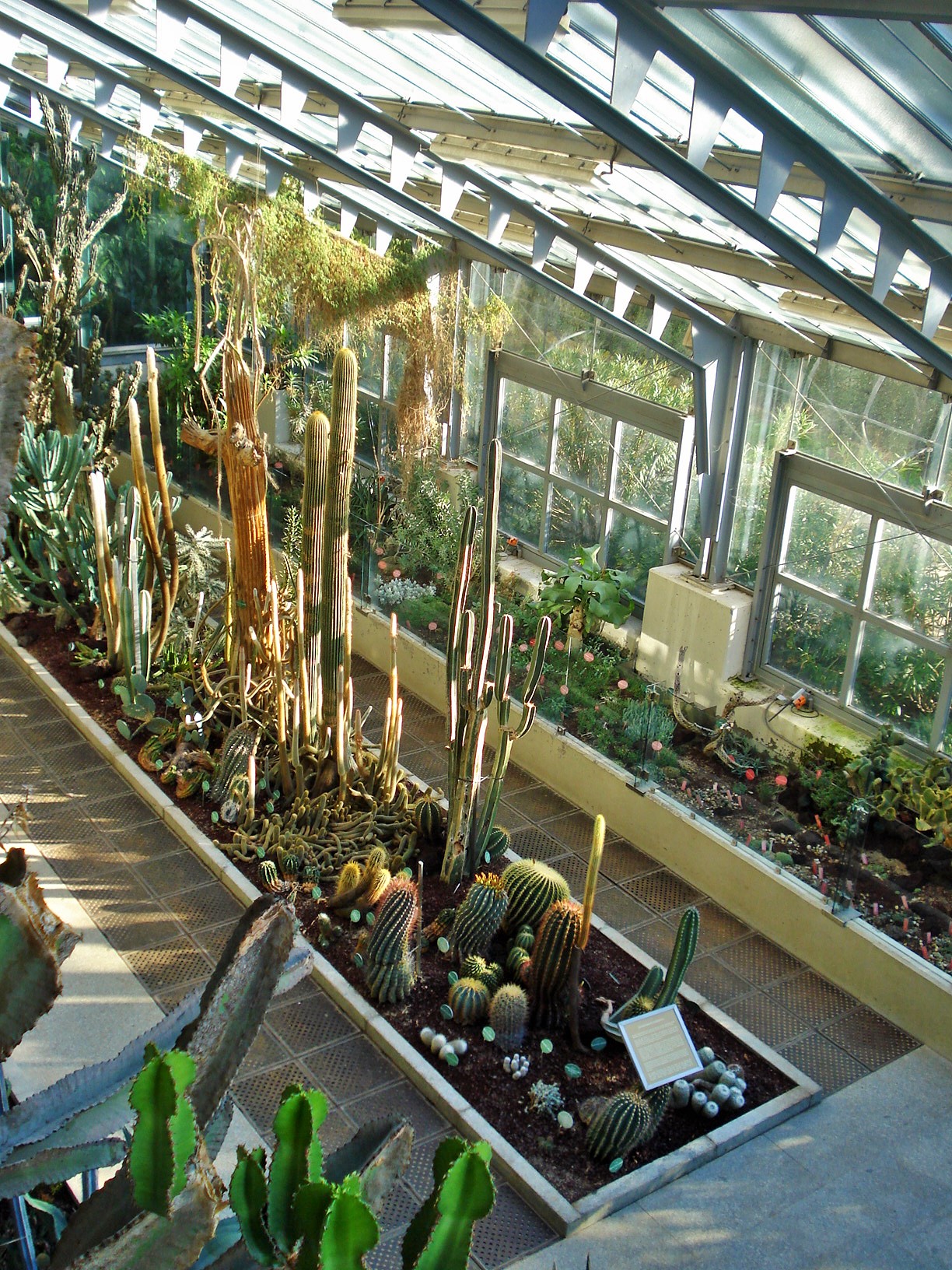
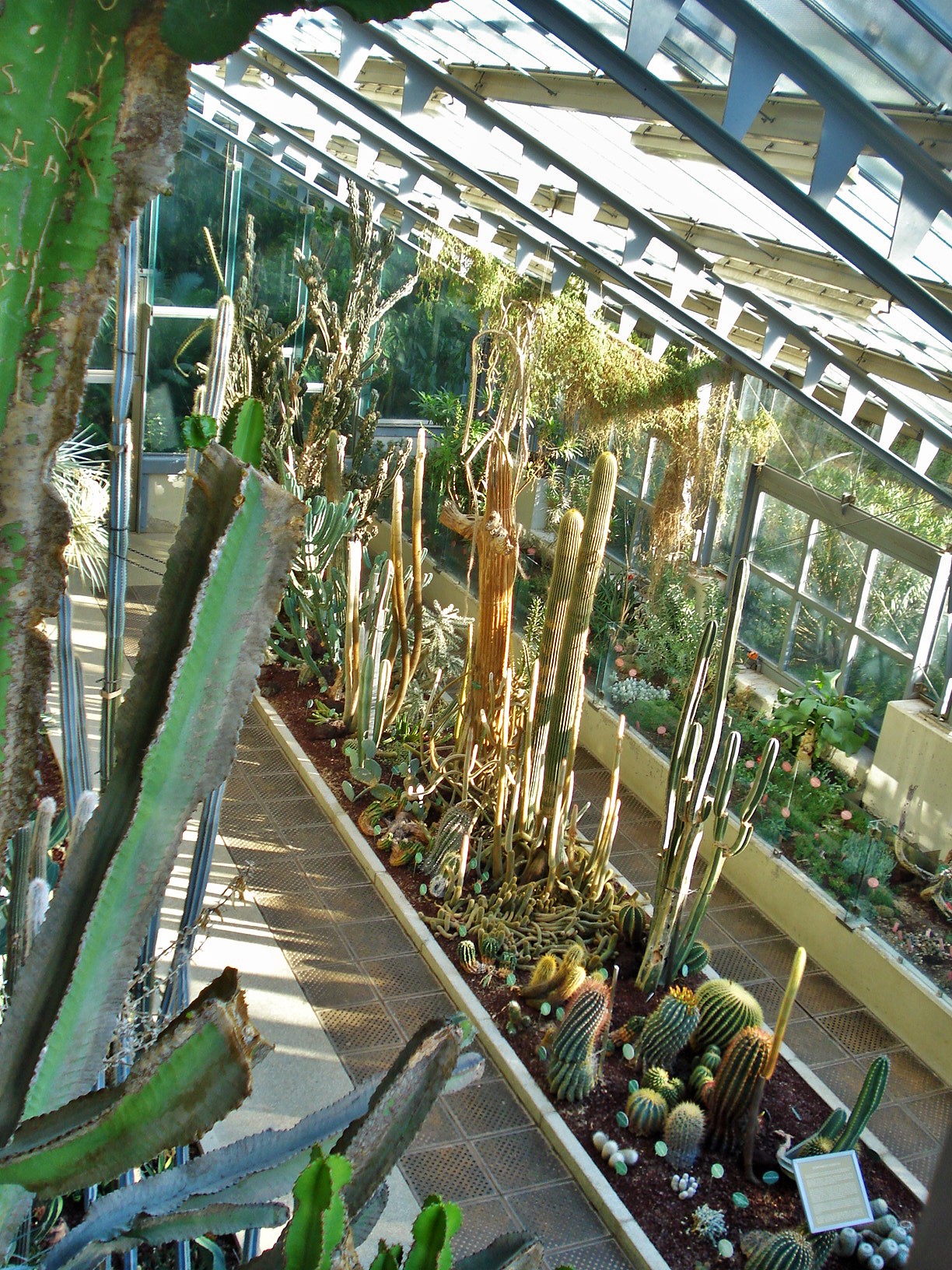
Madrid’s Royal Botanical Gardens: The Succulents Greenhouse

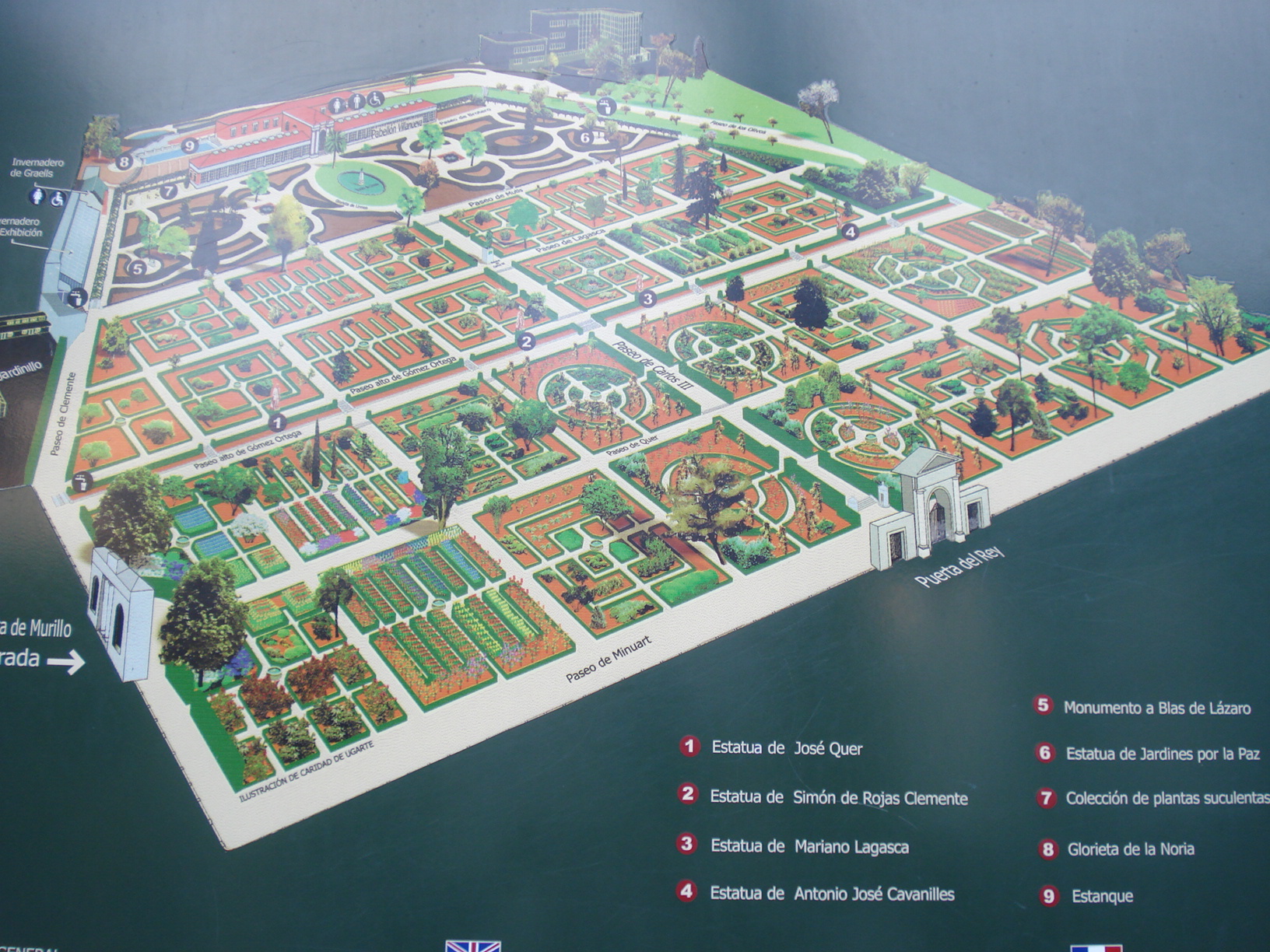
The Royal Botanical Gardens in Madrid cover eight hectares in the heart of the city, next to the world famous Prado museum. They were designed in the 18th century (1781) during the age of Enlightenment as part of a remodeling plan for the Prado area under Carlos III.

The gardens boast an amazing 30,000 plants, divided amongst smaller themed gardens such as the rose garden, the vegetable garden, the fruit garden, all laid out in squares along the central intersecting alleys. There is also a fantastic complex of greenhouses at one end, as well as a large pavilion and a long arbor covered in many varieties of grapevines.  It is laid out on four terraced levels.

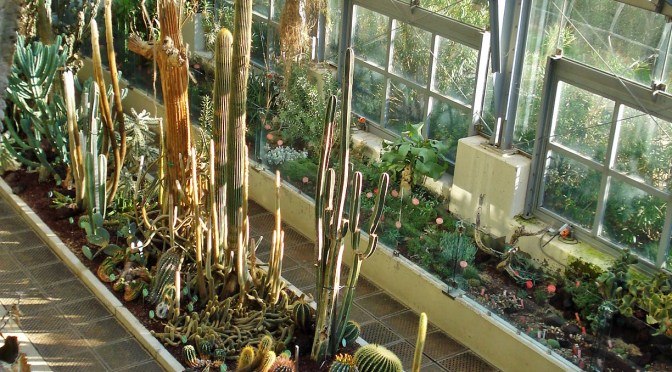
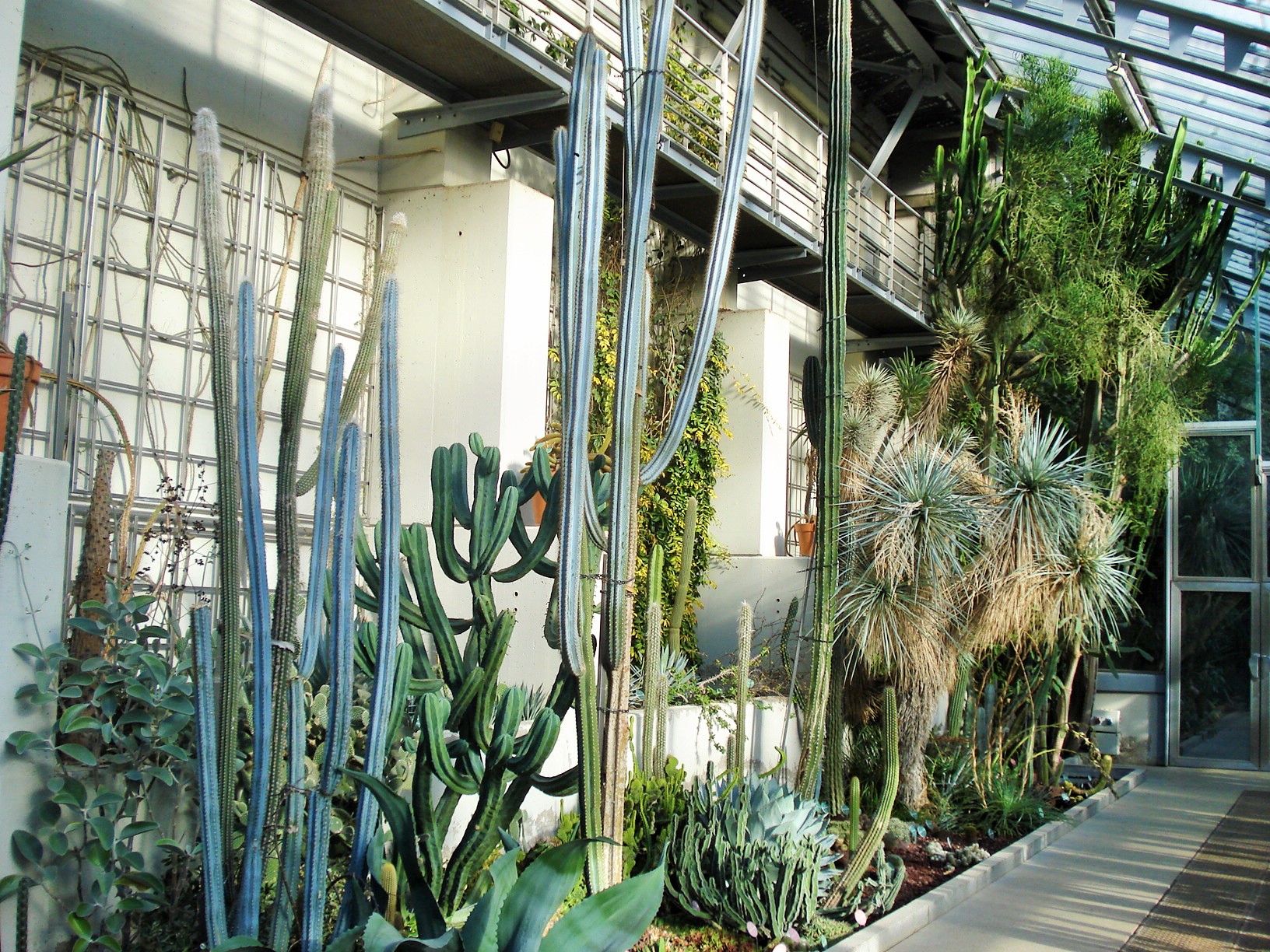
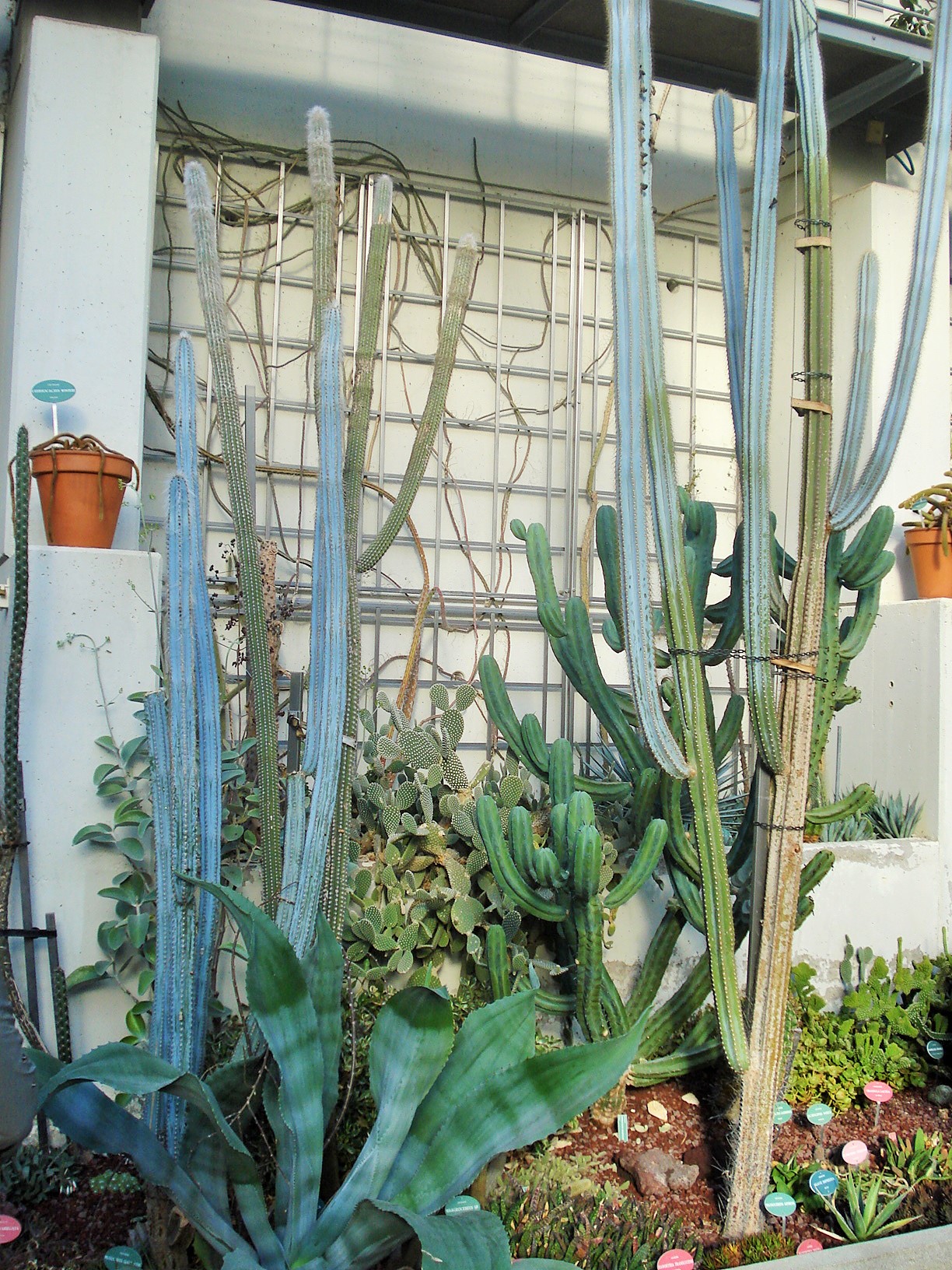
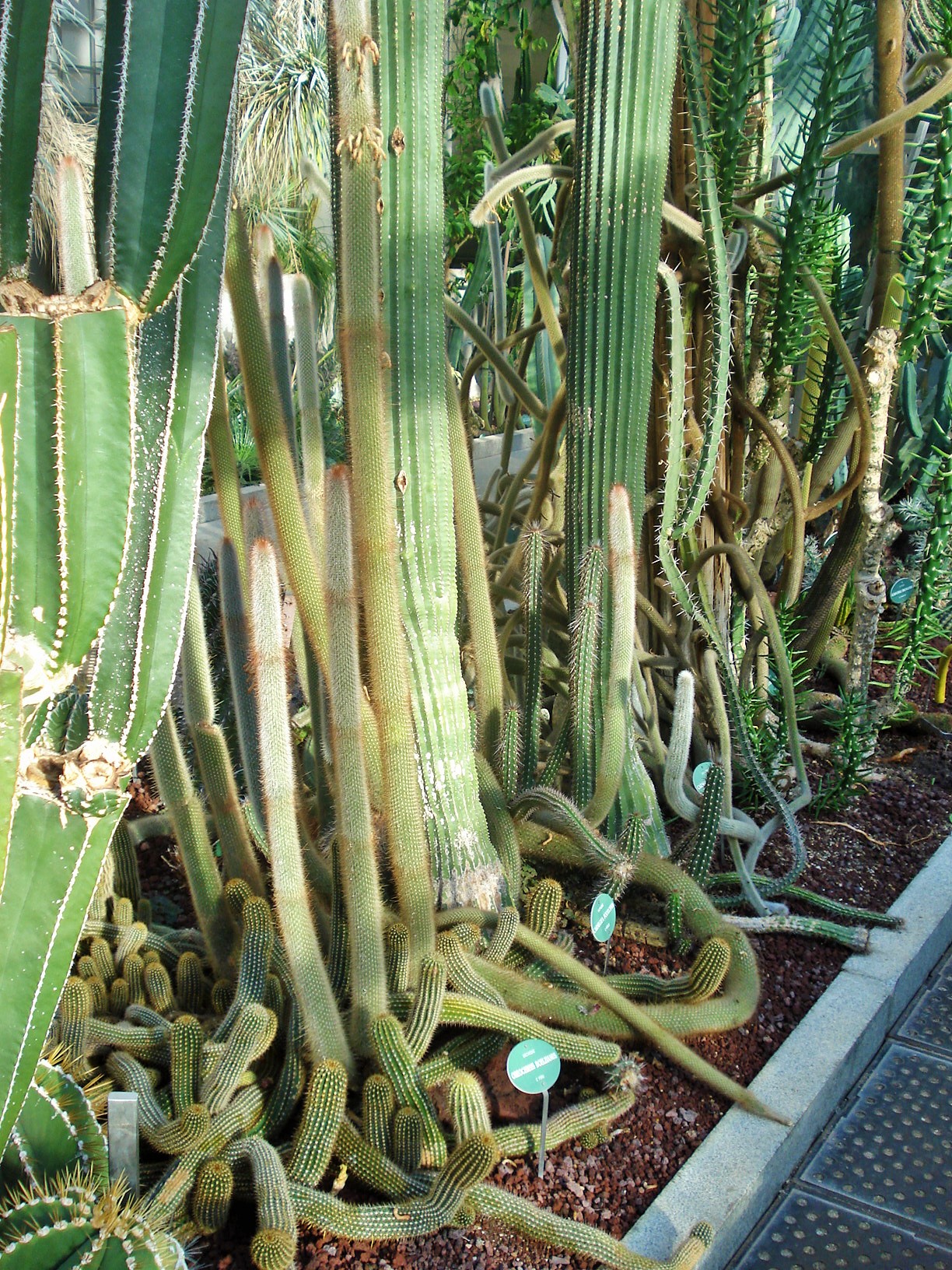
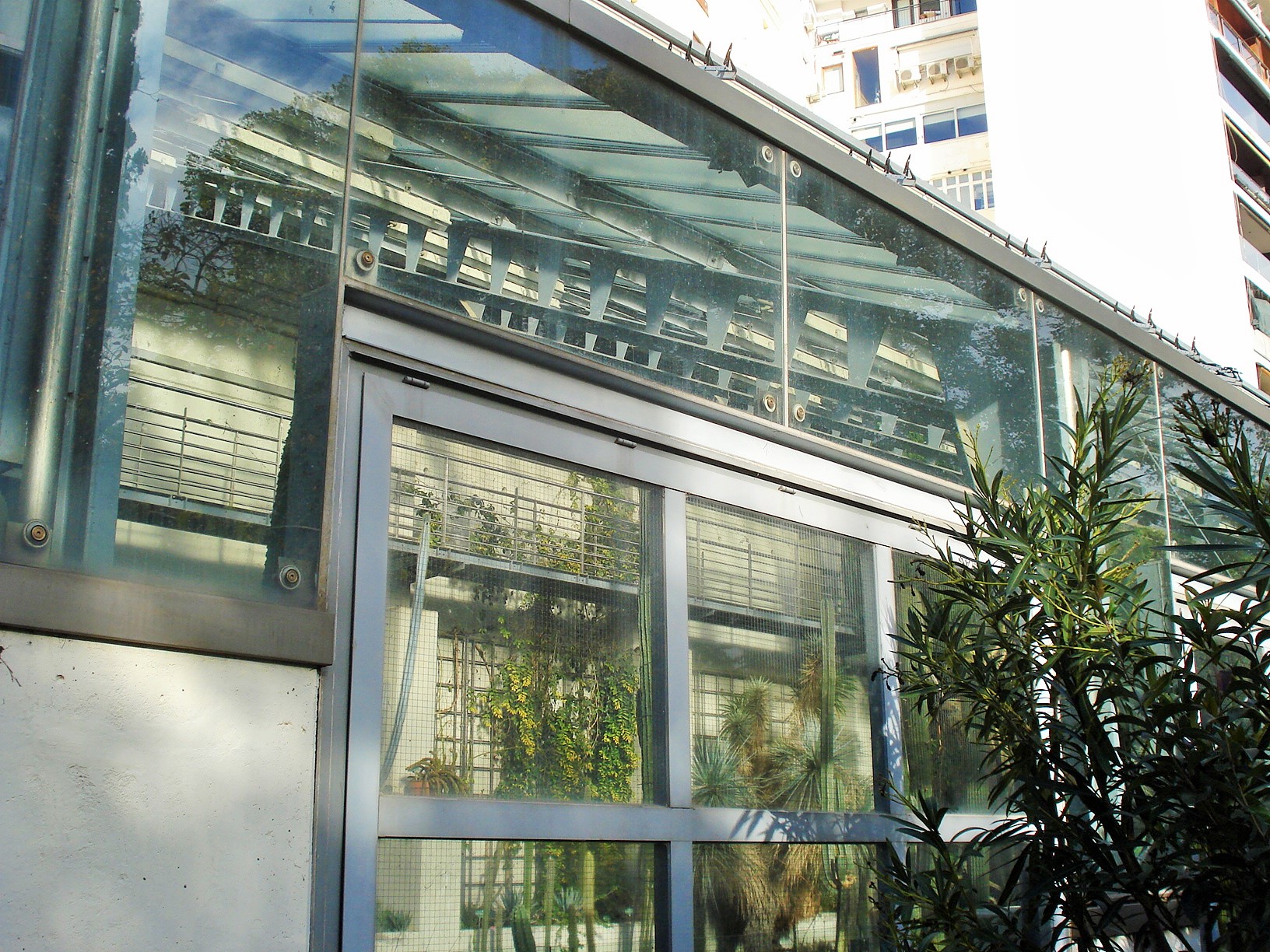
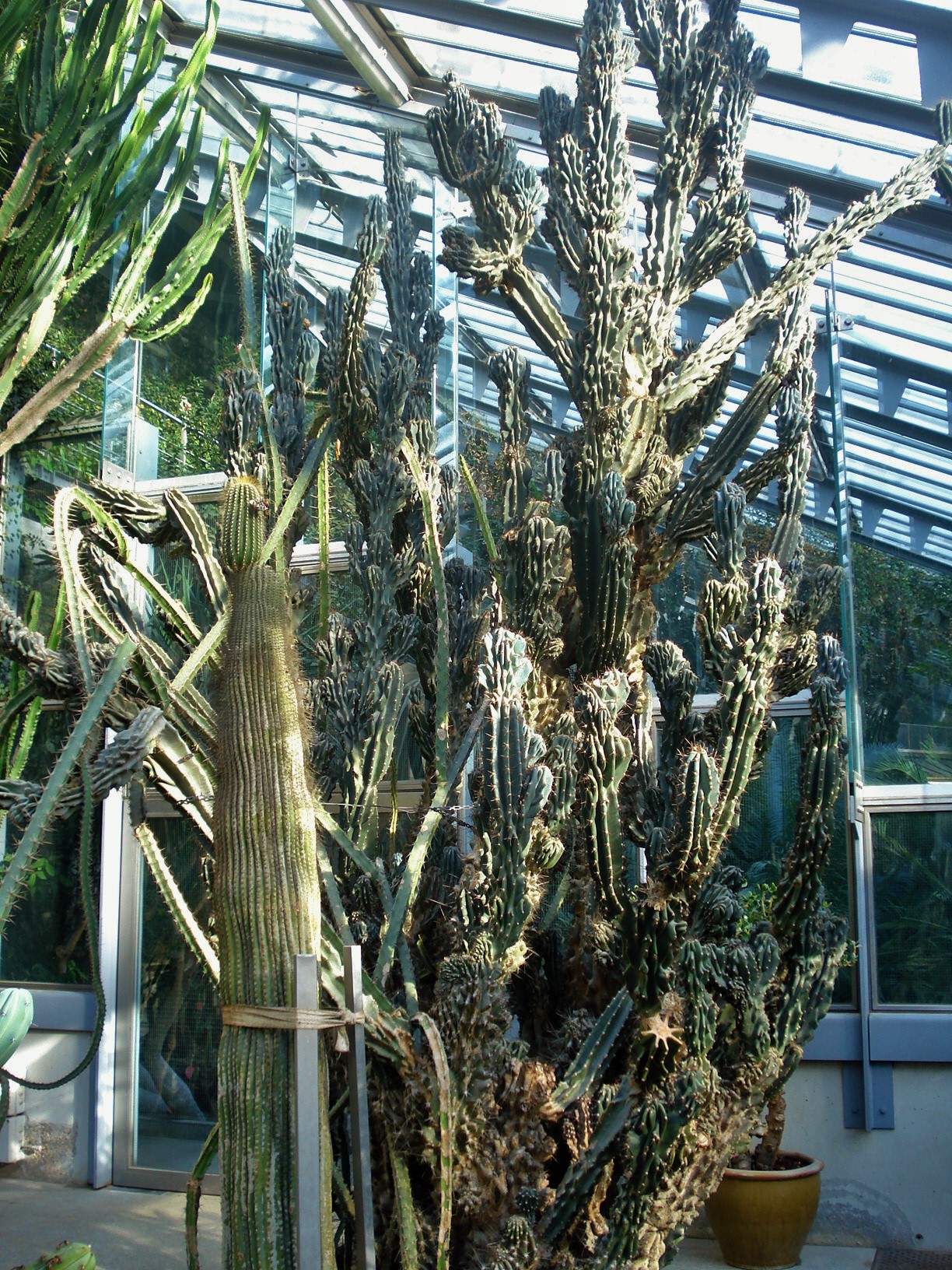
With such large and varied gardens, it would be impossible to cover it all in one post. In this post, I am featuring one of the more modern greenhouses, housing the gardens’ succulents collection. Note the use of vertical gardening on the very tall interior walls, as well as the catwalk along the top joining this greenhouse with the subtropical/tropical one.

DSC09047

 DSC08853DSC08854DSC08855DSC08857DSC08858DSC08859DSC08860DSC08861DSC08862DSC08863DSC08864DSC08865DSC08866DSC08867DSC08868DSC08869DSC08870DSC08871DSC08872DSC08873DSC08937DSC08938DSC08939DSC08940DSC08941DSC08942DSC08943DSC08851

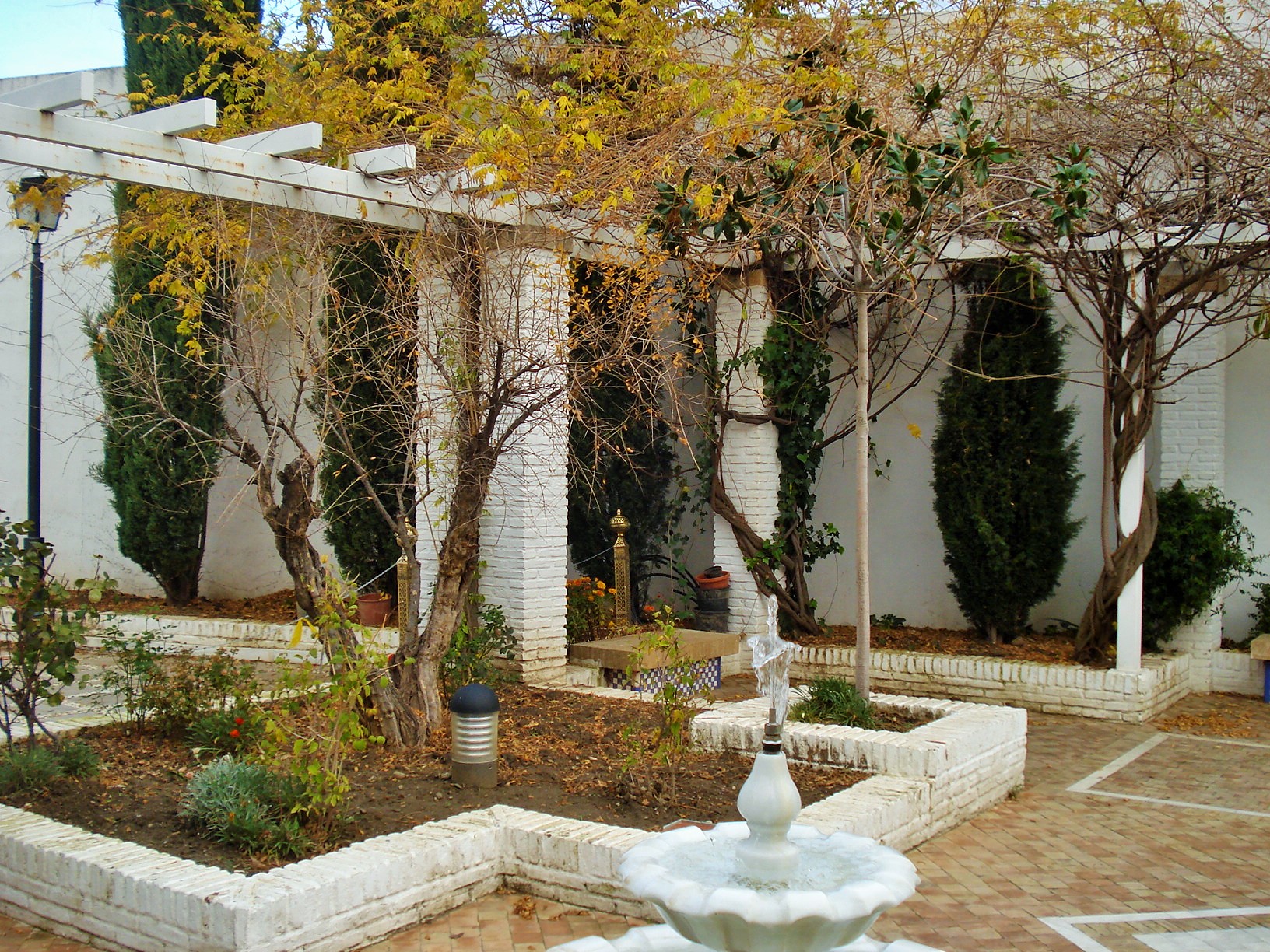
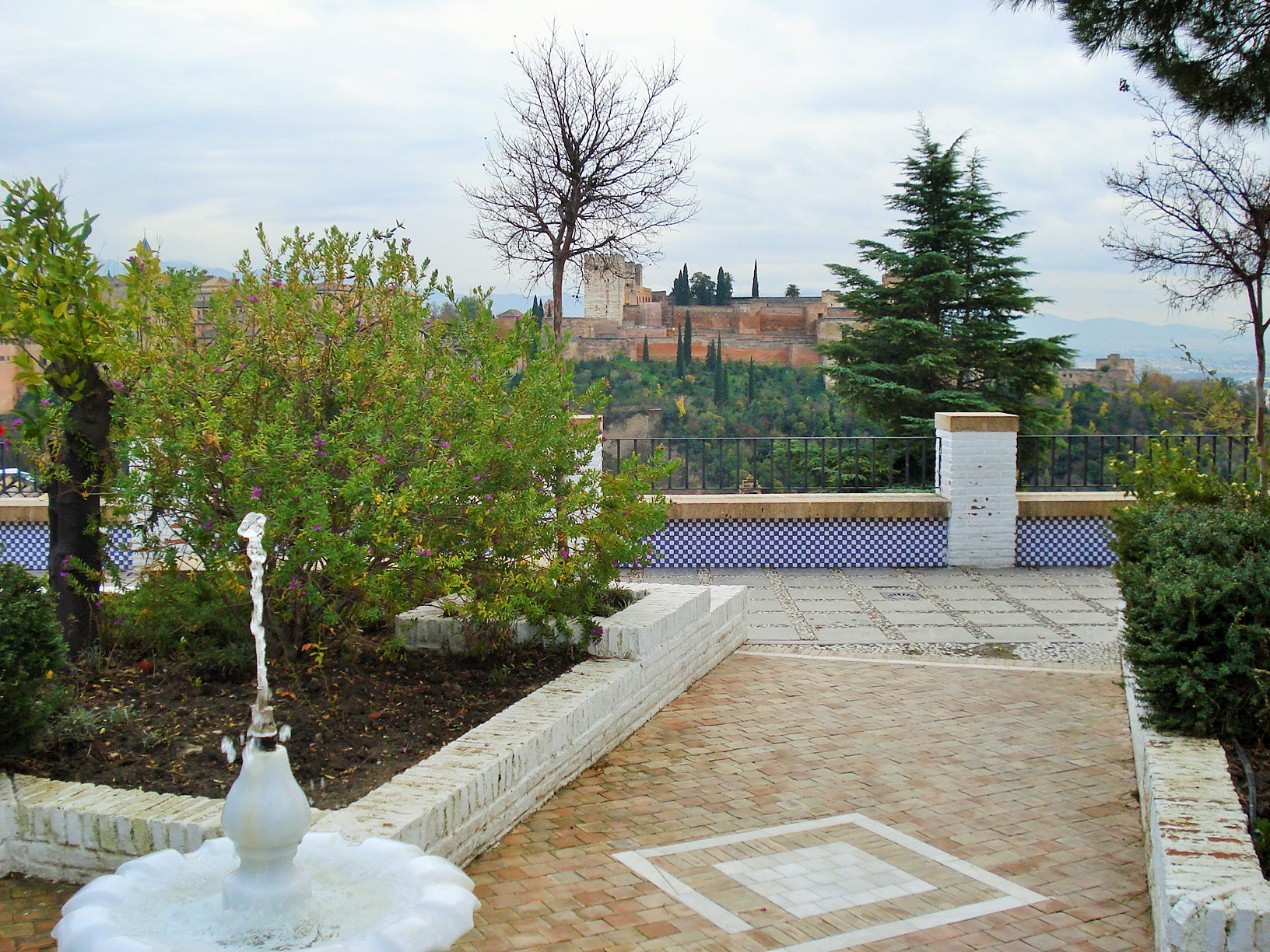
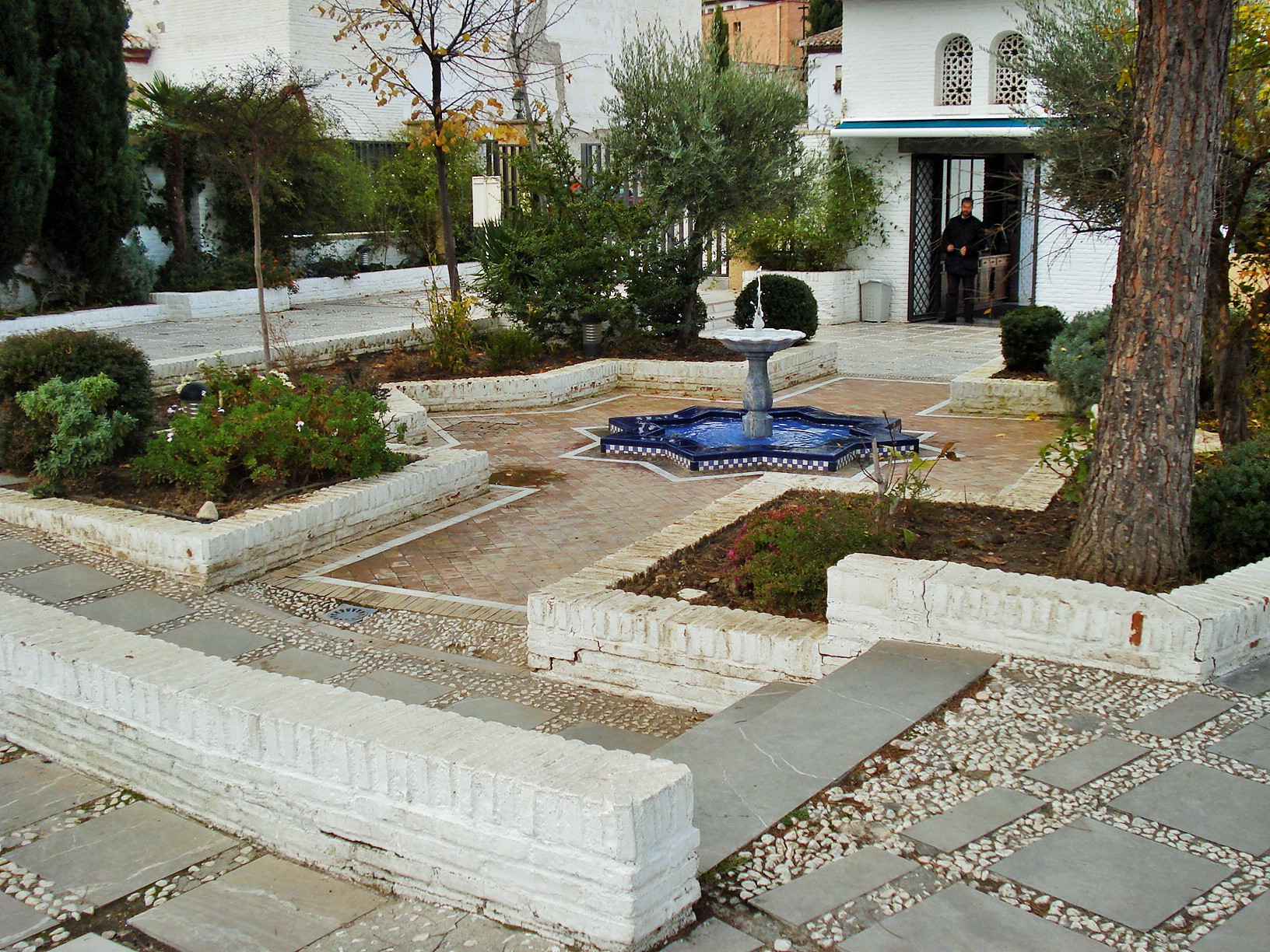
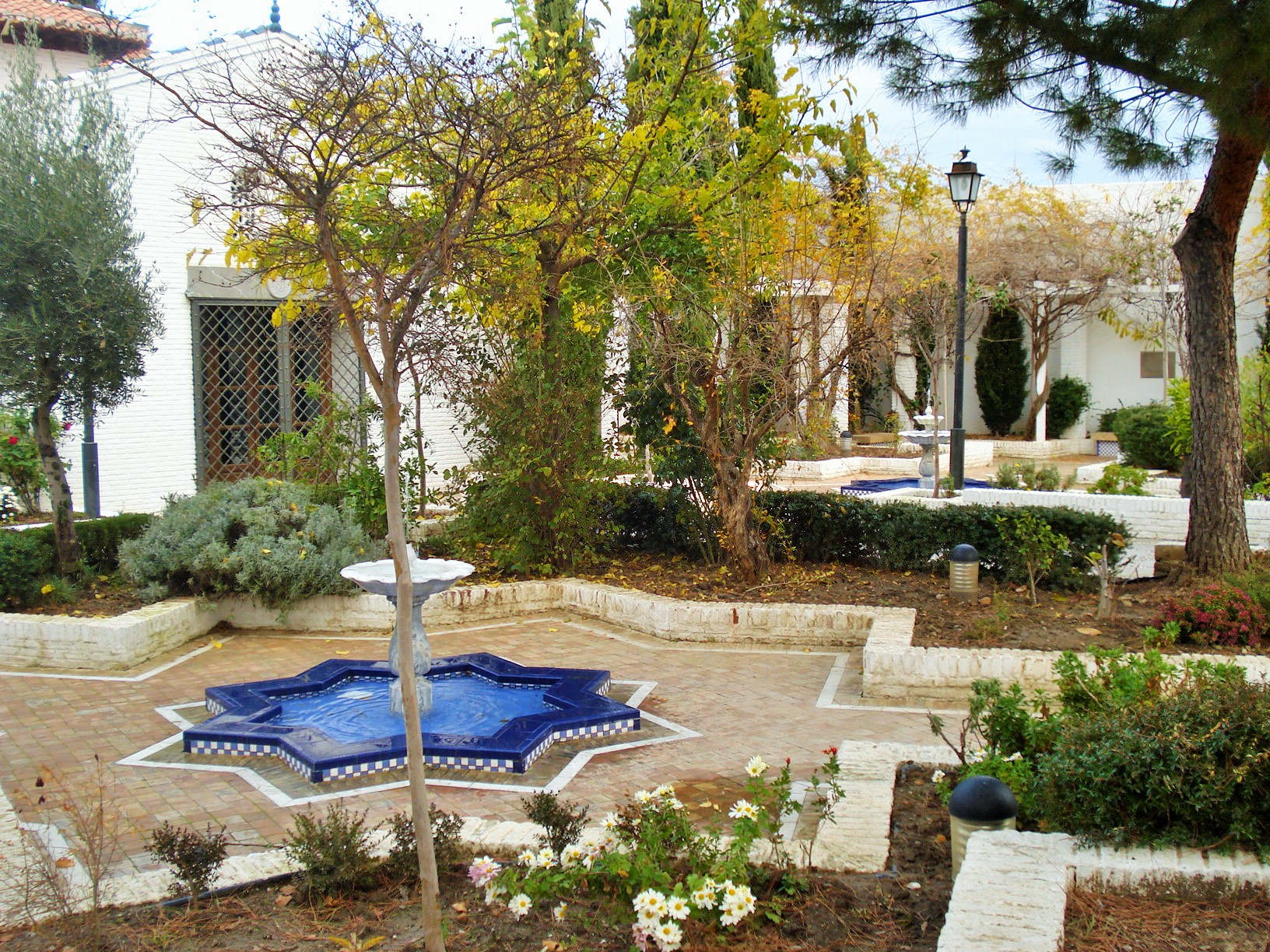
Gardens of the Mosque of Granada

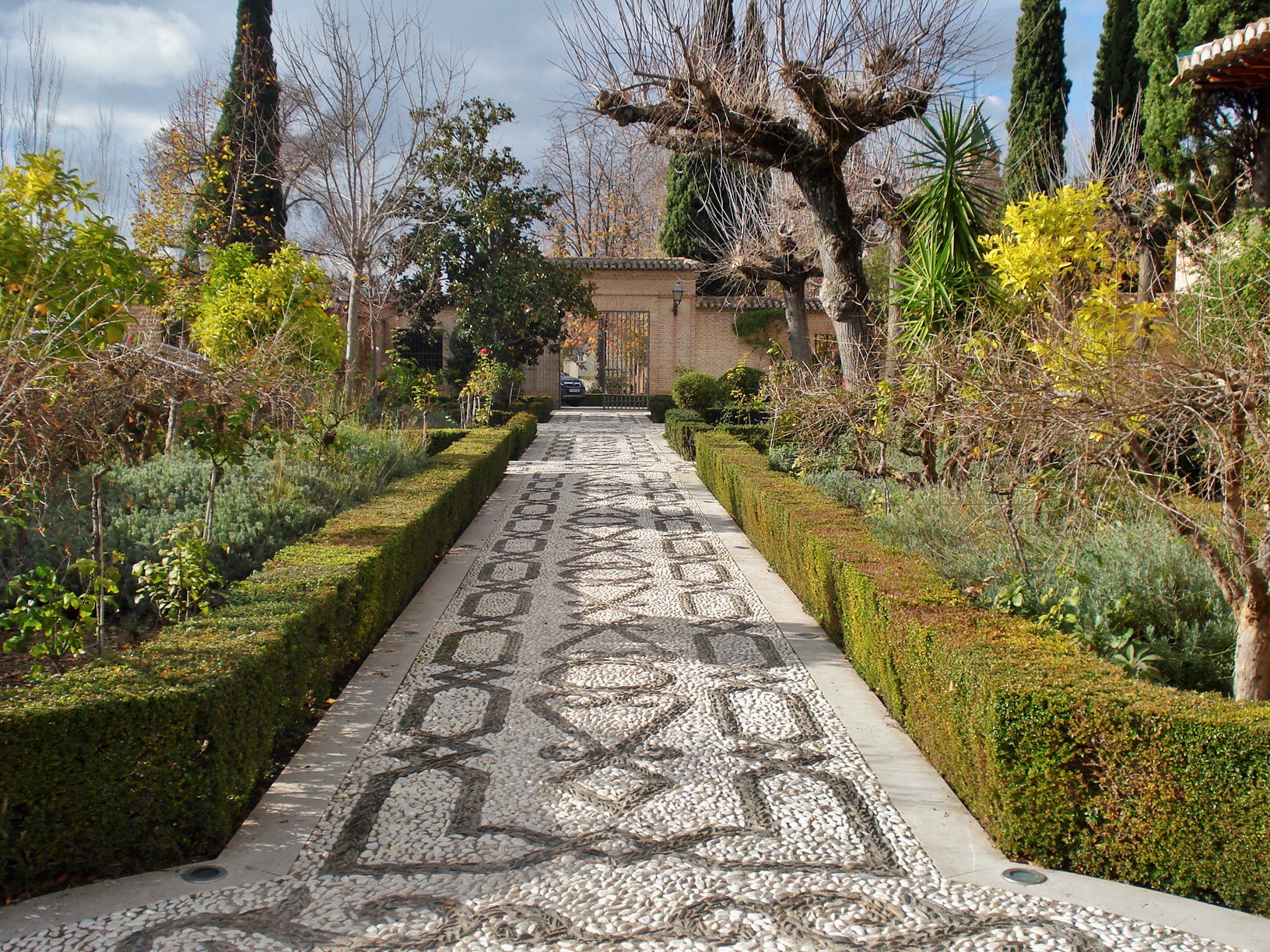
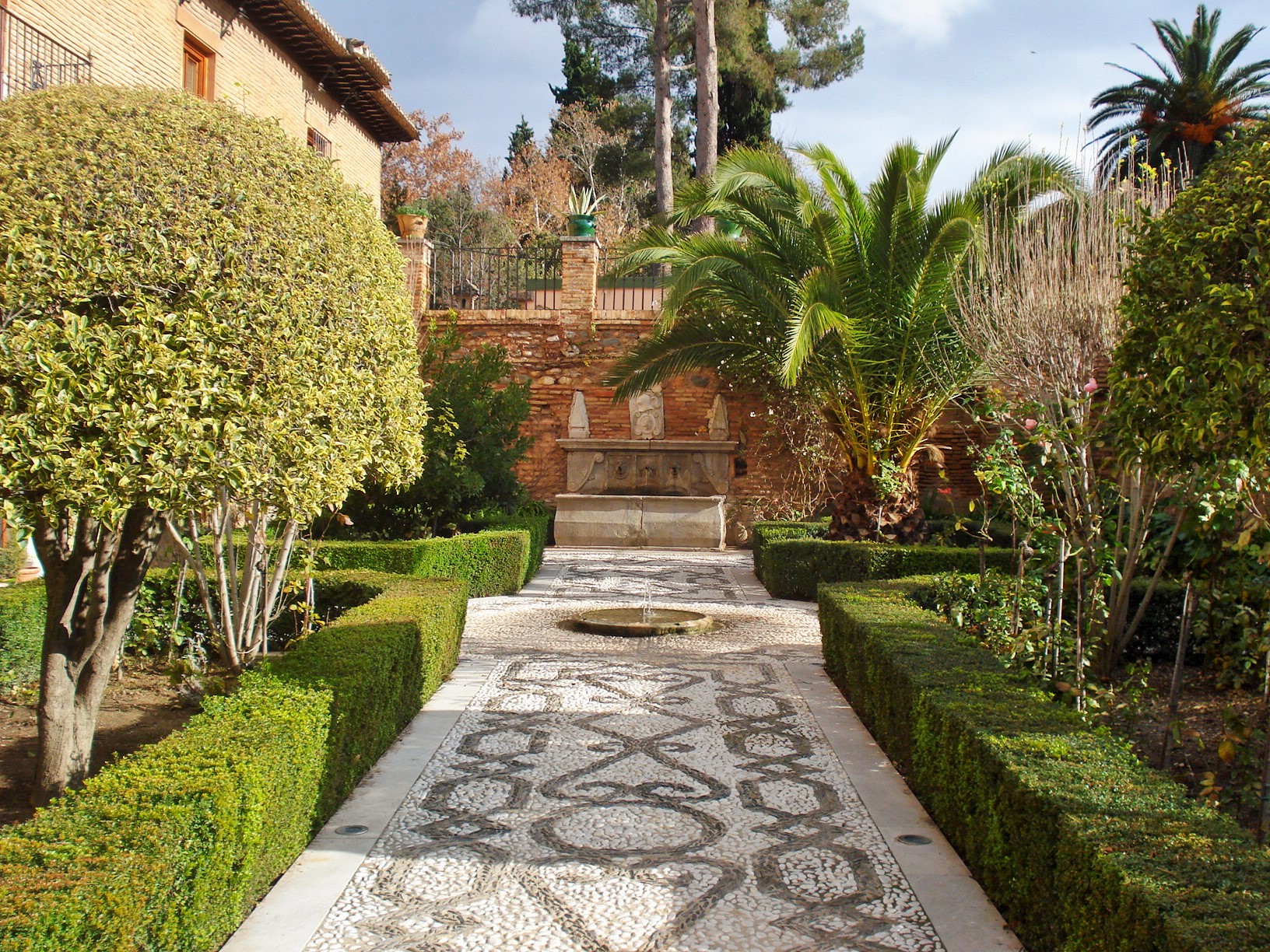
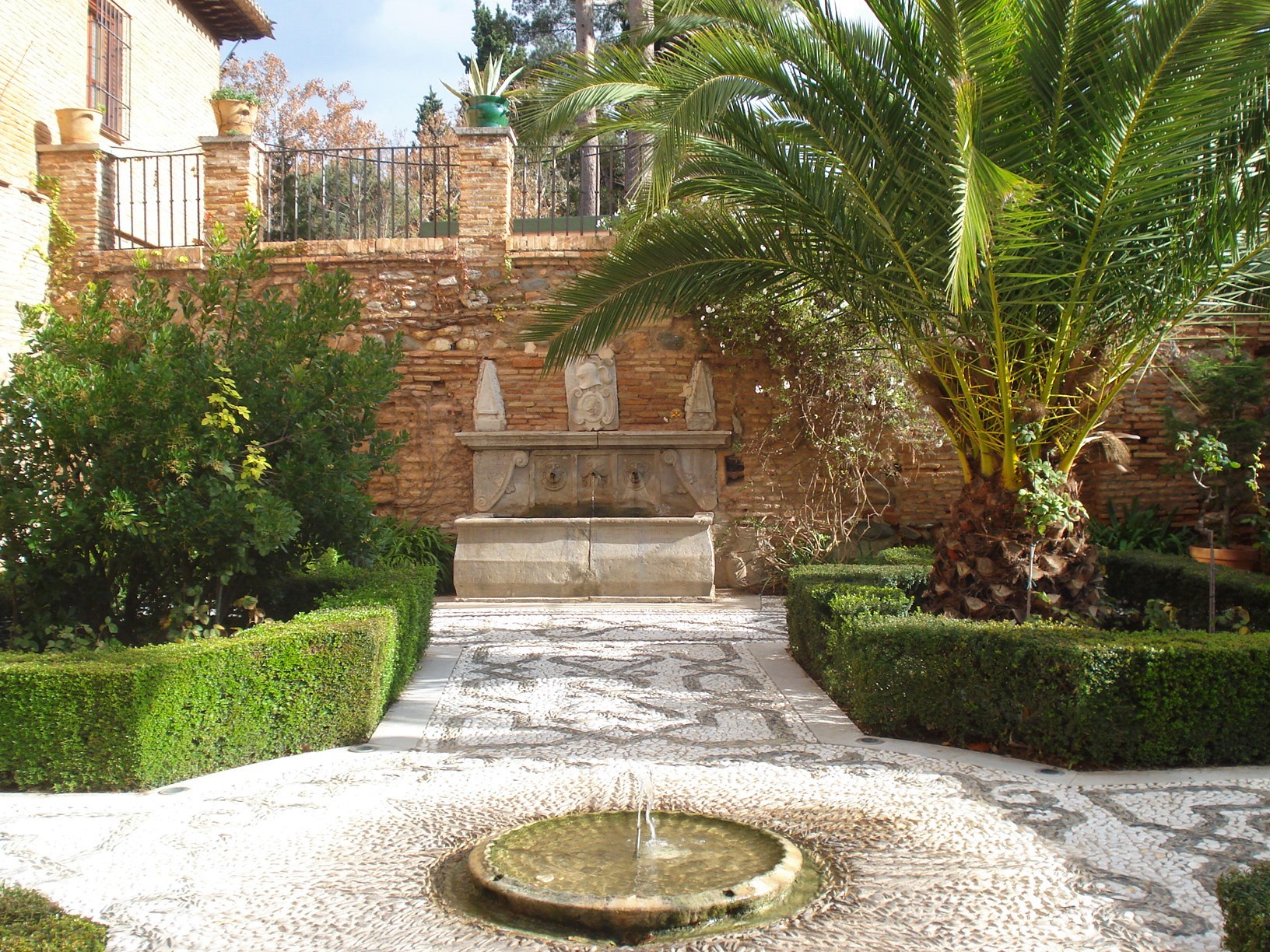
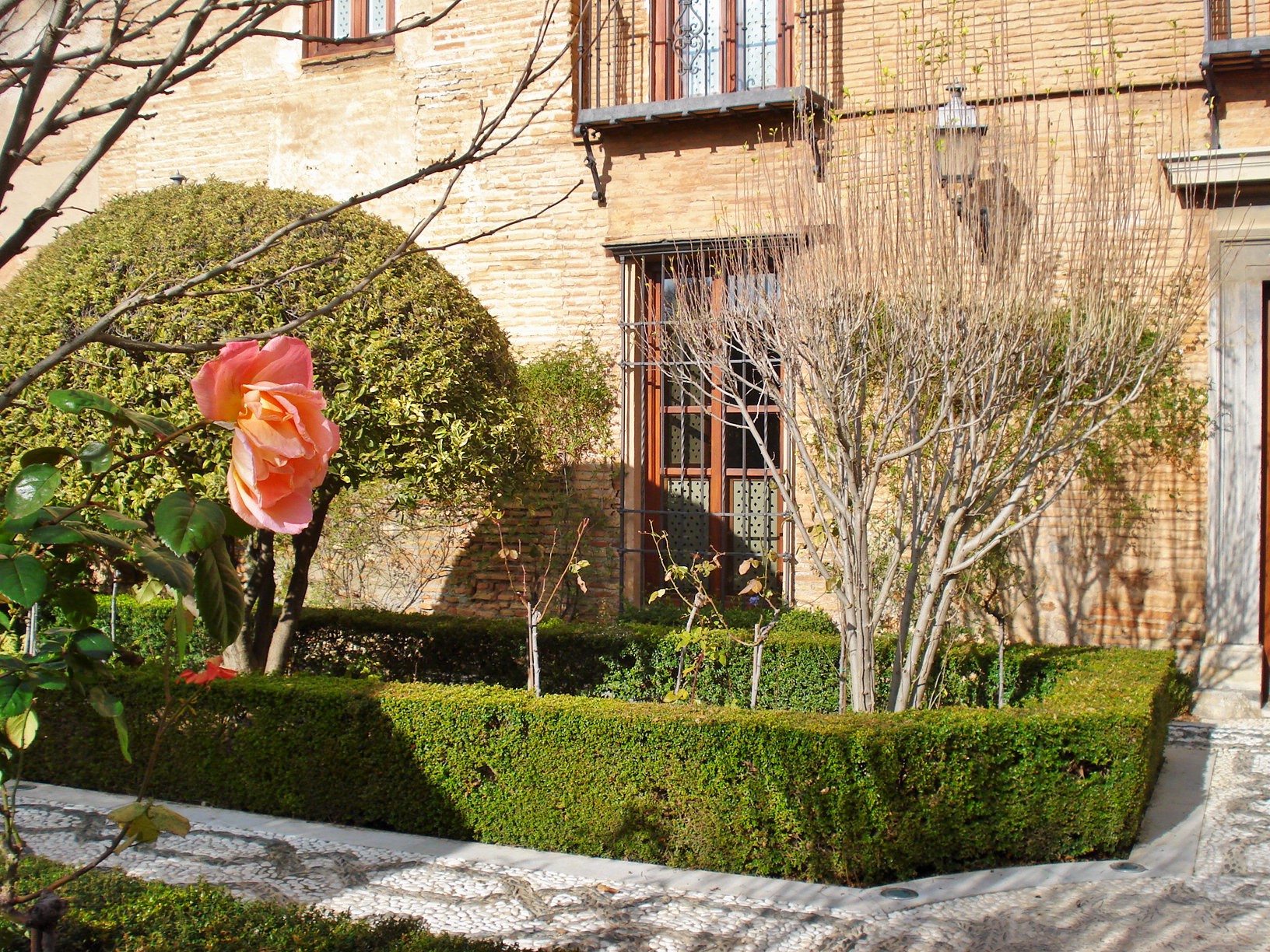
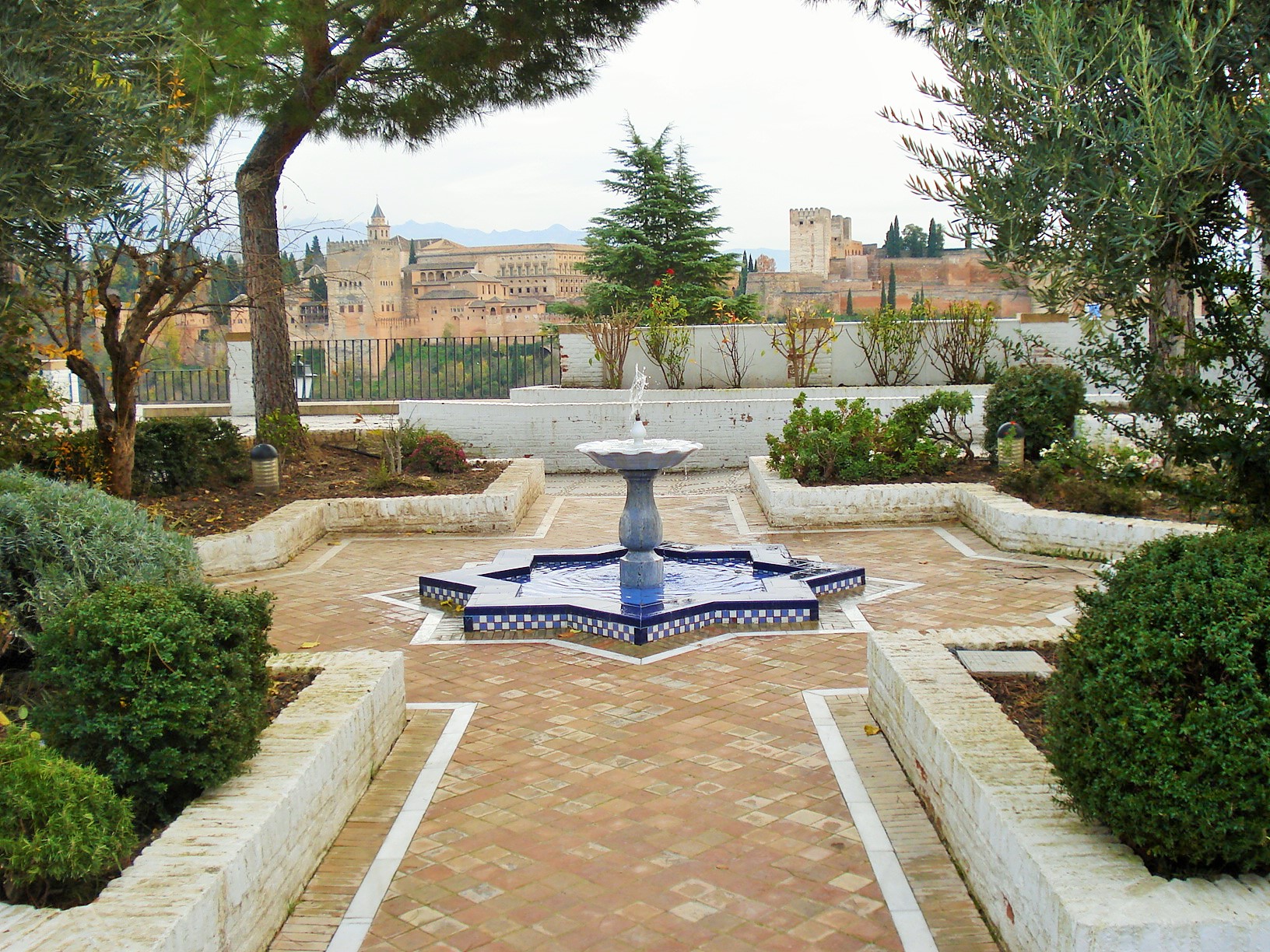
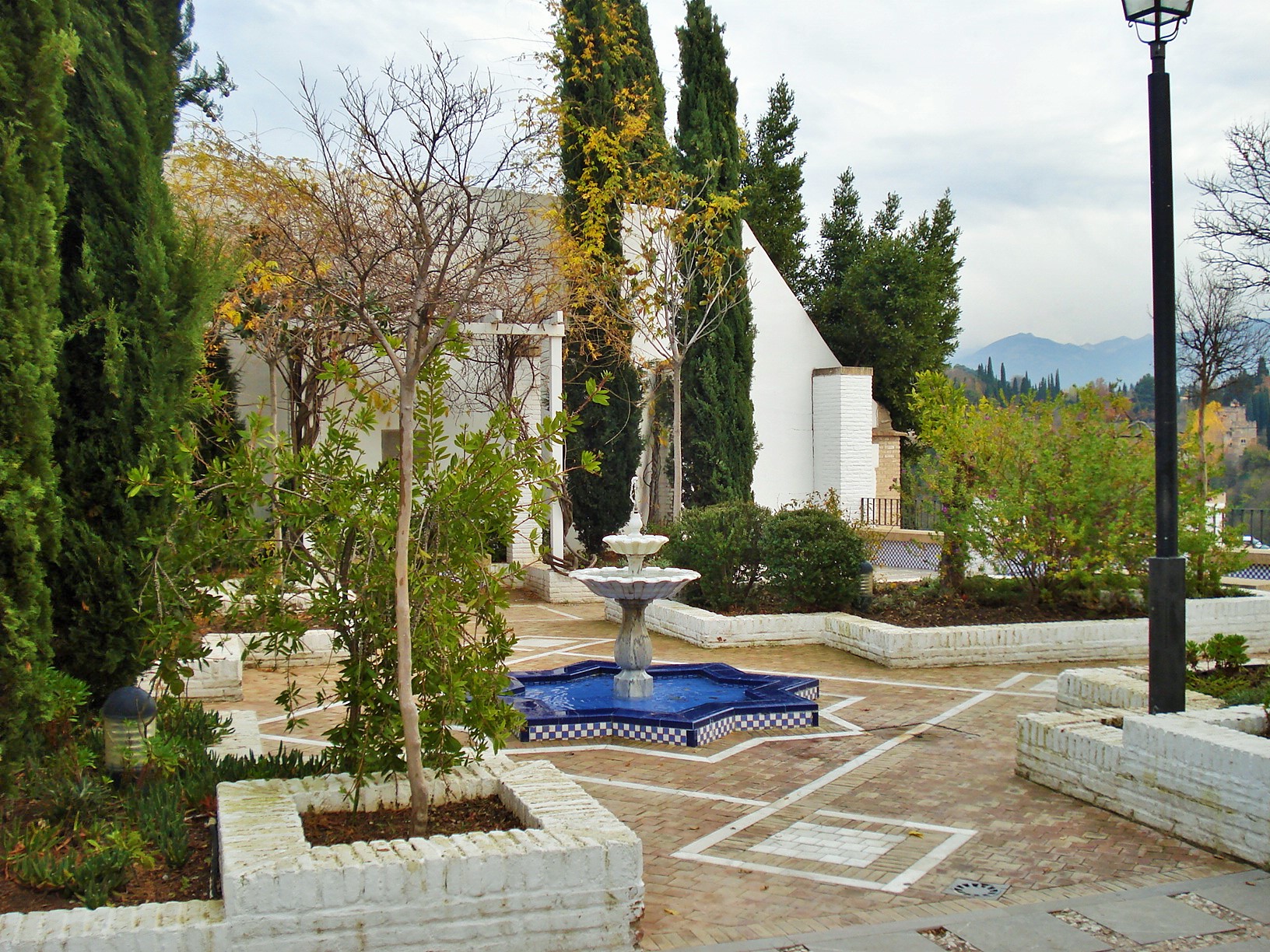
Granada, in southern Spain,  is of course most famous for the Alhambra and Generalife gardens.  The Mosque of Granada is located in the Albaicin, the Moorish quarter and oldest part of Granada, at the top of the hill and affording spectacular views of the city and the Alhambra on the other side of the river. The gardens are typical of Moorish gardens found in Andalusia, with pebble patio flooring designs, and fountains.

DSC00360DSC00343DSC00344DSC00345DSC00346DSC00347DSC00348DSC00349DSC00350DSC00351DSC00352DSC00353DSC00354DSC00355DSC00356DSC00357DSC00359

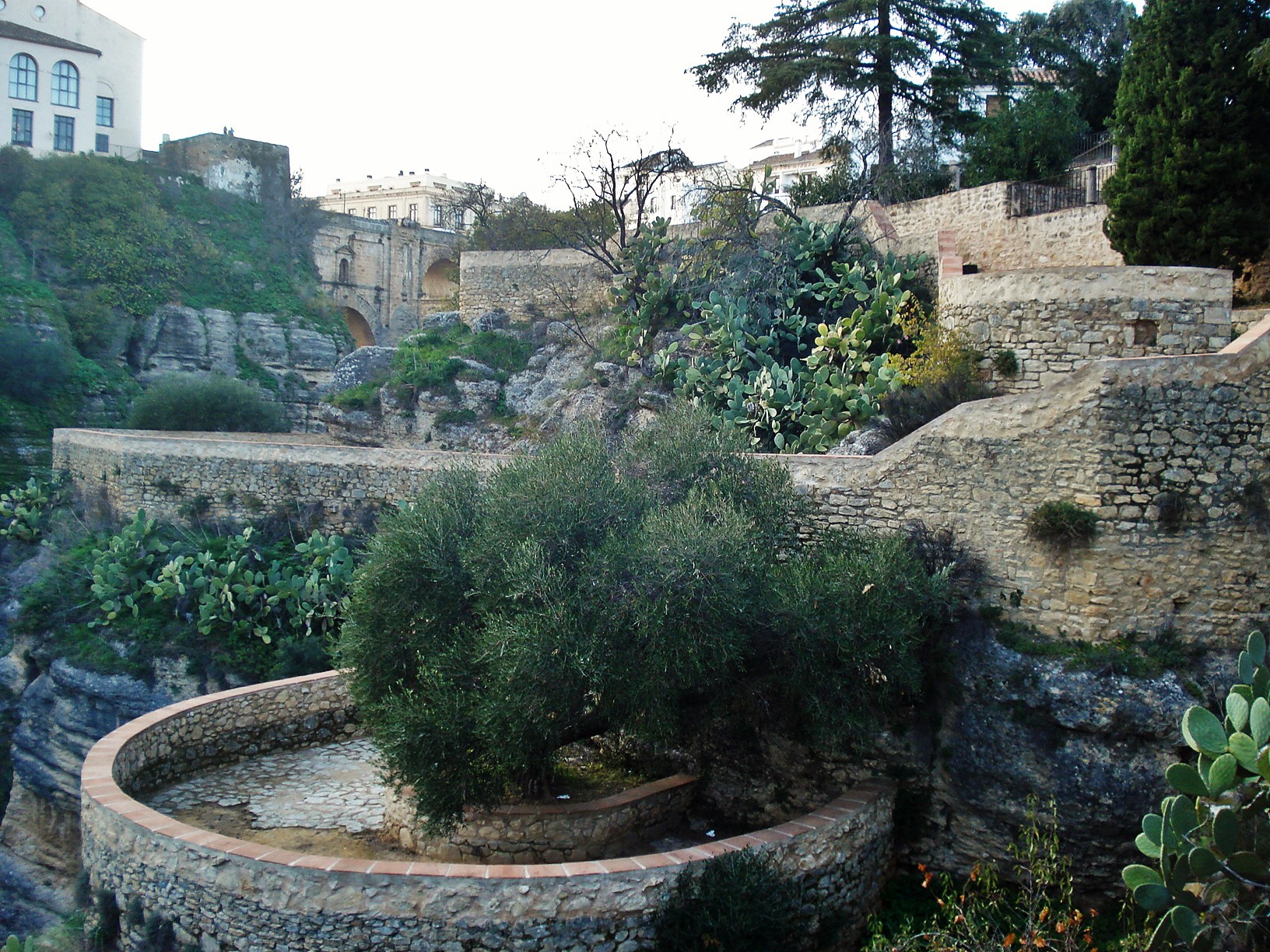
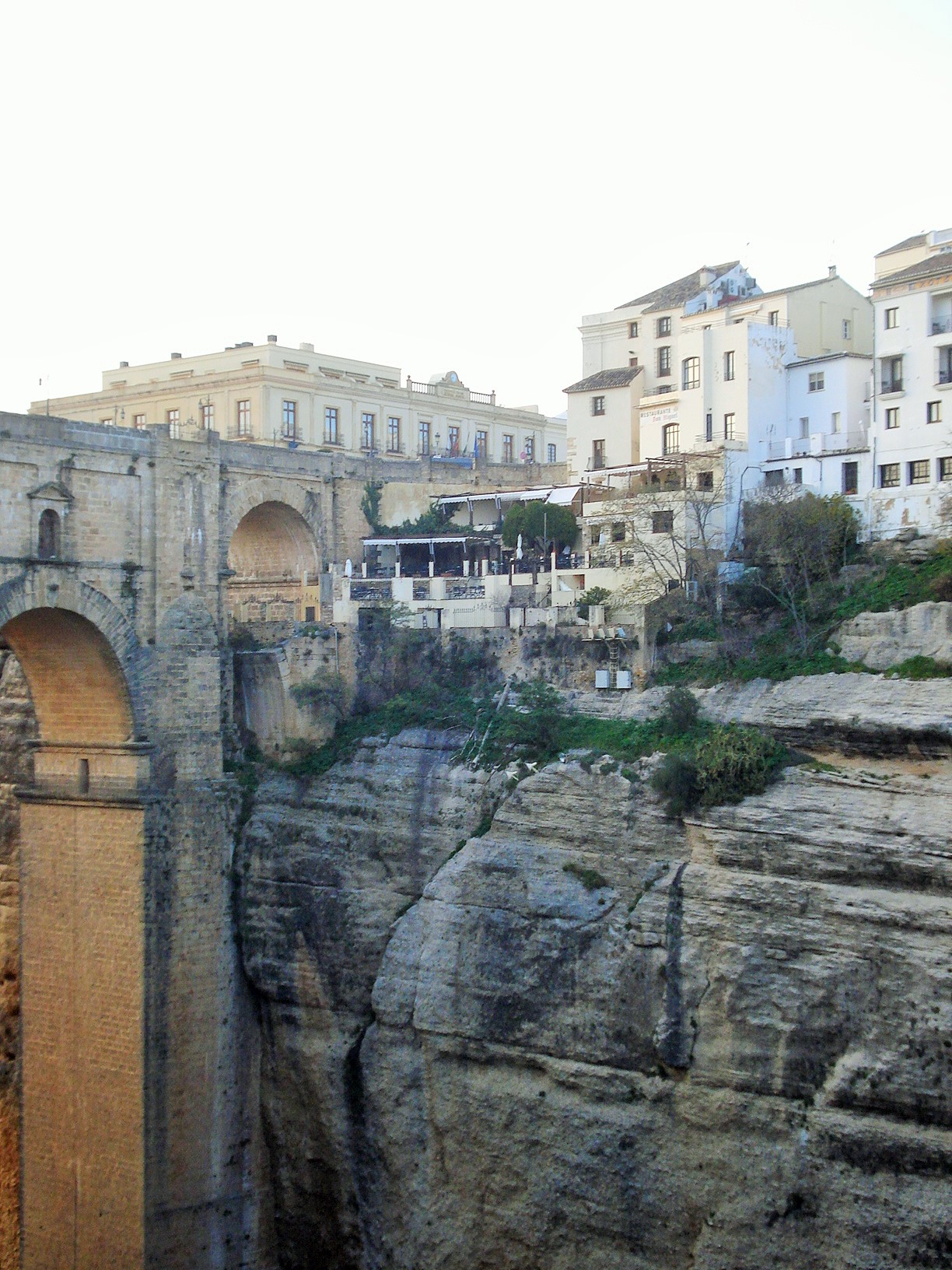
Jardines de Cuenca: A Cliffhanging Garden in Ronda, Spain

Ronda is one of the “white villages” of Andalusia in southern Spain. It is most famous for the steep cliffs separating the two sides of town and the jaw dropping view they offer. Ronda also has one of the oldest bullfighting arenas and Ernest Hemingway and Orson Welles were frequent visitors. streets are actually named after them.

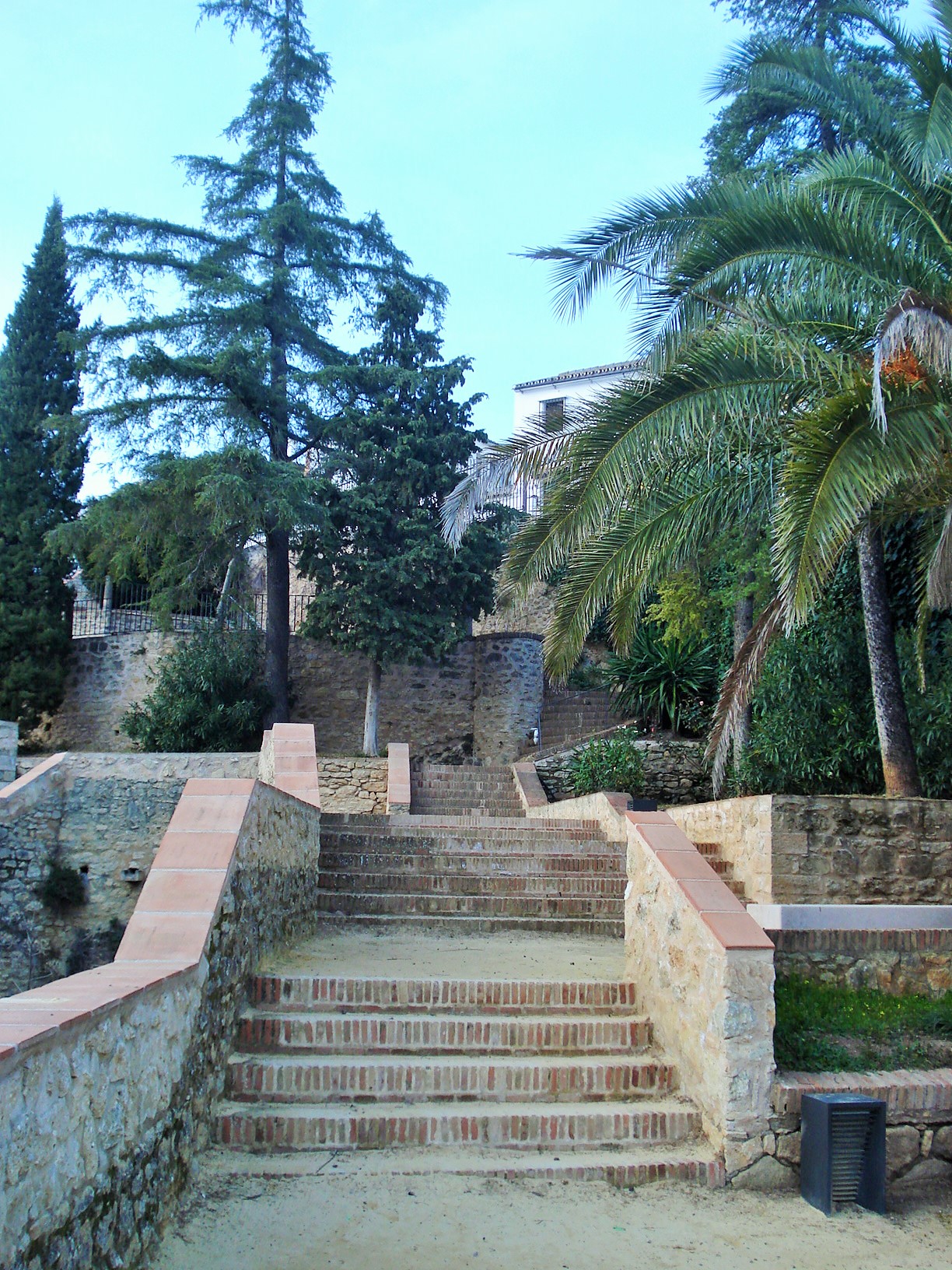
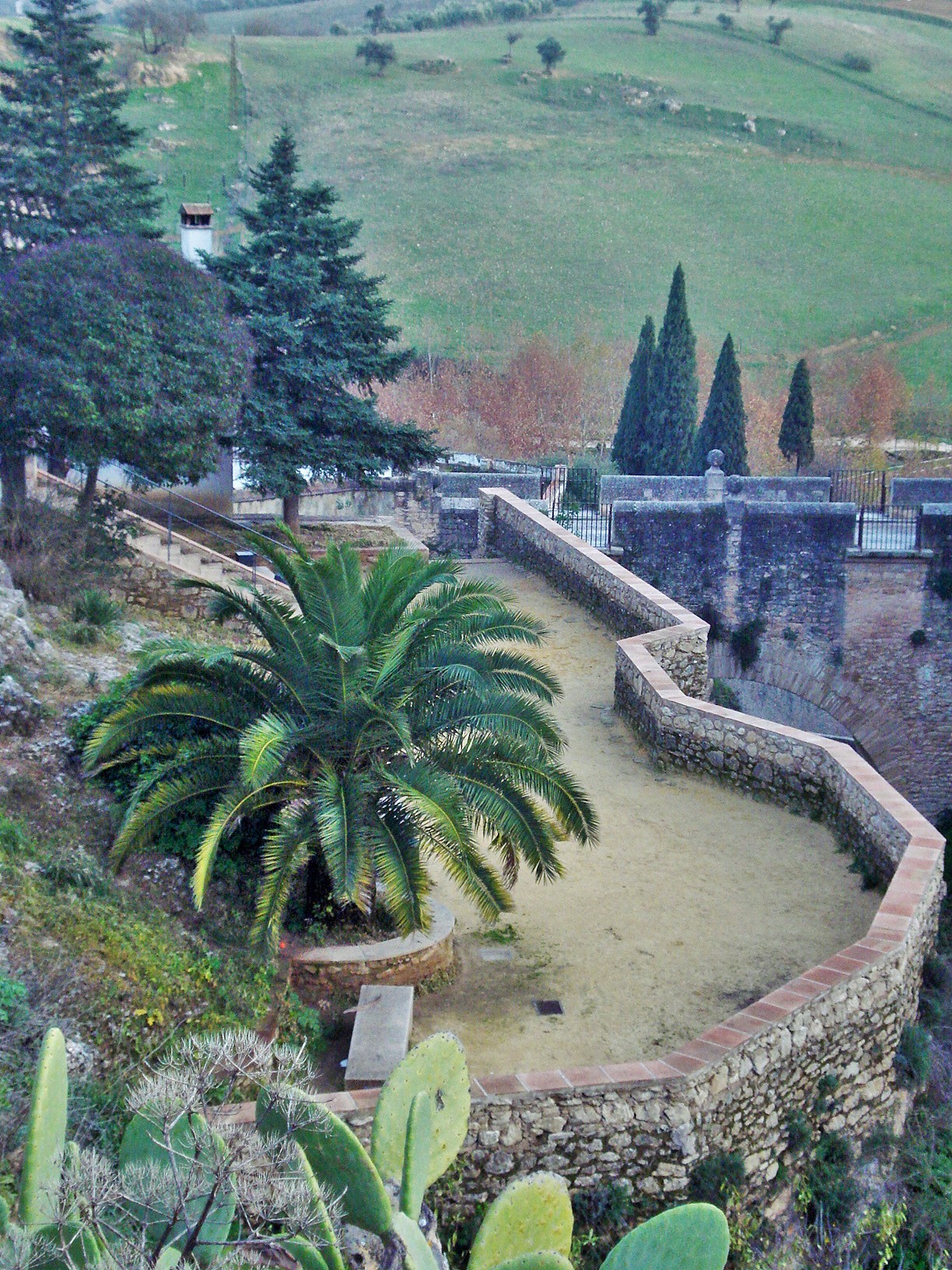
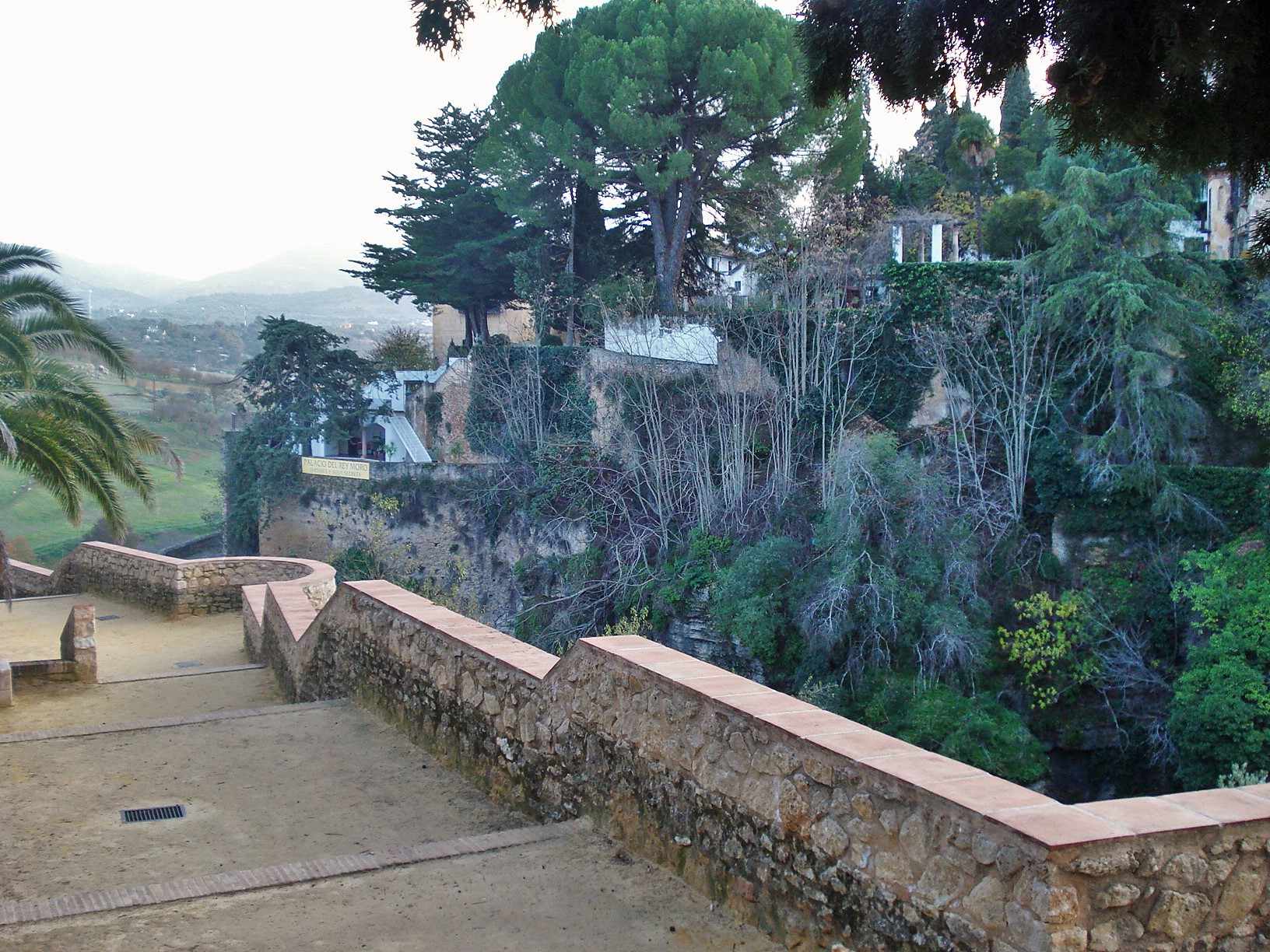
I visited Ronda in the winter, so I did not see the Jardines de Cuenca at their very best.  The season however in no way detracted from appreciating this unique site,  and the stunning views from this small garden literally hanging over the canyon. It is laid out as a series of small terraces, climbing up into the center and towards the main bridge, and planted with palm trees and succulents that are well adapted to the summer heat of southern Spain.

DSC00867 DSC00868 DSC00870 DSC00871 DSC00836 DSC00837 DSC00838 DSC00840 DSC00841 DSC00842 DSC00843 DSC00844 DSC00845 DSC00846 DSC00847 DSC00848 DSC00850 DSC00851 DSC00852 DSC00854


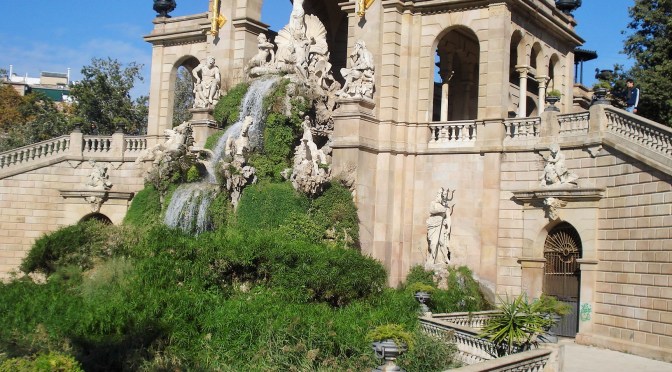
Barcelona Ciutadella Park: Fountains, Gaudi and Gardens

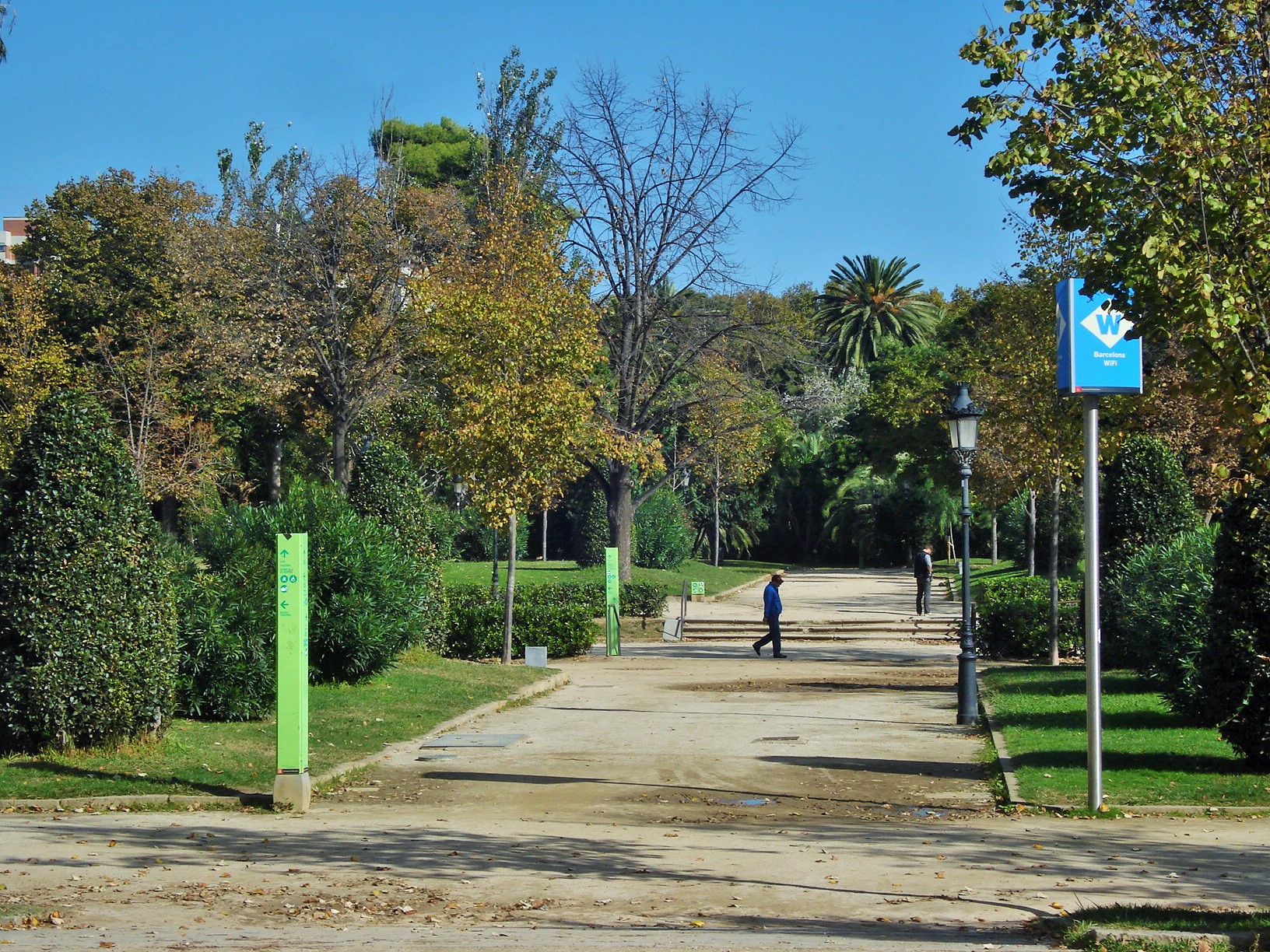
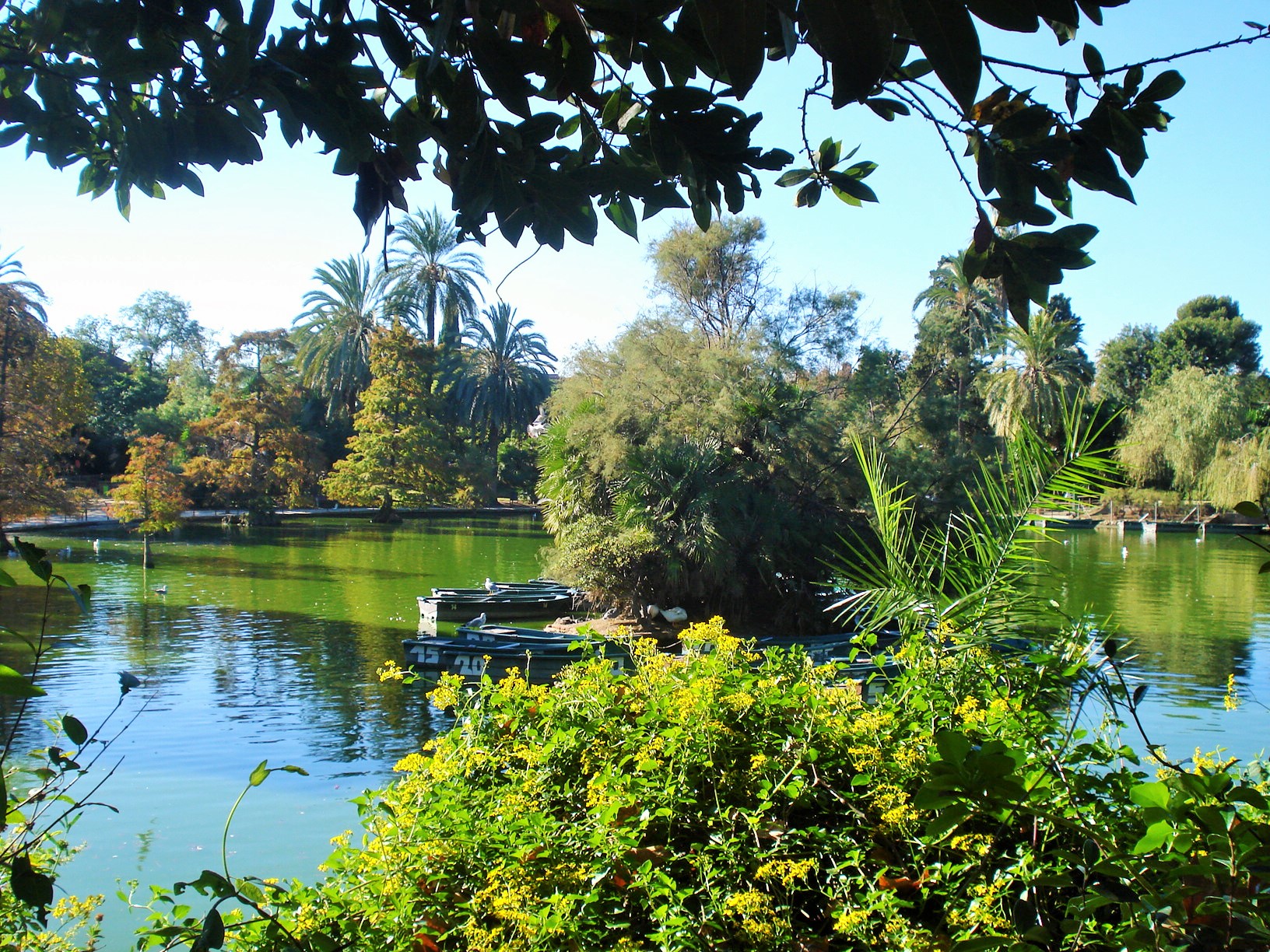
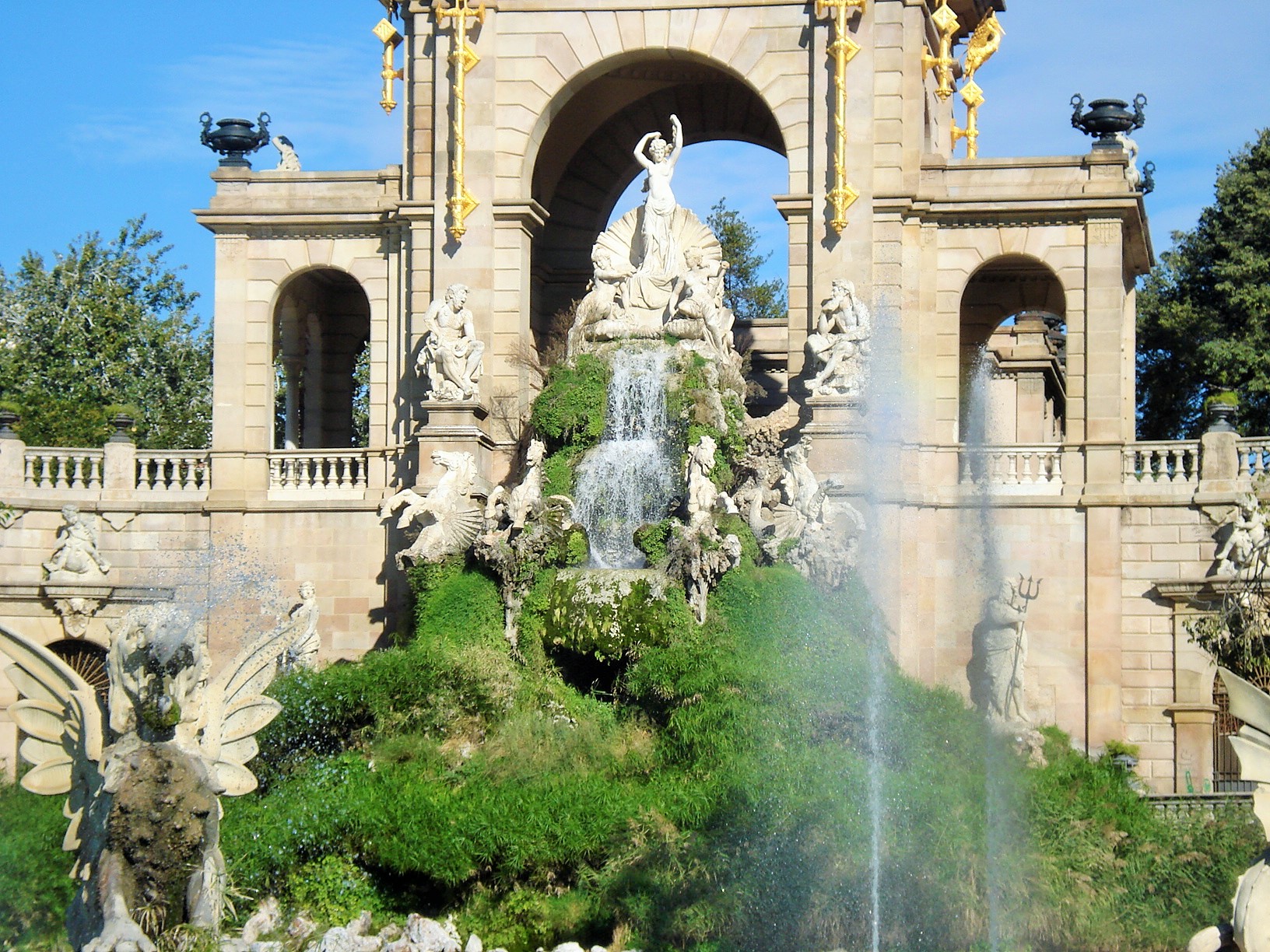
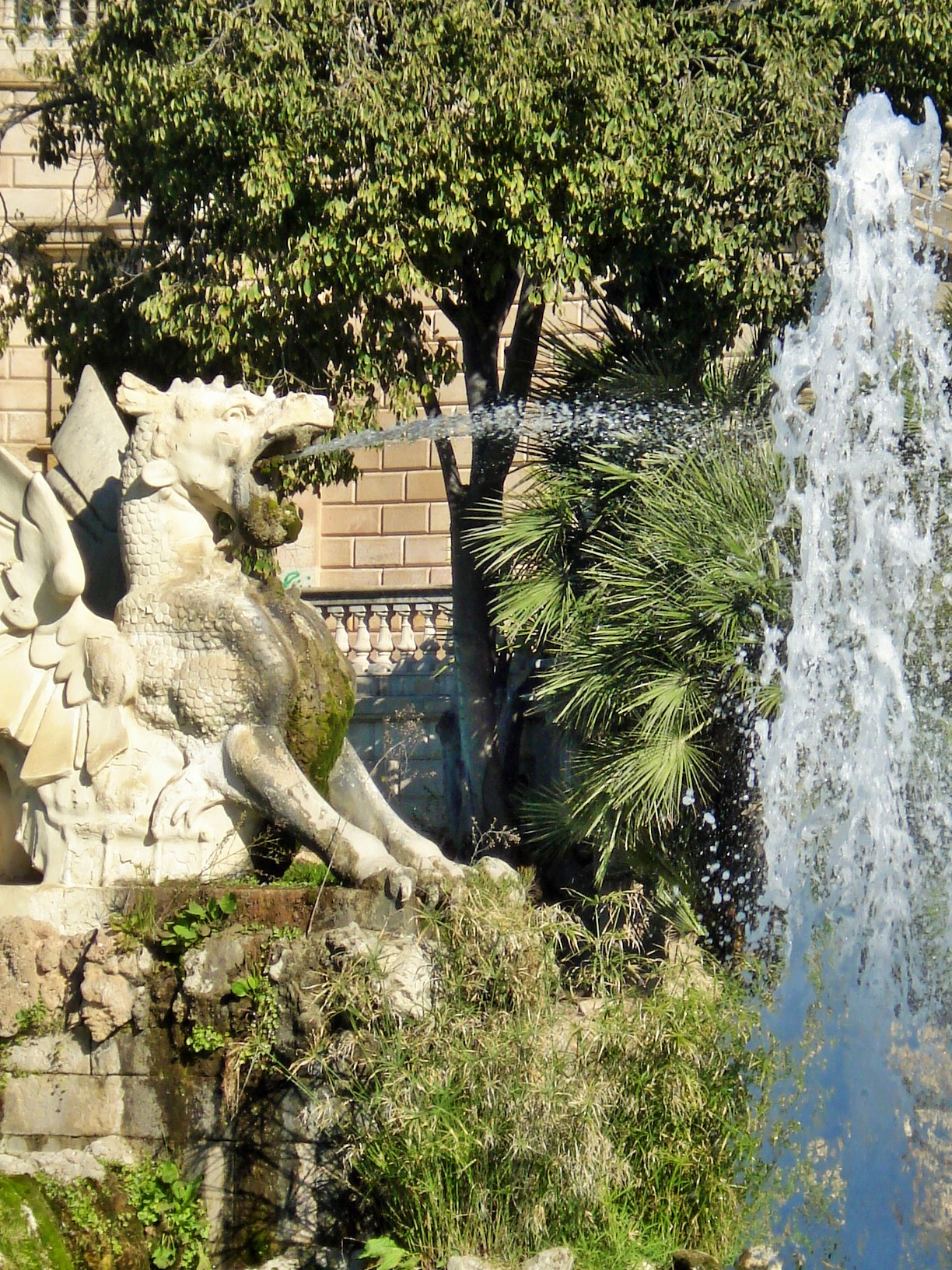
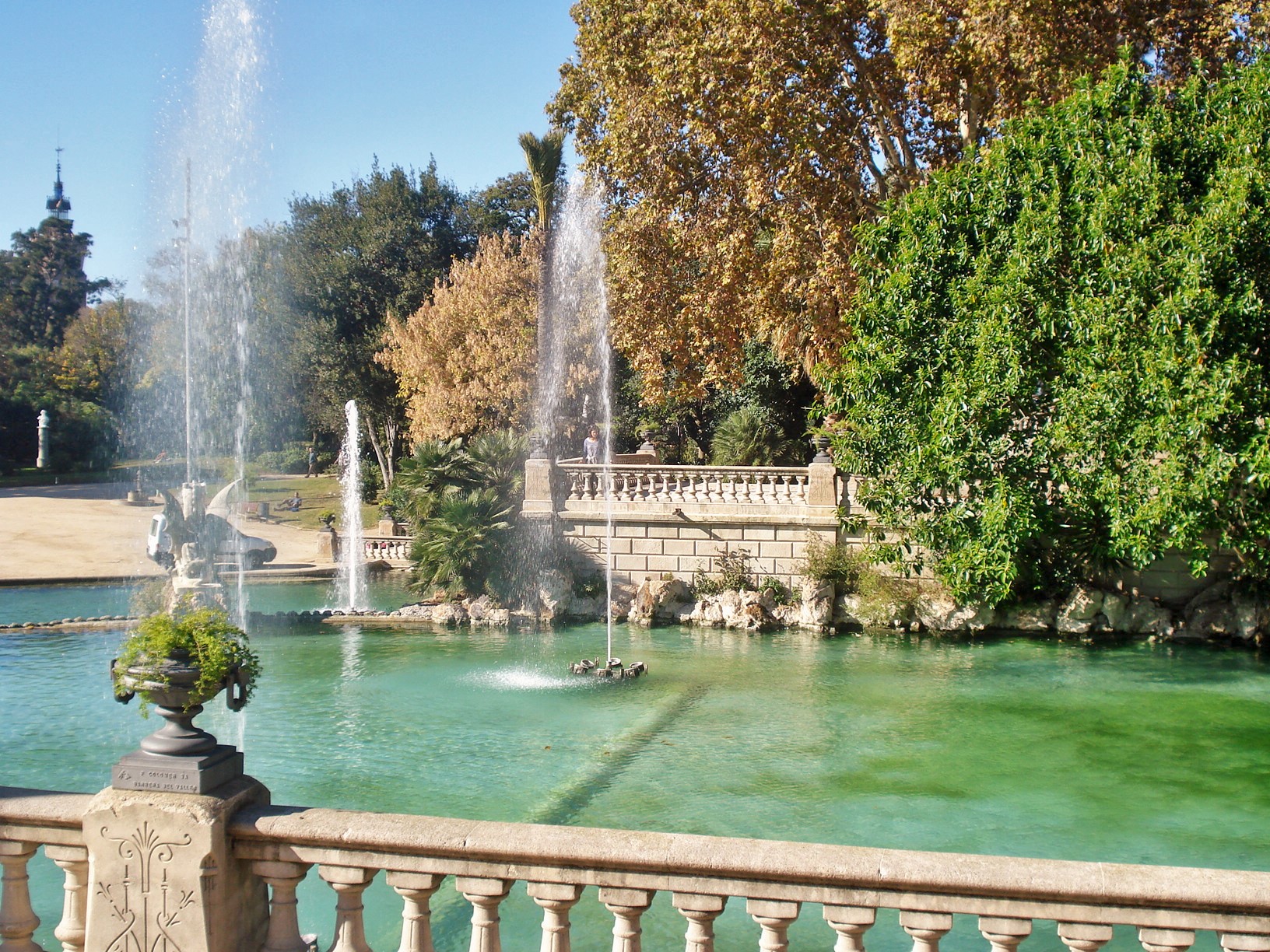
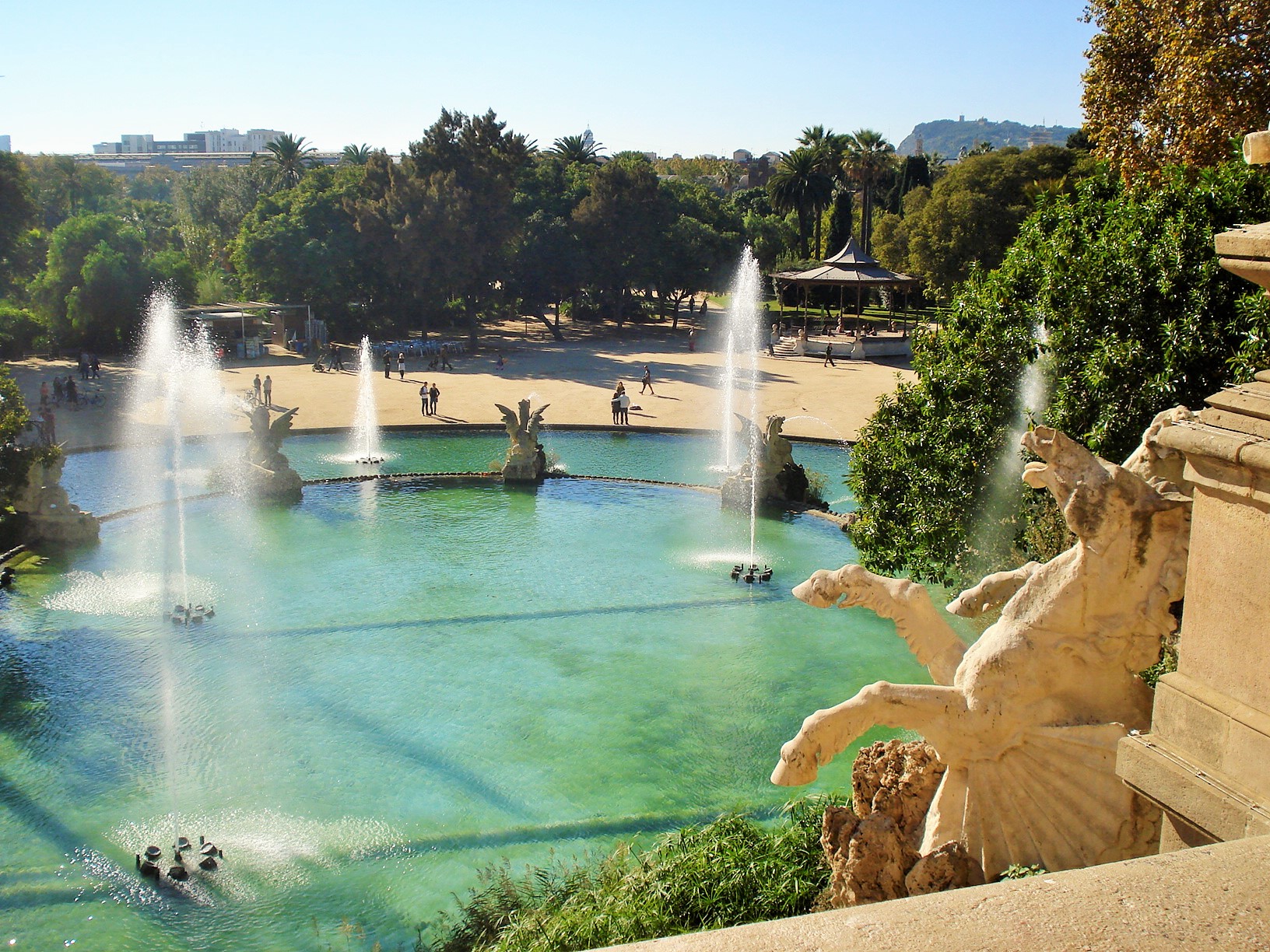
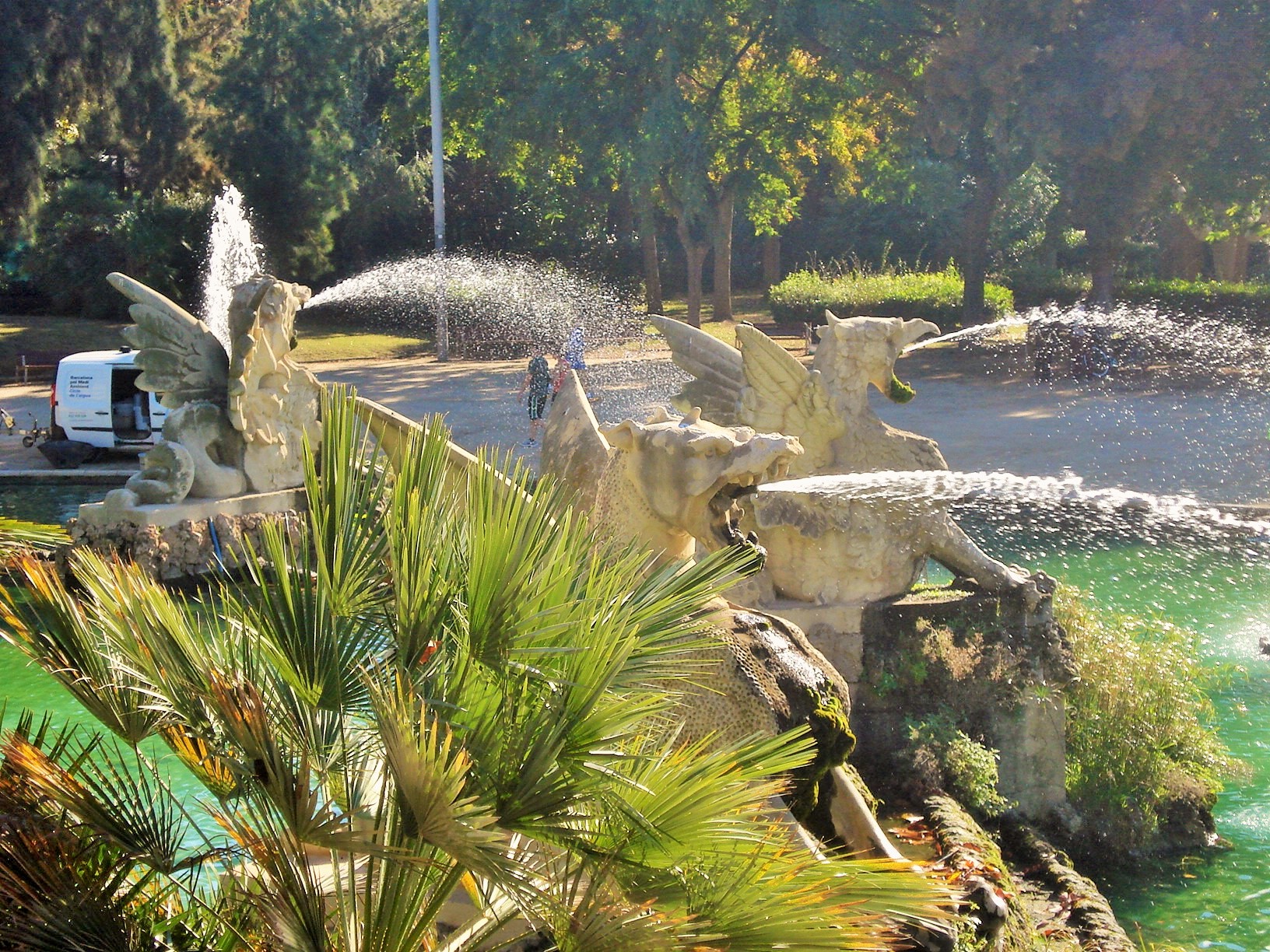
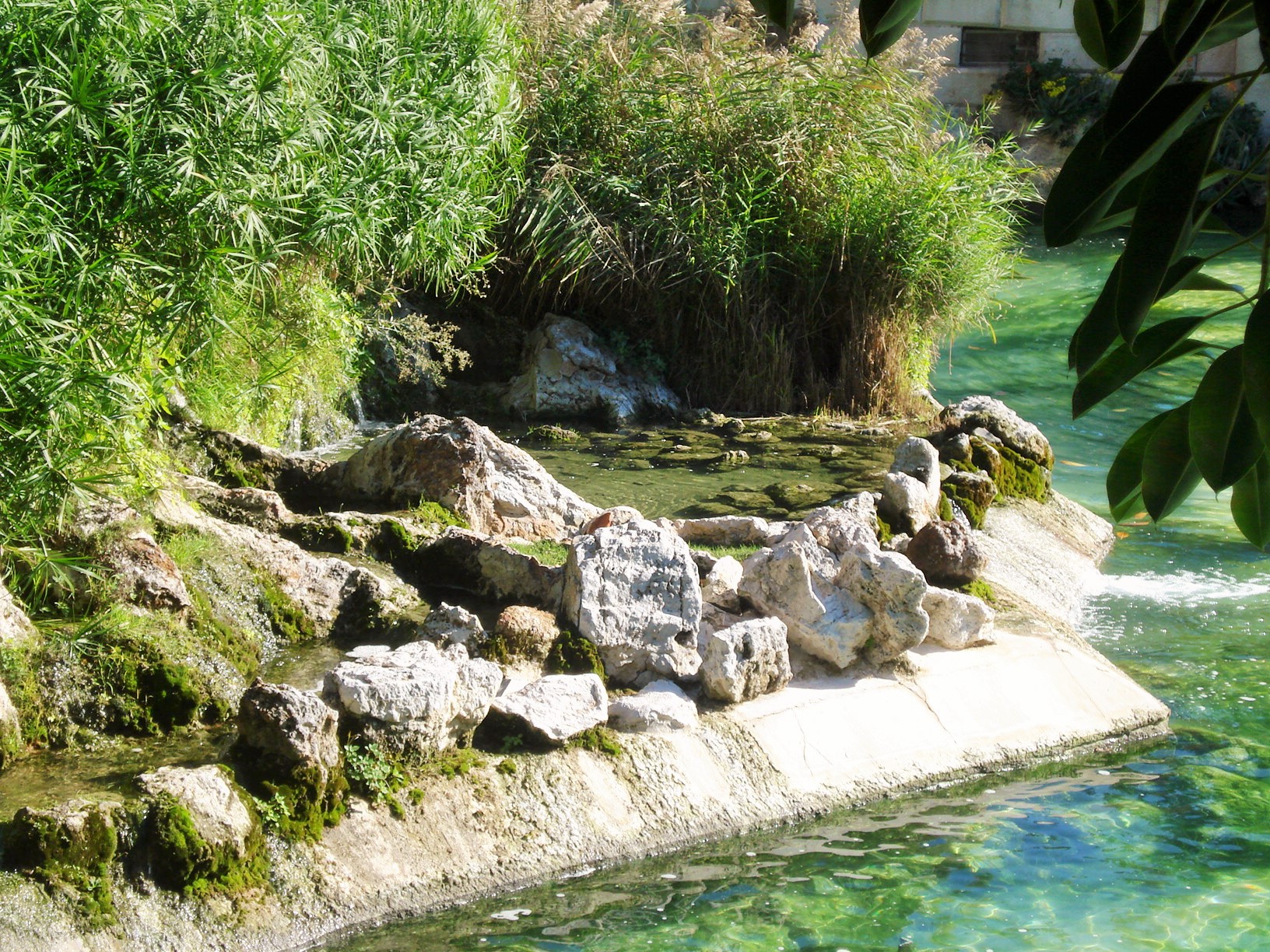
The Ciutadella Park in Barcelona is the largest and oldest city park. It was established in the mid 19th century and was for a long the only substantial green space in the city with about 70 acres of paths, trails, a lake, and assorted statuary and buildings. It is home to the Parliament building, the Barcelona Zoo, and the Geological museum. It is perhaps most famous for the very large waterfall fountain designed by Fontsere in the 1880s when Gaudi was his student and is believed to have contributed to it. It was inaugurated for the Universal Exhibition.

DSC08101 DSC07989 DSC07991 DSC07994 DSC07995 DSC07997 DSC08002 DSC08003 DSC08005 DSC08008 DSC08013 DSC08016 DSC08018 DSC08020 DSC08021 DSC08024 DSC08028 DSC08034 DSC08044 DSC08045 DSC08048 DSC08075 DSC08077

Prinicipe de Anglona: A Historic Garden in Old Madrid

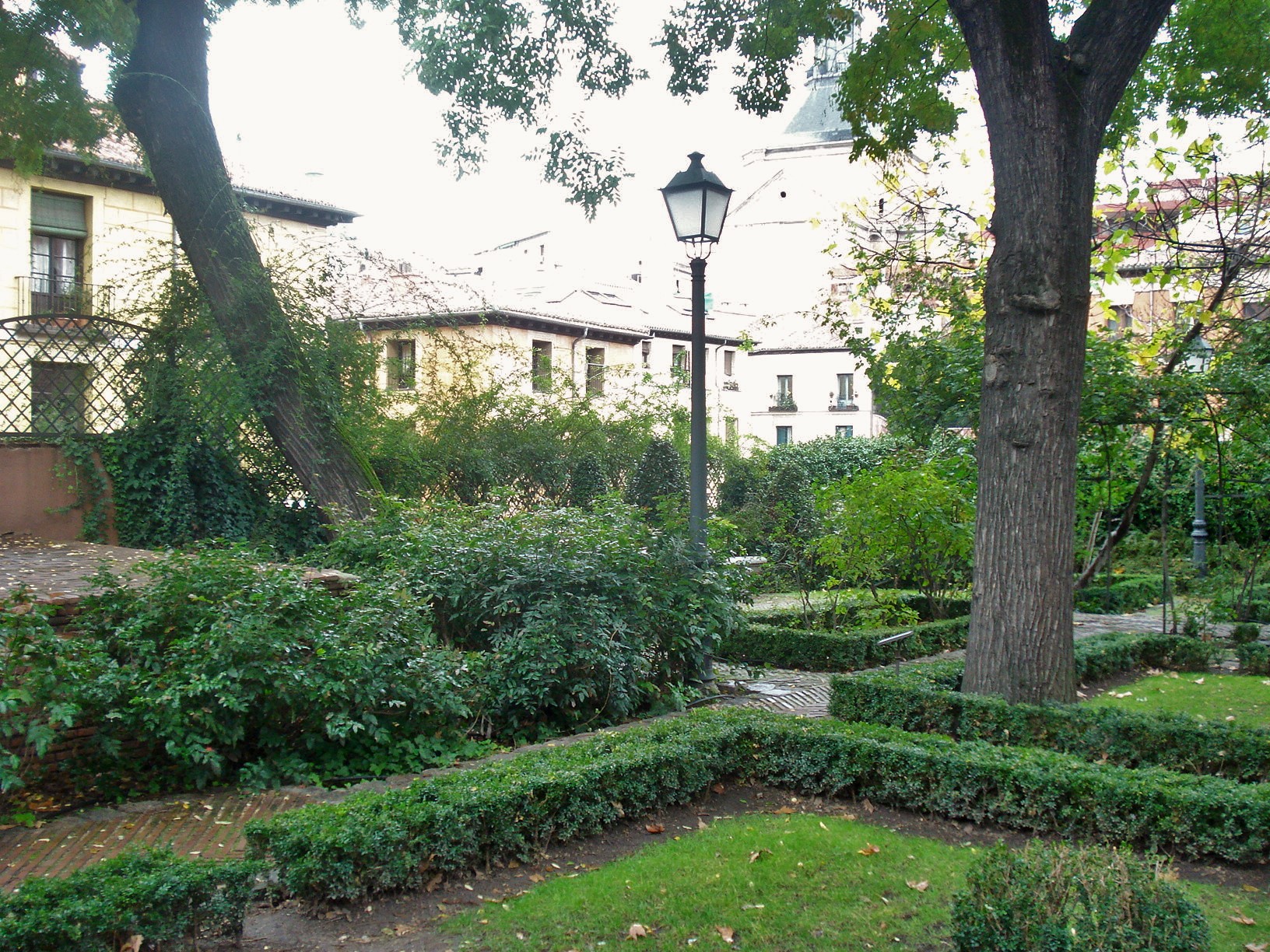
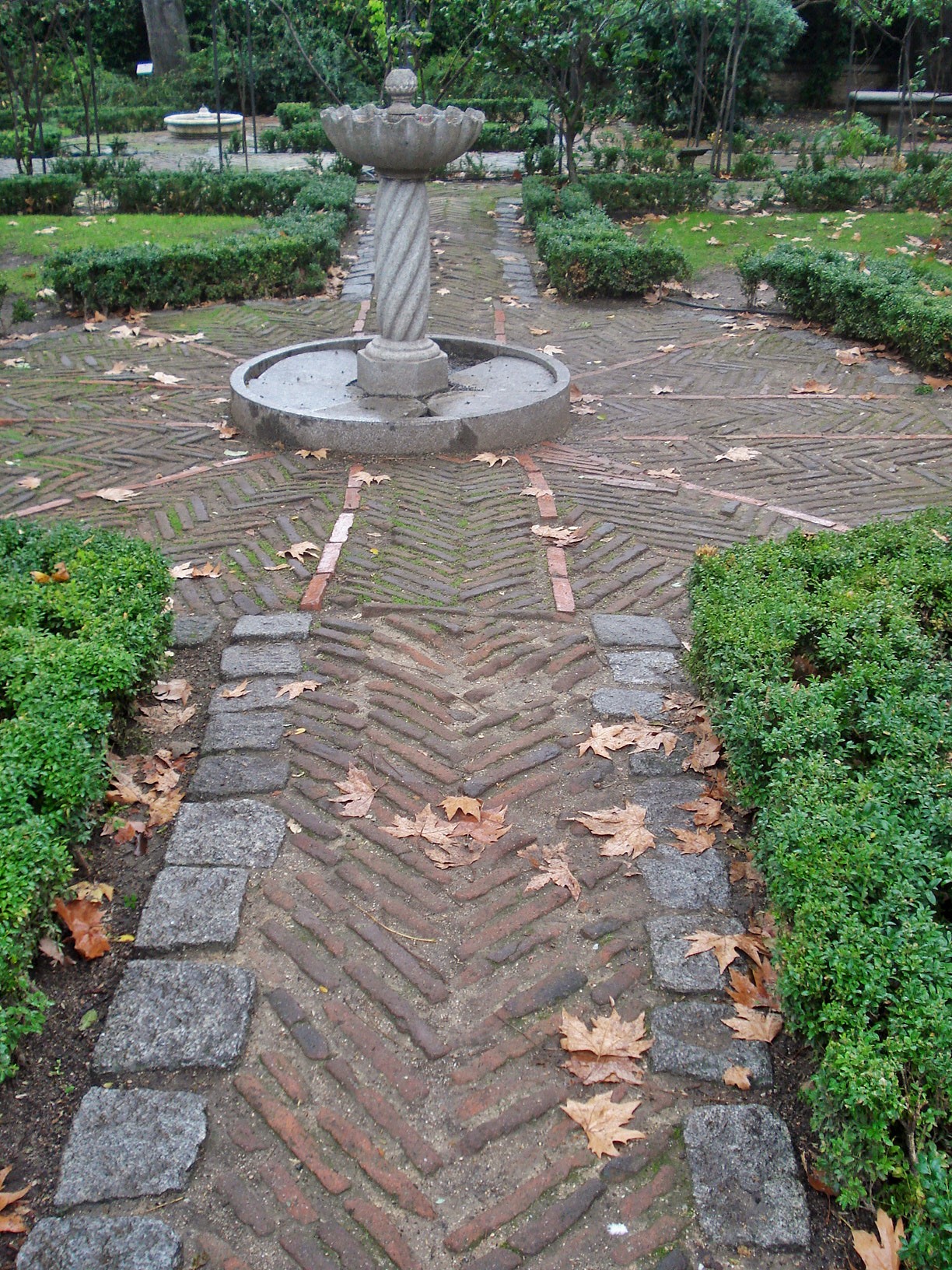
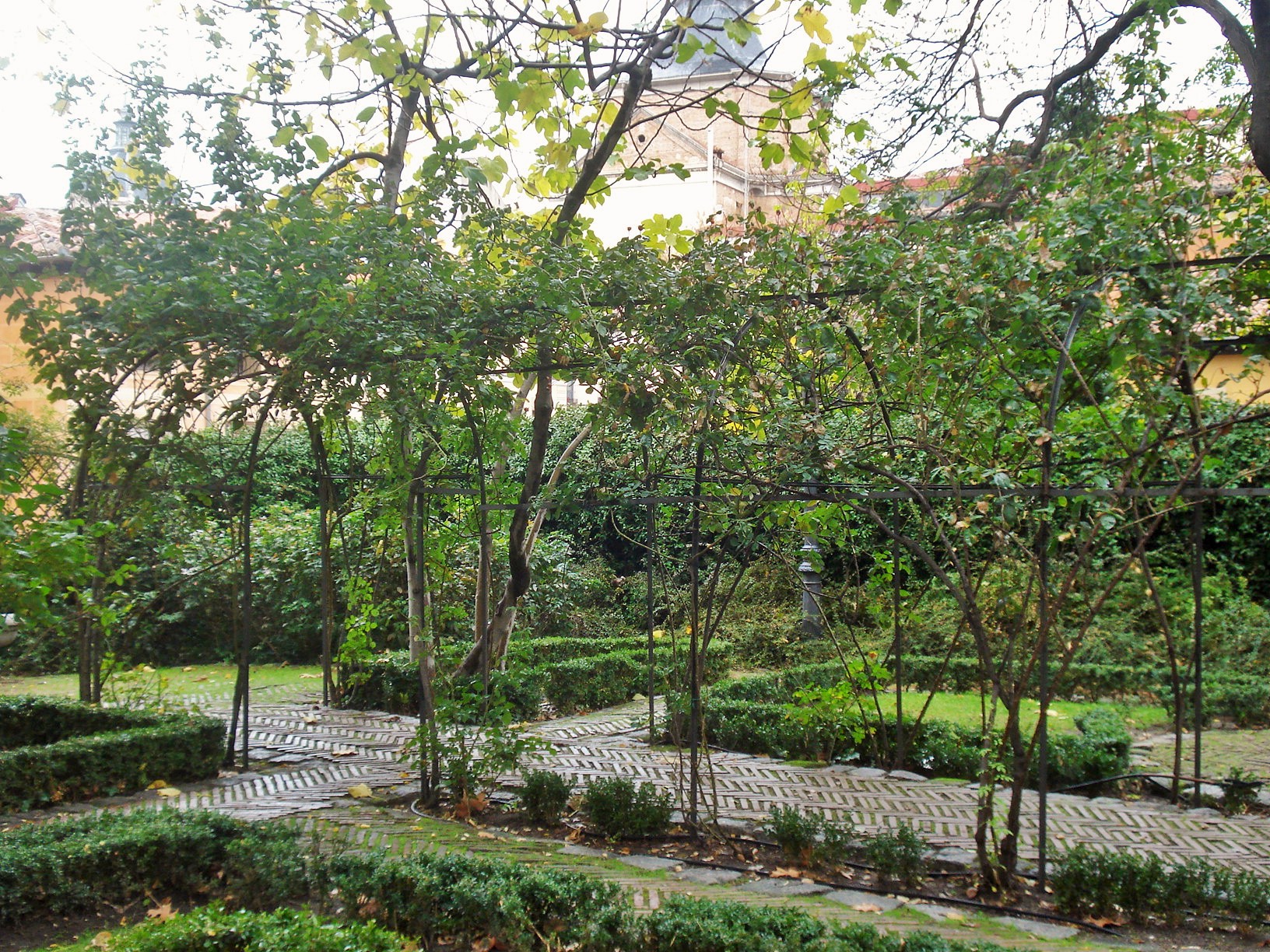
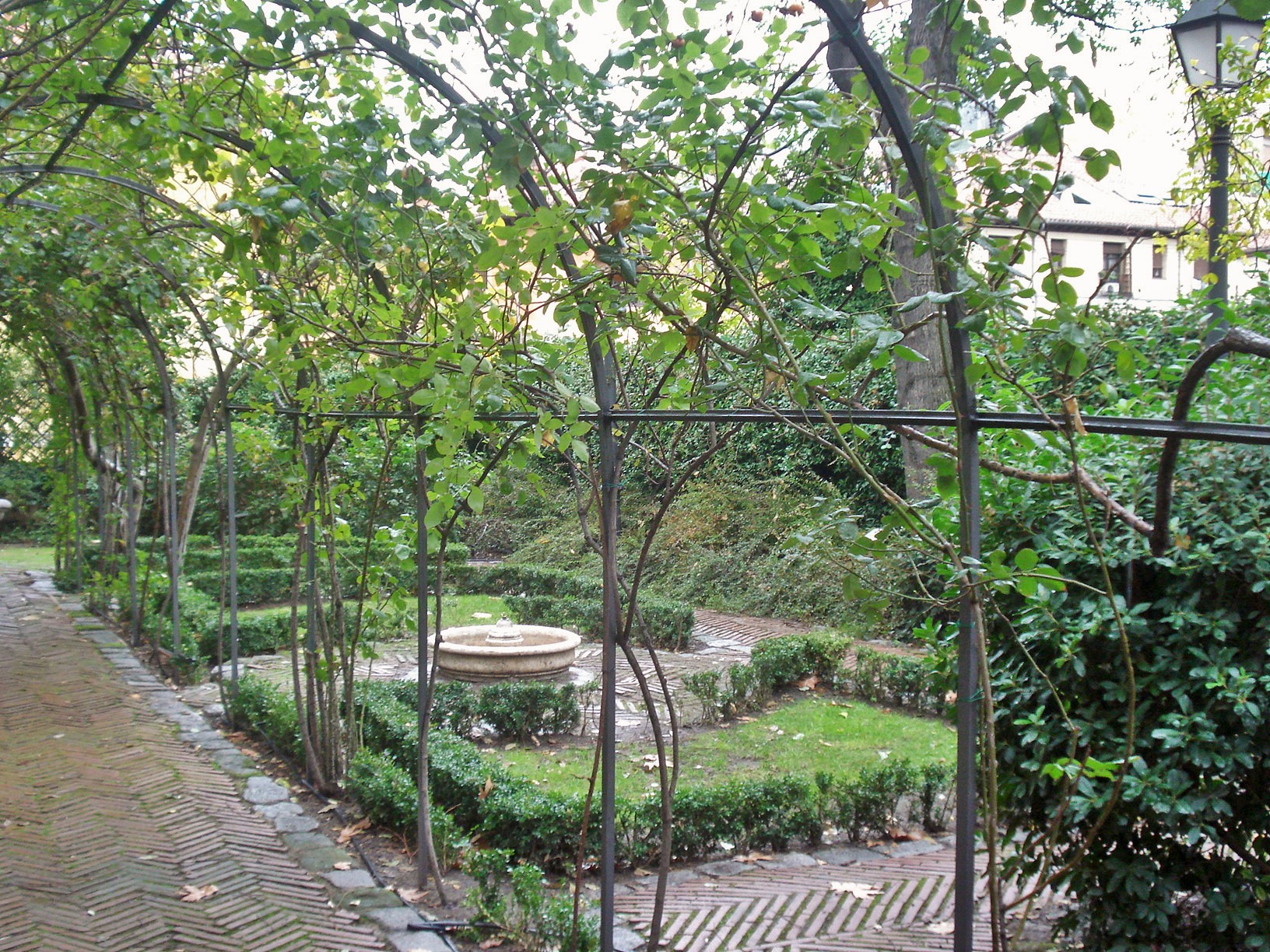
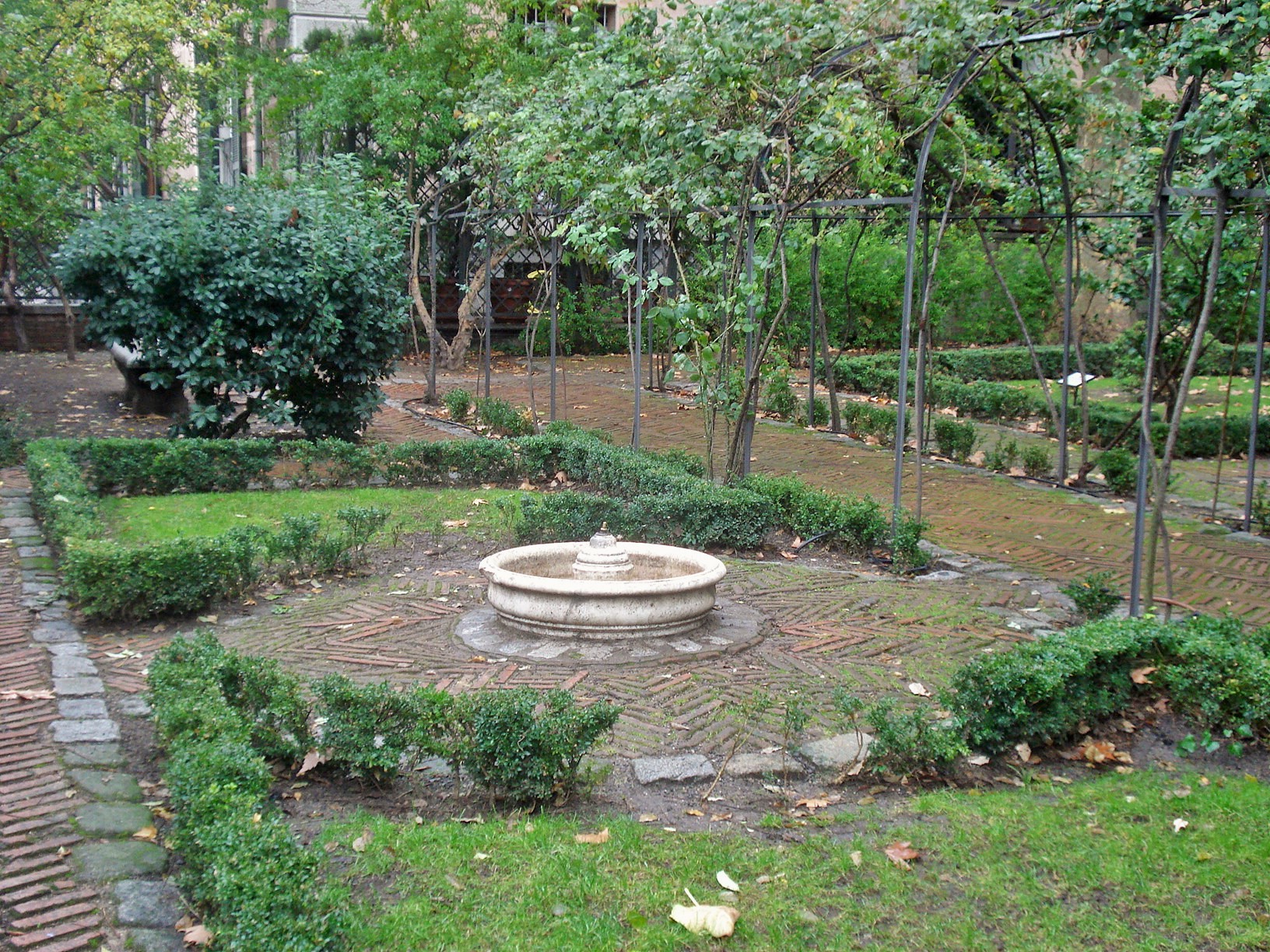
Jardín del Príncipe de Anglona is a beautiful green space, gracing Madrid’s Plaza de la Paja. It is one of the few examples of aristocratic gardens of the eighteenth century still preserved in the capital.

Its history is linked to the Palacio del Príncipe de Anglona, an edifice erected around 1530 as the residence of Francisco de Vargas- Jardín del Príncipe de Anglona was laid out in the eighteenth century, along one side of the mansion. It was designed in neo-classical style by Nicolás Chalmandrier.

The garden is named for Pedro de Alcántara Téllez-Girón y Alfonso-Pimentel, prince of Anglona and marquez of Jabalquinto, who lived in the mansion in the nineteenth century.”  (From stay.com)

I visited this garden in the fall, and I can only image what a wonderful green oasis it must be in the heart of Madrid when the arbor and roses are in full bloom.


DSC08755 DSC08739 DSC08740 DSC08741 DSC08742 DSC08743 DSC08744 DSC08745 DSC08746 DSC08747 DSC08748 DSC08749 DSC08750 DSC08751 DSC08753 DSC08754

The Alcazaba Gardens: Alhambra’s Fortress in Granada, Spain

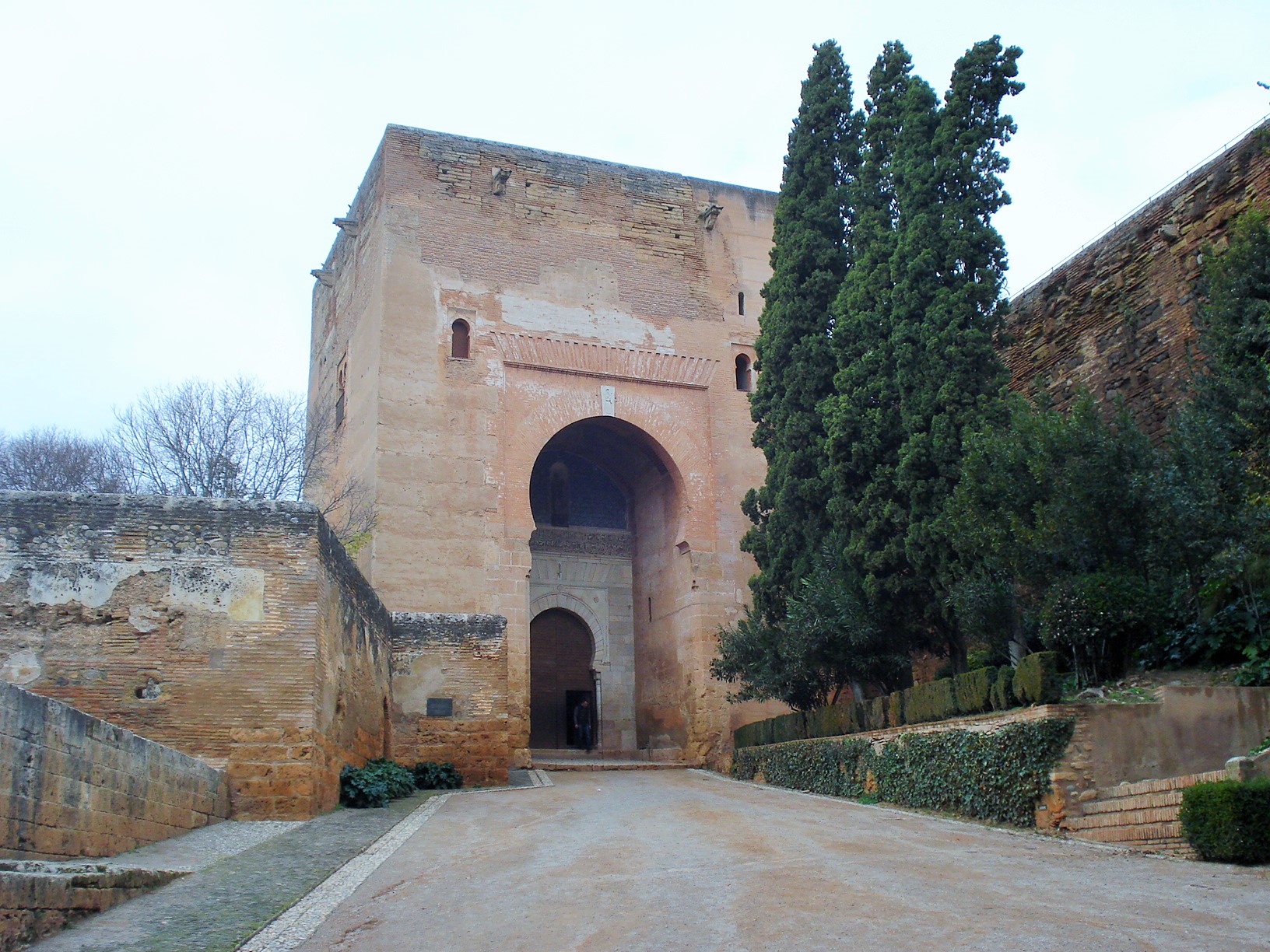
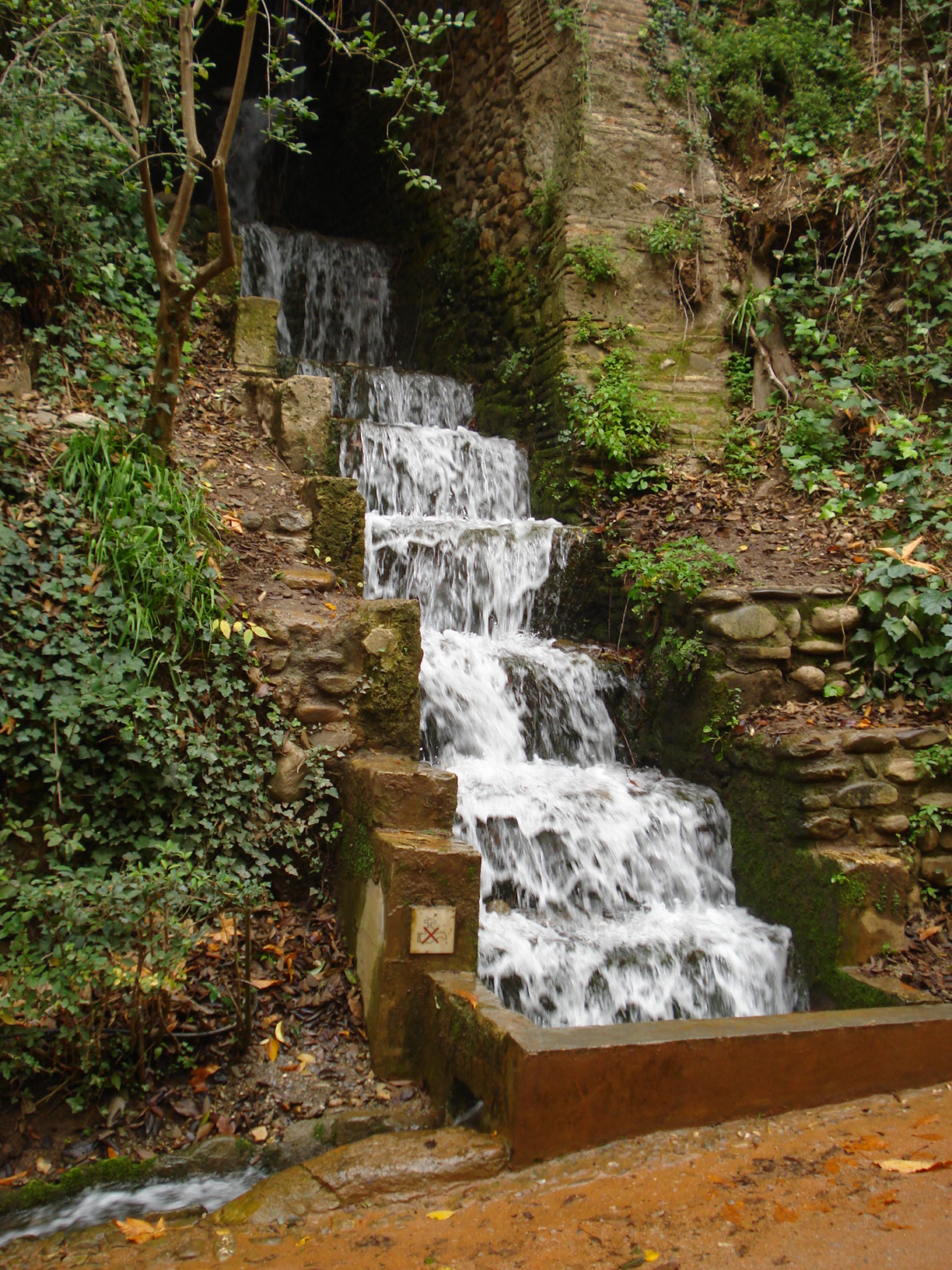
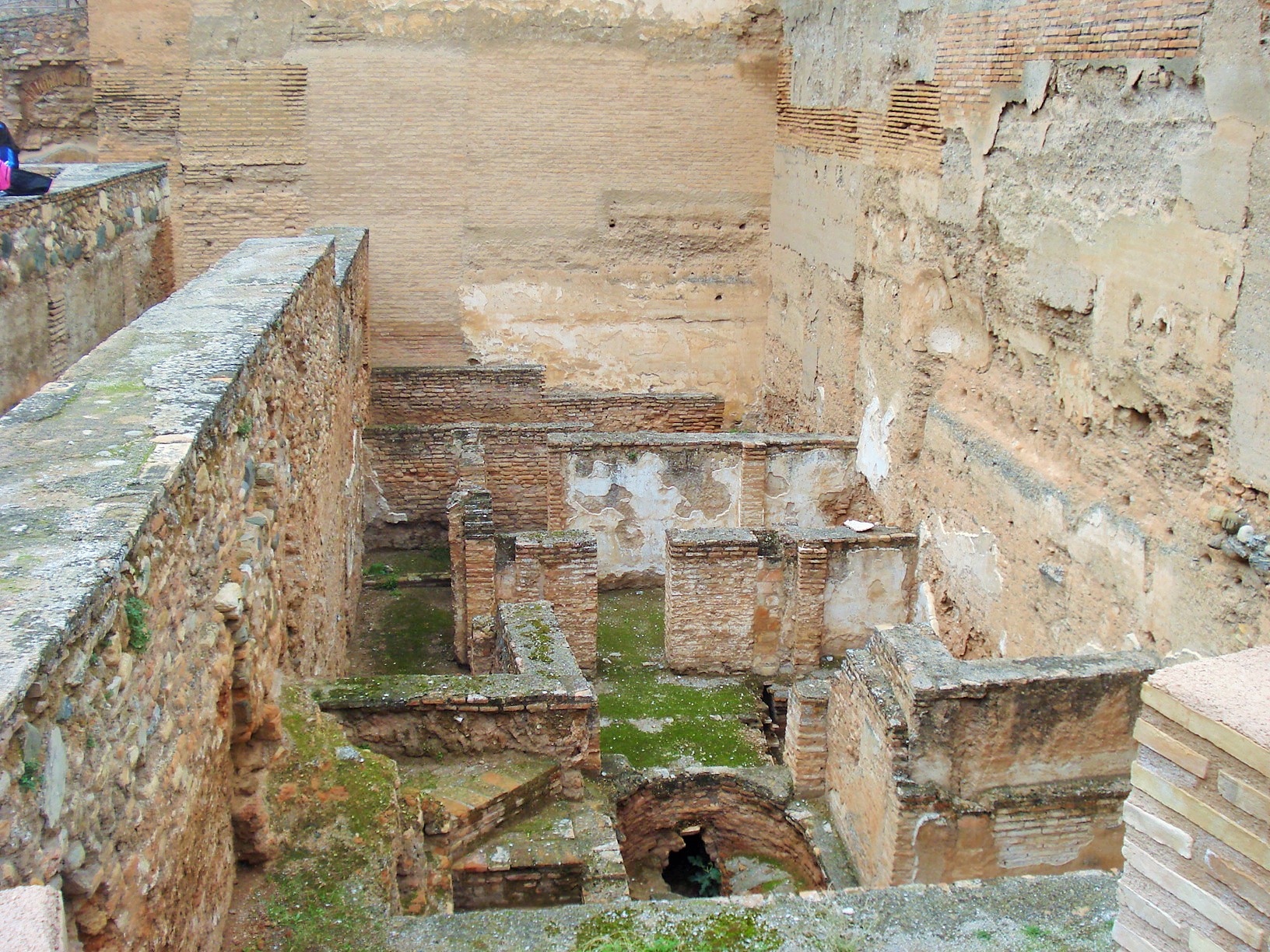
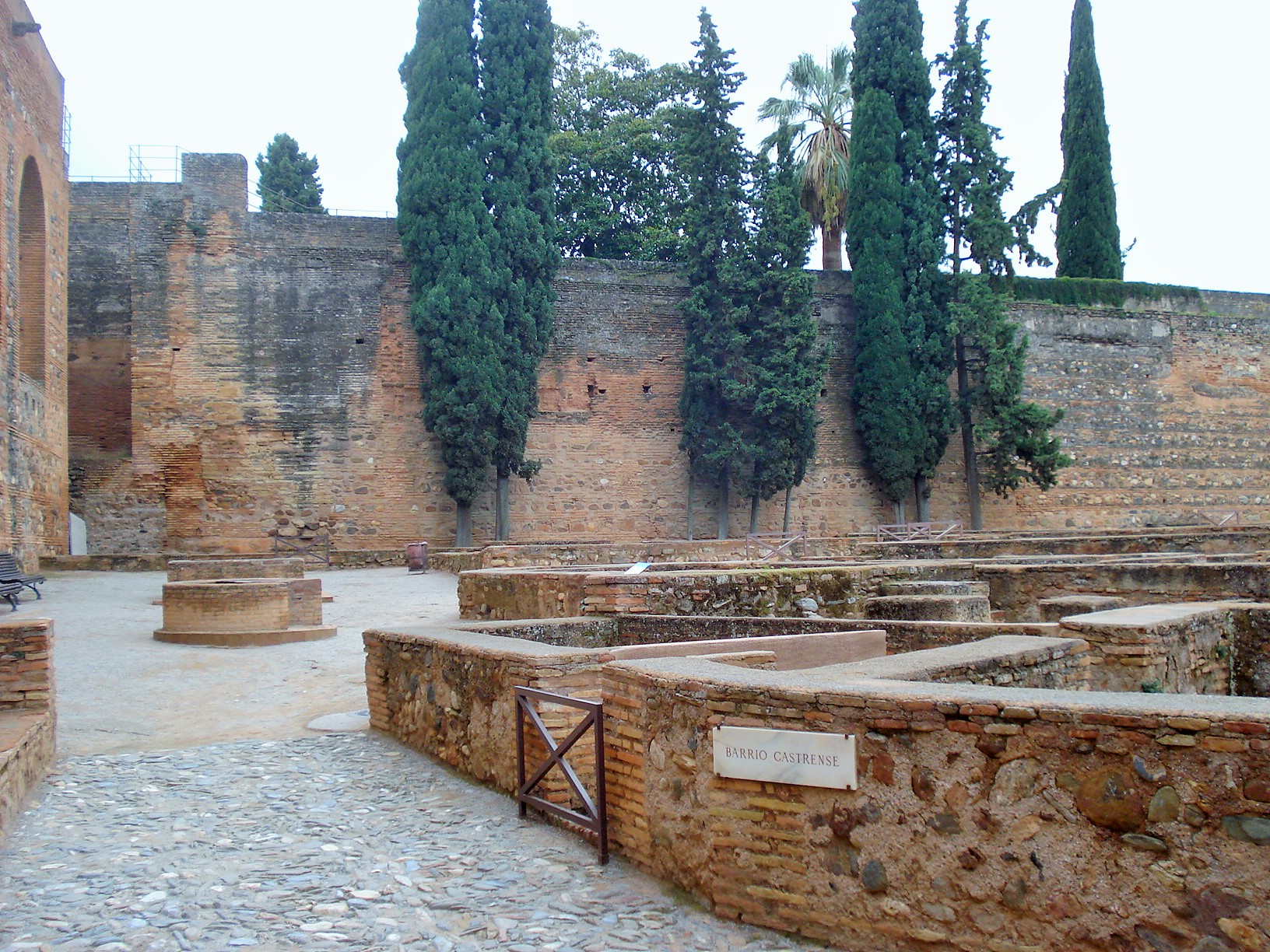
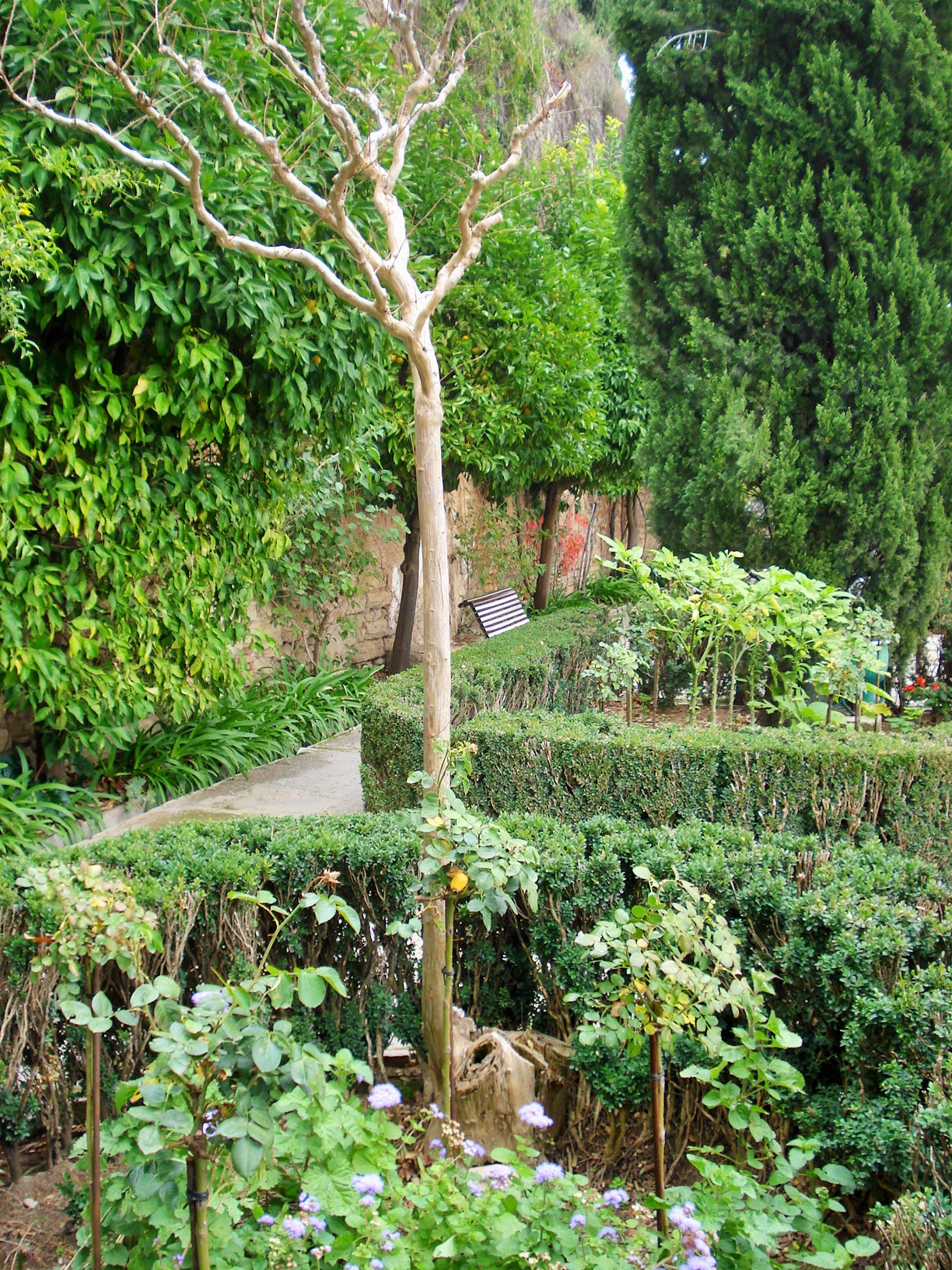
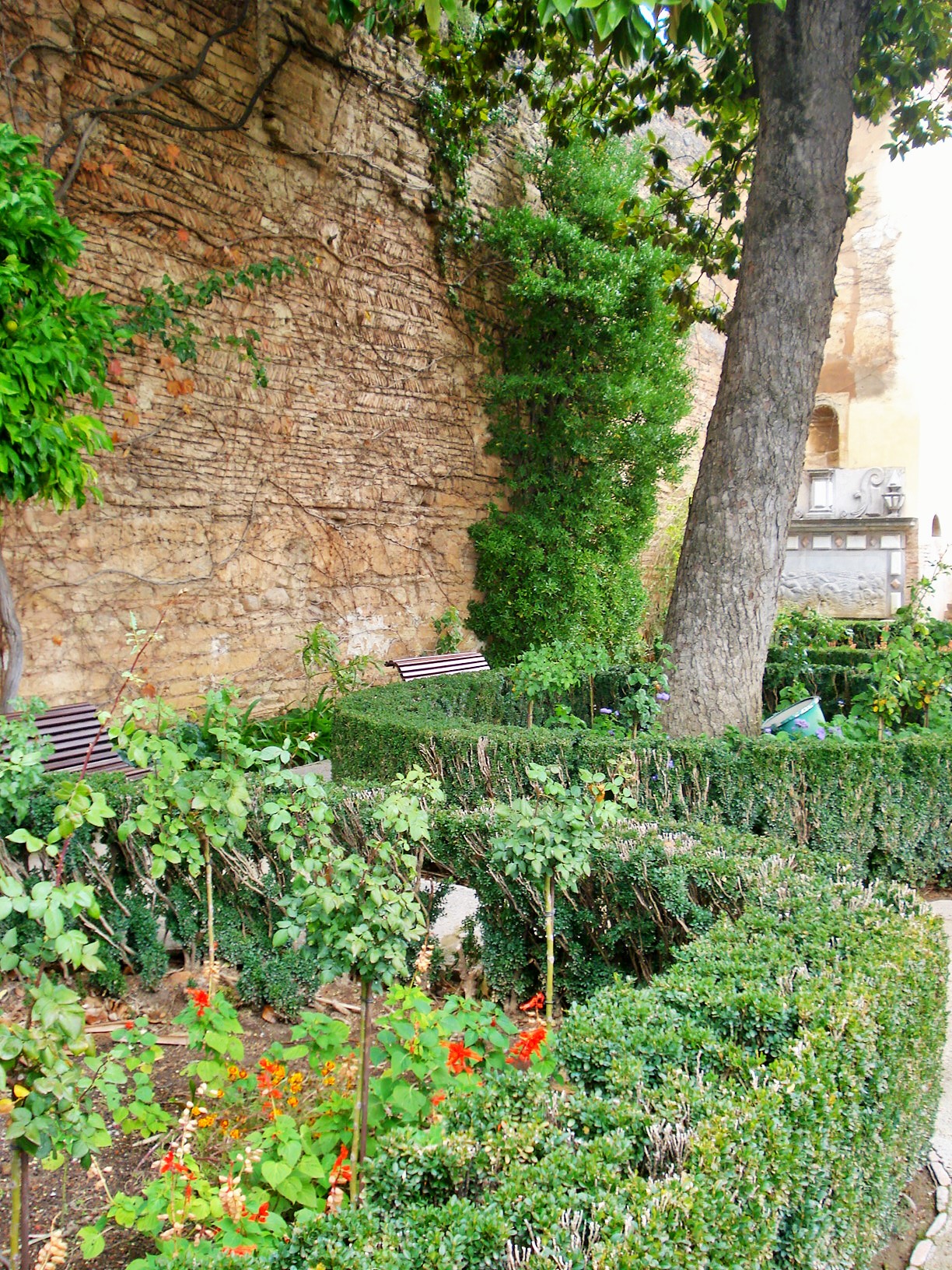
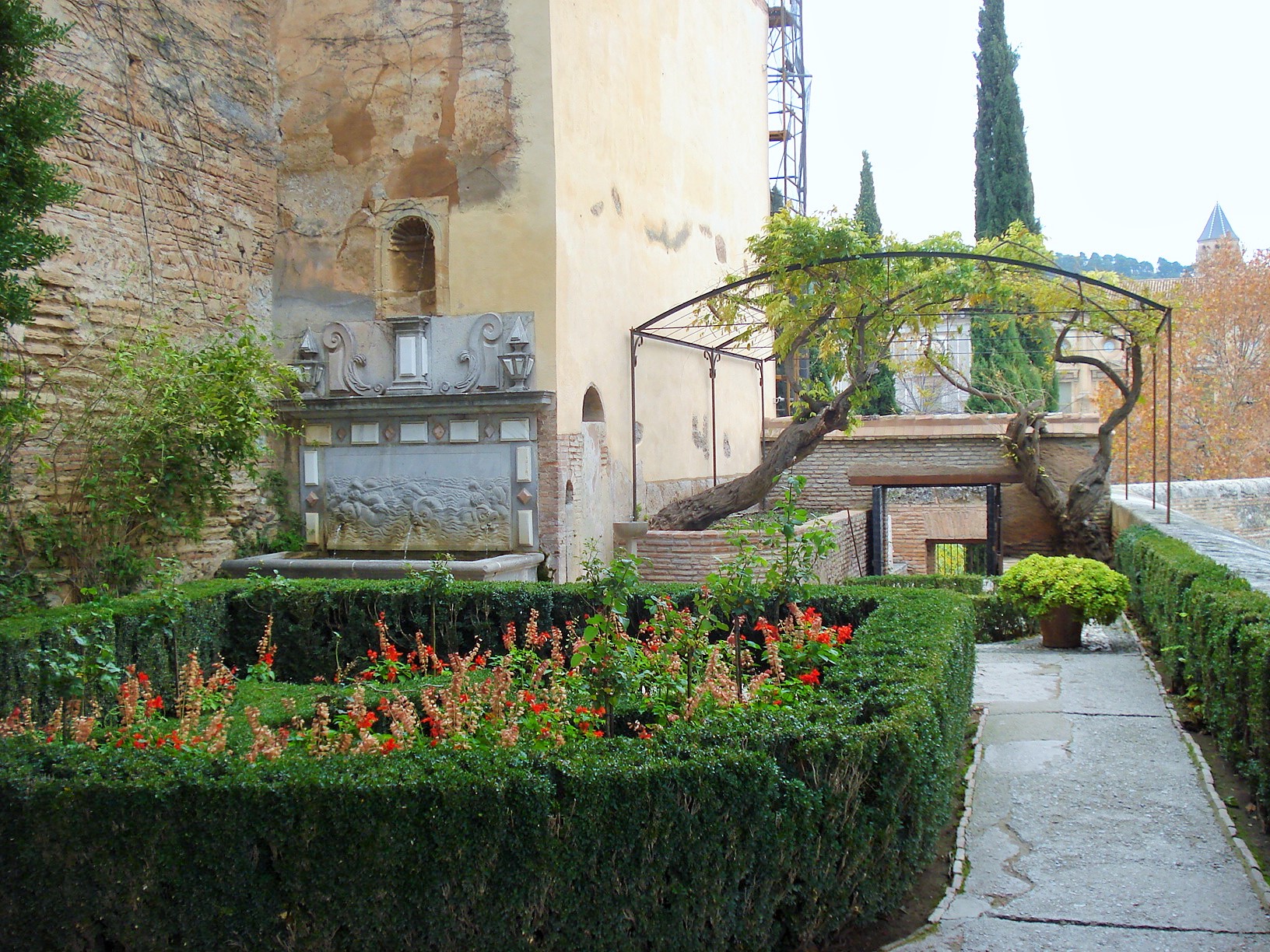
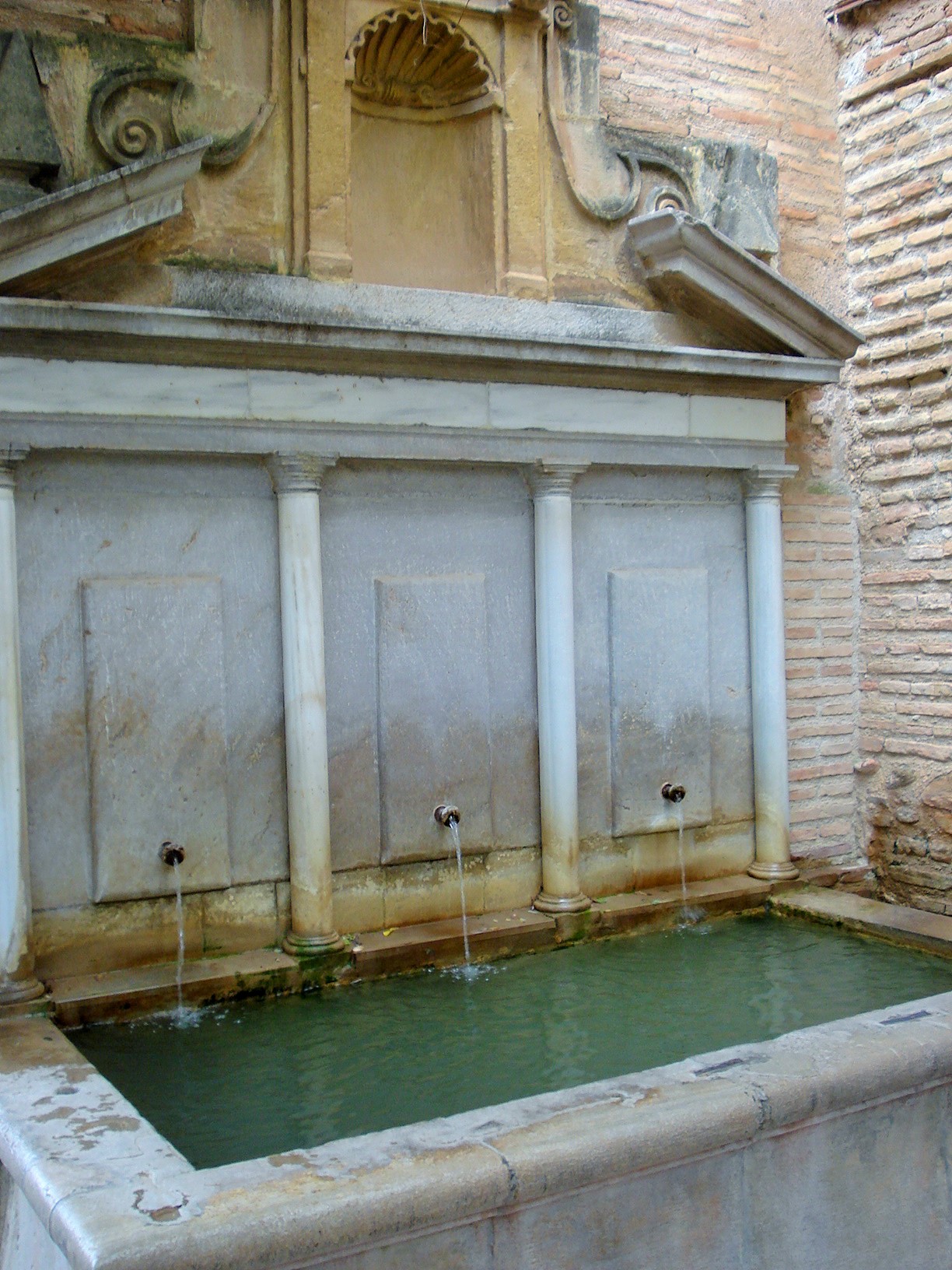
Granada, in southern Spain,  is of course most famous for the Alhambra and Generalife gardens.  The Alcazaba was built as a fortress and is the oldest part of the Alhambra. The gardens of the Alcazaba are small but offer sweeping views of the city, as well as fountains and other features typically found in Moorish style gardens.

DSC00427
View from the Alcazaba
DSC00426
The gate
DSC00425
The ornate fountain outside the walls
DSC00424
On the hill going up to the gate
DSC00429
Building foundations remaining in the Alcazaba

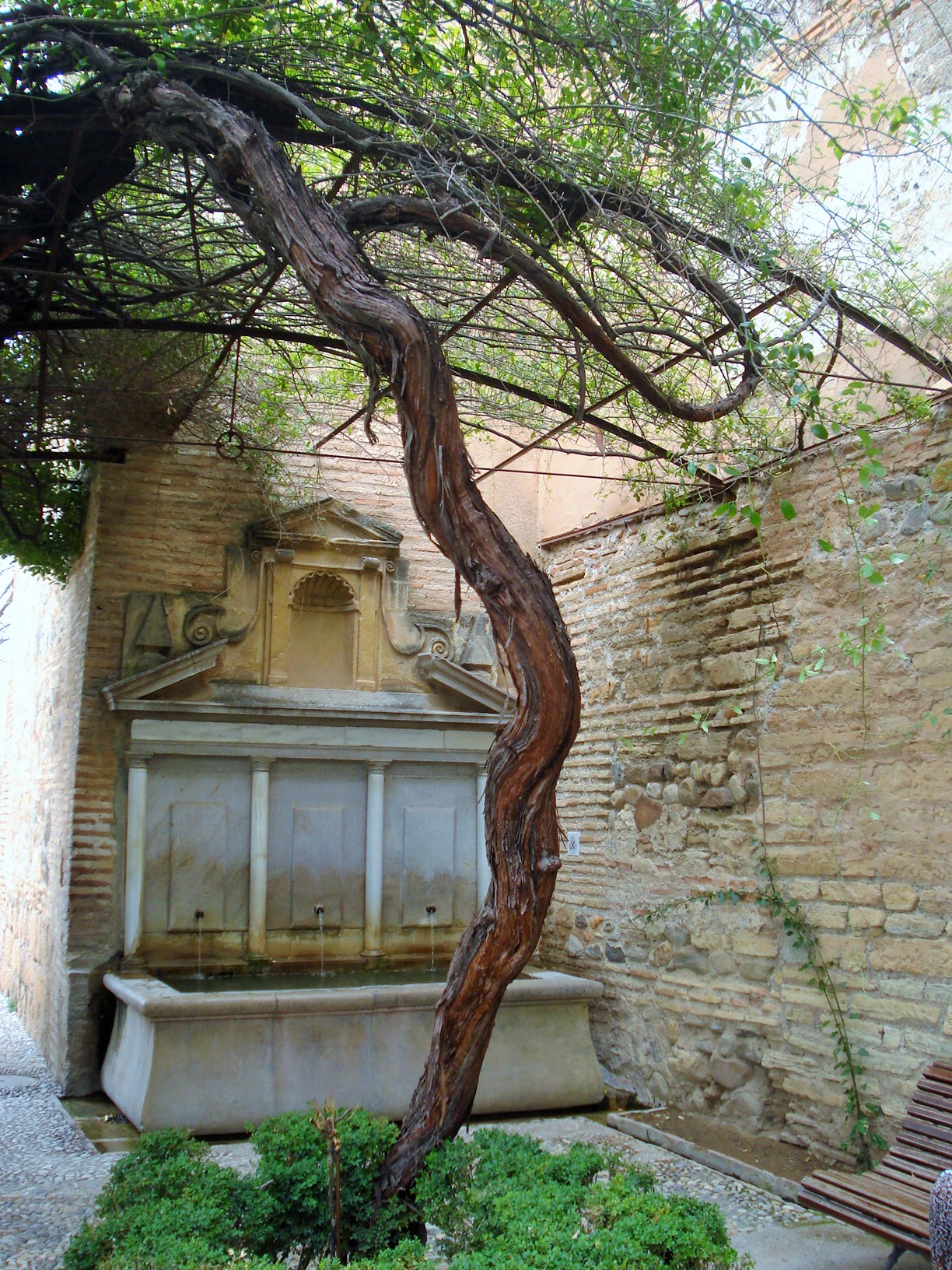
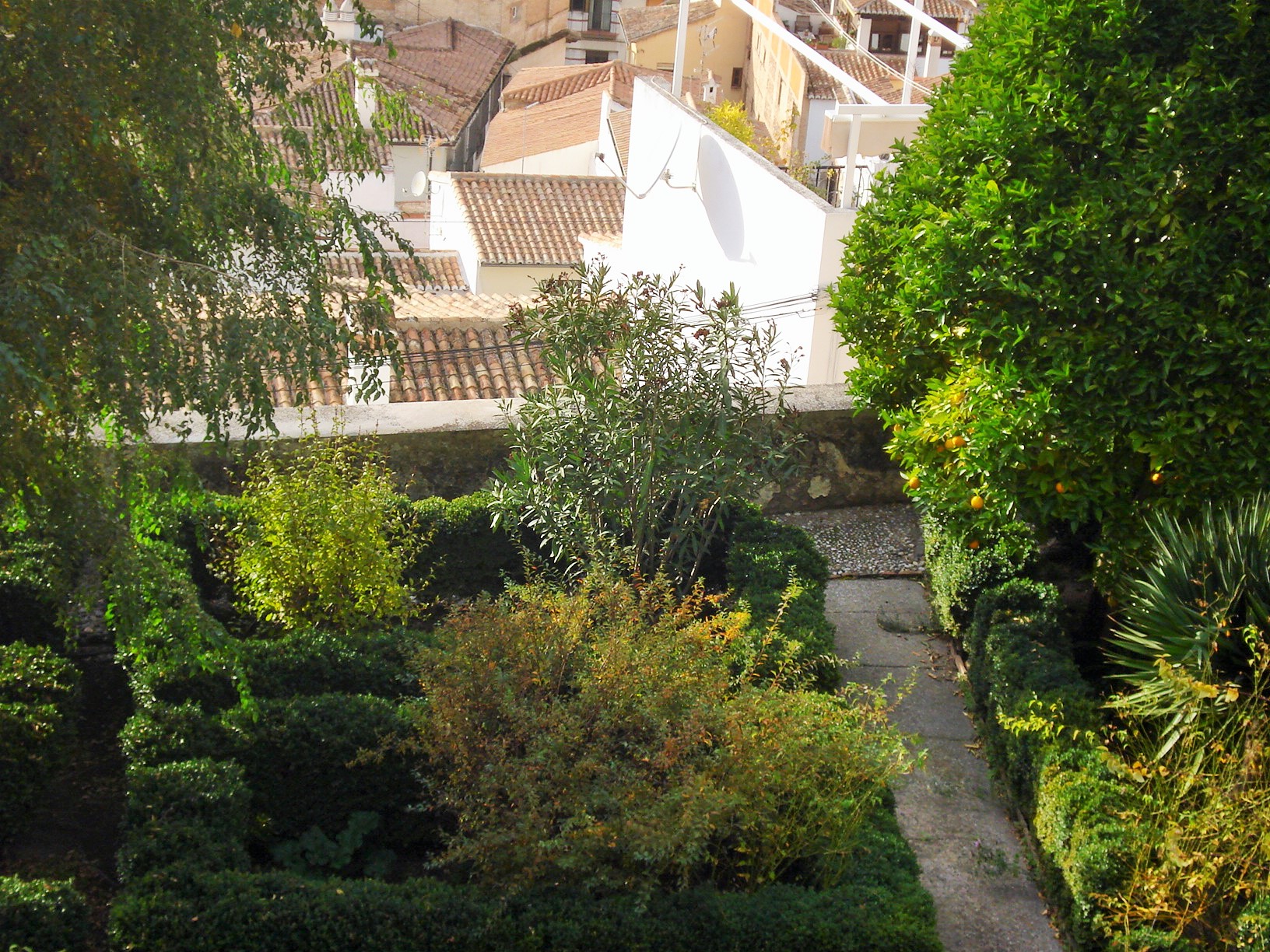
DSC00428The garden proper is called Jardin de los Adarves. It is a long and narrow garden on the side of the Alcazaba overlooking the city.

DSC00436 DSC00437 DSC00438 DSC00439 DSC00440 DSC00441 DSC00442 DSC00443 DSC00432 DSC00433 DSC00435