Alhambra’s Iconic Patios & Courtyards in Granada, Spain

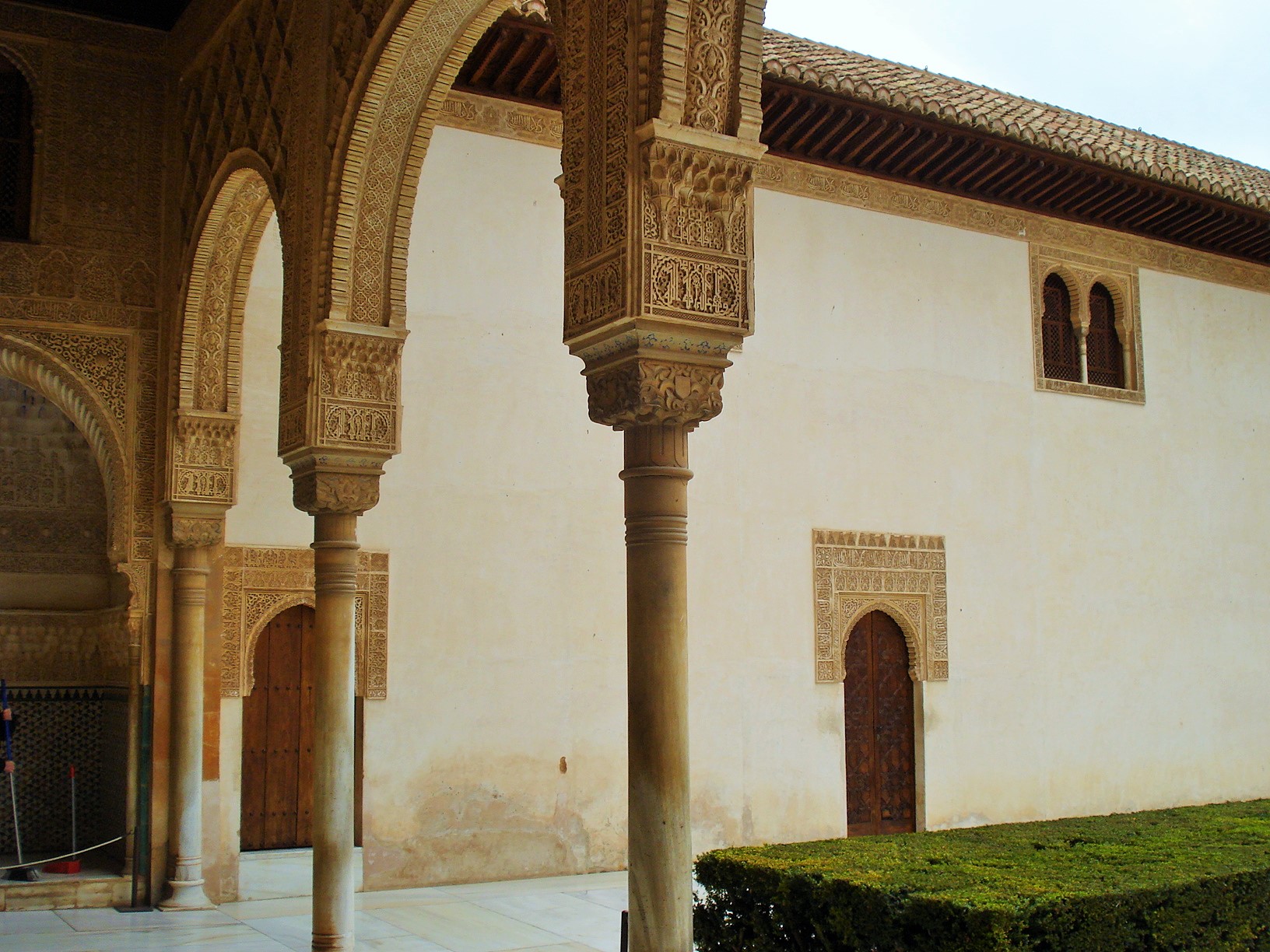
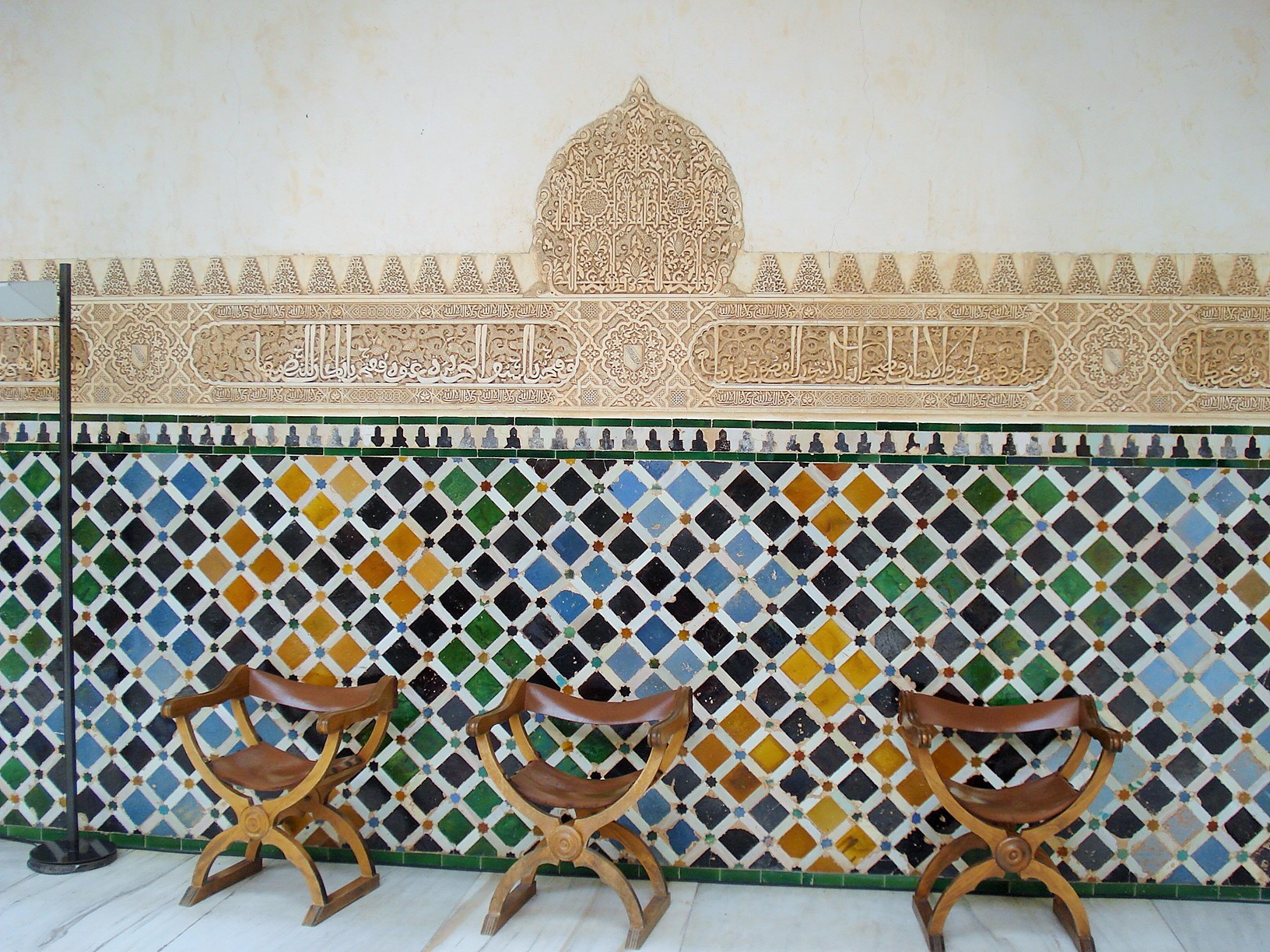
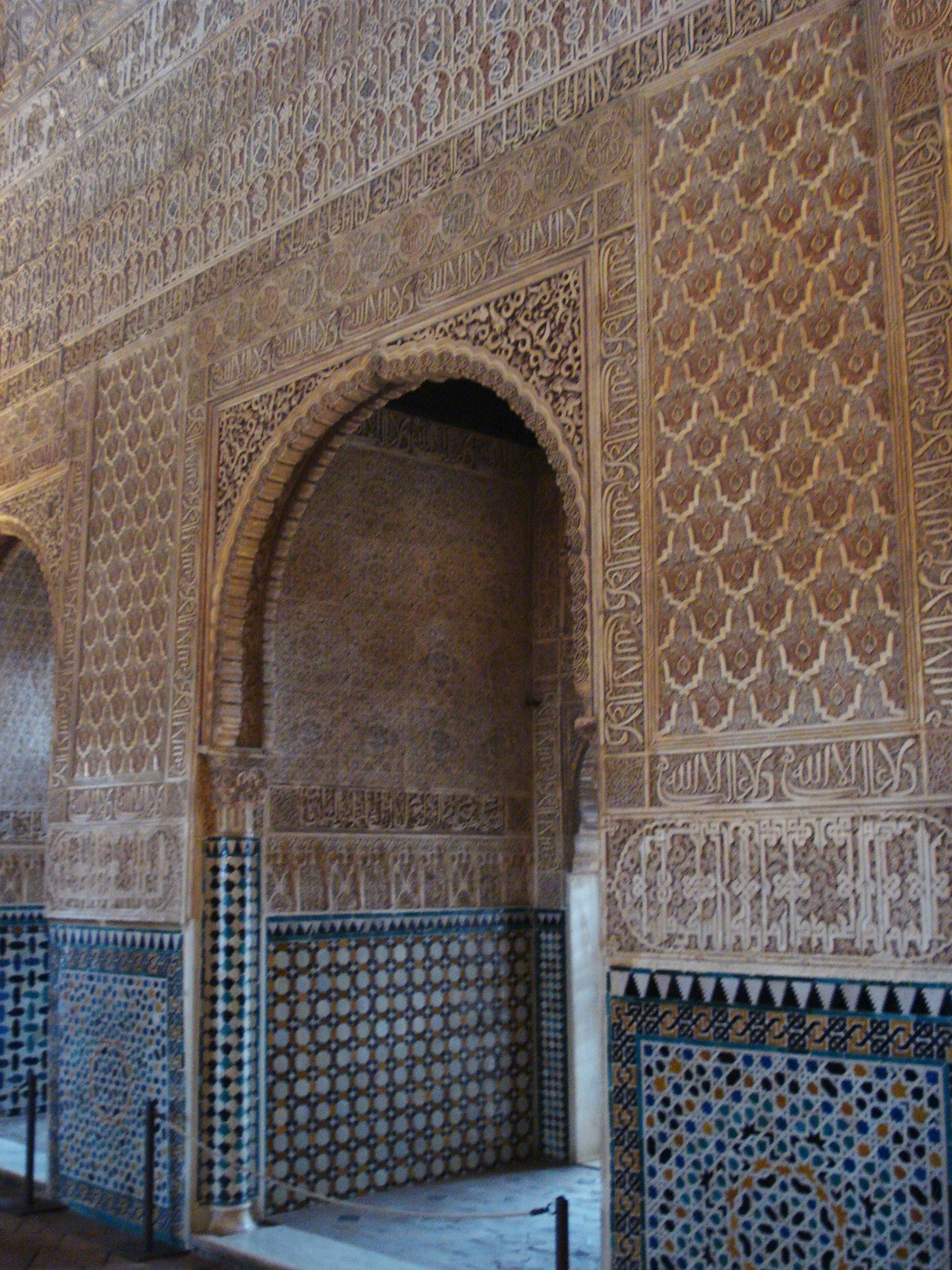
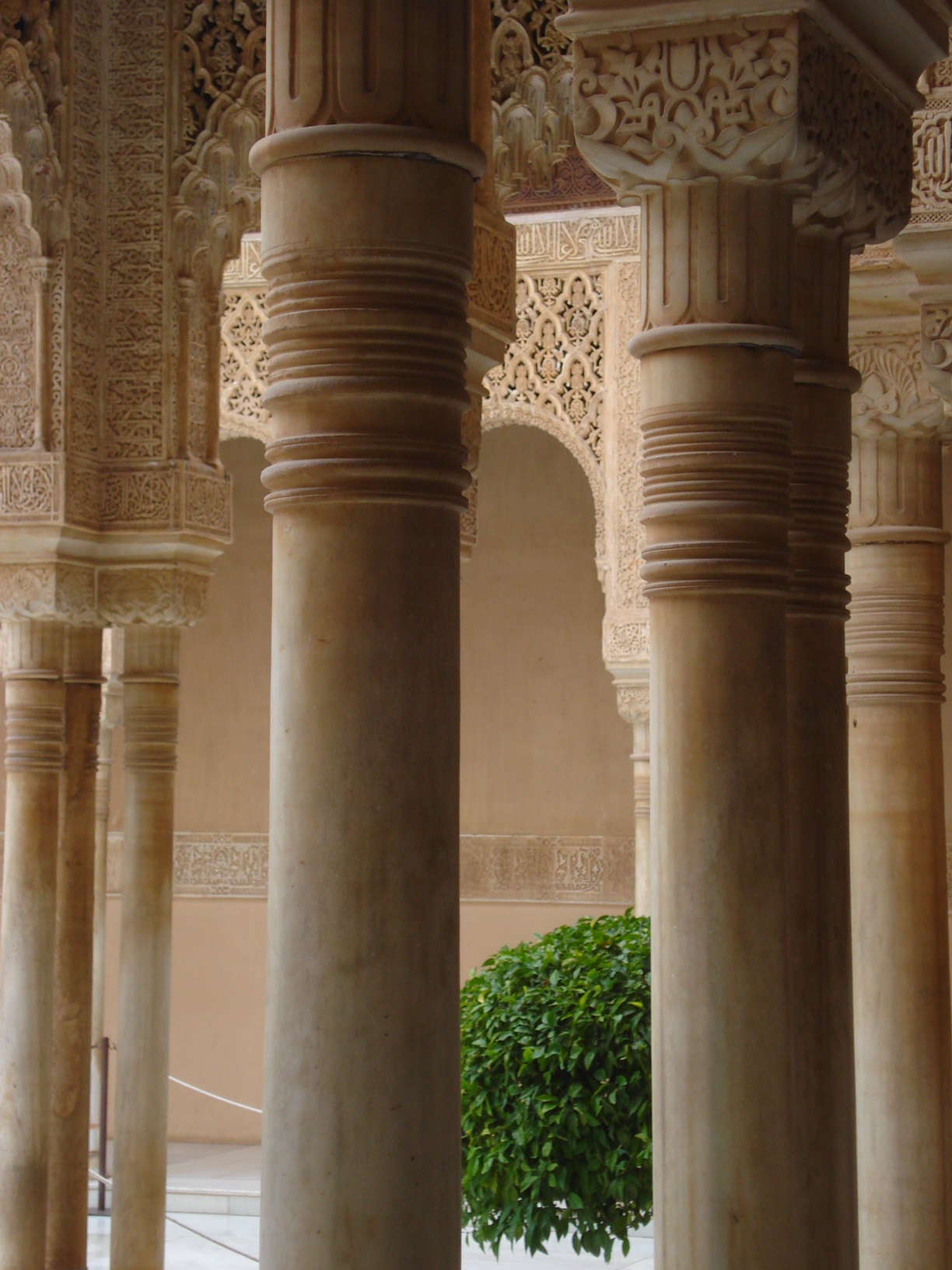
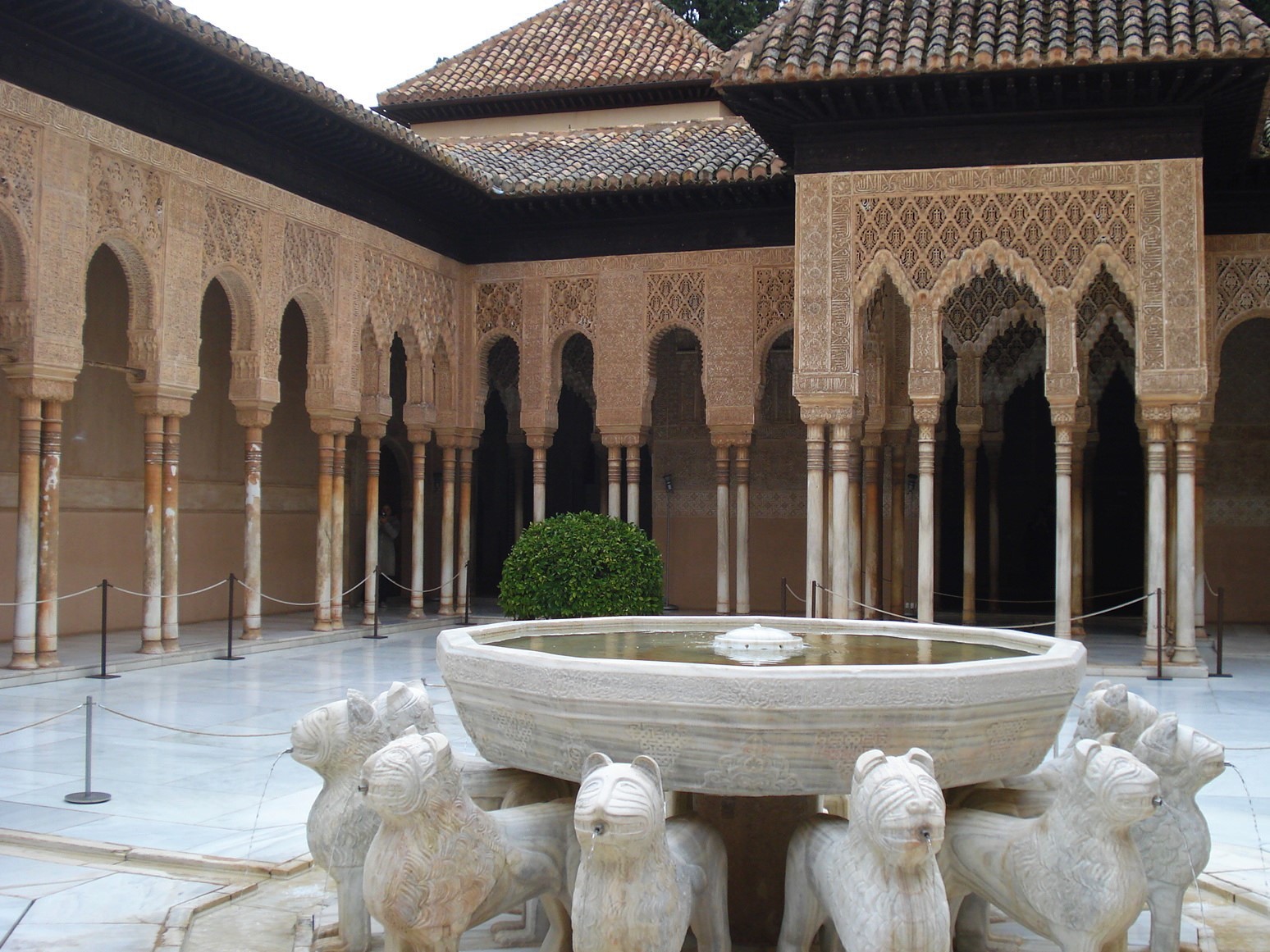
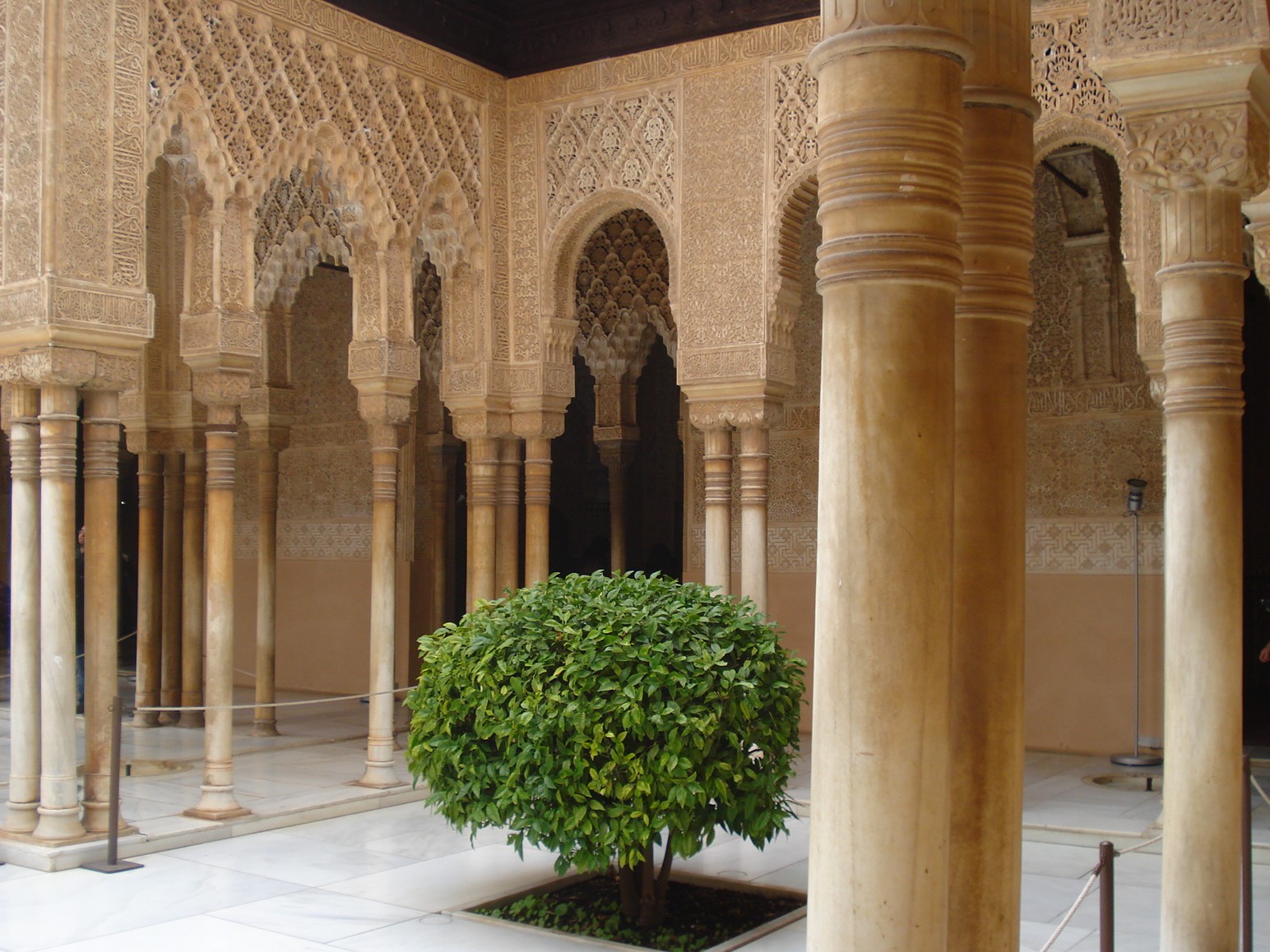
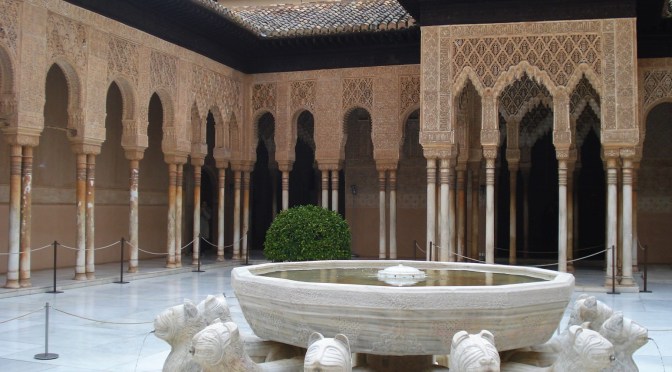
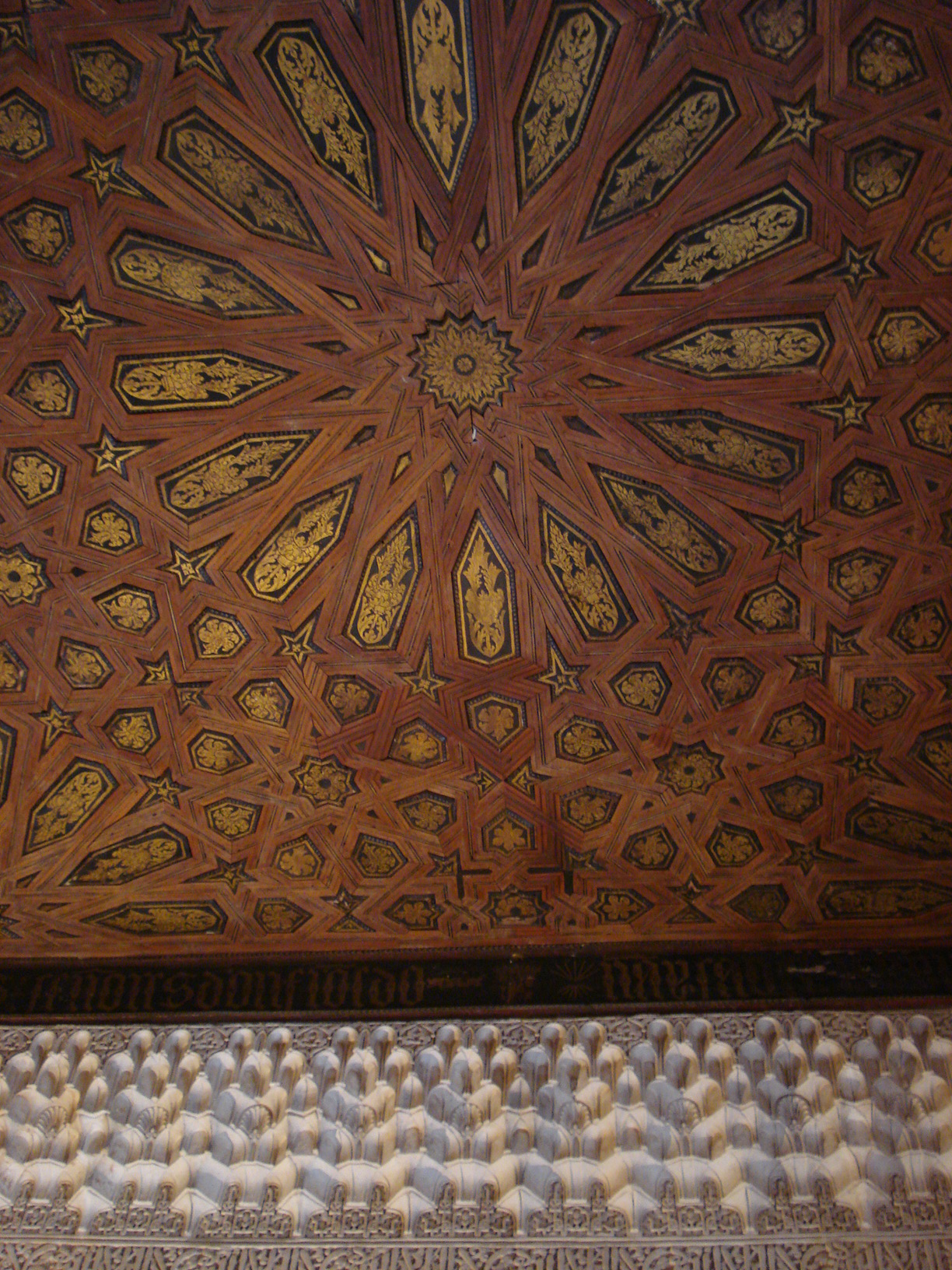
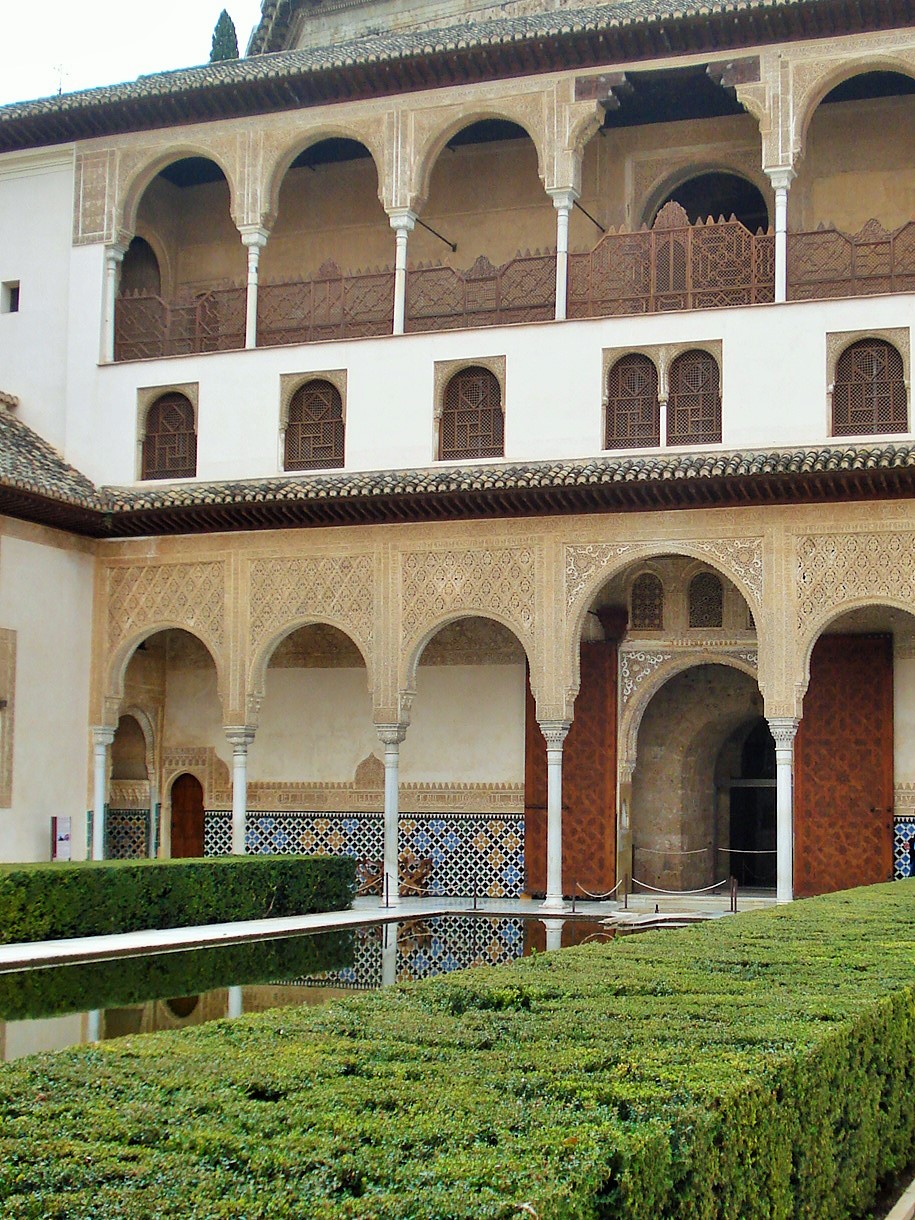
Granada, in southern Spain,  is of course most famous for the Alhambra and Generalife gardens.  The patios of the Alhambra are iconic images of Granada.  Best known are the Patio the los Mirtos and the Patio de los Leones.

According to Wikipedia, “The Court of the Myrtles (Patio de los Arrayanes) is part of the palace and fortress complexe of the Alhambra. It is located east of the “Guilded Room” (Cuarto Dorado) and west of the “Patio of the Lions” and the Baths. Its current name is due to the myrtle bushes that surround the central pond and the bright green colour of which contrasts with the white marble of the patio. It was also called the Patio of the Pondor or the Reservoir (Patio del Estanque o de la Alberca) because of the central pond, which is 34 metres long and 7,10 meters wide.[1] The patio is divided in two sides by the pond, which receives its water from two fountains. The espace has chambers and porticoes around it. These porticoes rest on columns with cubic capitals, which have seven semicircular arches decorated with fretwork rhombuses and inscriptions praising God. The central arch is greater than the other six and has solid scallops decorated with stylised vegetal forms and capitals of mocarabes.”
DSC00460

DSC00461 DSC00463 DSC00464 DSC00465 DSC00466 DSC00467 DSC00470 DSC00472 DSC00473 DSC00474 DSC00475

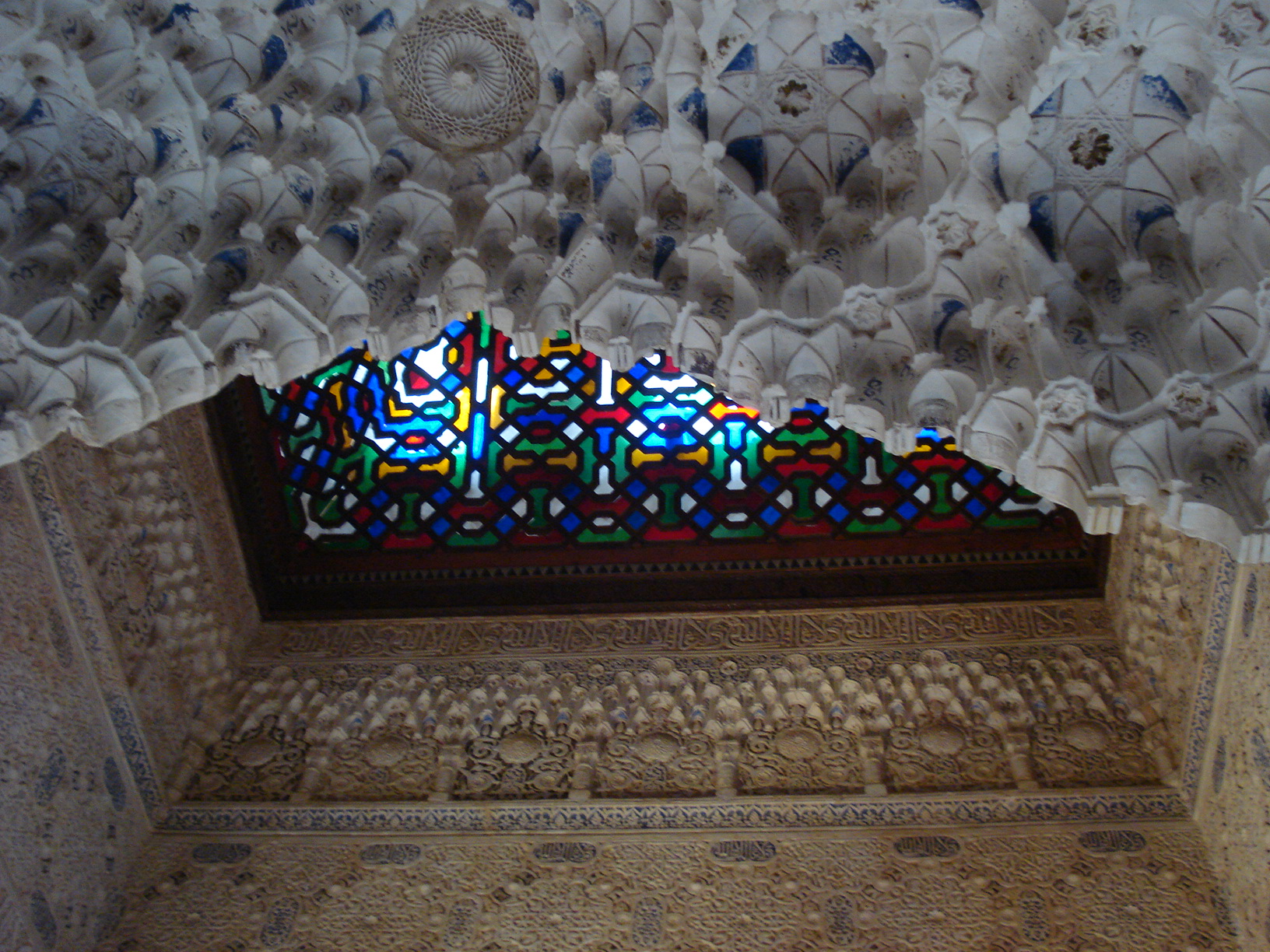
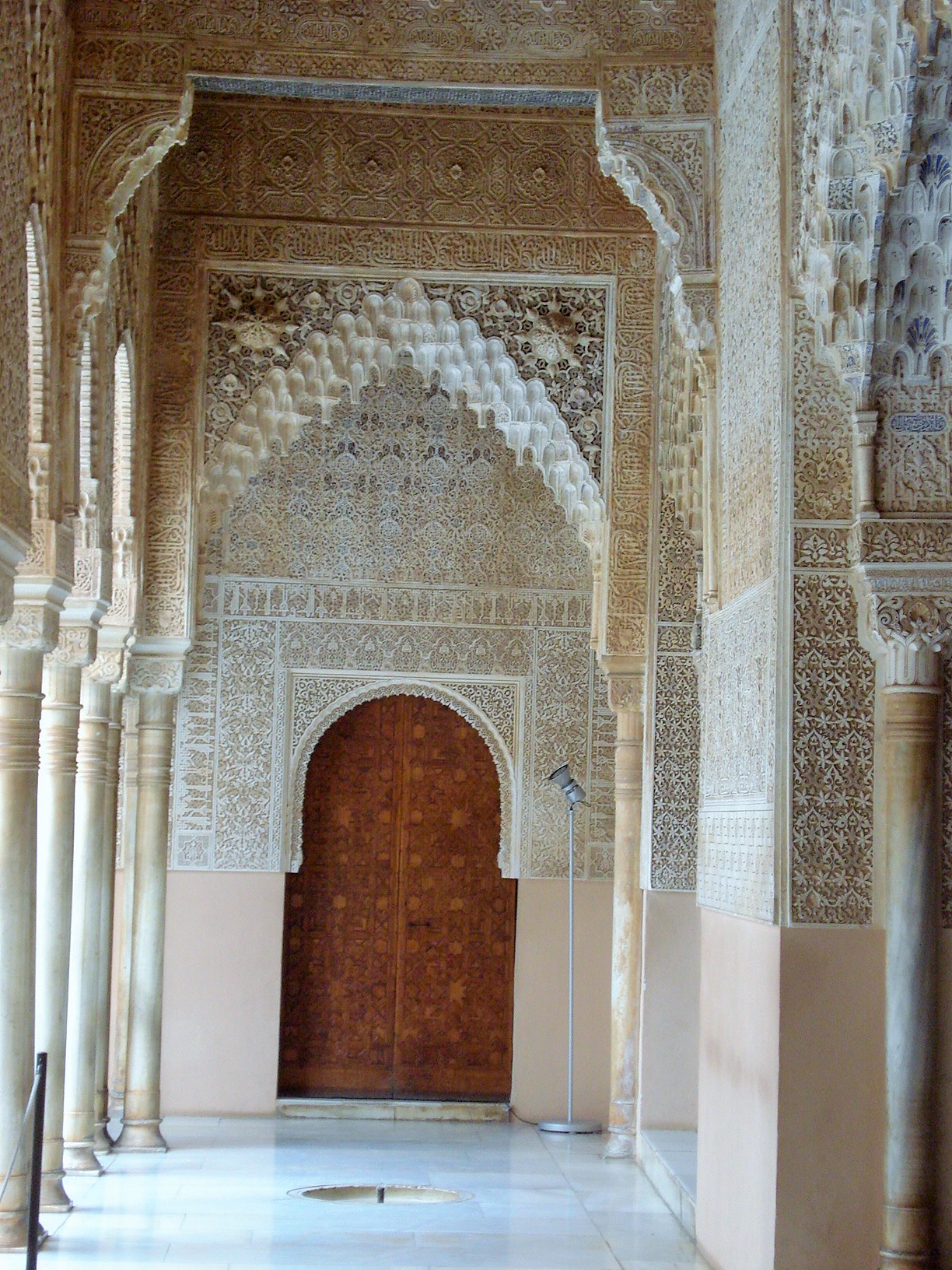
Also in Wikepedia, “The Courtyard of the Lions is an oblong courtyard, 35 m in length and 20 m in width, surrounded by a low gallery supported on 124 white marble columns. A pavilion projects into the courtyard at each extremity, with filigree walls and light domed roof, elaborately ornamented. The square is paved with coloured tiles, and the colonnade with white marble; while the walls are covered 1.5 m up from the ground with blue and yellow tiles, with a border above and below enamelled blue and gold. The columns supporting the roof and gallery are irregularly placed, with a view to artistic effect; and the general form of the piers, arches and pillars is most graceful. They are adorned by varieties of foliage, etc.; above each arch there is a large square of arabesques; and over the pillars is another square of filigree work. In the center of the courtyard is the celebrated Fountain of Lions, a magnificent alabaster basin supported by the figures of twelve lions in white marble. ”
DSC00501 DSC00479 DSC00480 DSC00481 DSC00485 DSC00488 DSC00489 DSC00493 DSC00495


Casa del Patio in Cordoba: Vertical & Container Gardening Ideas

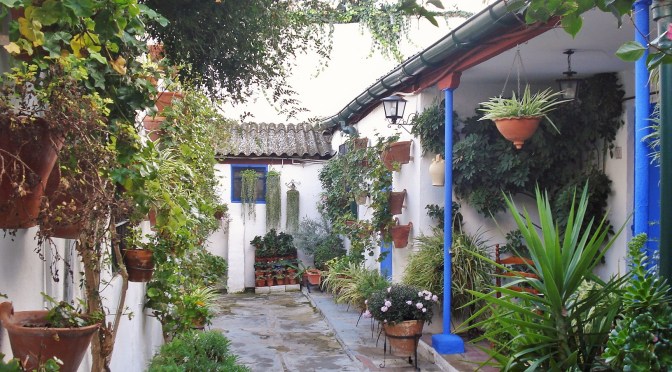
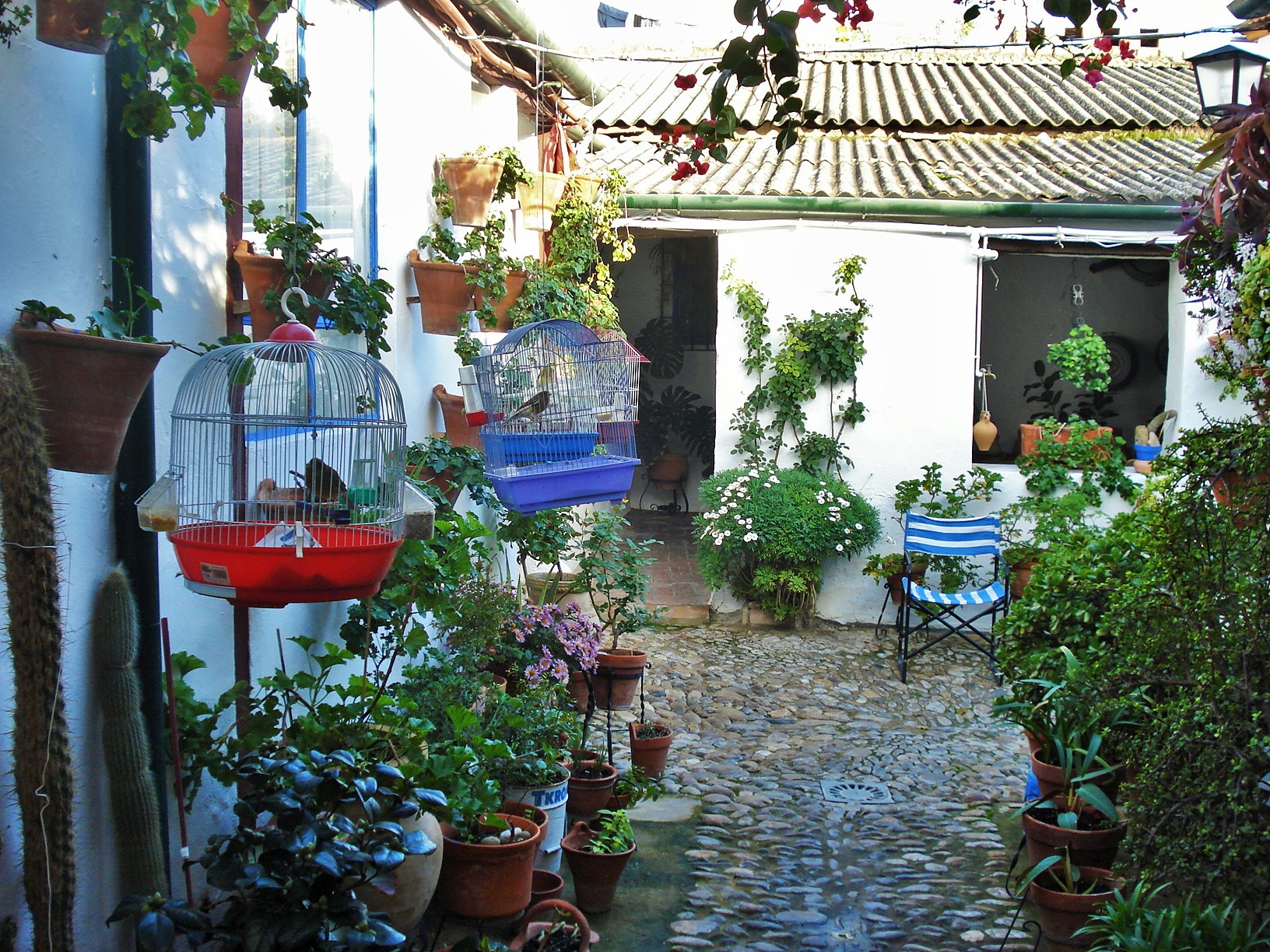
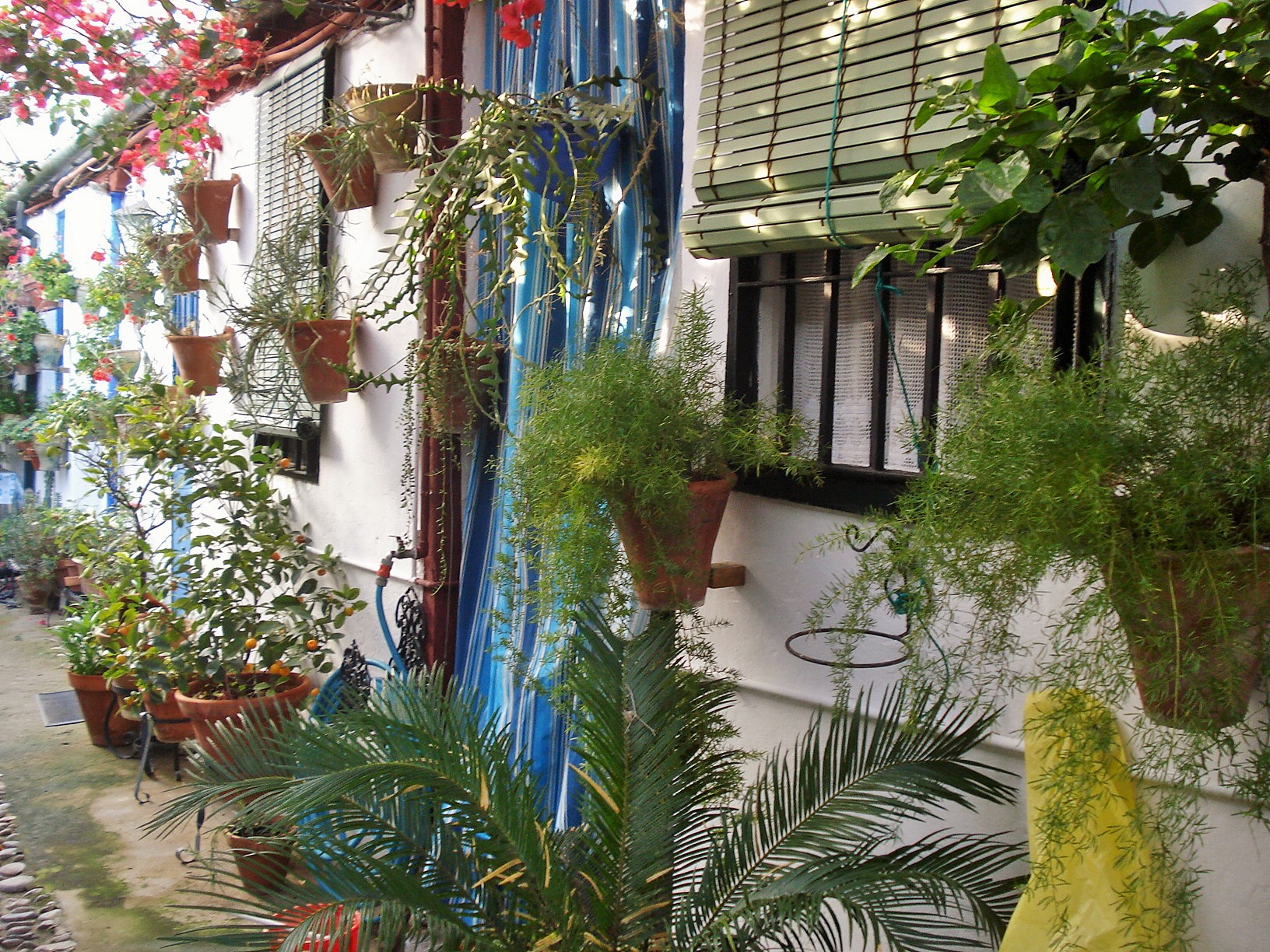
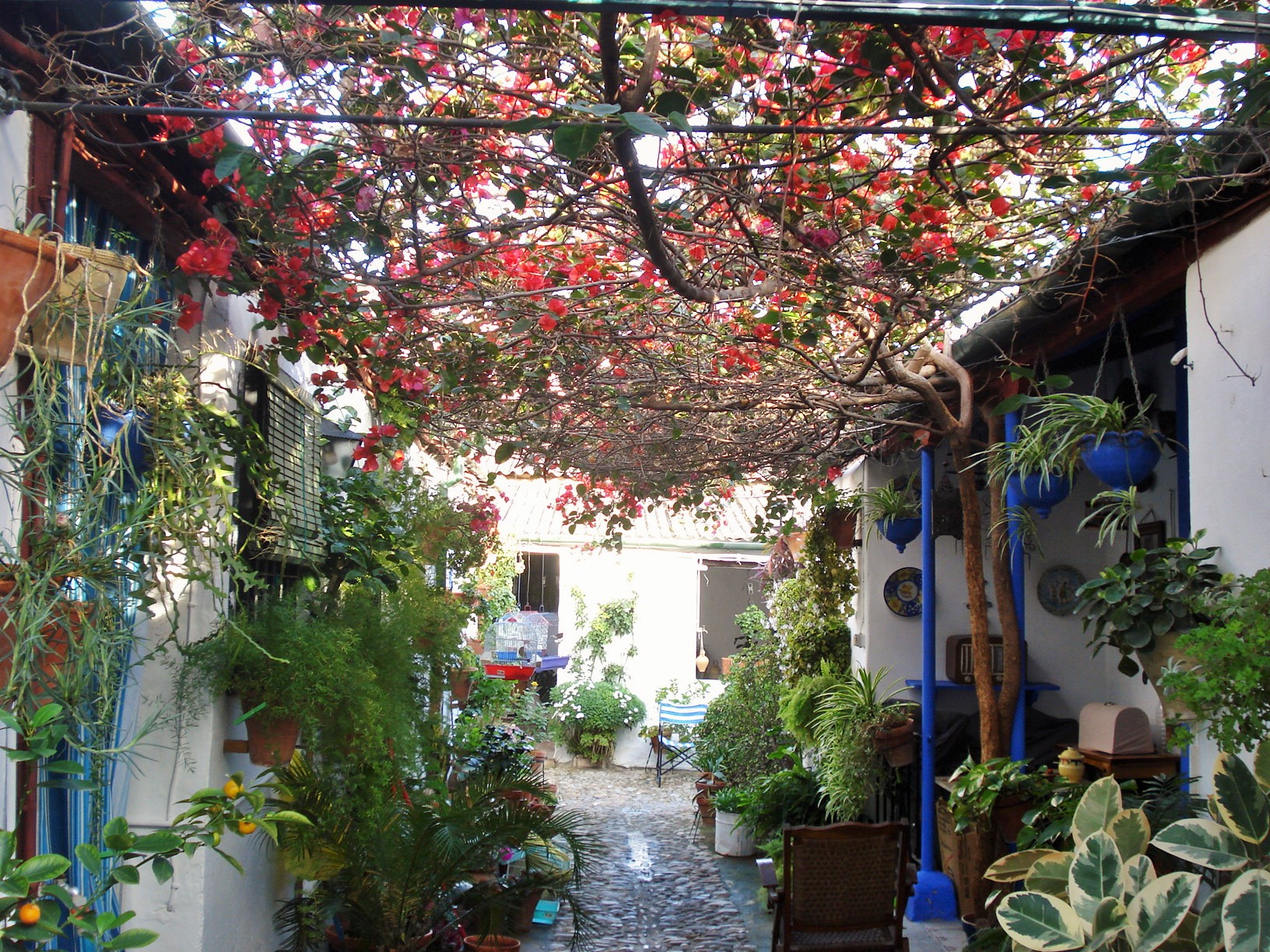
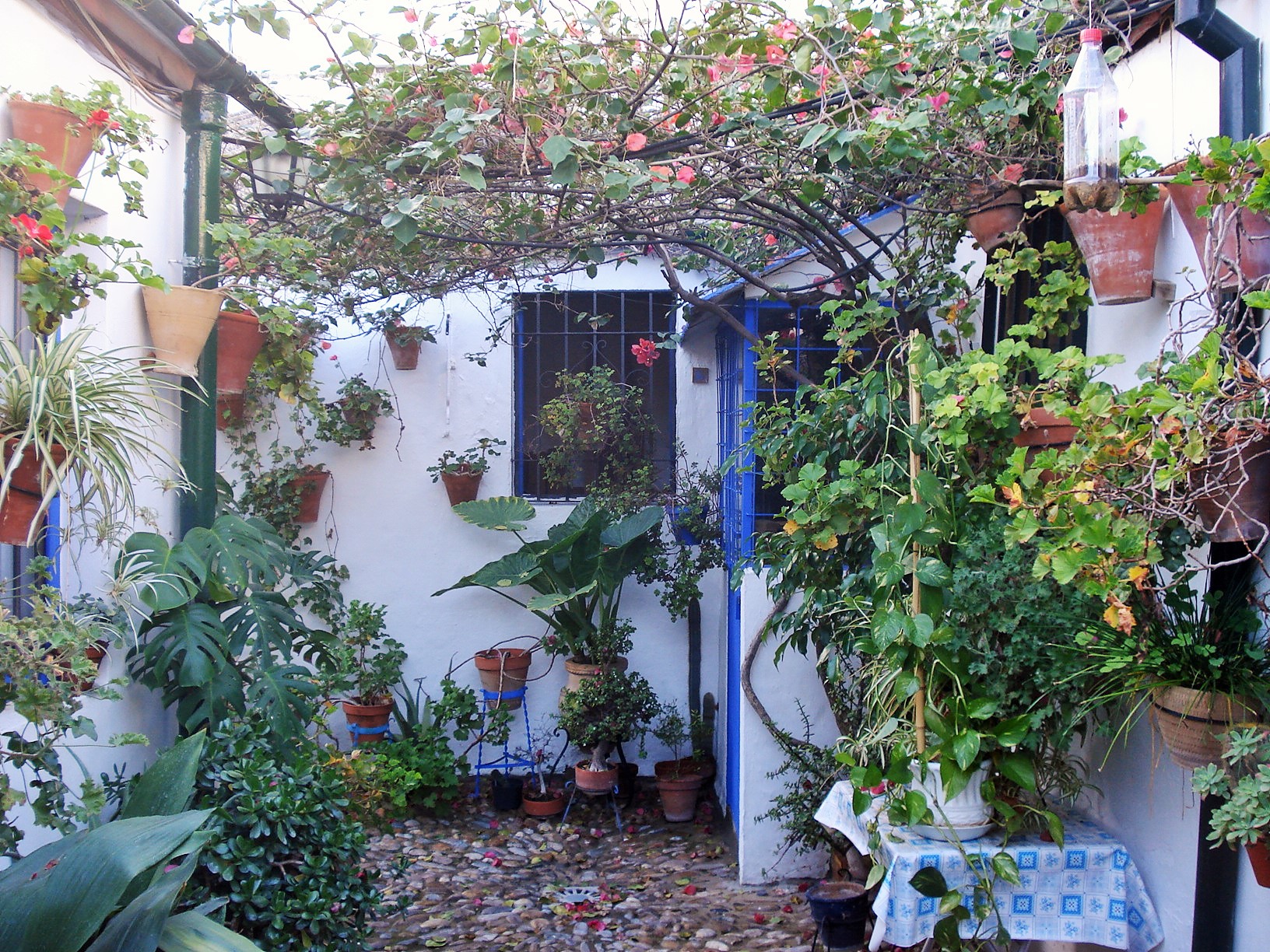
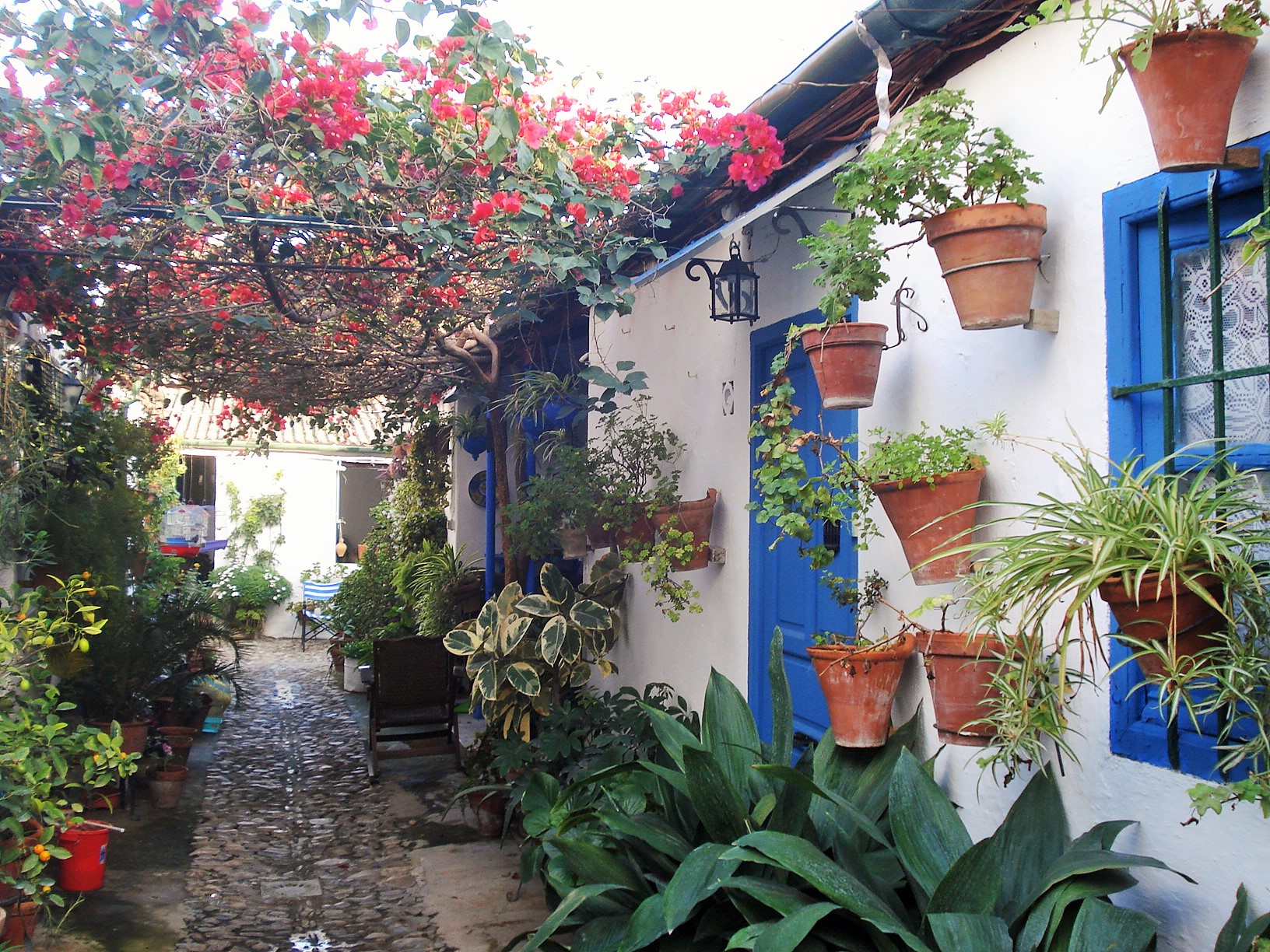
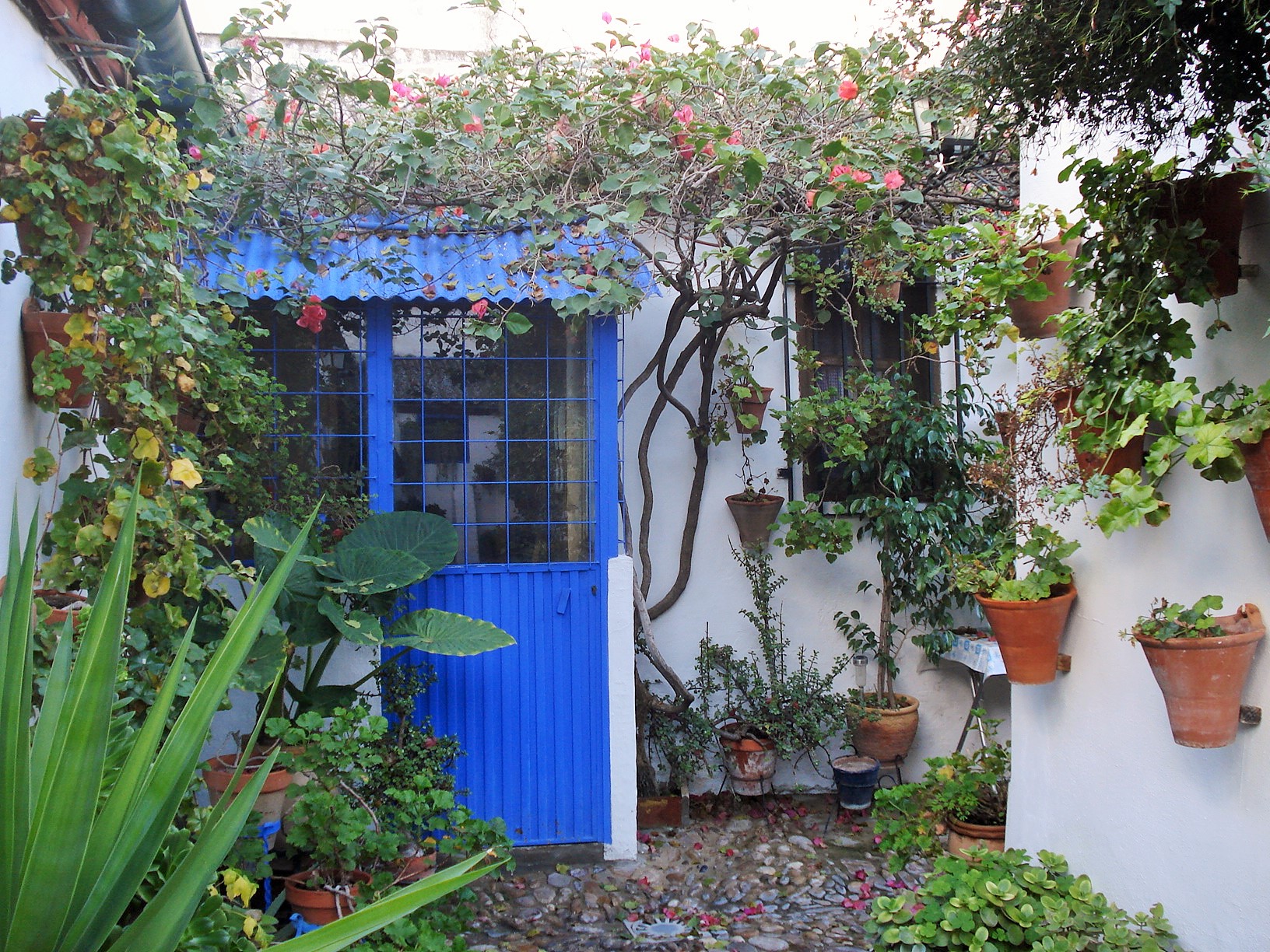
Nothing distinguishes the Casa del Patio from any of the other houses tucked away in a quiet side street of this old Cordoba neighborhood.  It is only when stepping inside that one is transported to this unexpected green oasis. The building itself is only a series of meandering little cottages, quite modest on their own, but the residents, many of them artists and craftsmen have transformed them into a wild and lush haven of greenery.

Cordoba is famed for, and prides itself in, its patios and courtyards. It hold a Fiesta de los Patios once a year in May, during which prizes are awarded for the best patios, and many private buildings open their doors for visits once a year on that occasion. Case del Patio is one such venue, and never fails to garner top rankings in the Festival.

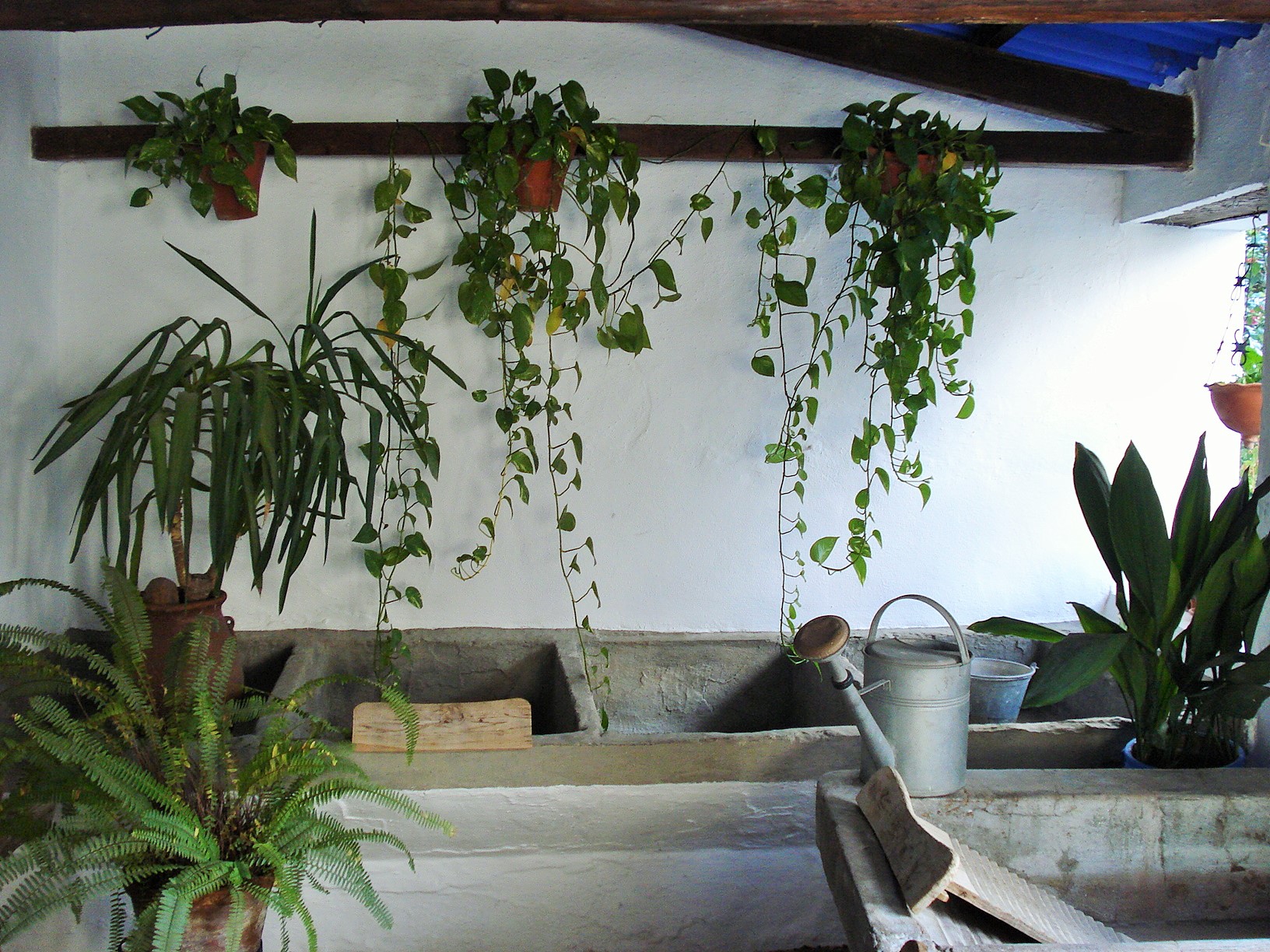
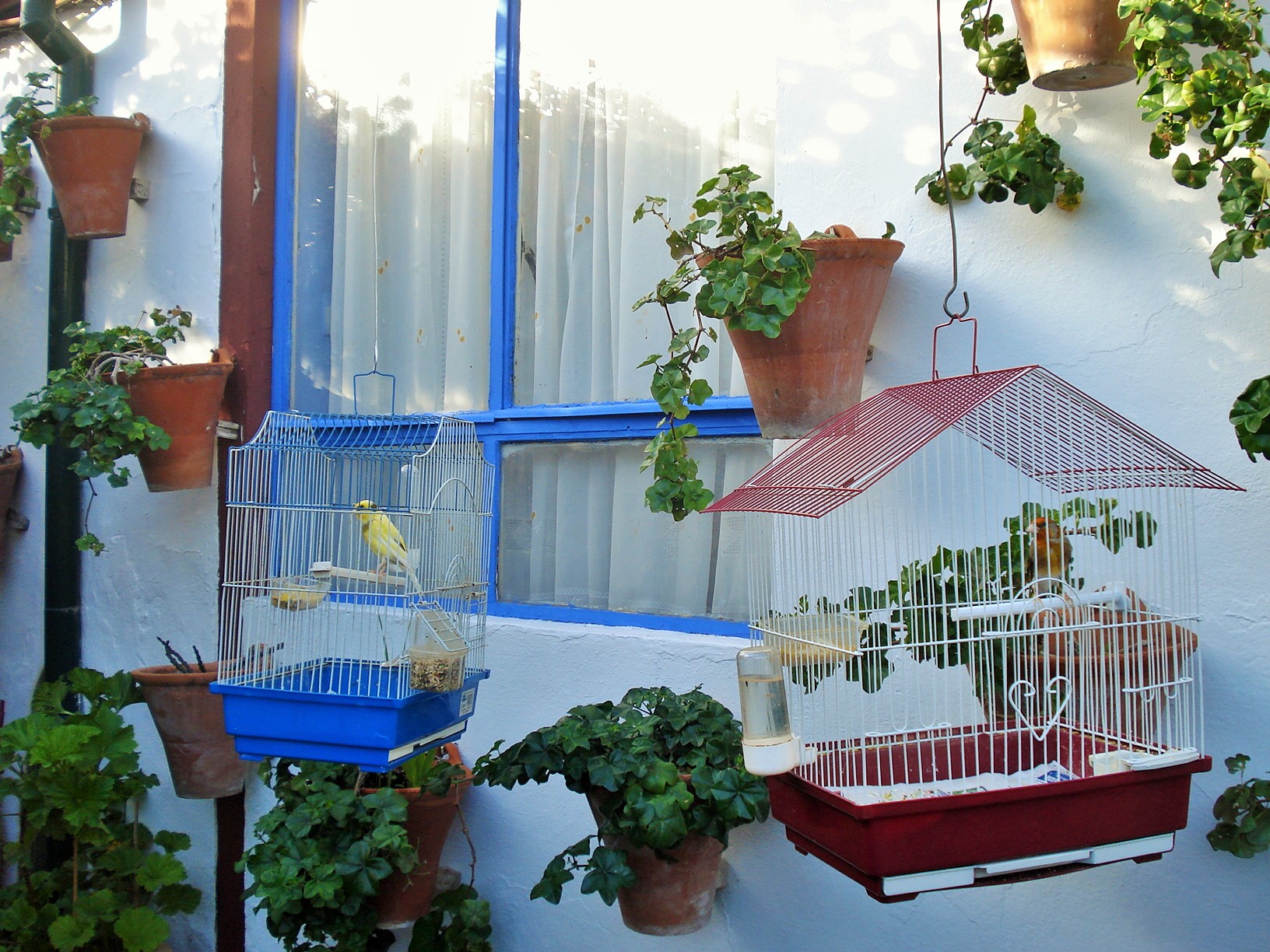
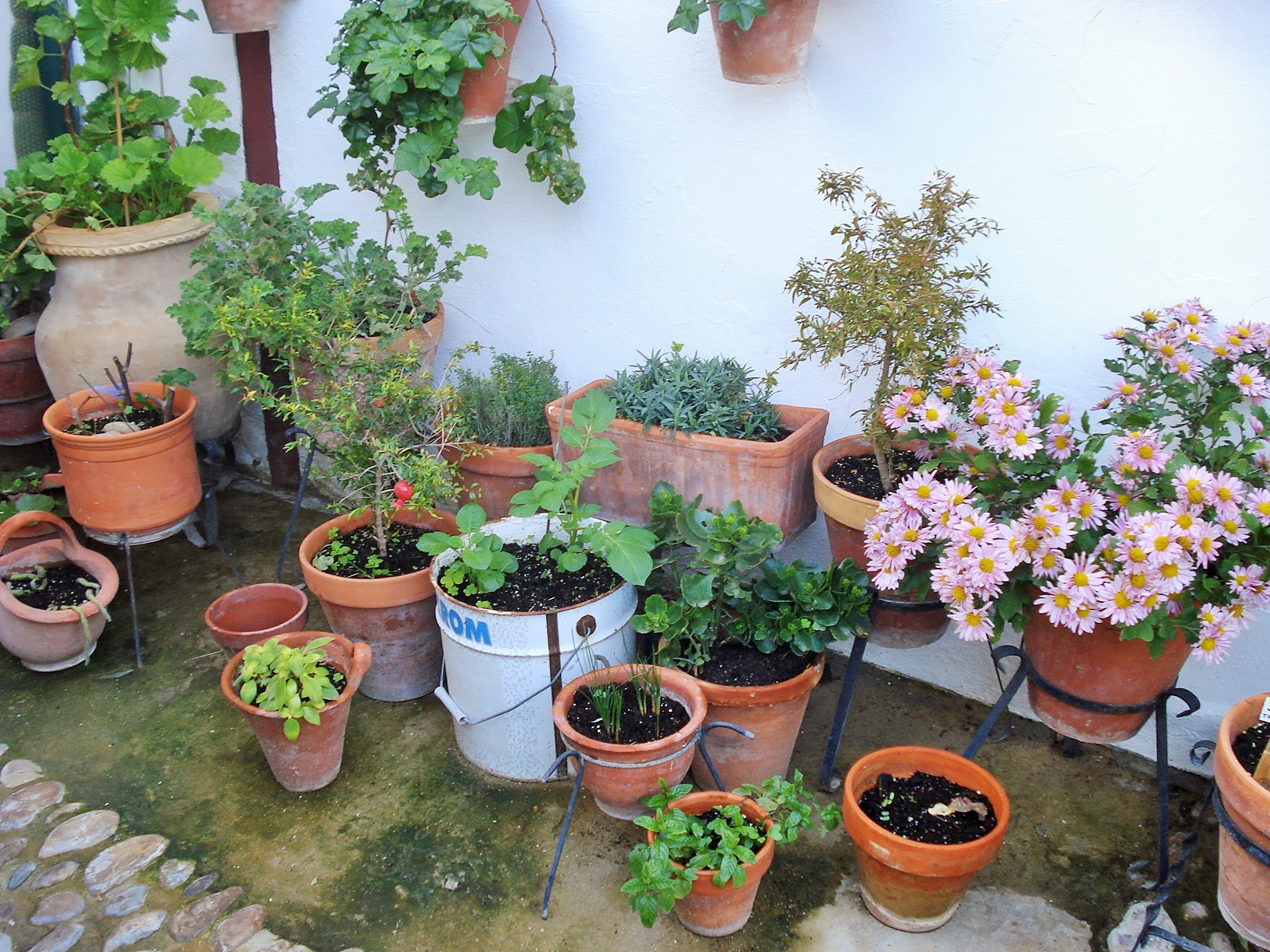
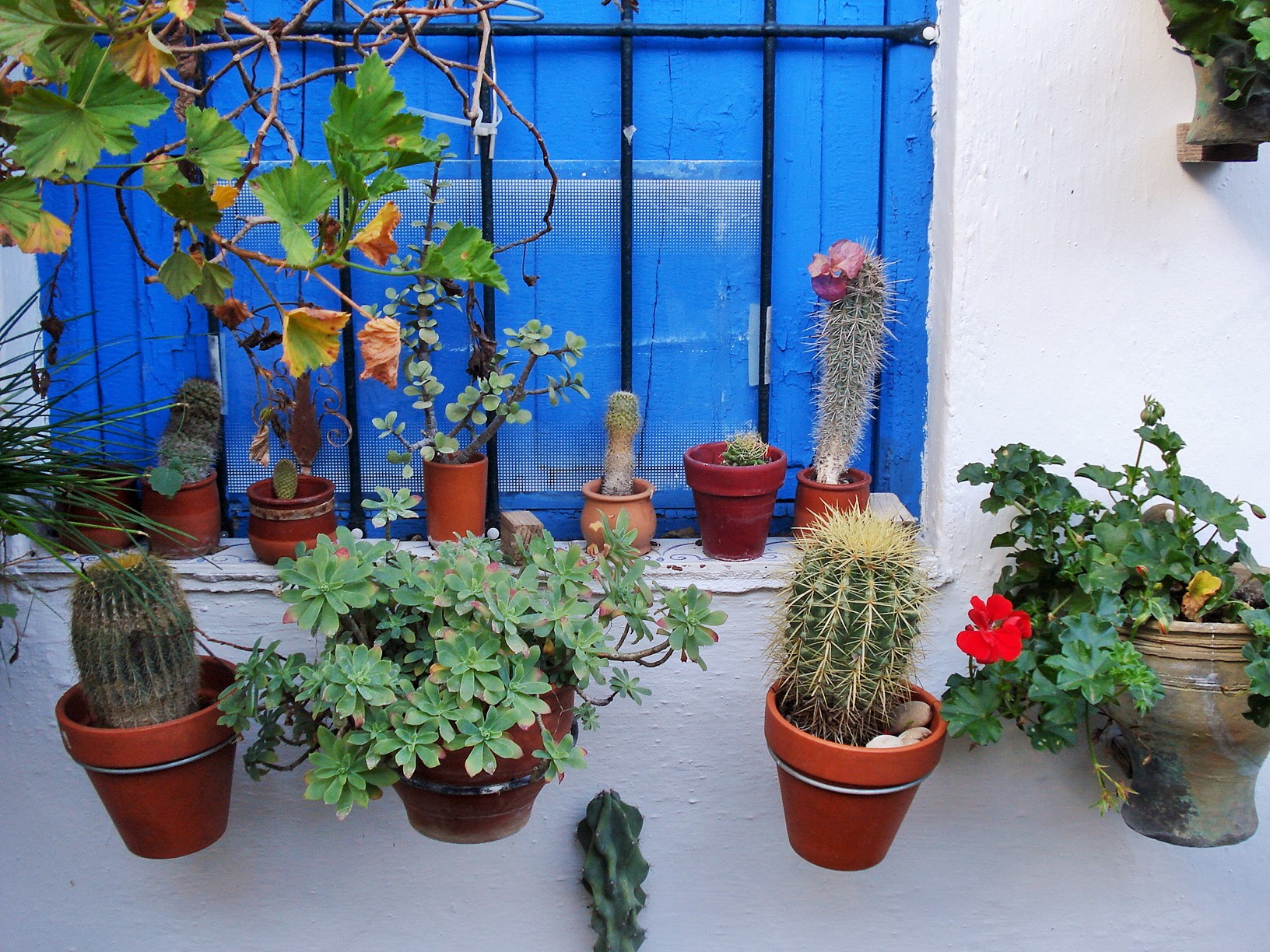
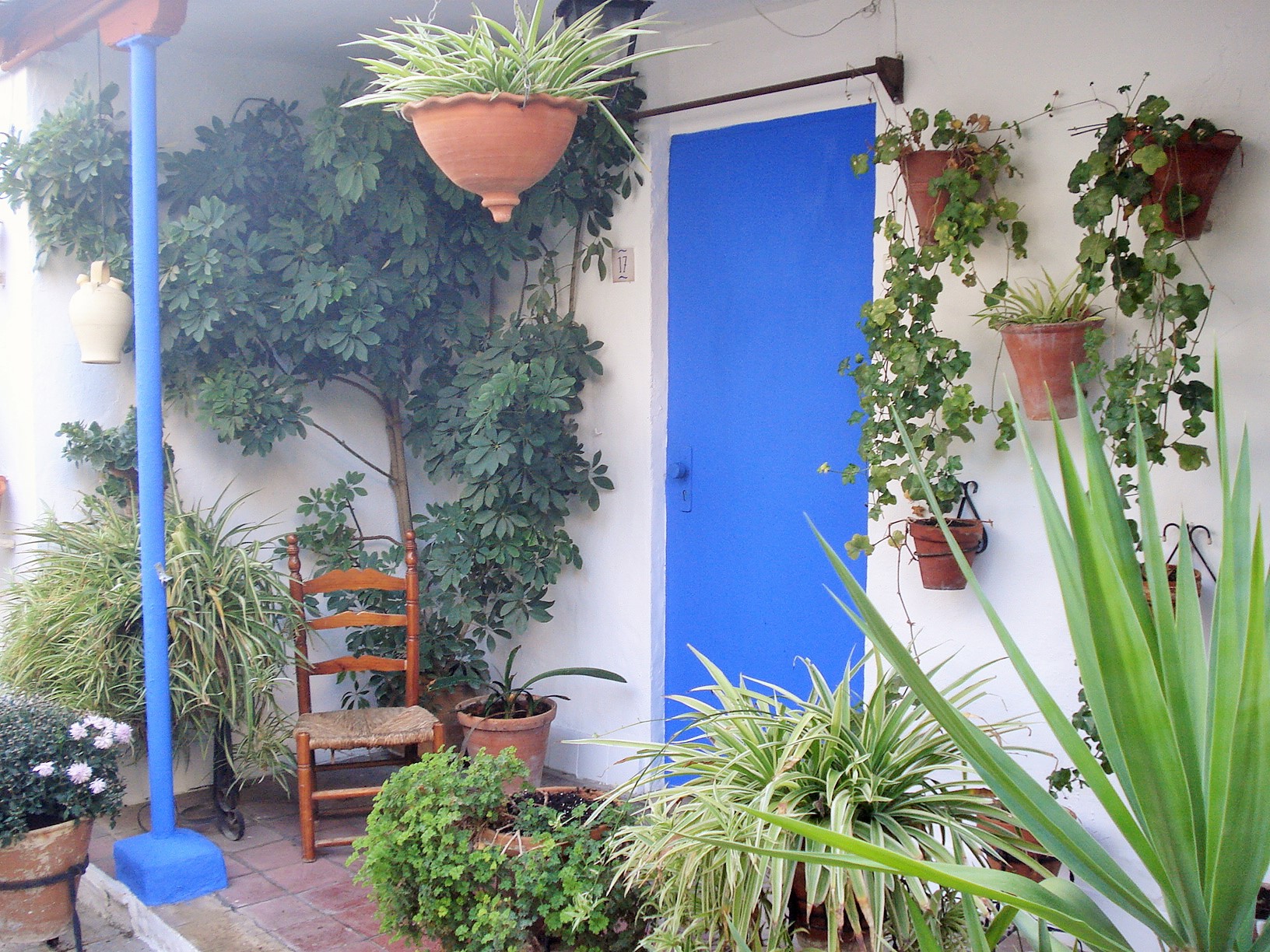
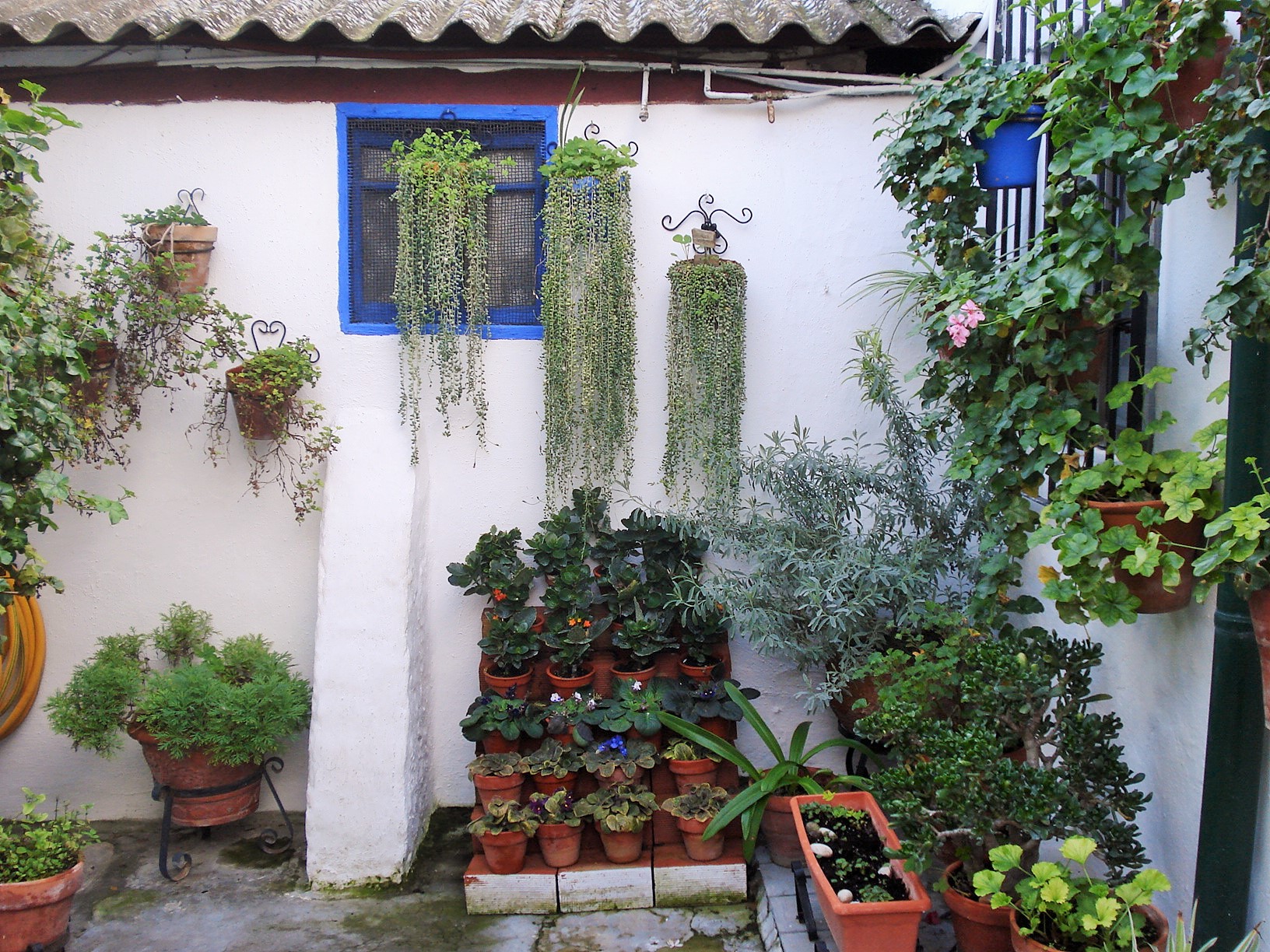
The residents rival in ingenuity to create the most creative visual displays in container gardening and vertical gardening, with mass groupings of containers hanging from every wall and filling every patio with bougainvilleas and other climber, perennials, flowering plants, cacti, succulents and even palms.

In this second post on the Casa del Patio, I am featuring more great vertical and container ideas.

DSC09970

DSC00029 DSC00003 DSC00004 DSC00005 DSC00006 DSC00007 DSC00008 DSC00009 DSC00011 DSC00012 DSC00014 DSC00015 DSC00016 DSC00017 DSC00018 DSC00019 DSC00020 DSC00021 DSC00022 DSC00023 DSC00024 DSC00025 DSC00026 DSC00027 DSC00028


Cordoba Botanical Gardens: The Andalusian Patio

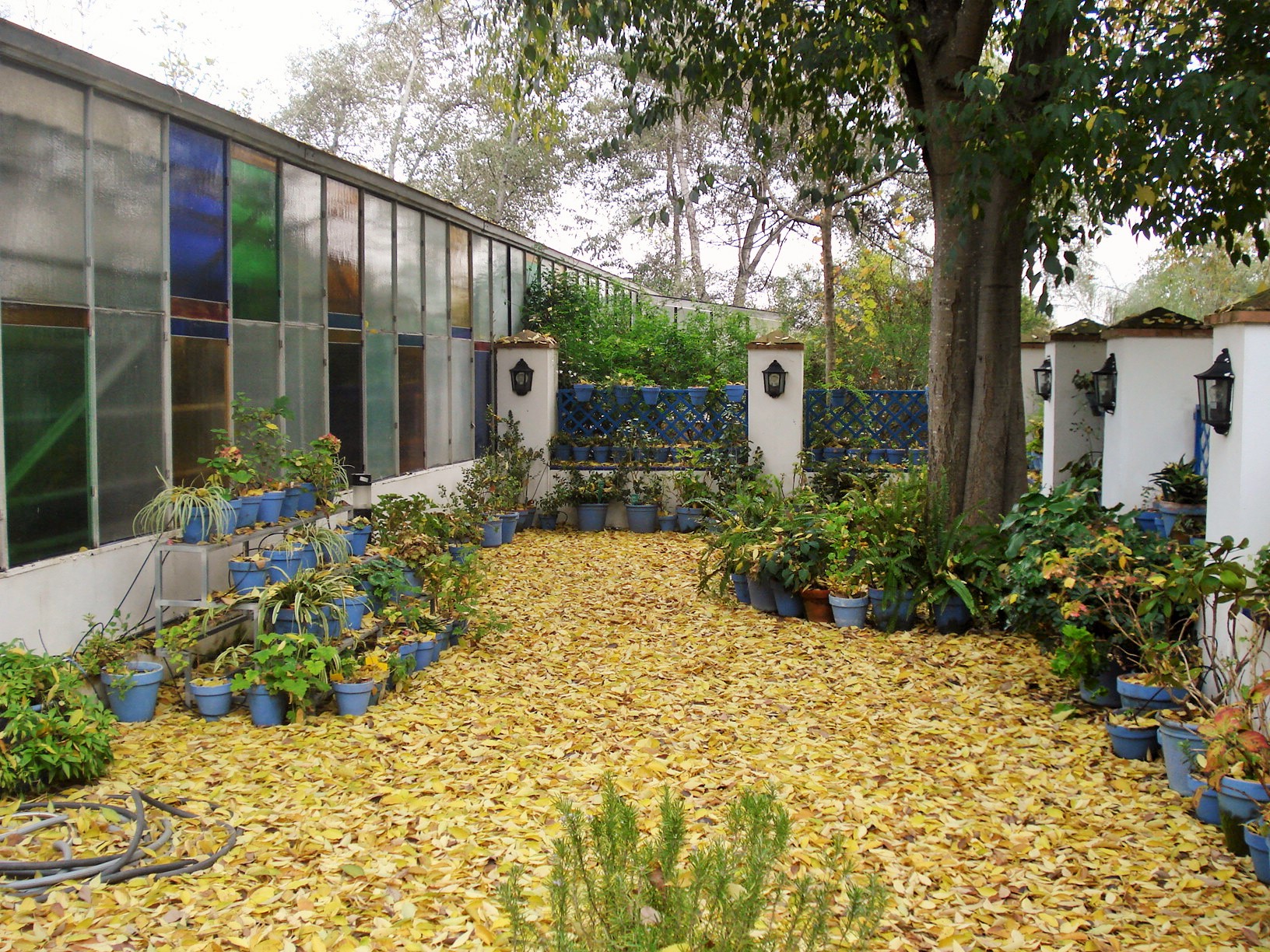
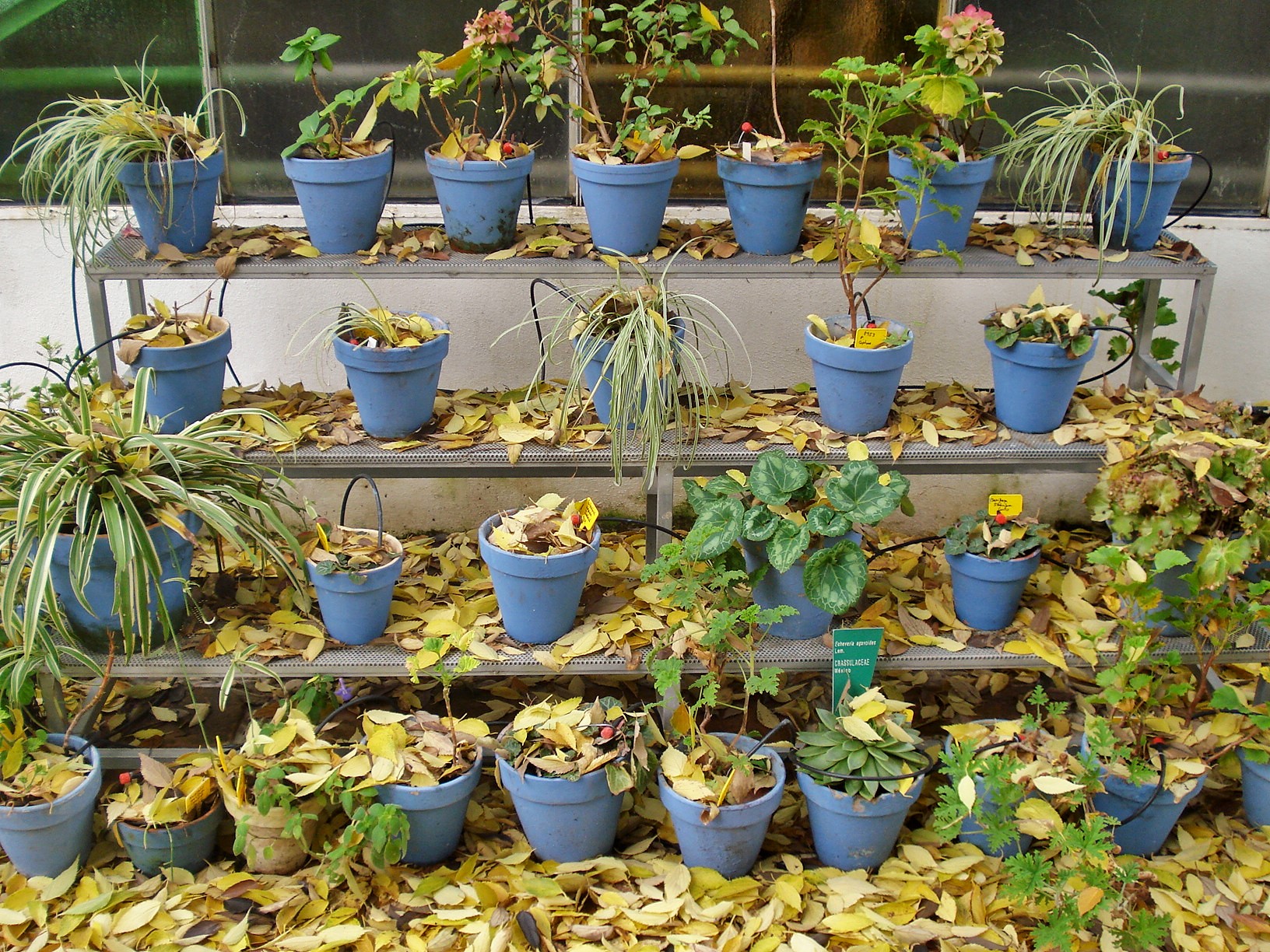
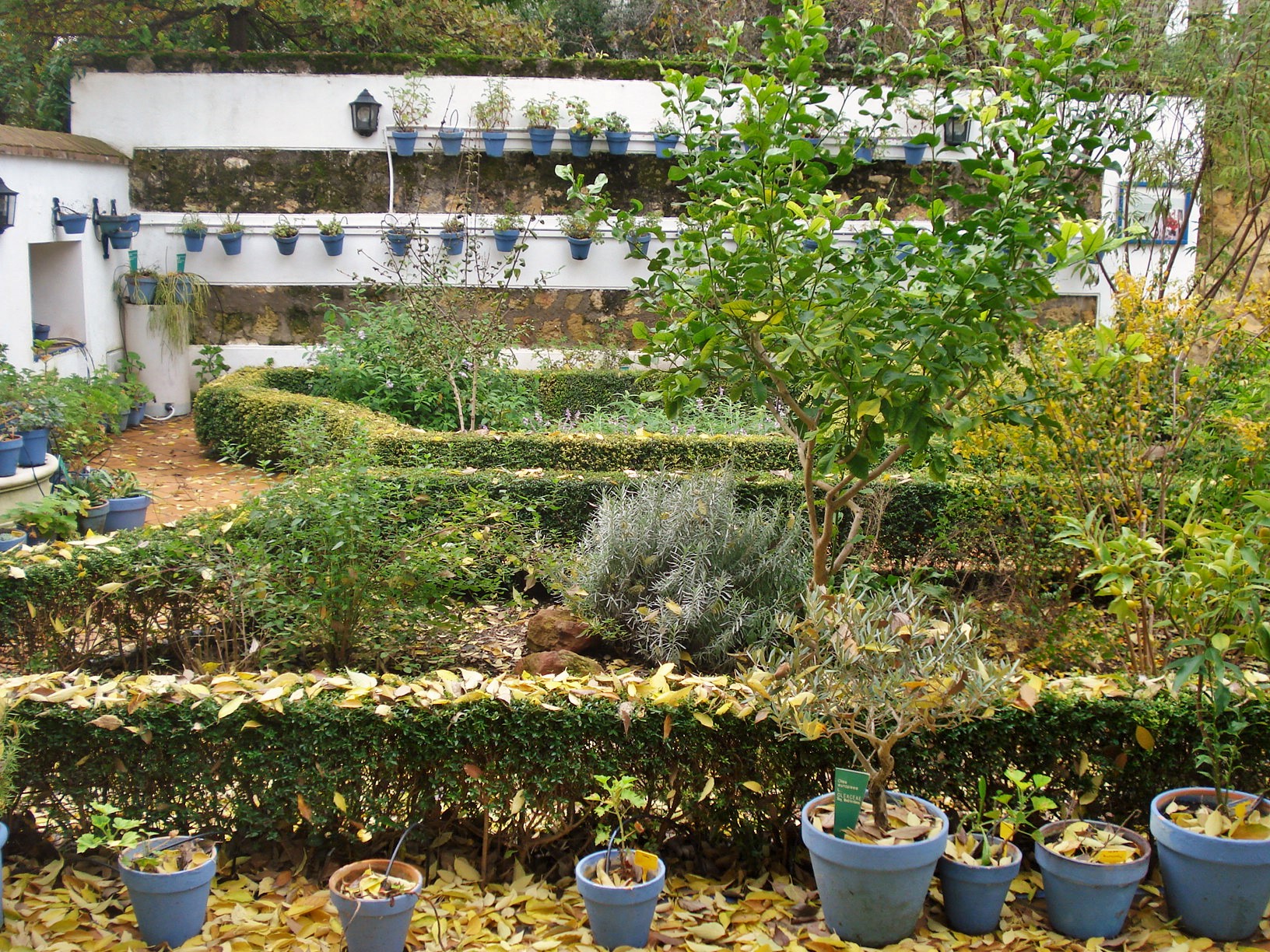
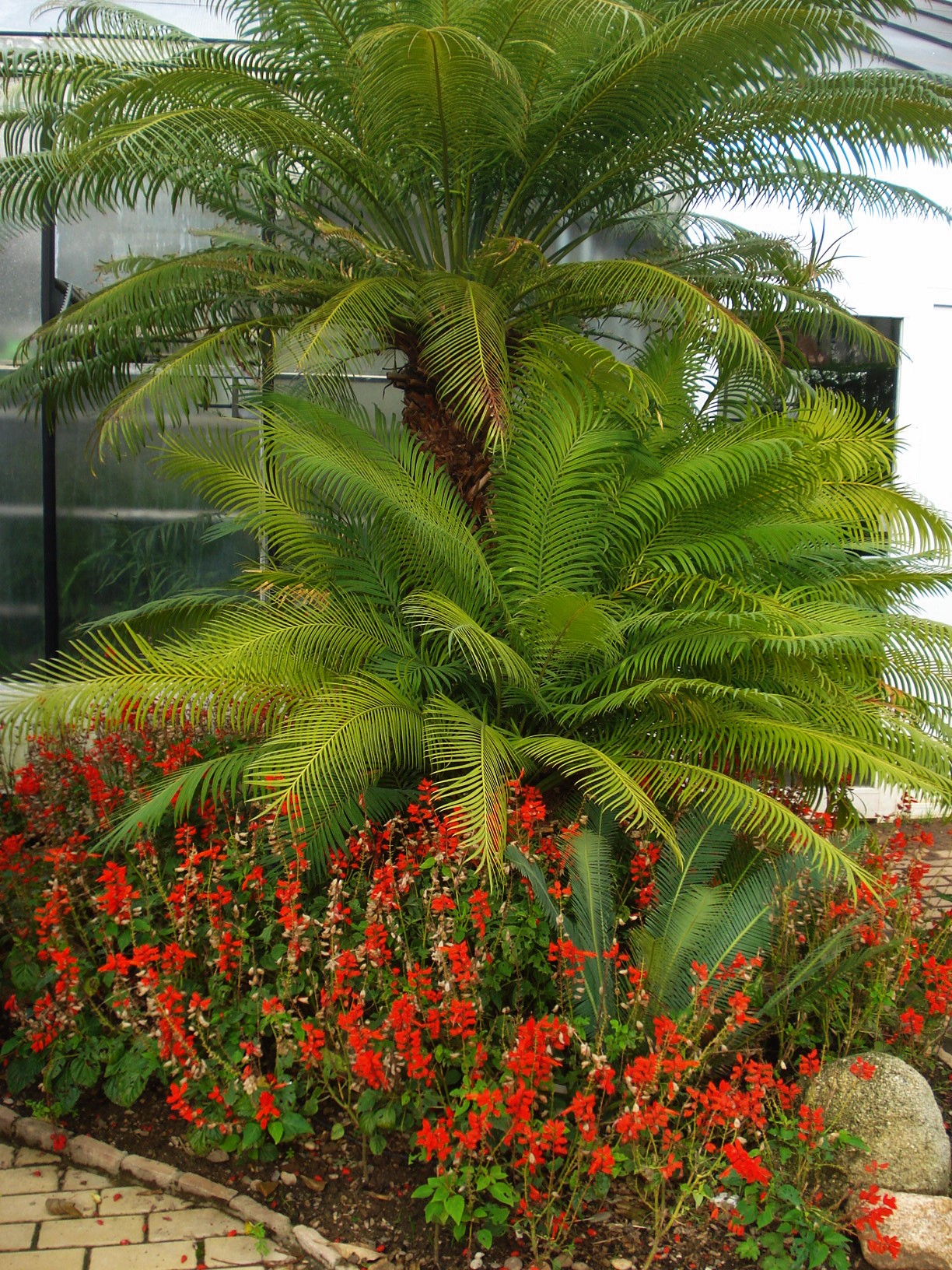
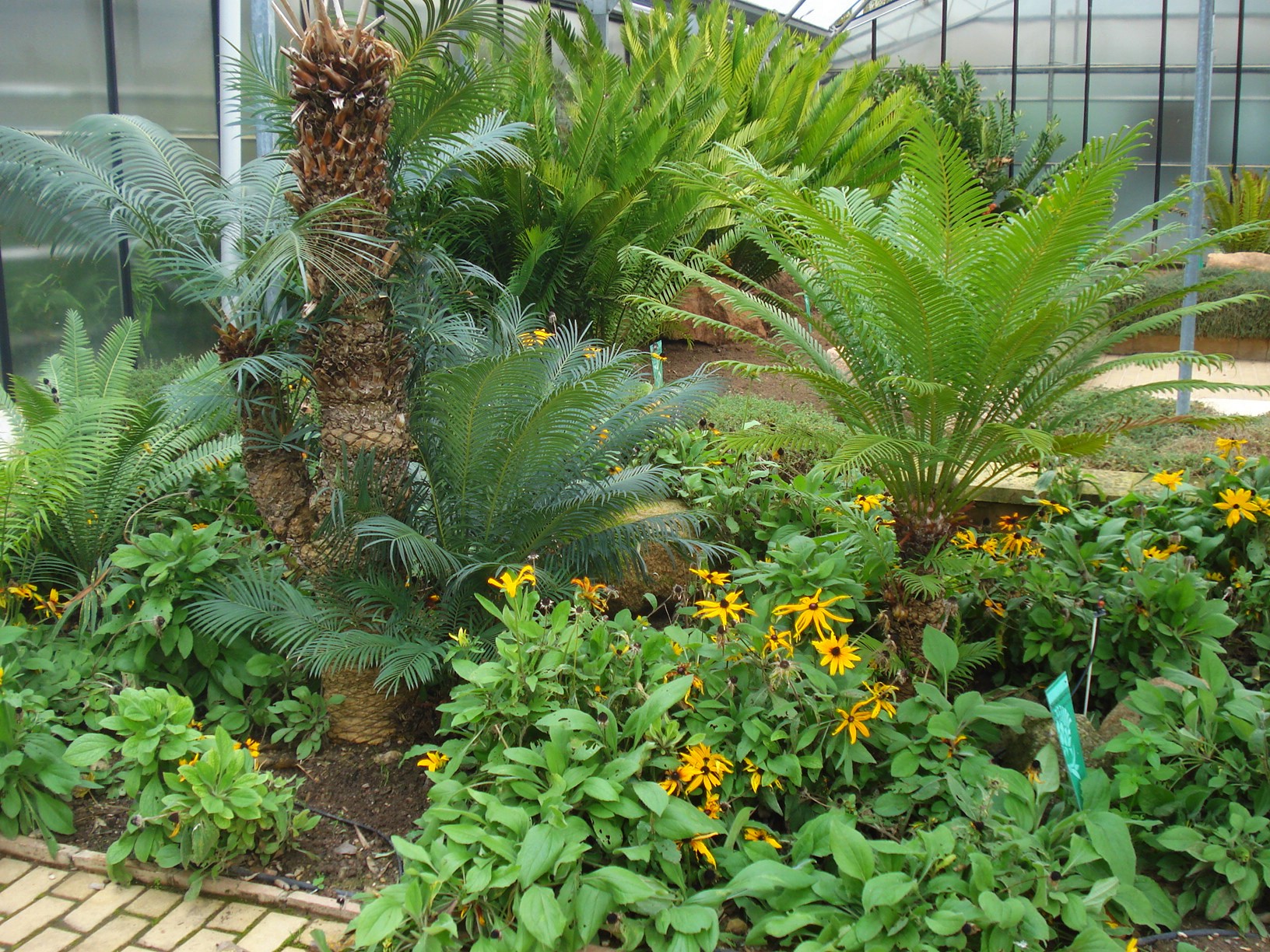
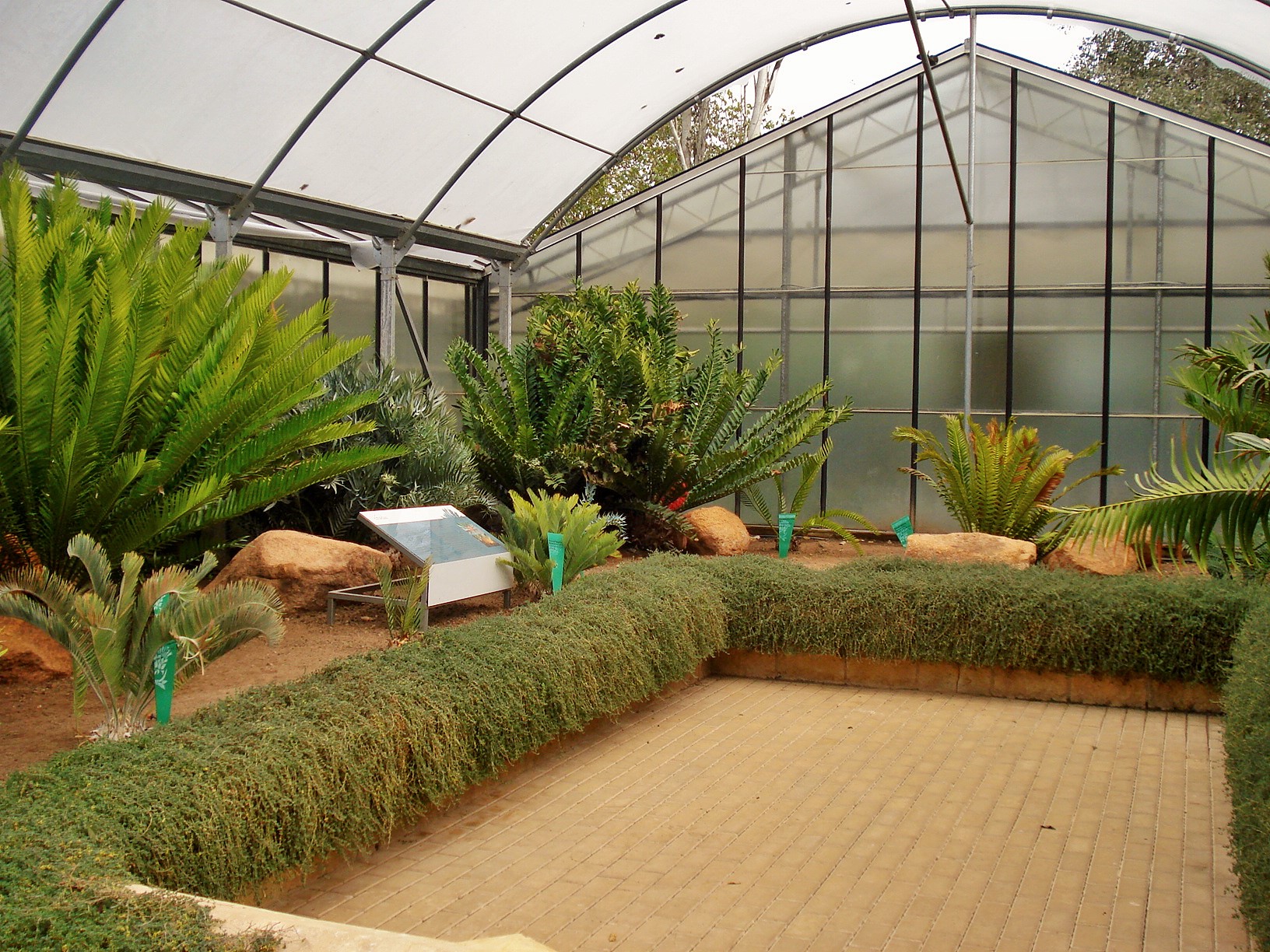
The Botanical Gardens in Cordoba, Spain opened in 1887 and were designed for primarily educational and scientific purposes. They are laid out along a wide central alley leading on one side to the Collections, species native to Spain arranged in borders edges by low growing rosemary or hackberry, and on the other side the Agricultural School with a large collection of citrus trees as well as an extensive vegetable garden. In the center are greenhouses dedicated to species from the Canary Islands, Balearic Islands and Andalusia, as well as a lovely area featured here, dedicated to the Andalusian patio.

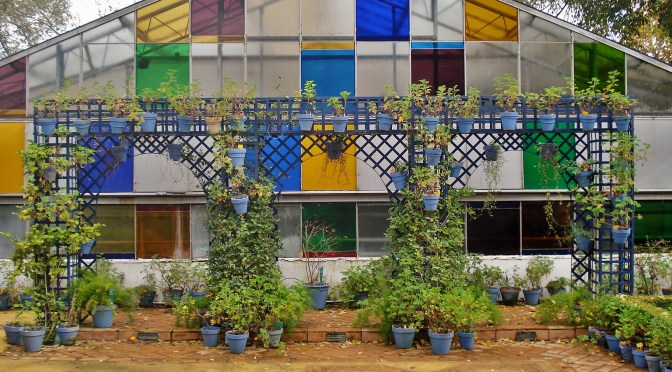
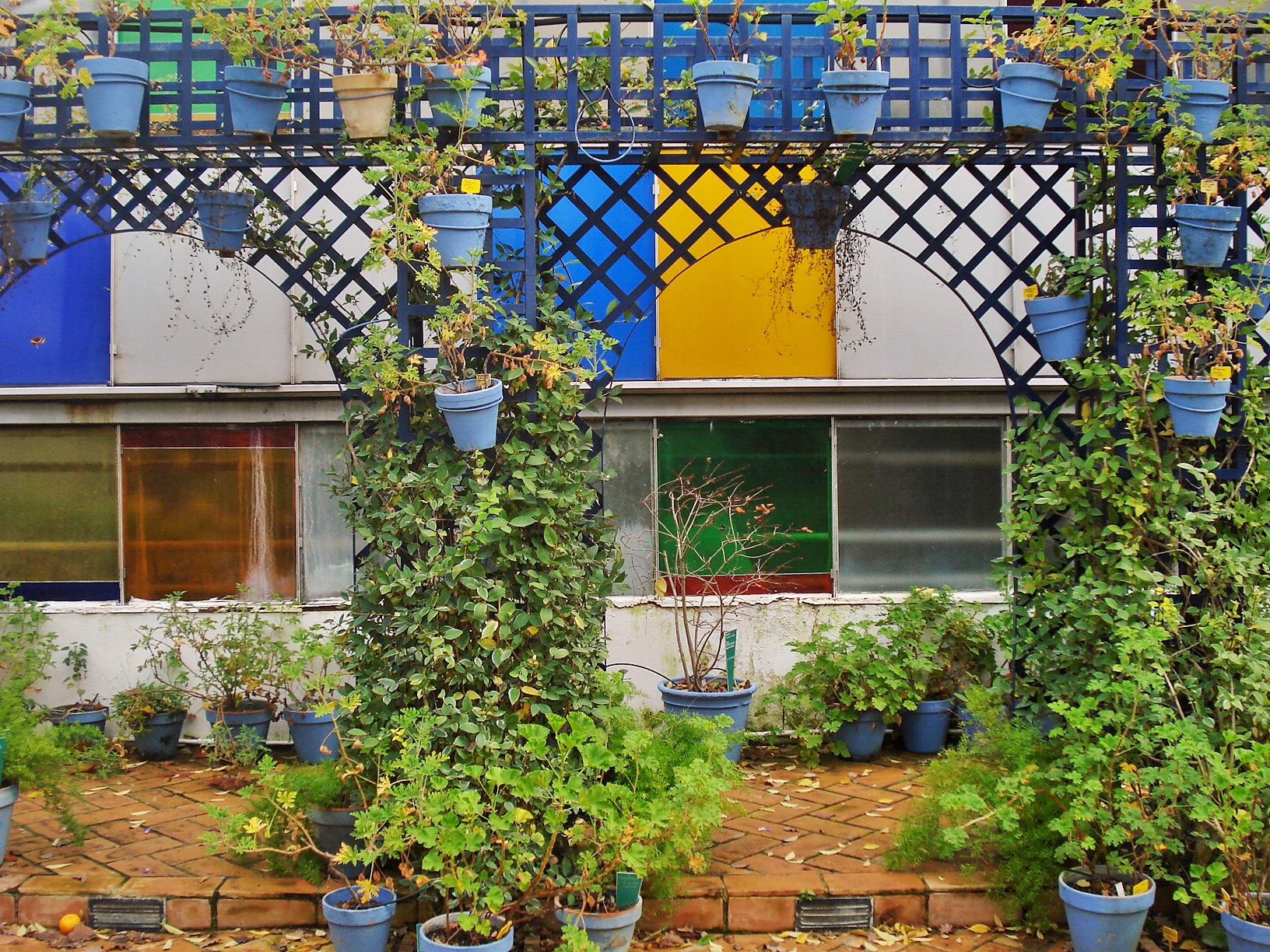
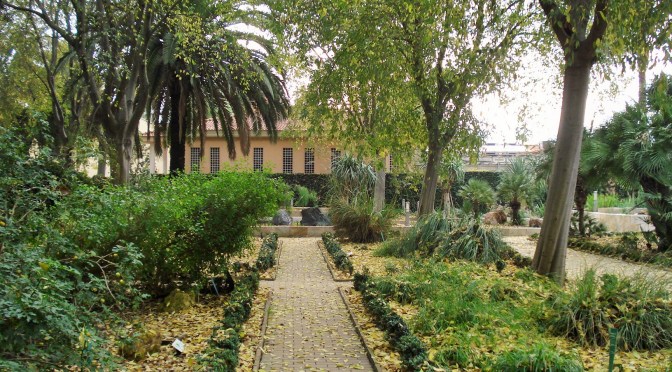
The patio is emblematic of Cordoba, where the Festival of the Patios has been taking place every year in May since 1933. Its origins go back many centuries to the Moorish rule in Andalusia. In this are of the garden is nor a literal rendition of the Cordoban patio architecturally speaking, but rather a display of the many varieties of plants found in them, as many as 300 here, and many suitable to container gardening.

DSC00102 DSC00103 DSC00104 DSC00105 DSC00106 DSC00107 DSC00108 DSC00109 DSC00110 DSC00111 DSC00112 DSC00113 DSC00114 DSC00115 DSC00116

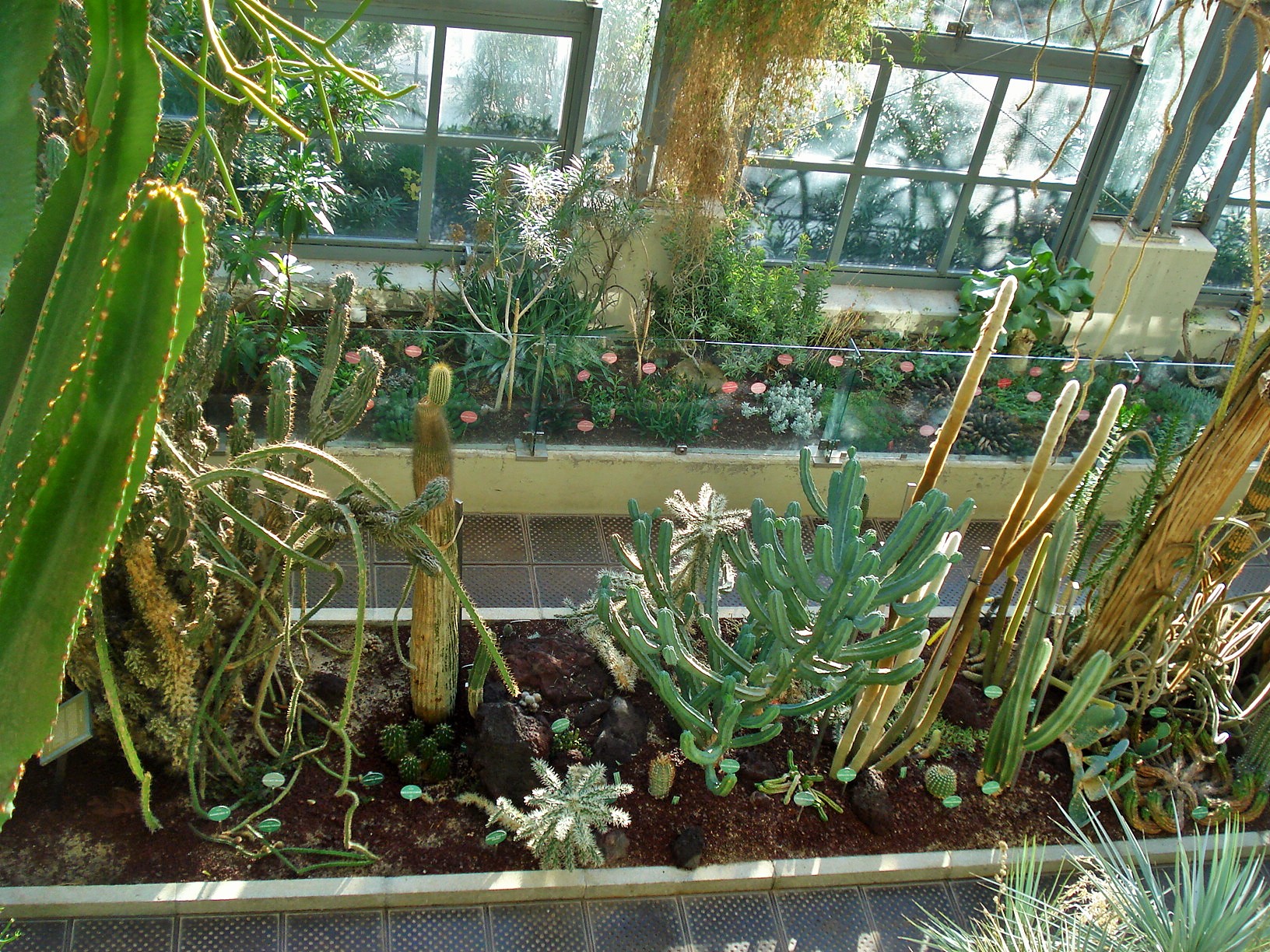
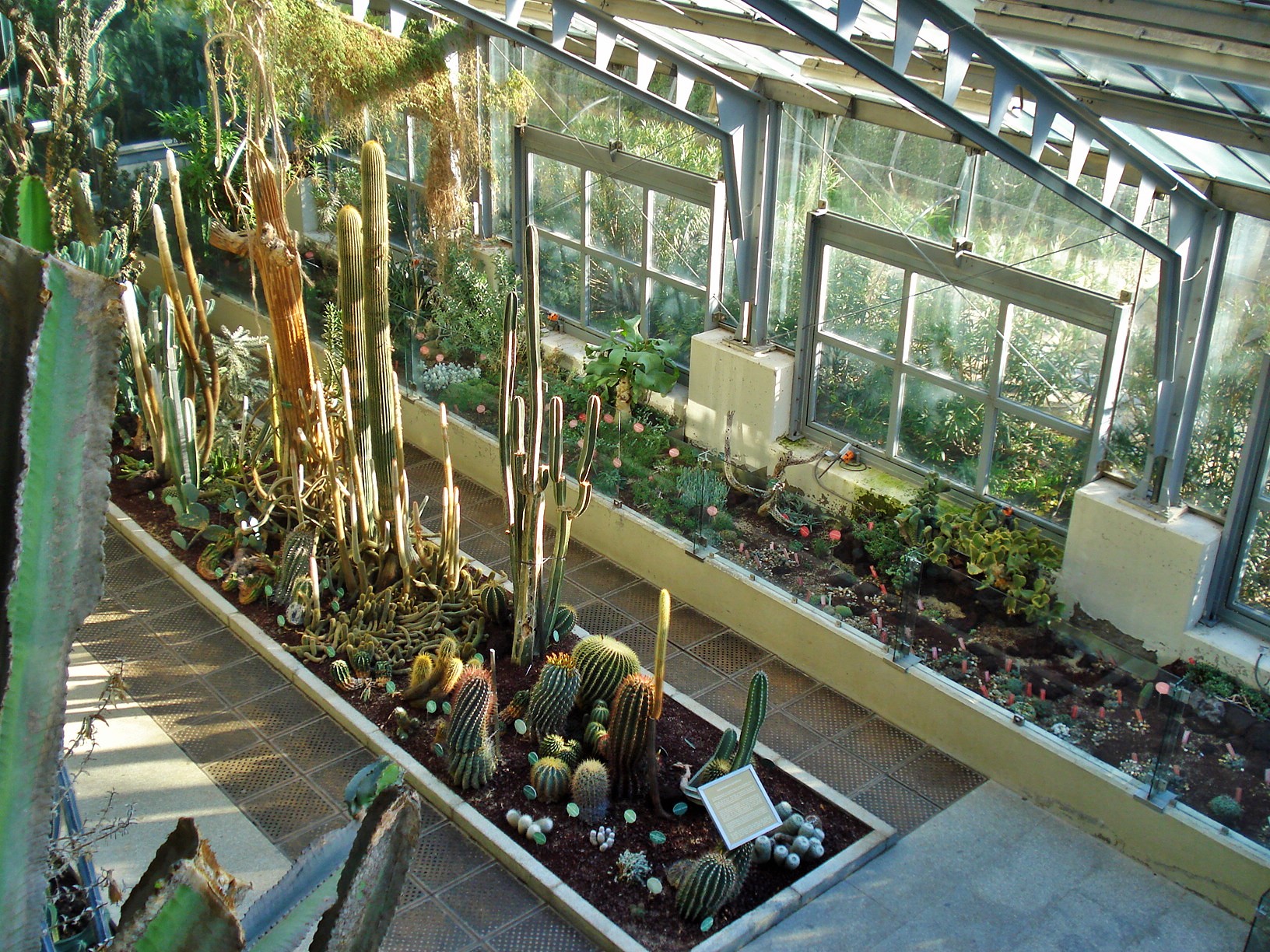
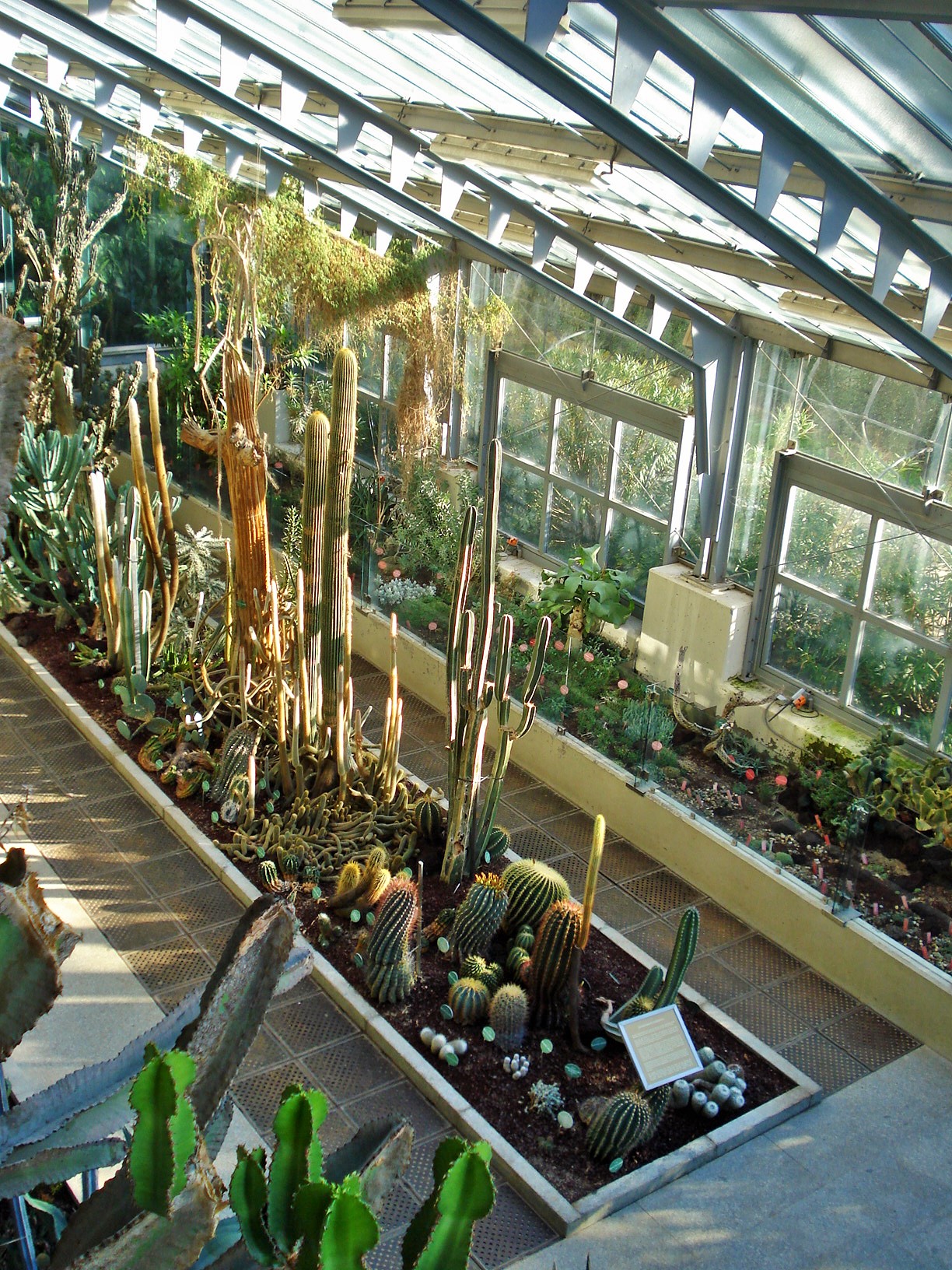
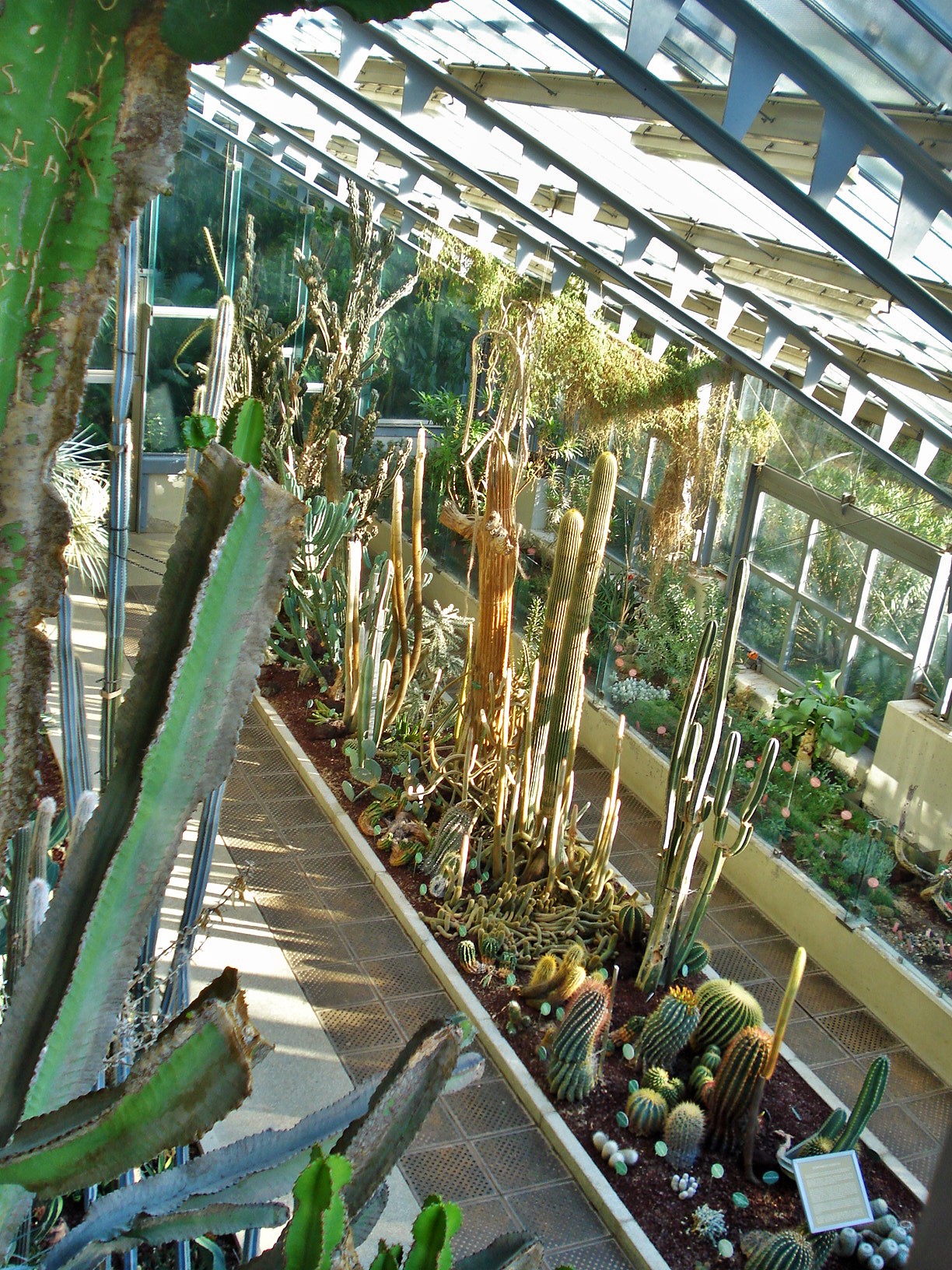
Madrid’s Royal Botanical Gardens: The Succulents Greenhouse

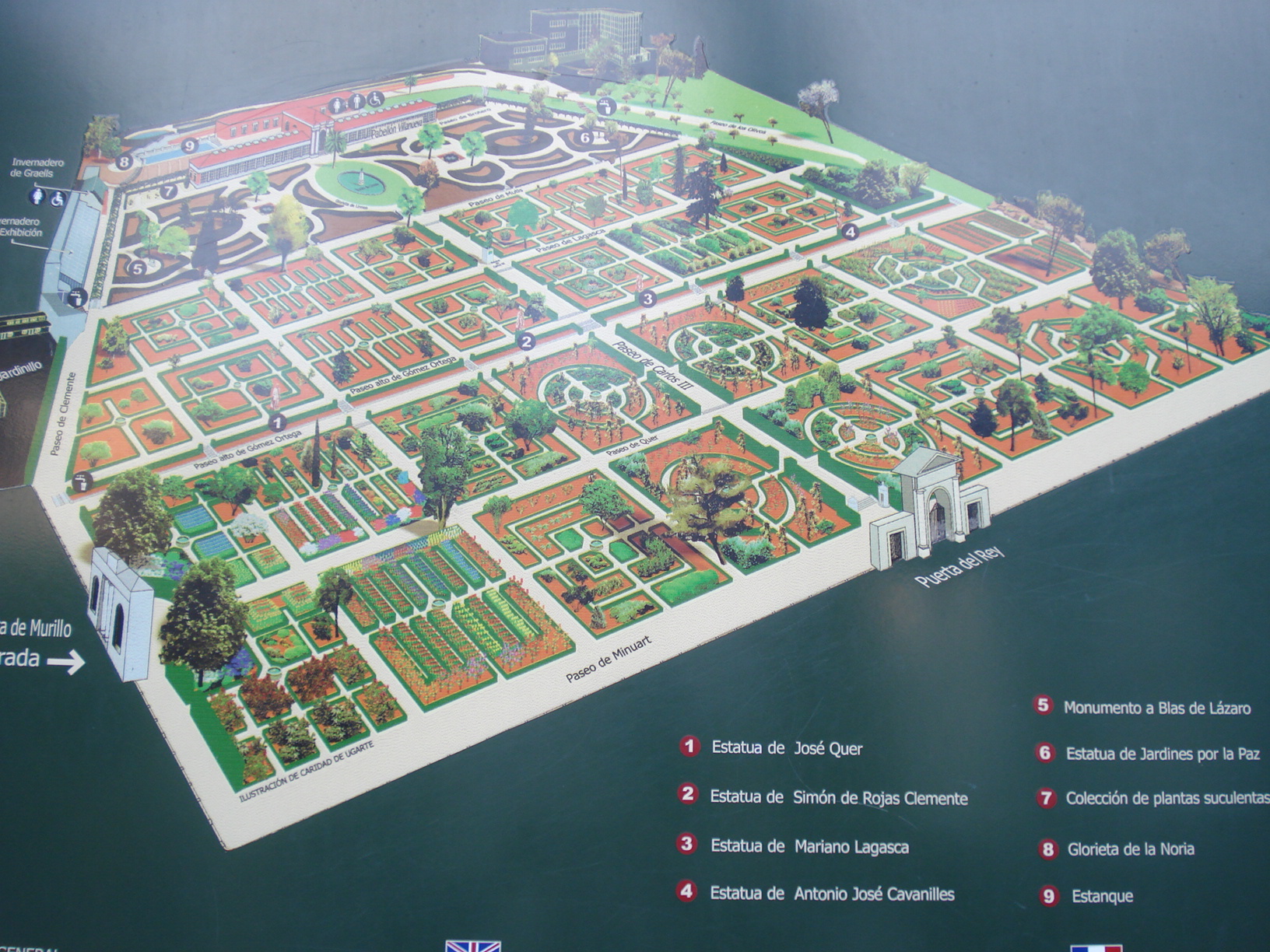
The Royal Botanical Gardens in Madrid cover eight hectares in the heart of the city, next to the world famous Prado museum. They were designed in the 18th century (1781) during the age of Enlightenment as part of a remodeling plan for the Prado area under Carlos III.

The gardens boast an amazing 30,000 plants, divided amongst smaller themed gardens such as the rose garden, the vegetable garden, the fruit garden, all laid out in squares along the central intersecting alleys. There is also a fantastic complex of greenhouses at one end, as well as a large pavilion and a long arbor covered in many varieties of grapevines.  It is laid out on four terraced levels.

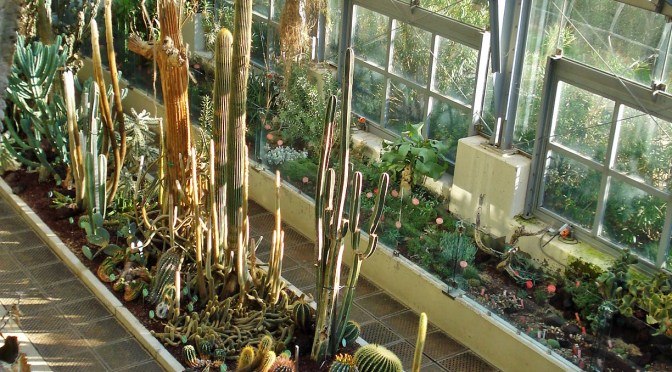
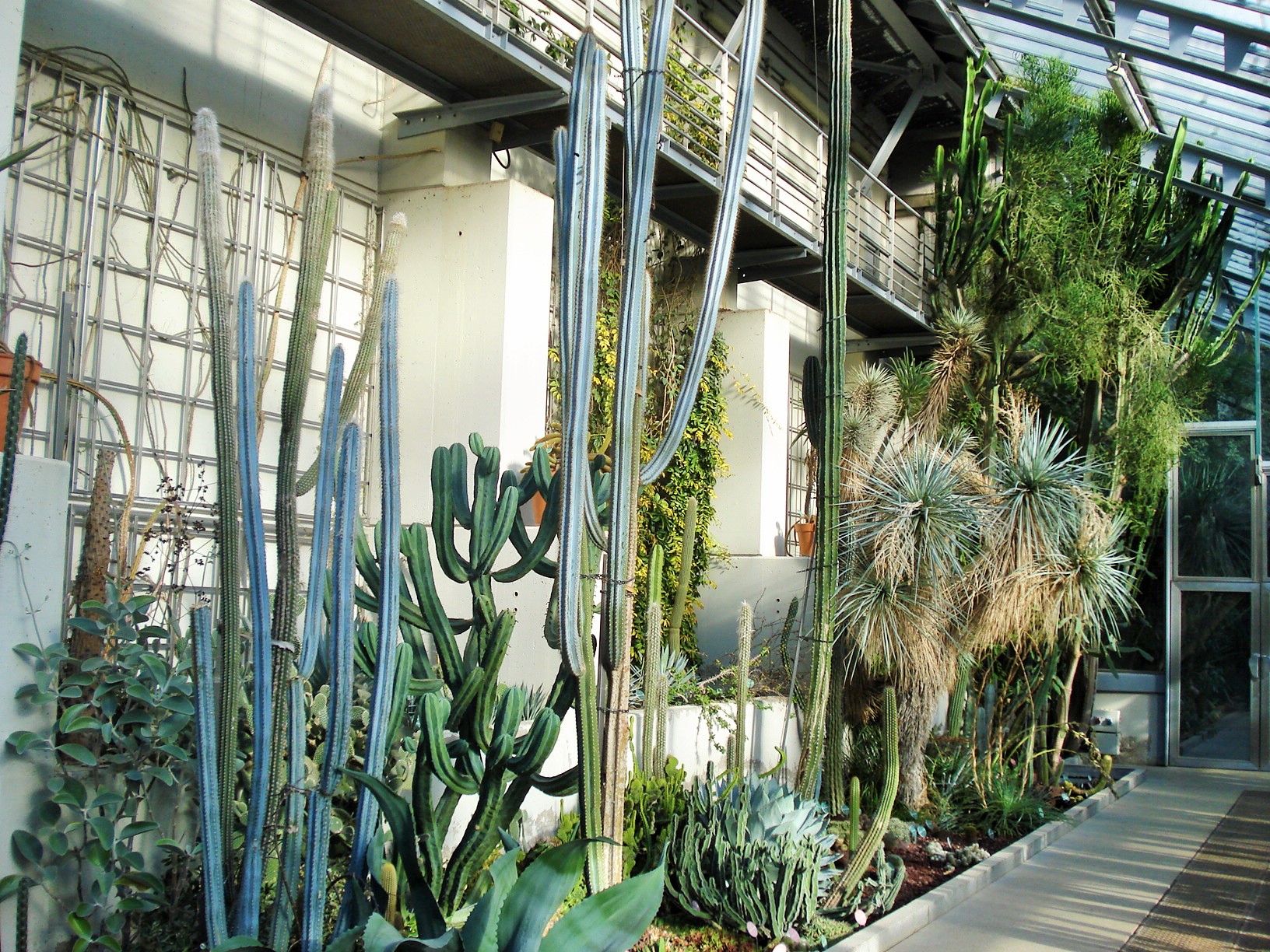
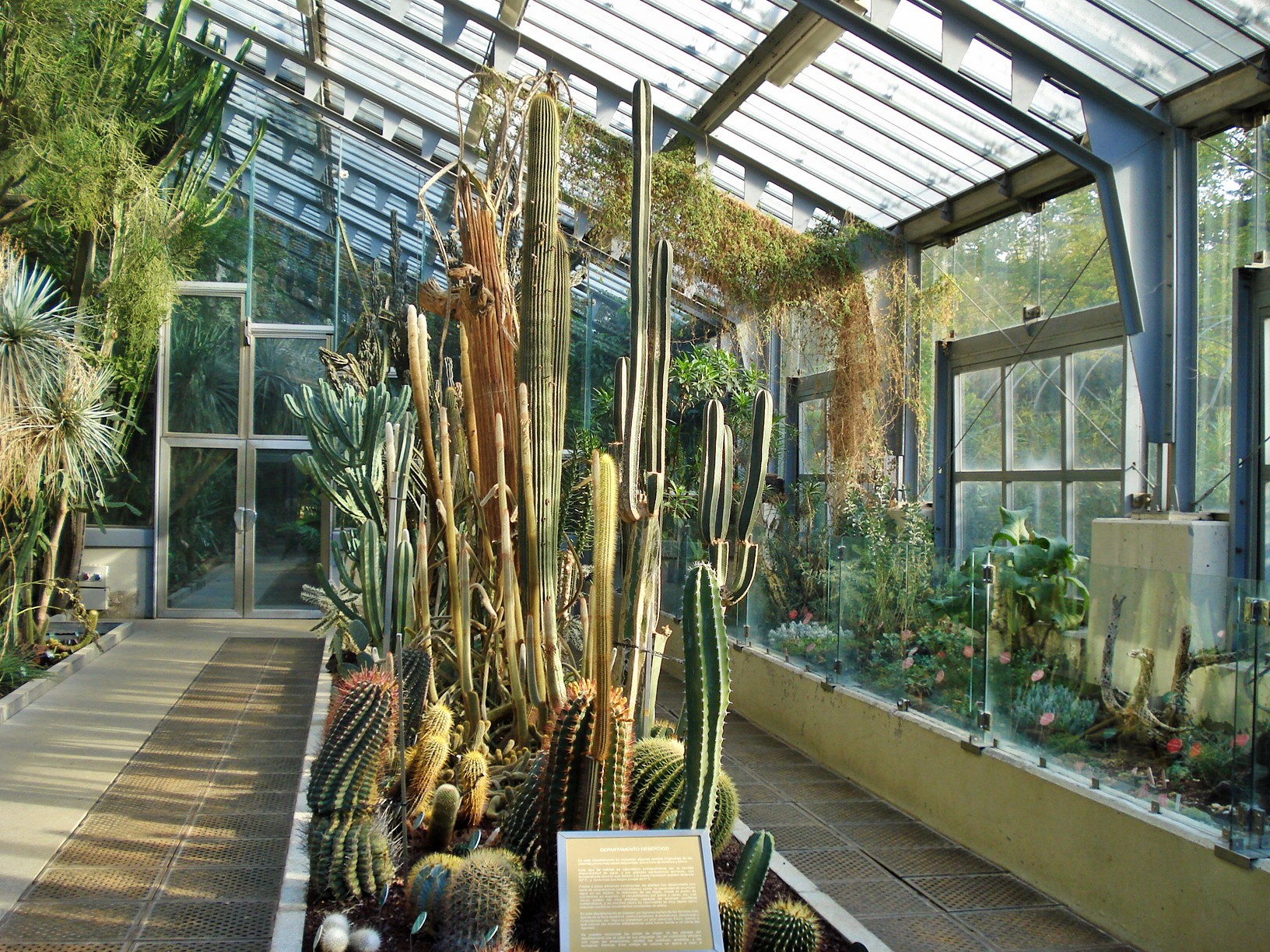
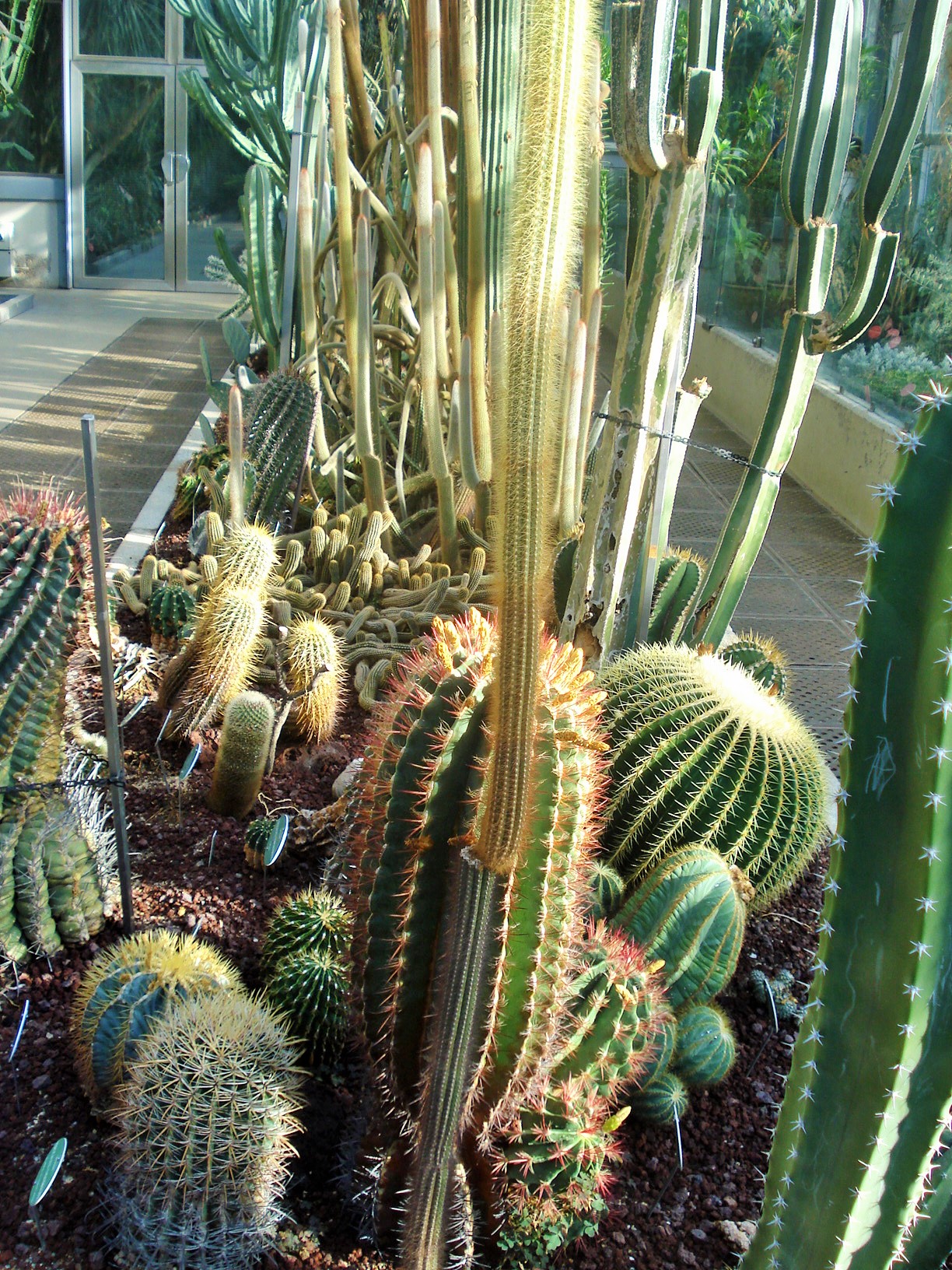
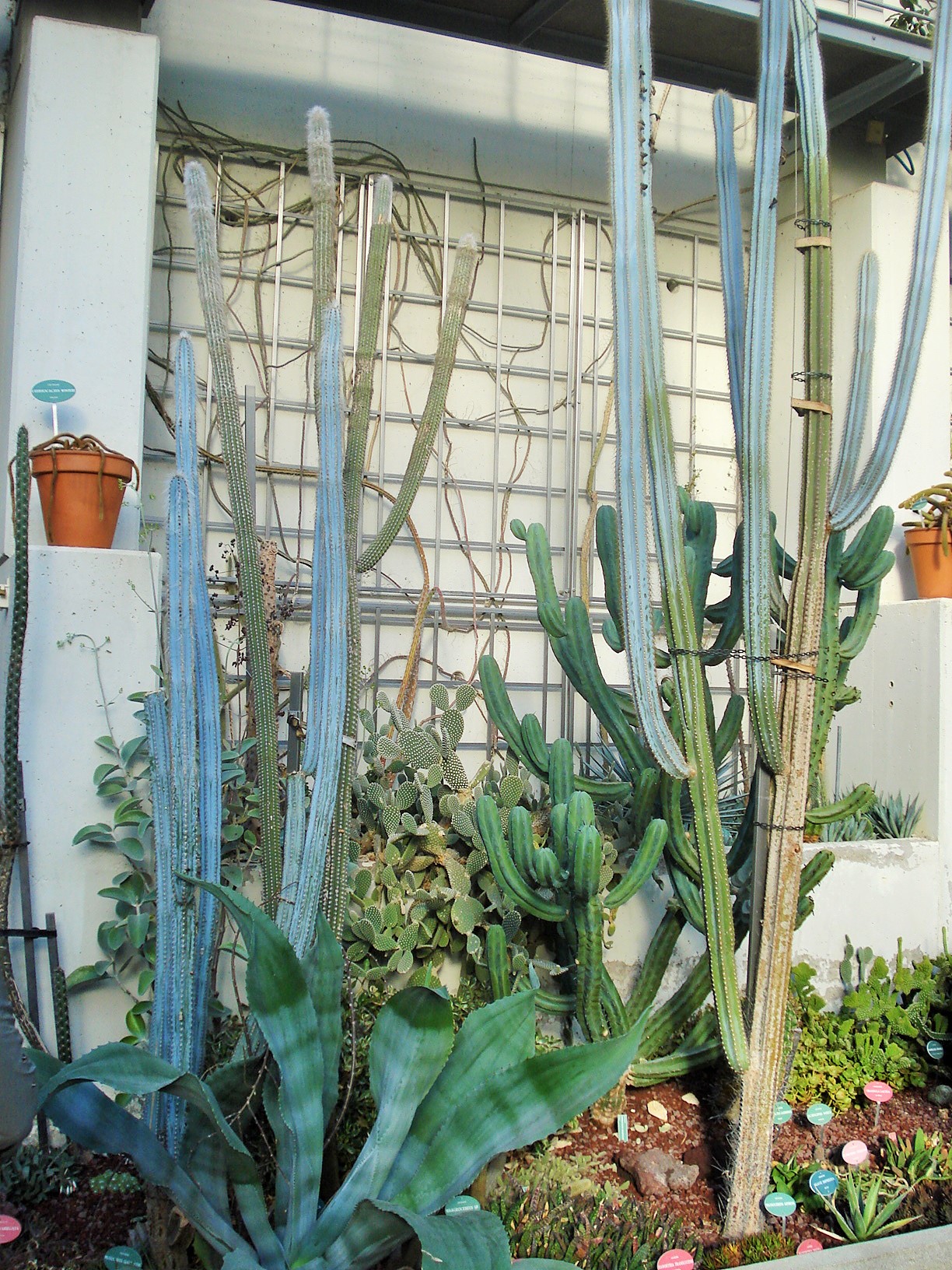
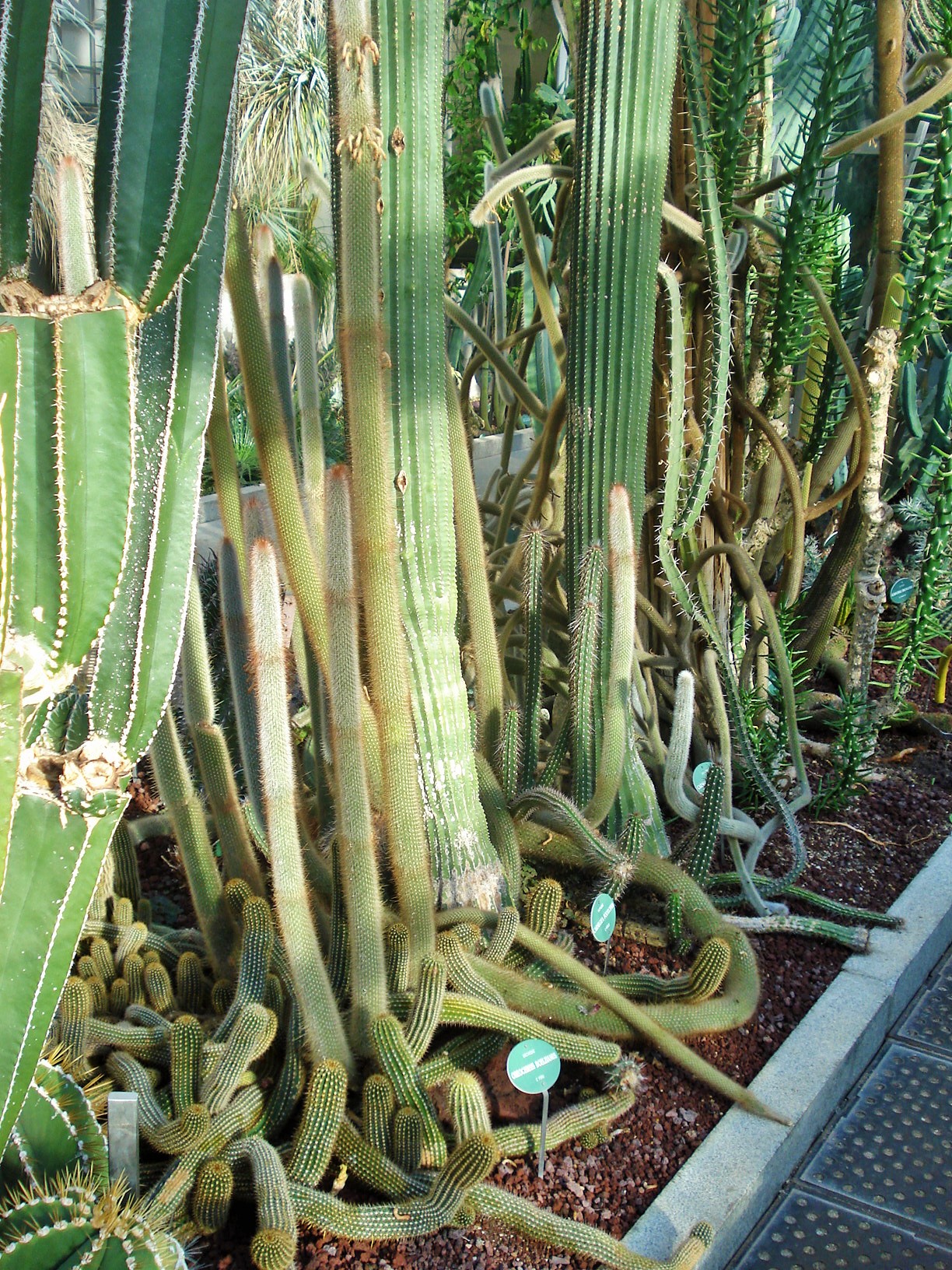
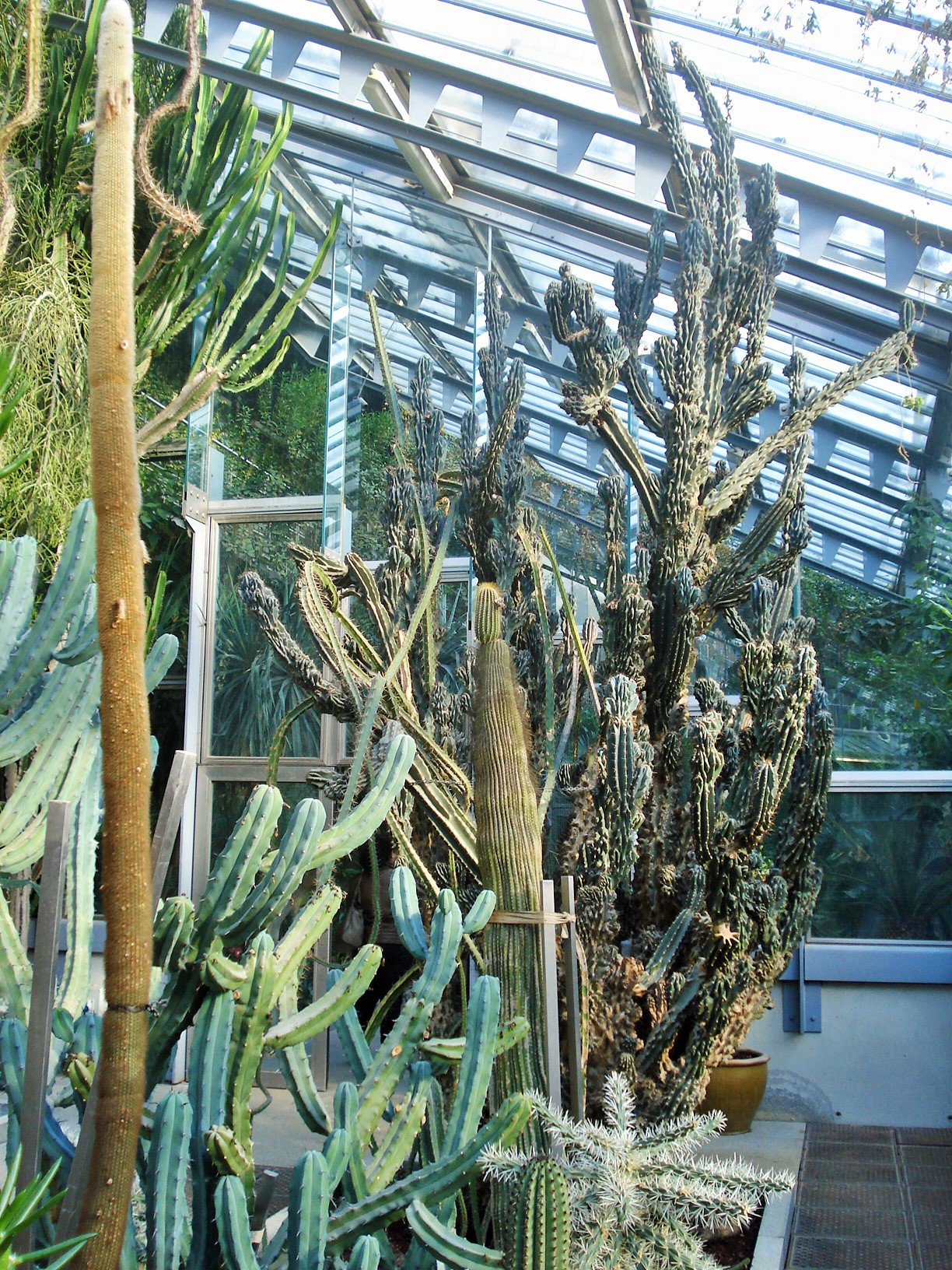
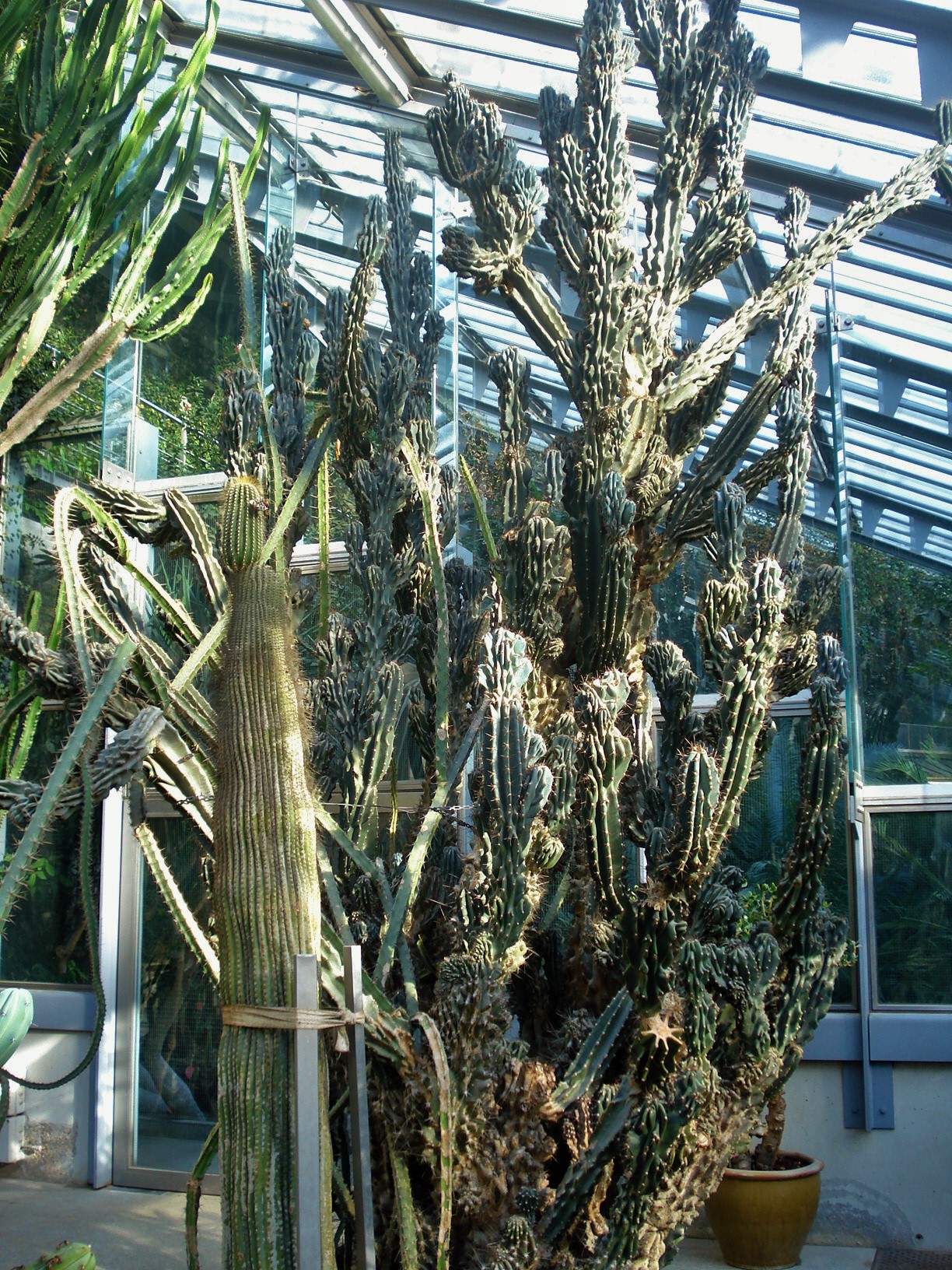
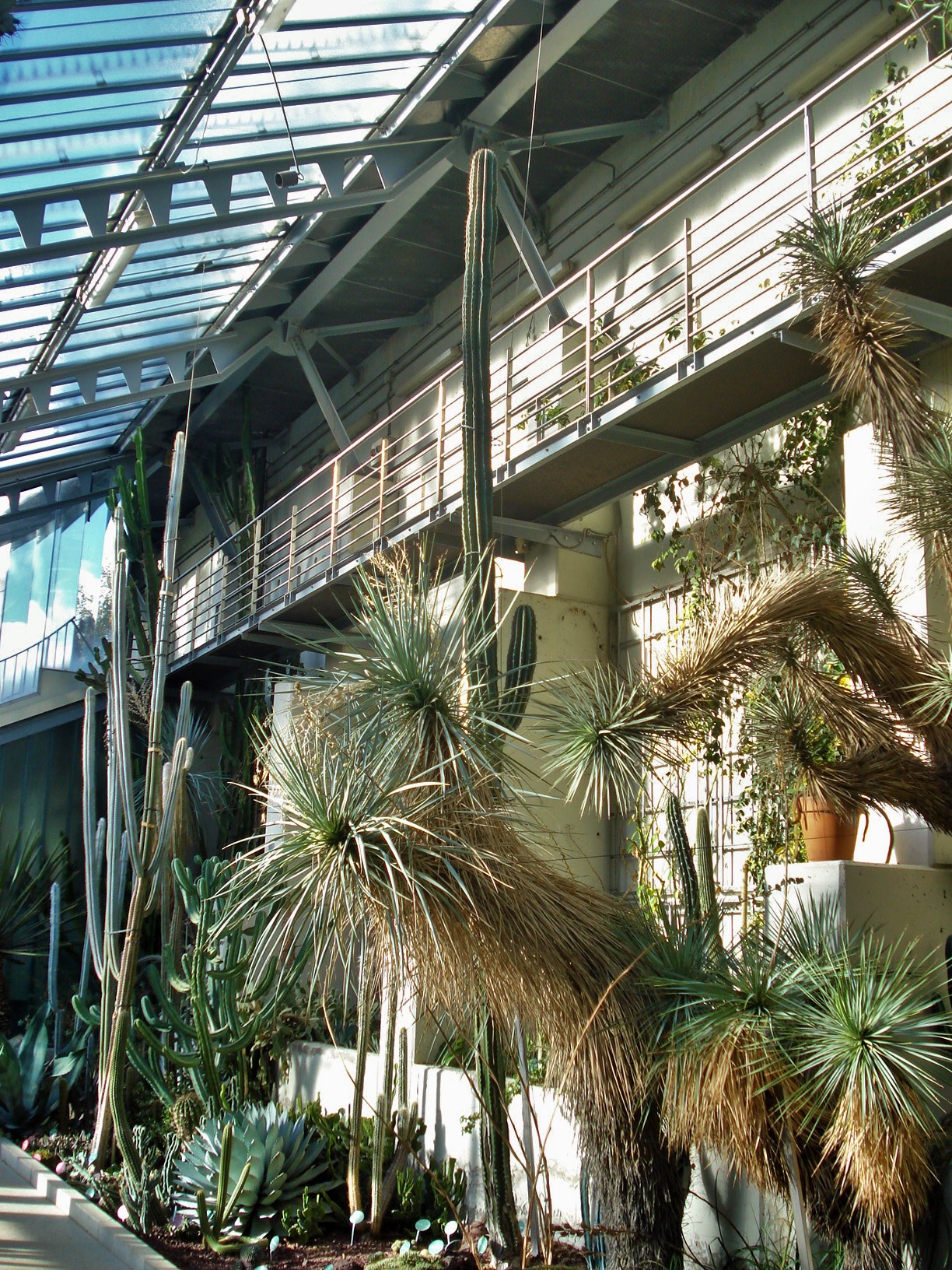
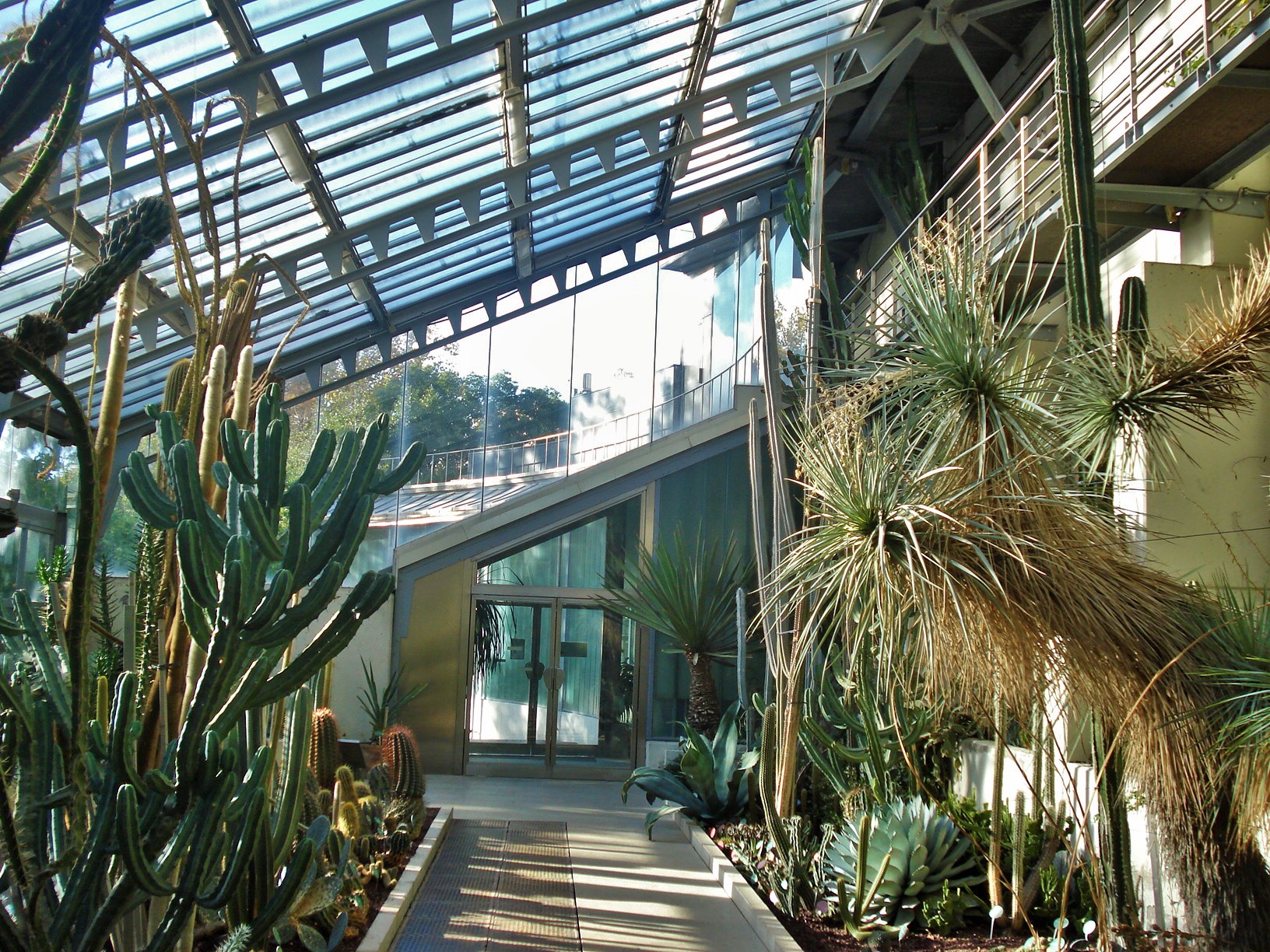
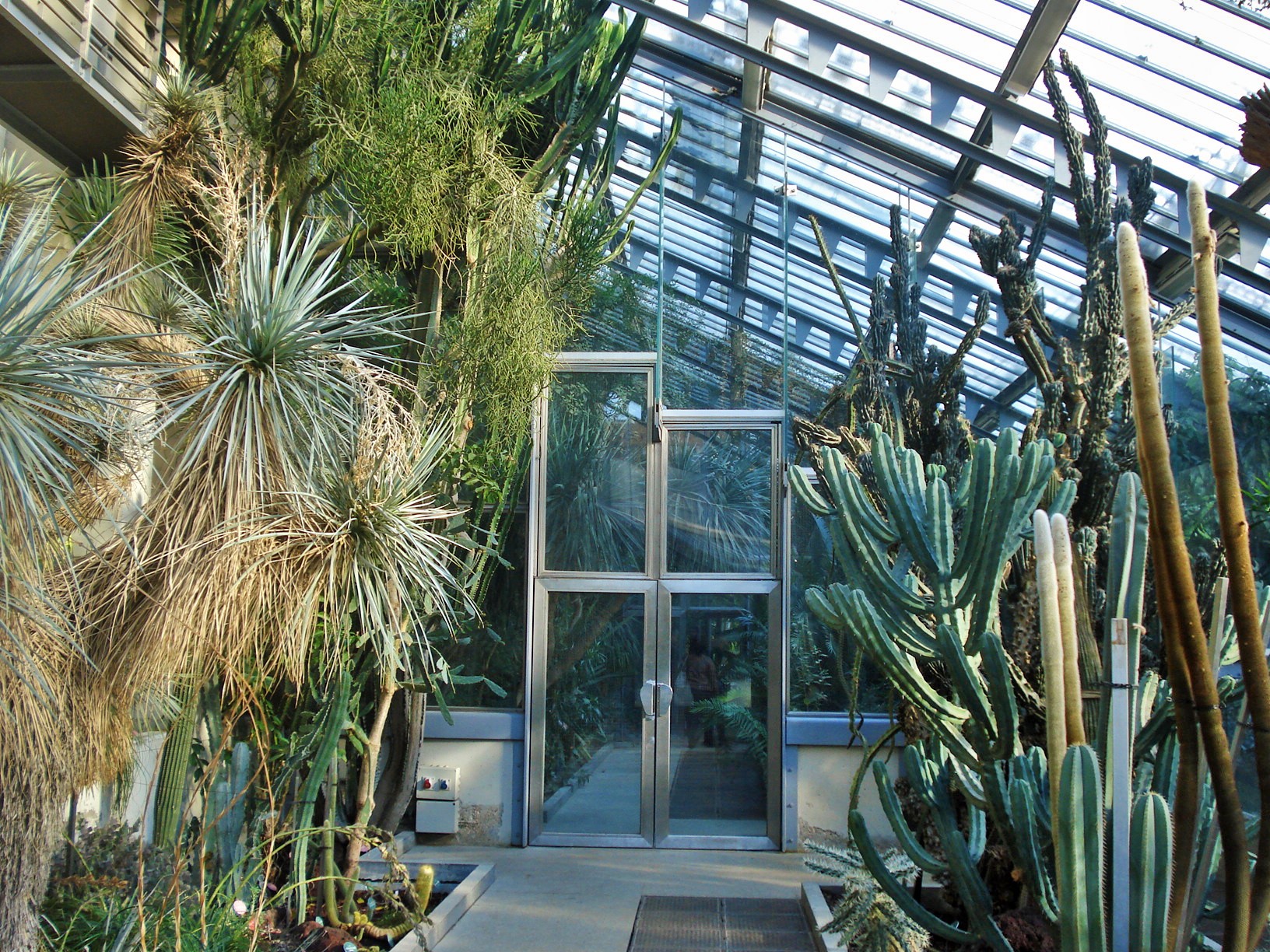
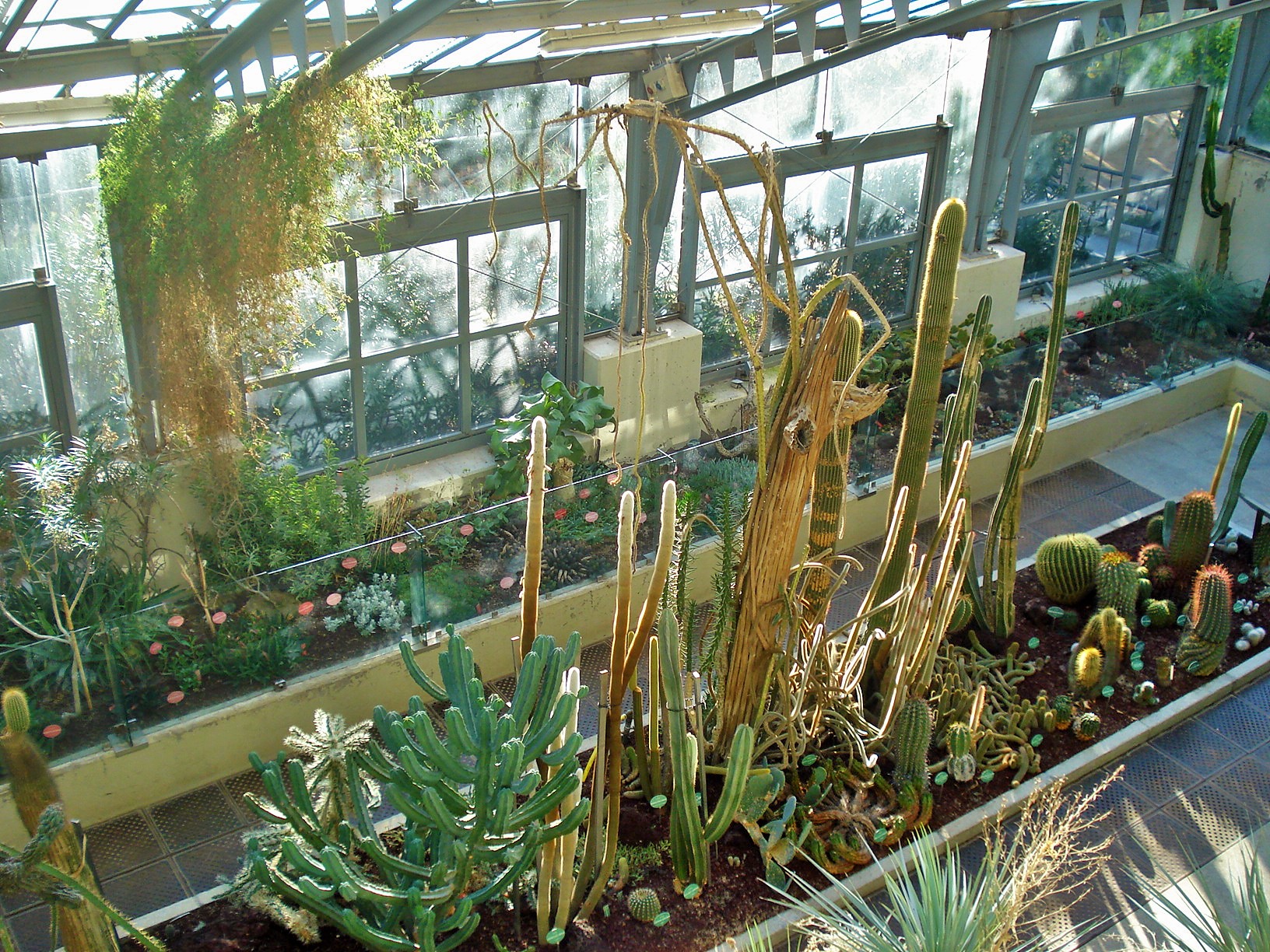
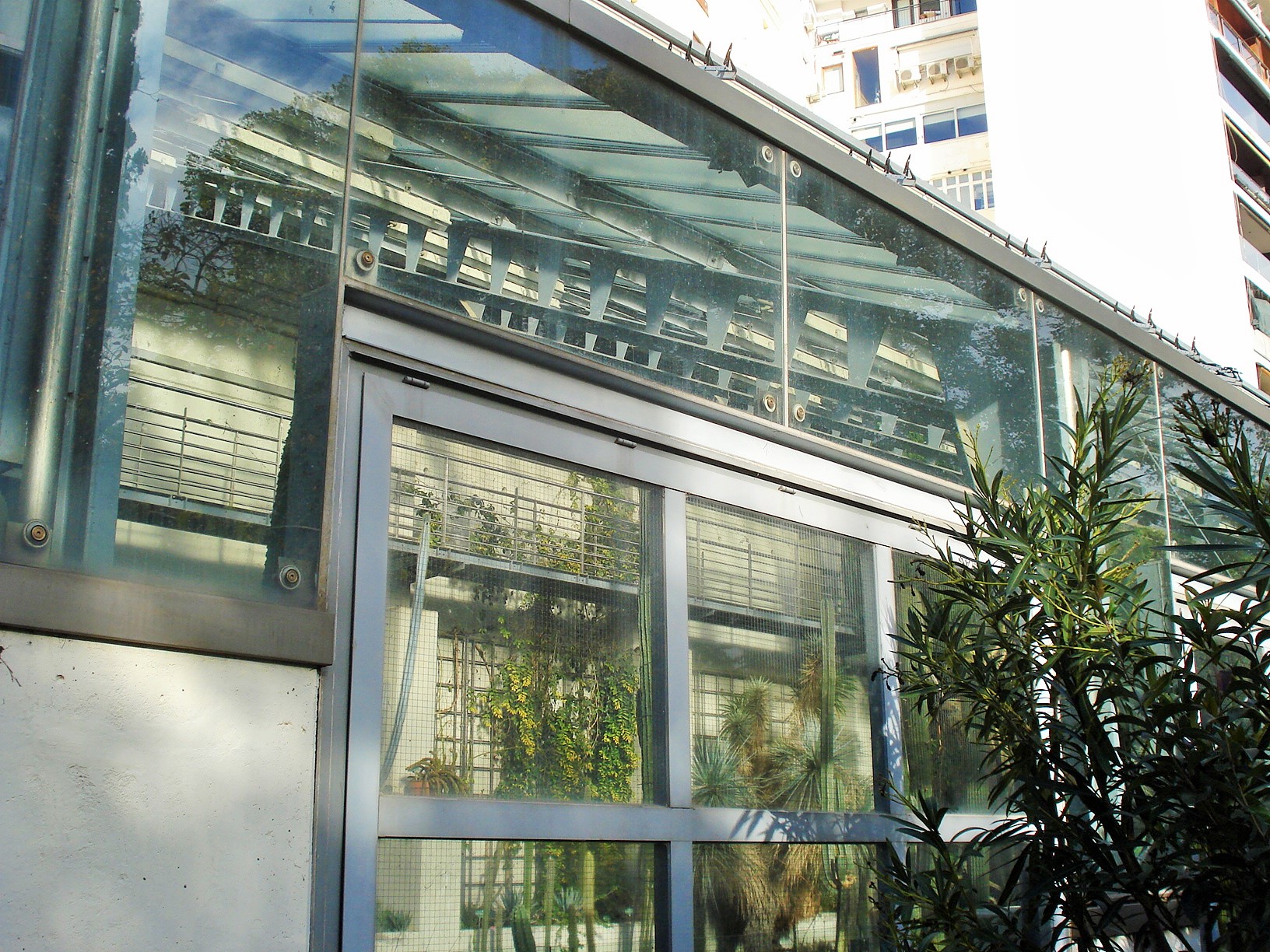
With such large and varied gardens, it would be impossible to cover it all in one post. In this post, I am featuring one of the more modern greenhouses, housing the gardens’ succulents collection. Note the use of vertical gardening on the very tall interior walls, as well as the catwalk along the top joining this greenhouse with the subtropical/tropical one.

DSC09047

 DSC08853DSC08854DSC08855DSC08857DSC08858DSC08859DSC08860DSC08861DSC08862DSC08863DSC08864DSC08865DSC08866DSC08867DSC08868DSC08869DSC08870DSC08871DSC08872DSC08873DSC08937DSC08938DSC08939DSC08940DSC08941DSC08942DSC08943DSC08851

Gardens of the Mosque of Granada

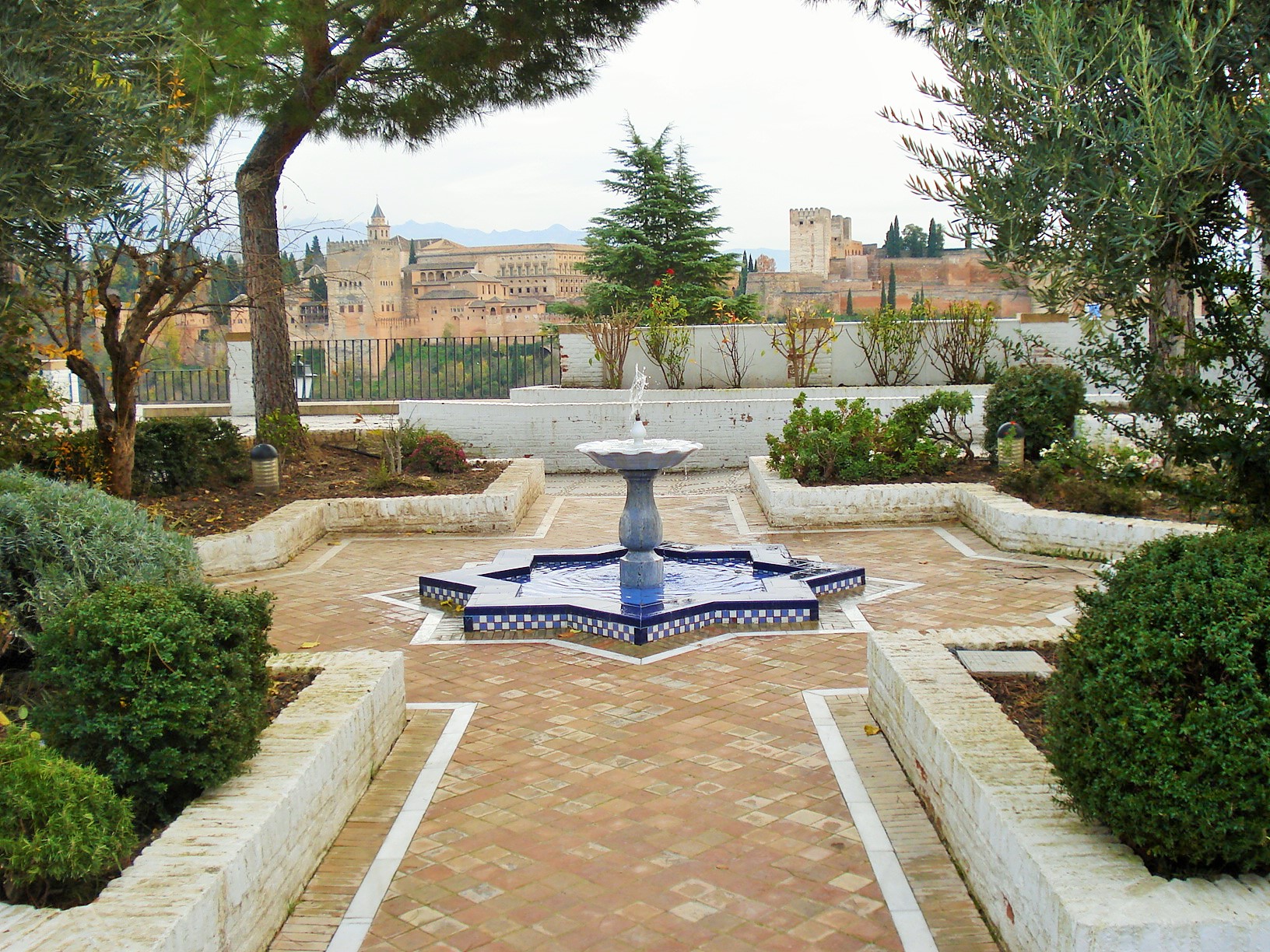
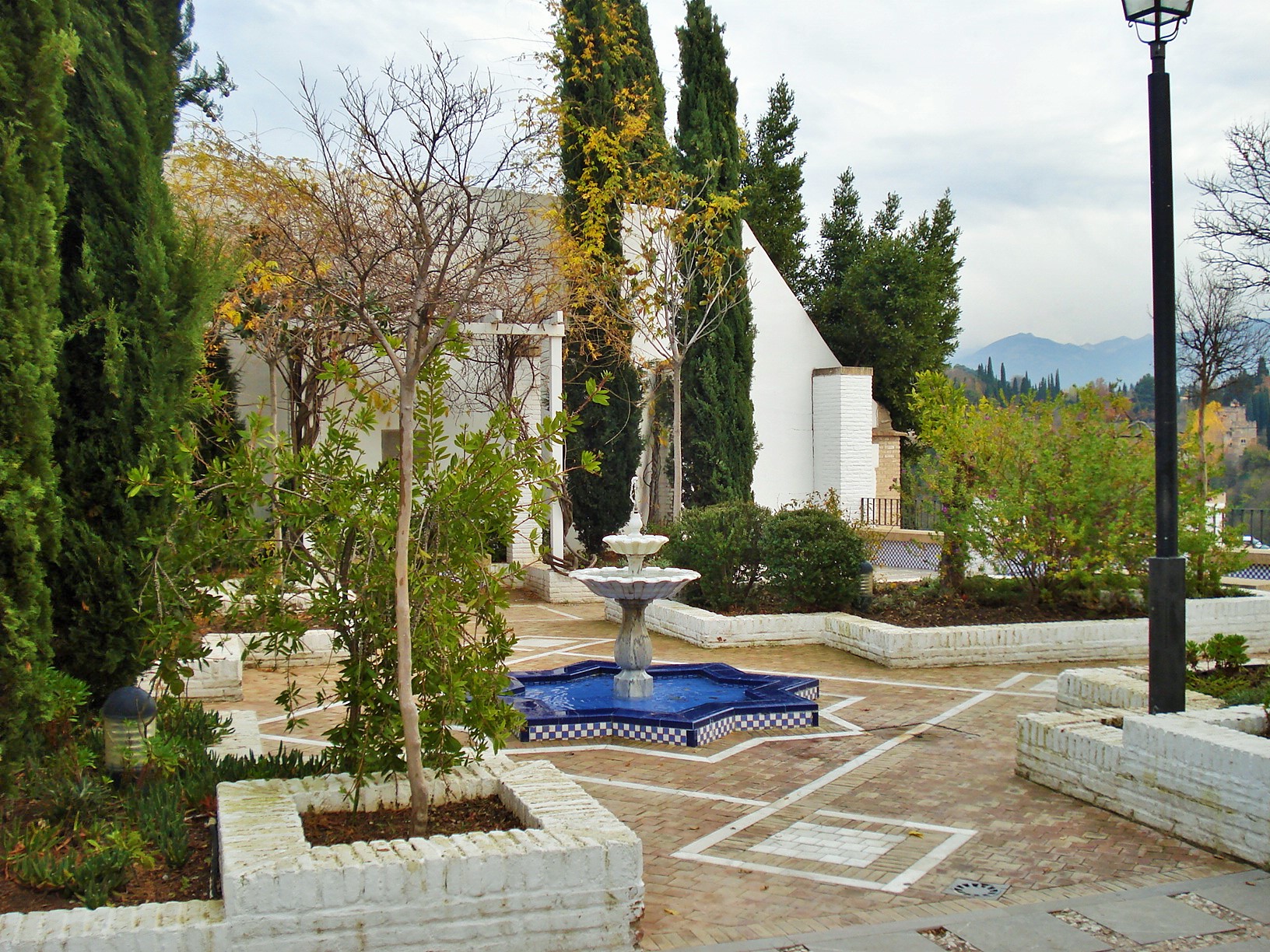
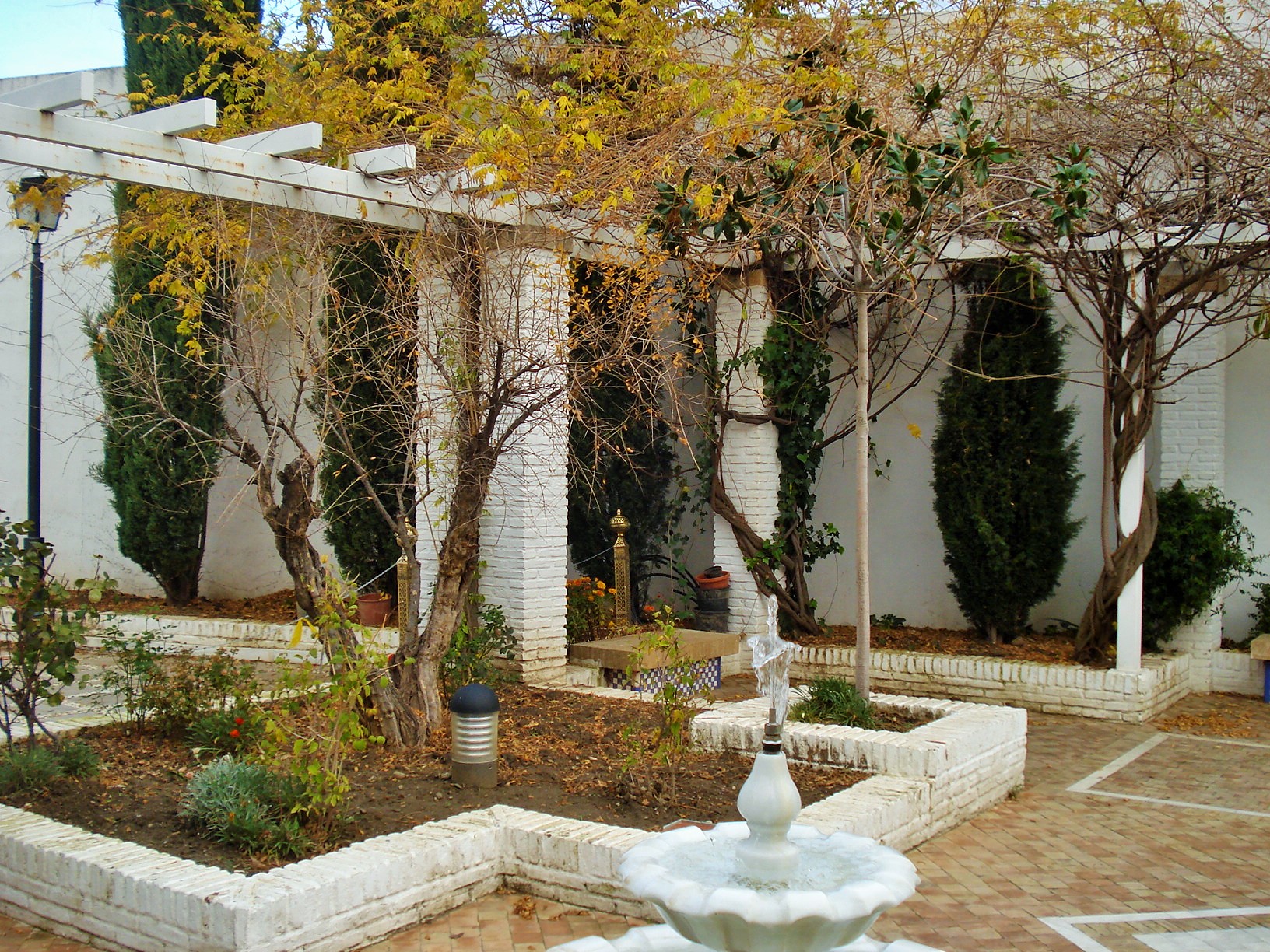
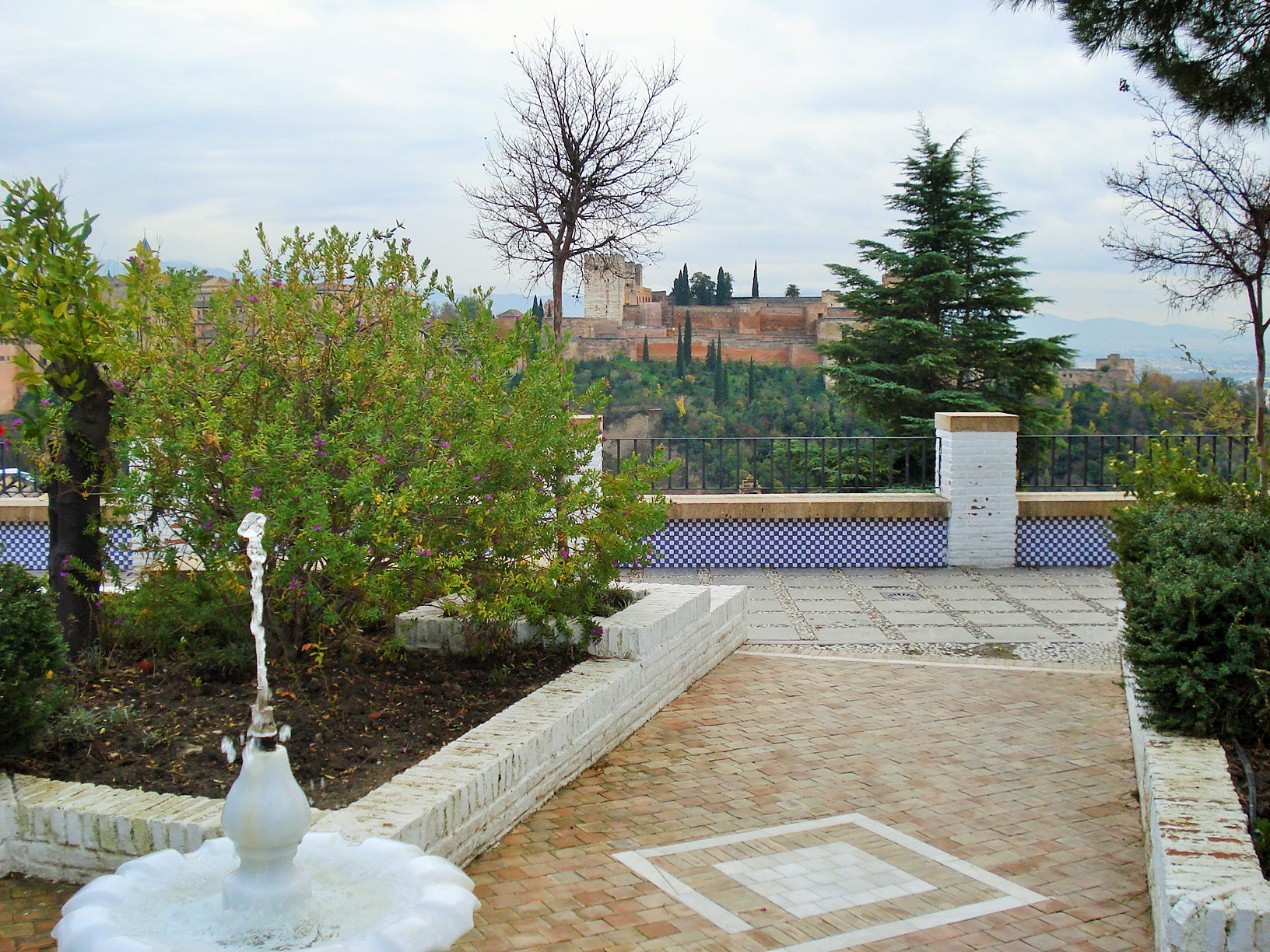
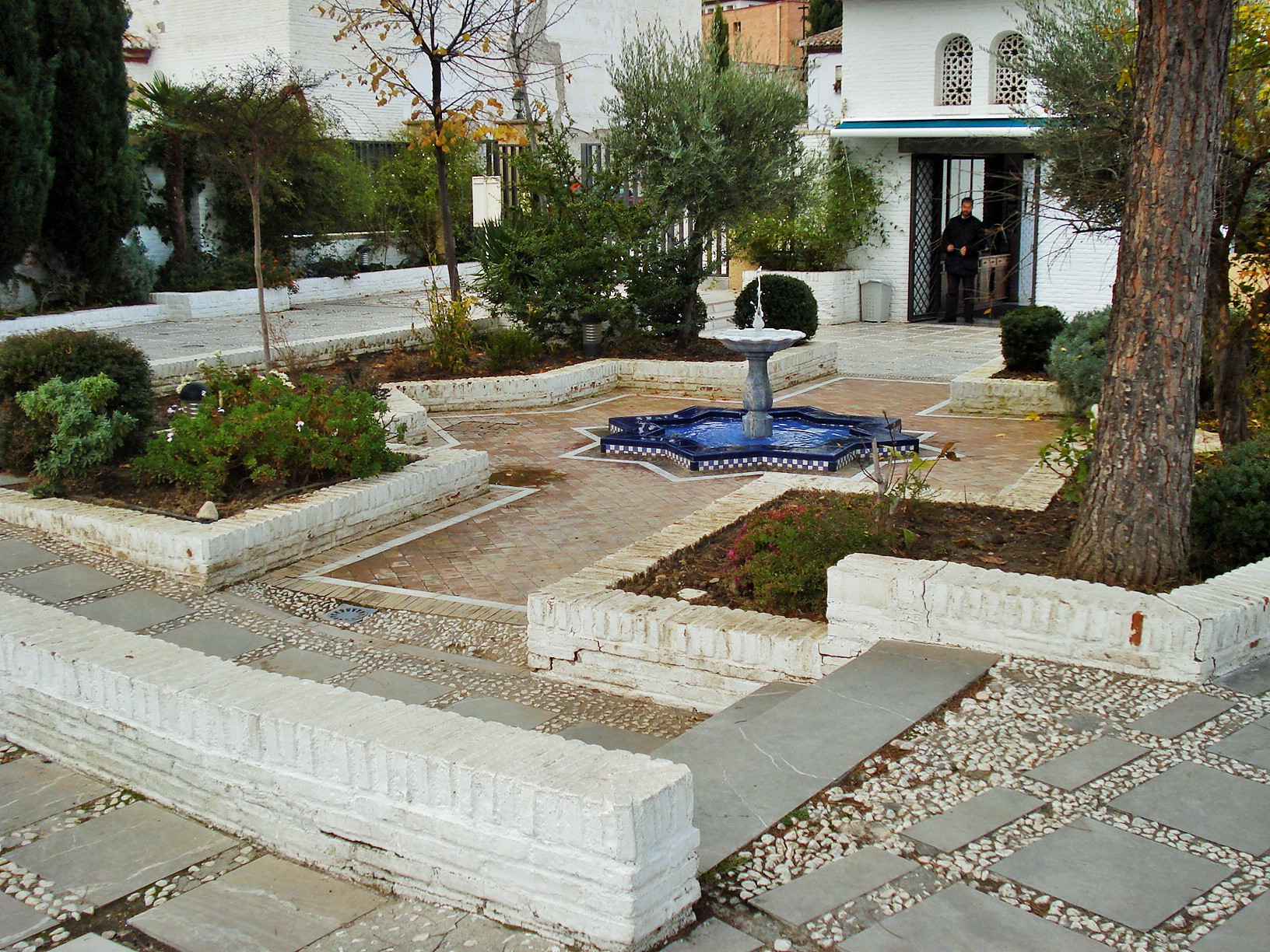
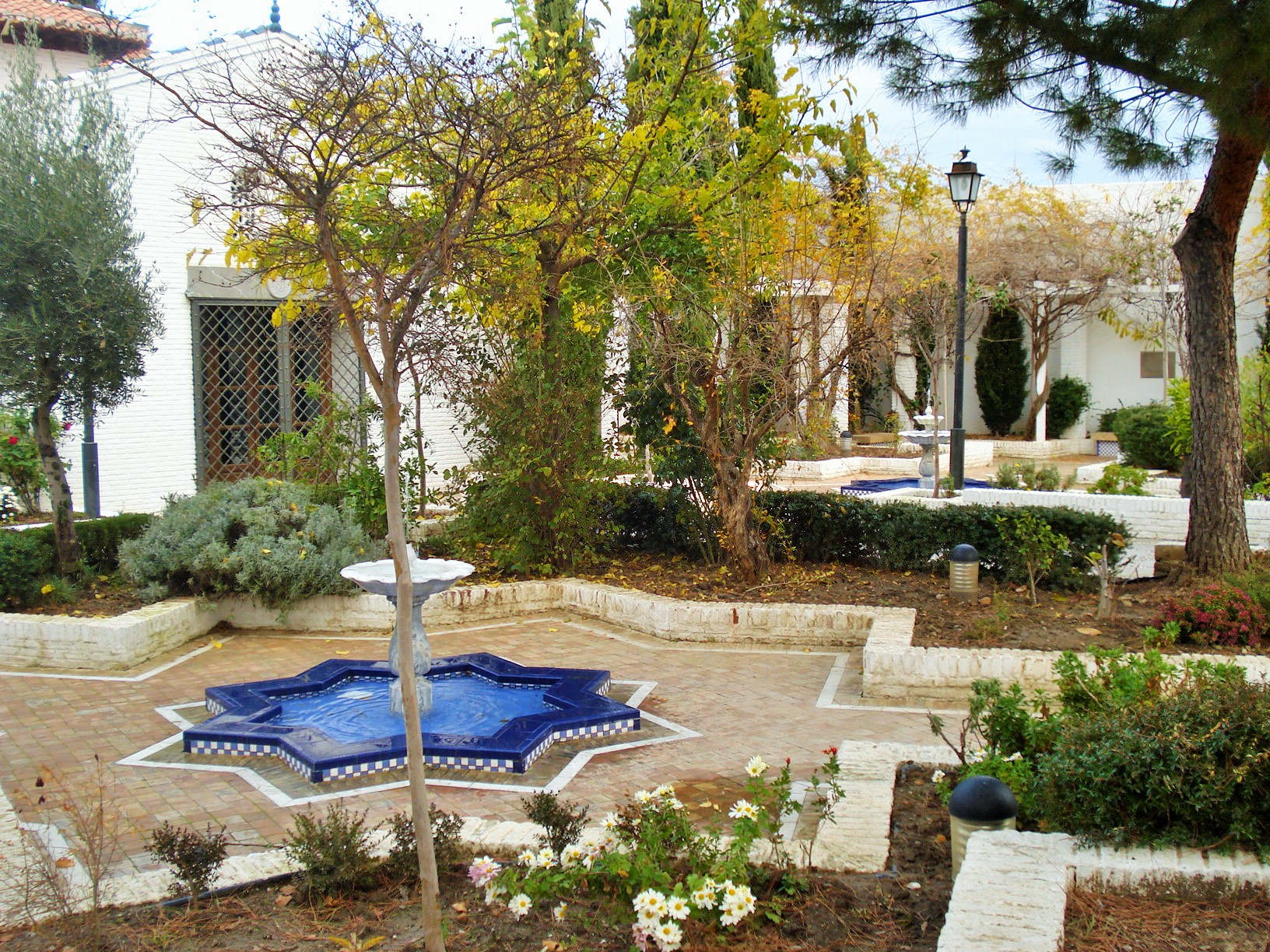
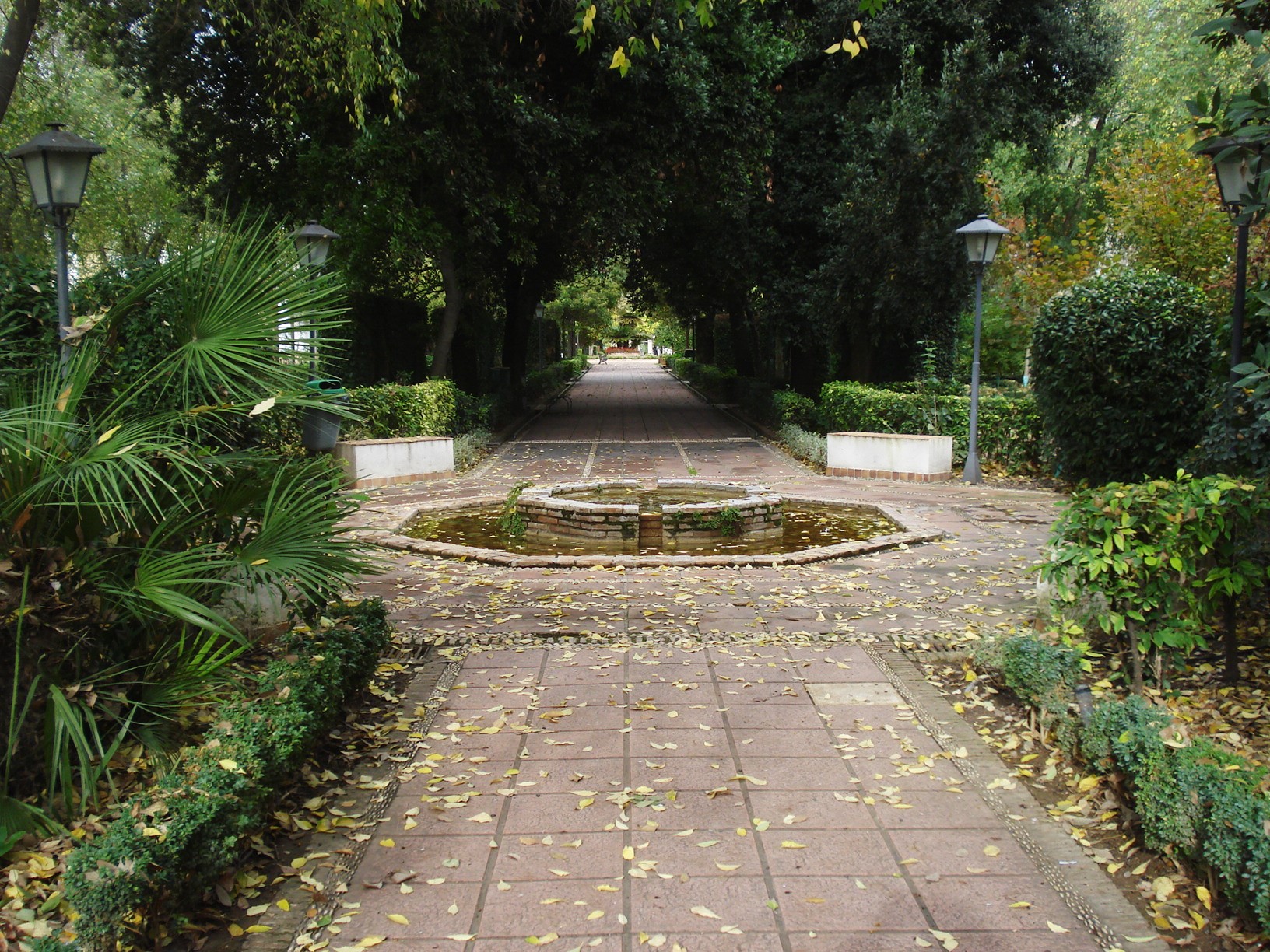
Granada, in southern Spain,  is of course most famous for the Alhambra and Generalife gardens.  The Mosque of Granada is located in the Albaicin, the Moorish quarter and oldest part of Granada, at the top of the hill and affording spectacular views of the city and the Alhambra on the other side of the river. The gardens are typical of Moorish gardens found in Andalusia, with pebble patio flooring designs, and fountains.

DSC00360DSC00343DSC00344DSC00345DSC00346DSC00347DSC00348DSC00349DSC00350DSC00351DSC00352DSC00353DSC00354DSC00355DSC00356DSC00357DSC00359

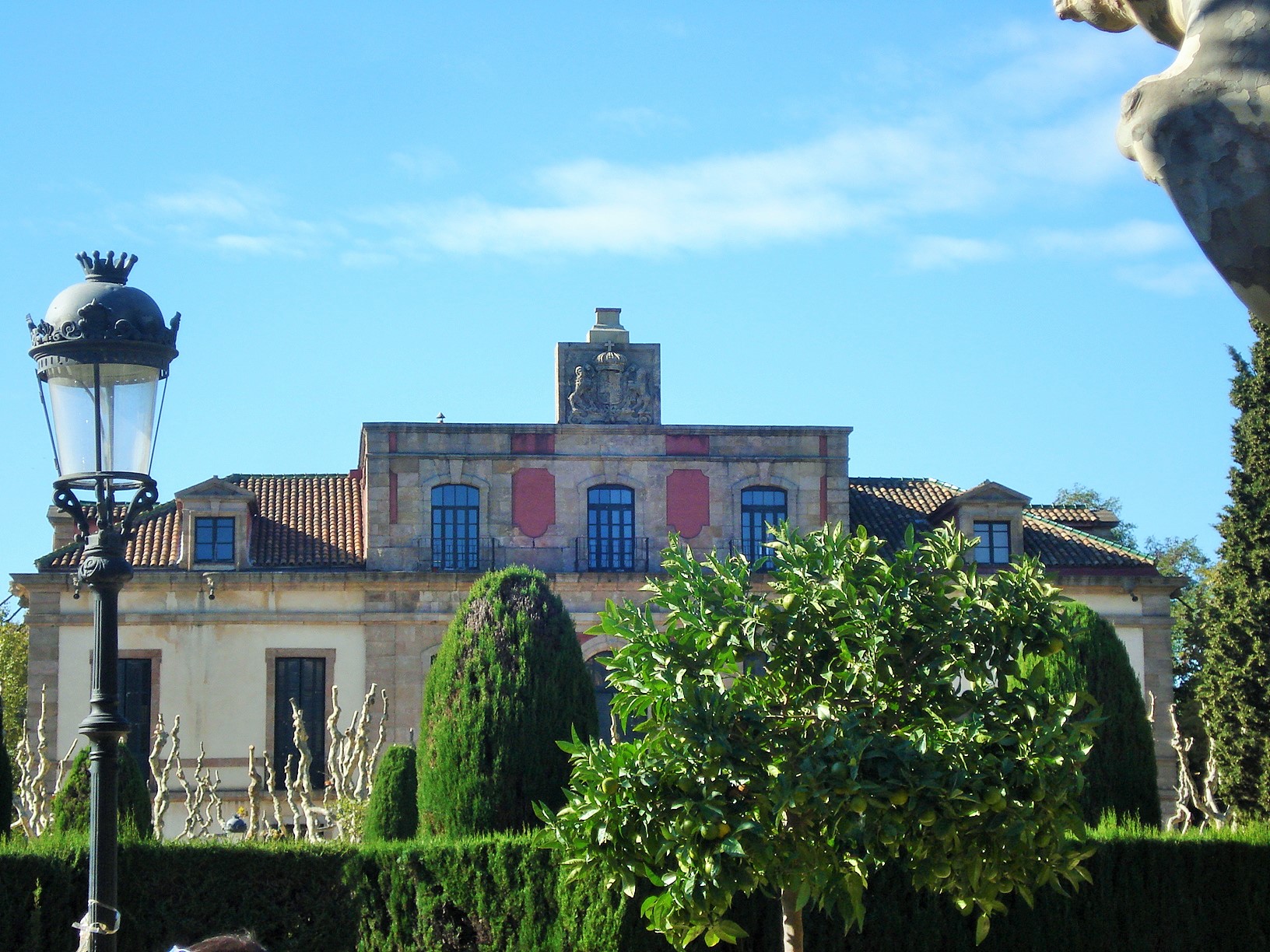
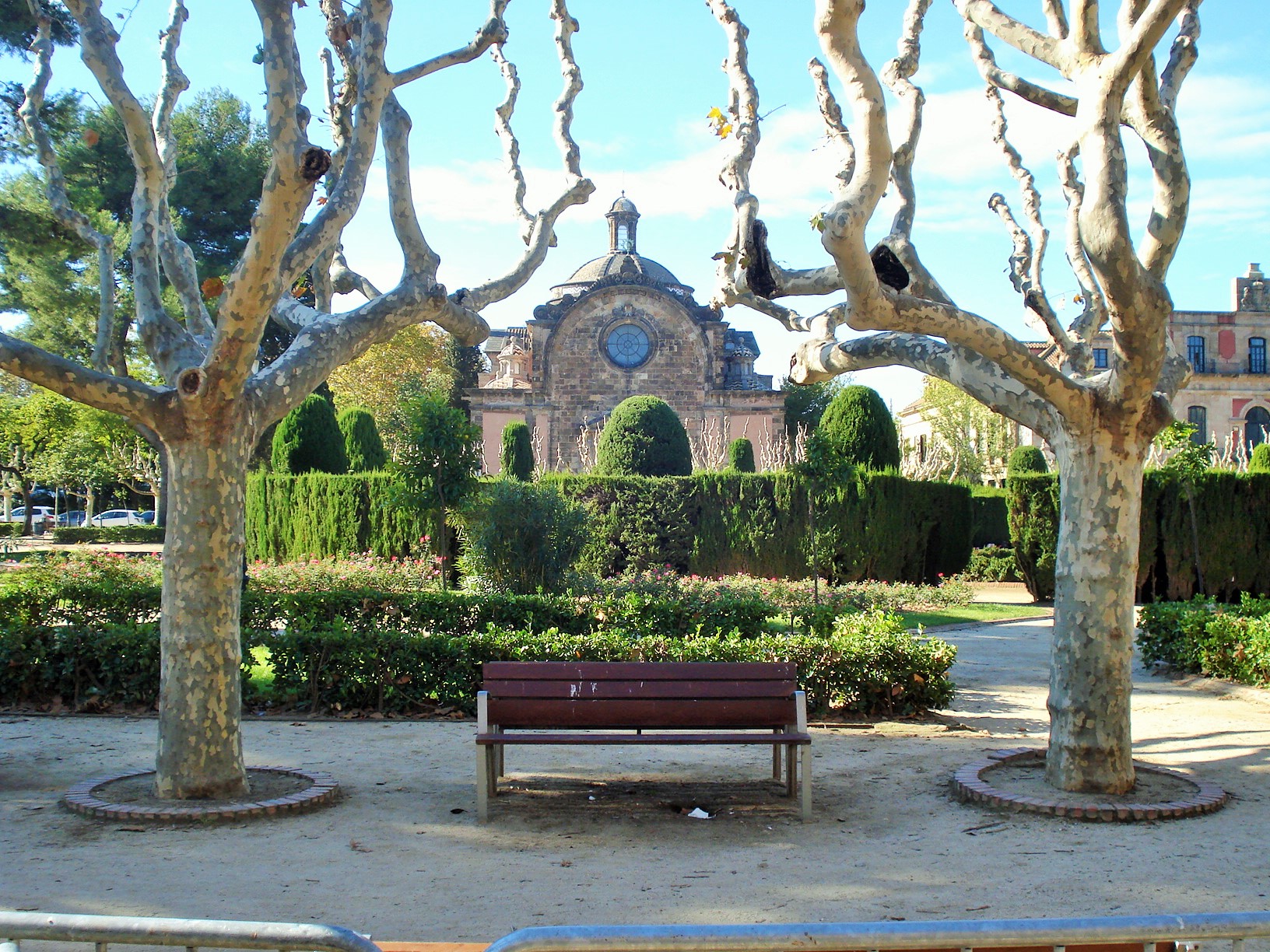
Barcelona Ciutadella Park: The Formal Gardens

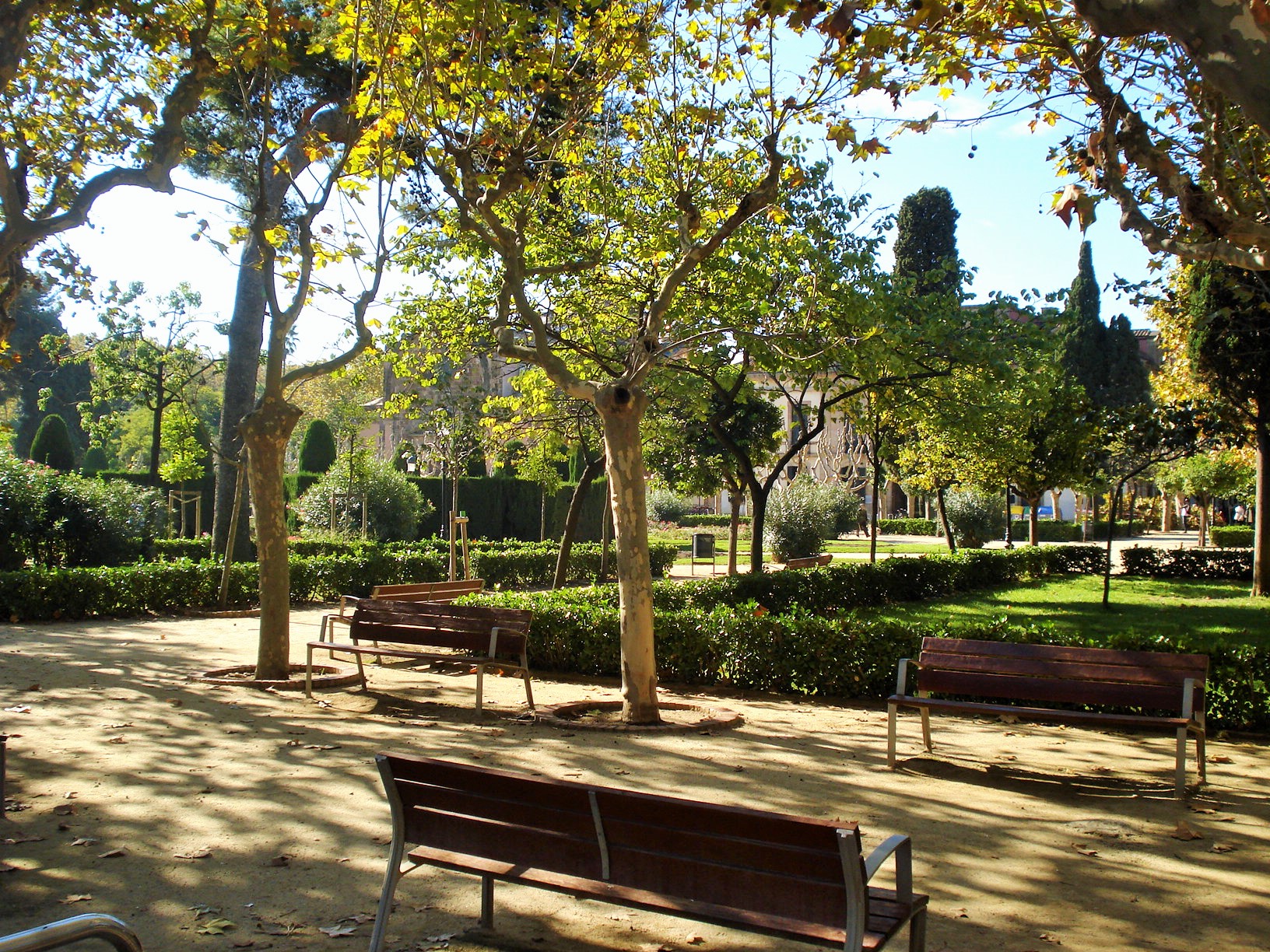
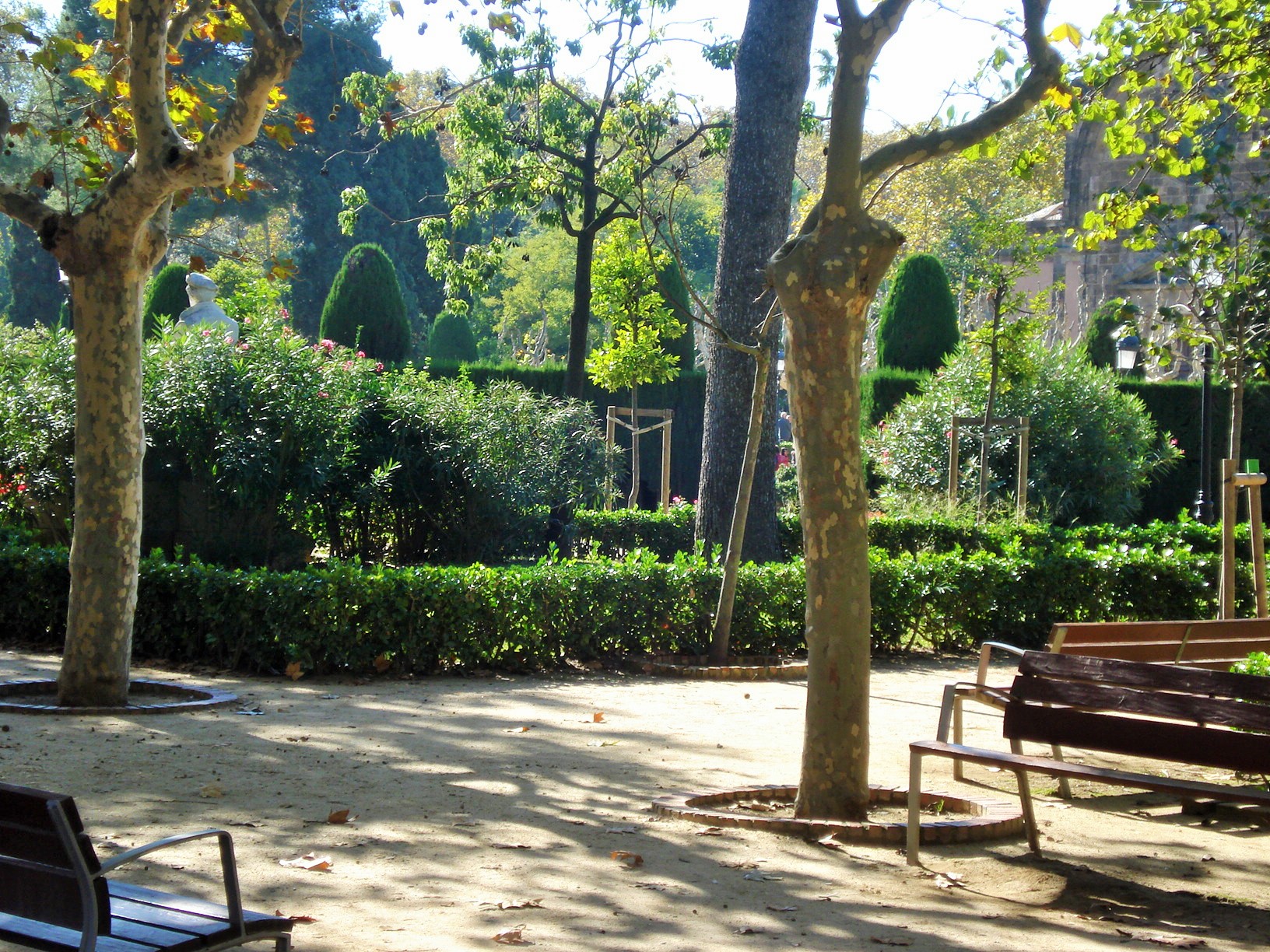
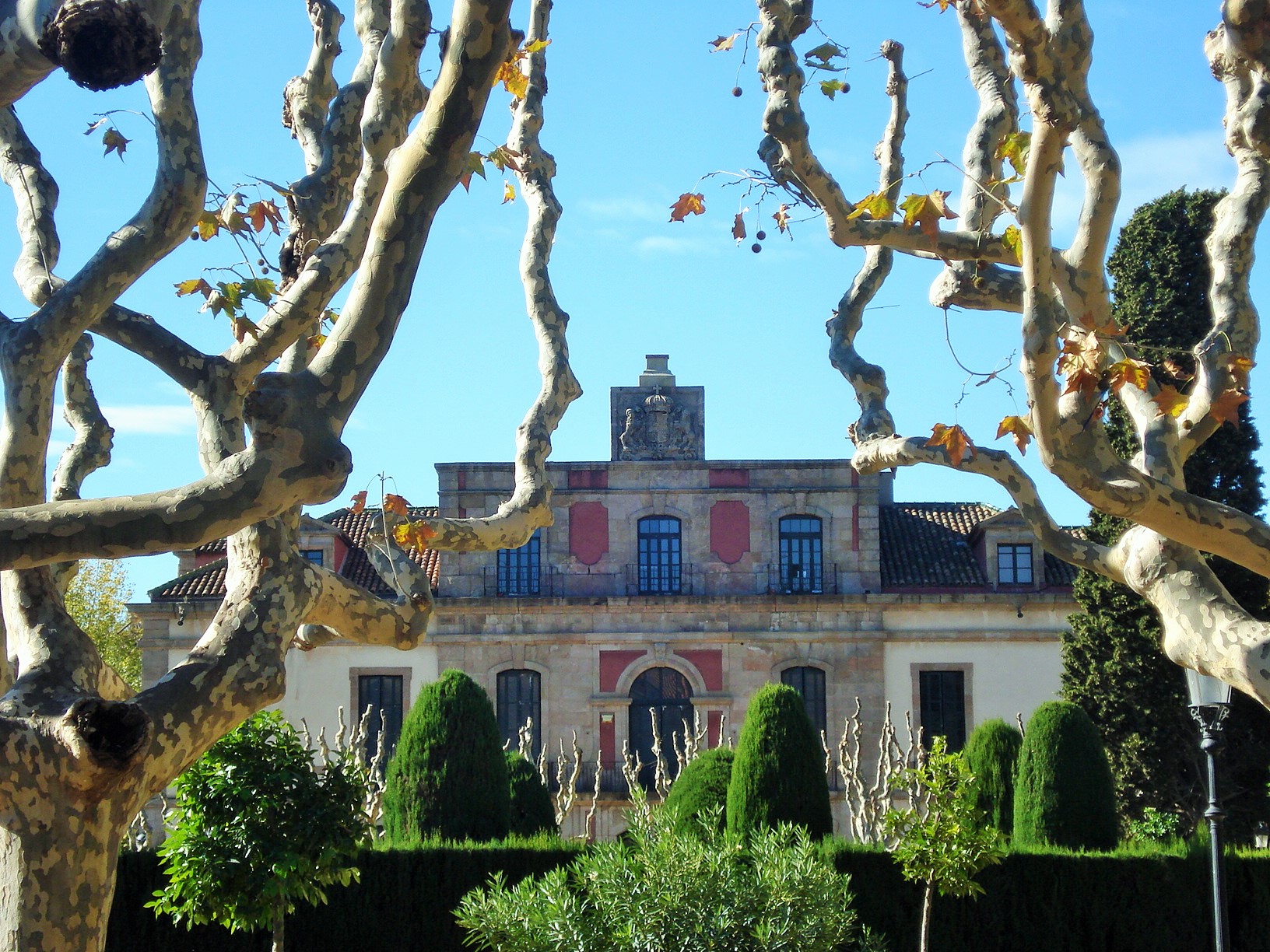
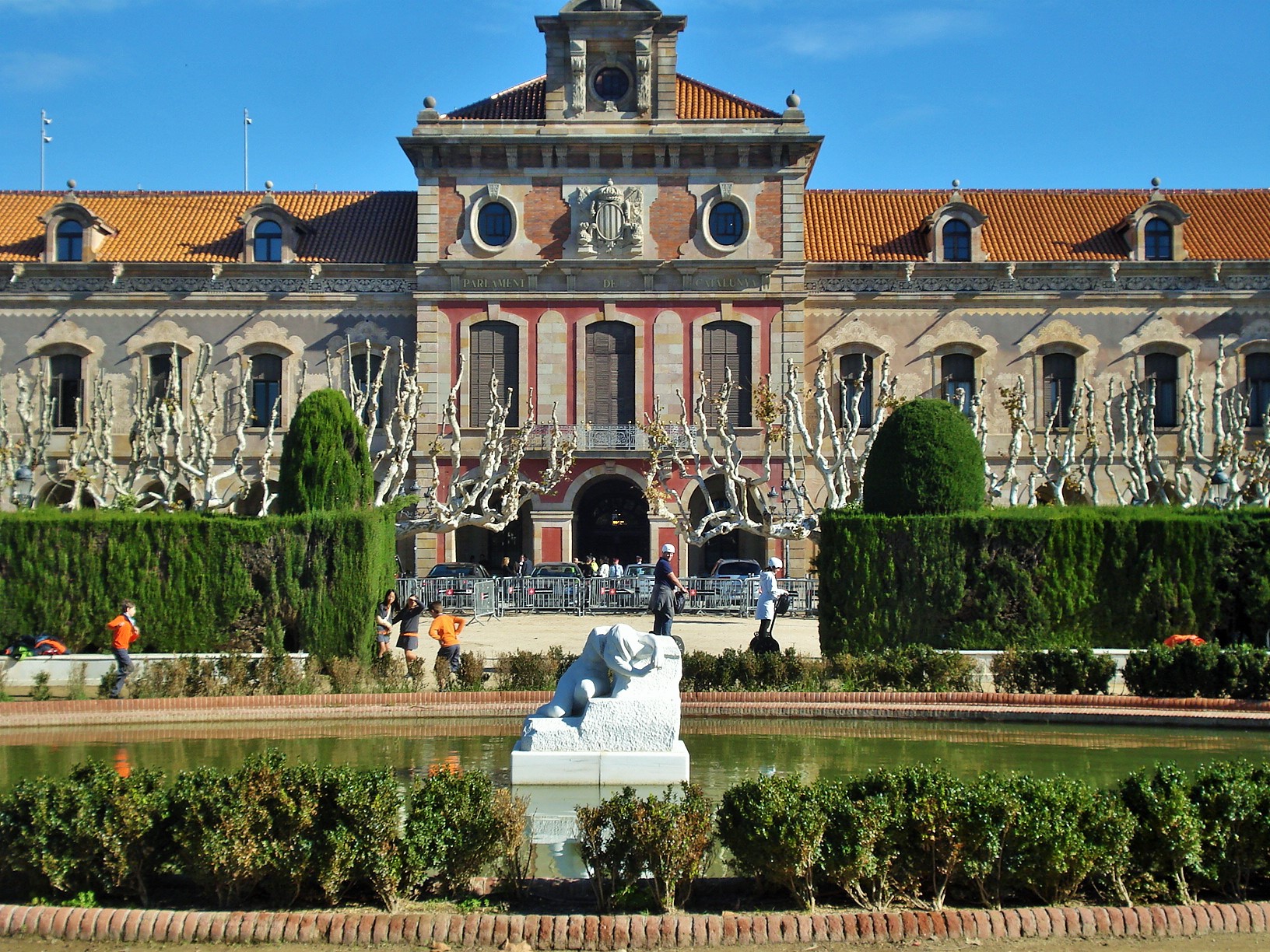
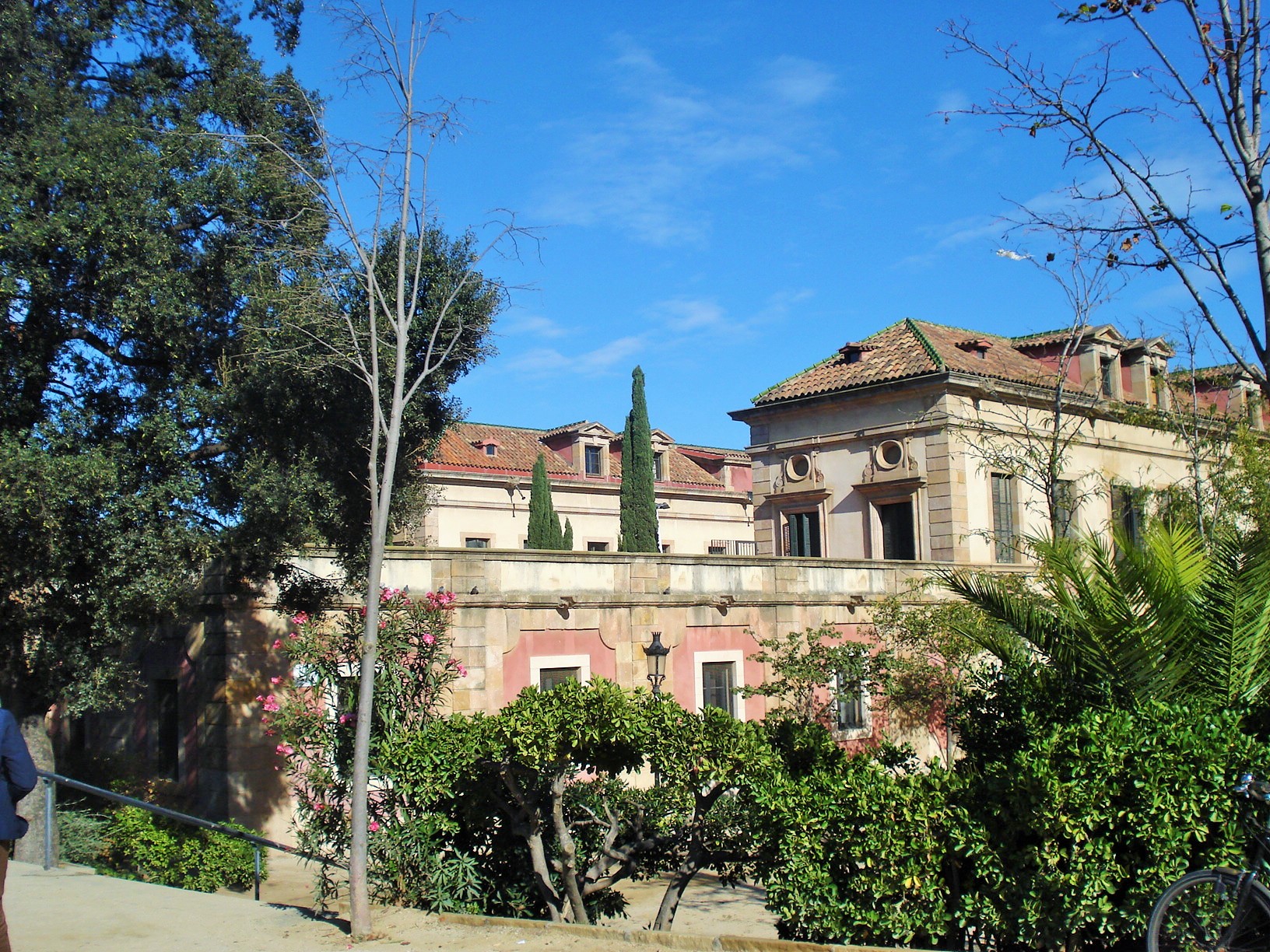
The Ciutadella Park in Barcelona is the largest and oldest city park. It was established in the mid 19th century and was for a long the only substantial green space in the city with about 70 acres of paths, trails, a lake, and assorted statuary and buildings. It is home to the Parliament building, the Barcelona Zoo, and the Geological museum. It is perhaps most famous for the very large waterfall fountain designed by Fontsere in the 1880s when Gaudi was his student and is believed to have contributed to it. It was inaugurated for the Universal Exhibition. See my other post for more on the fountain and the rest of the park.

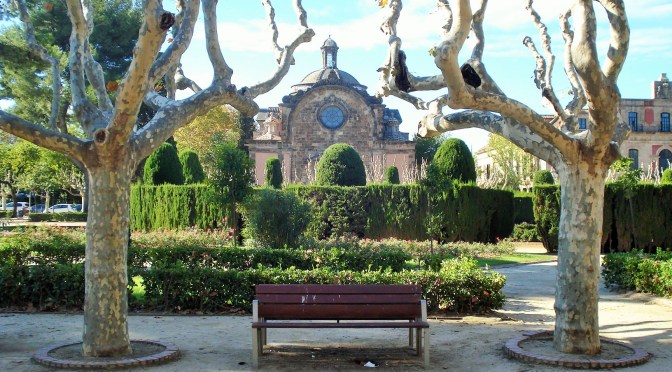
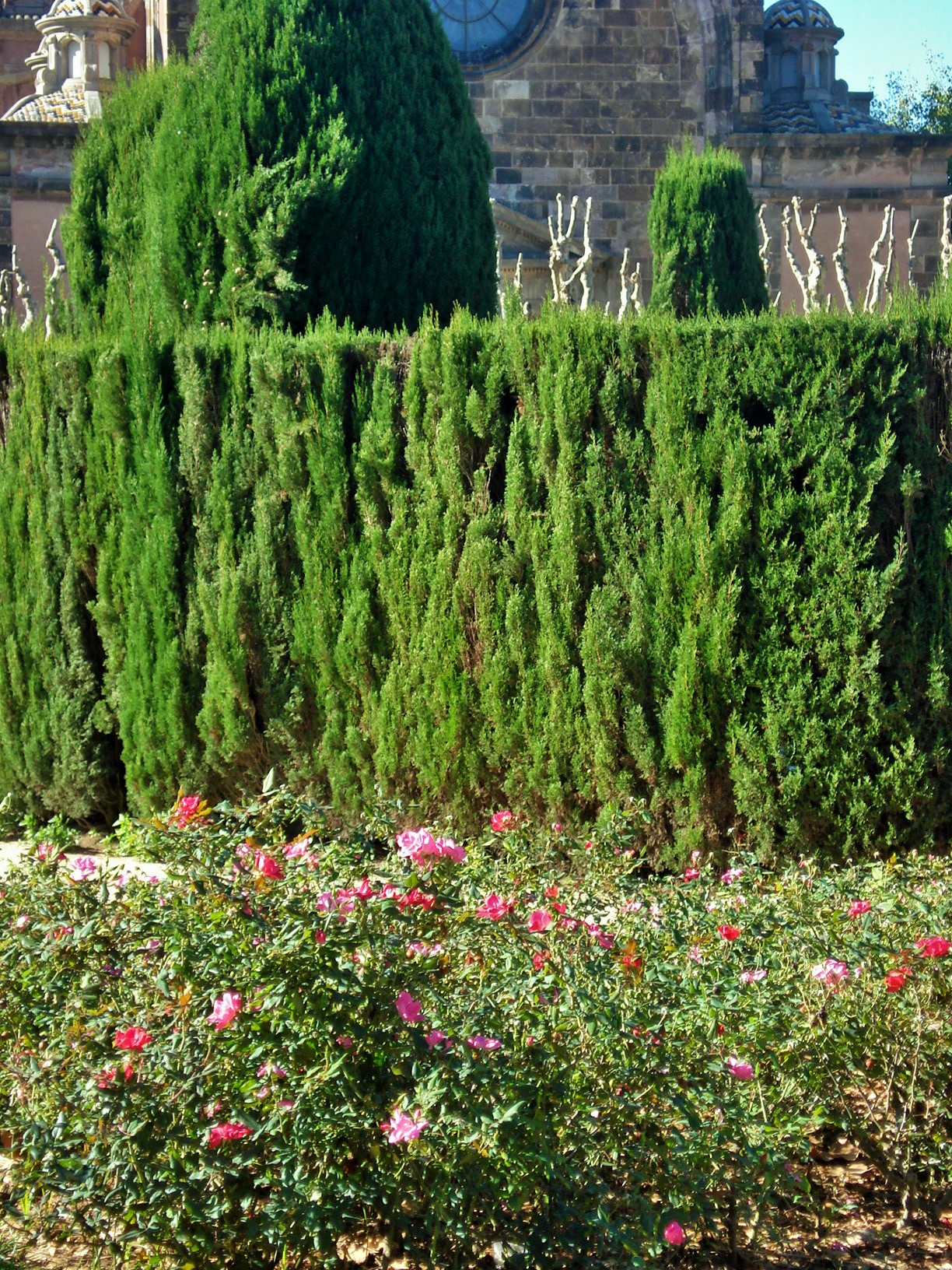
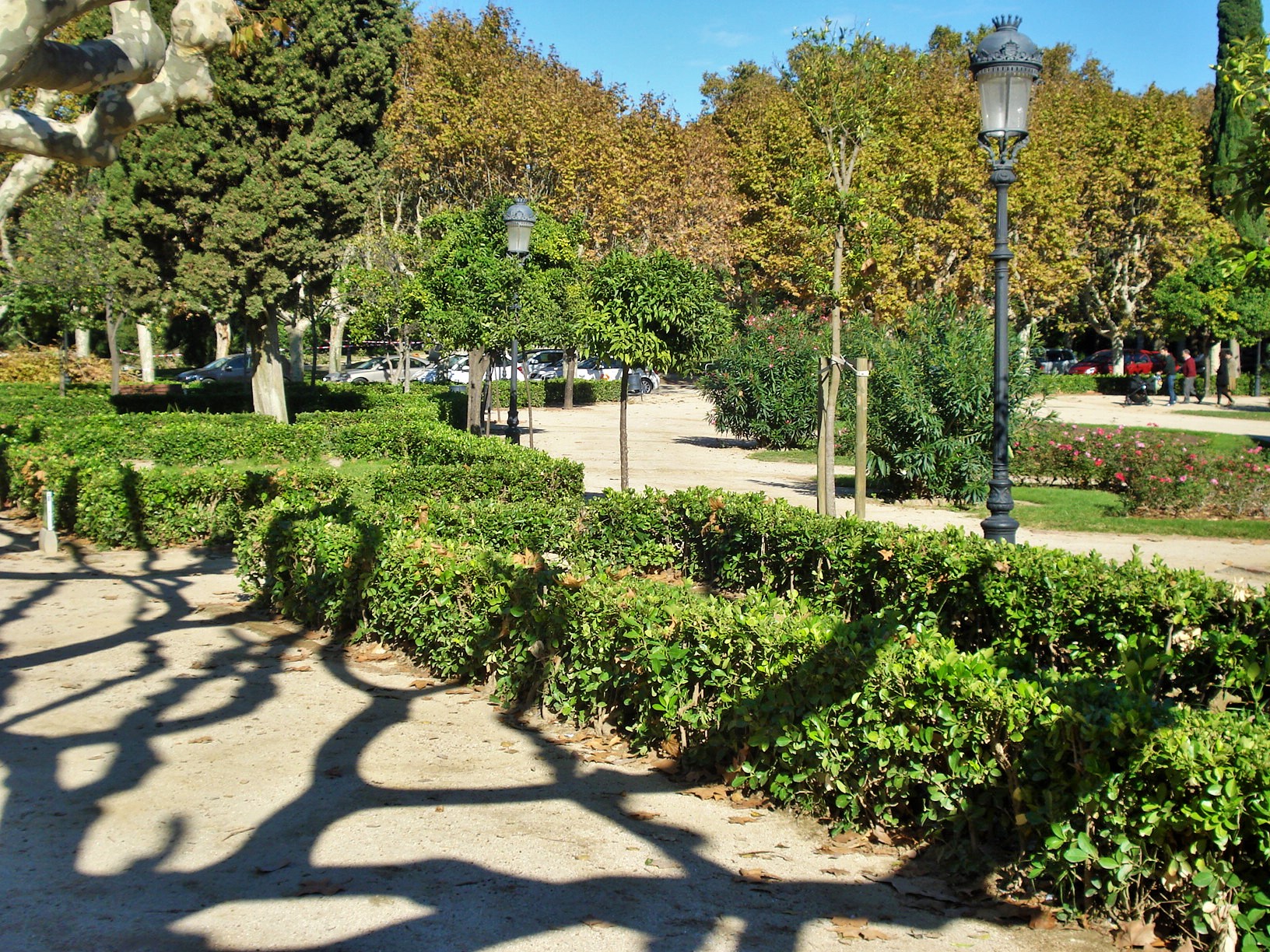
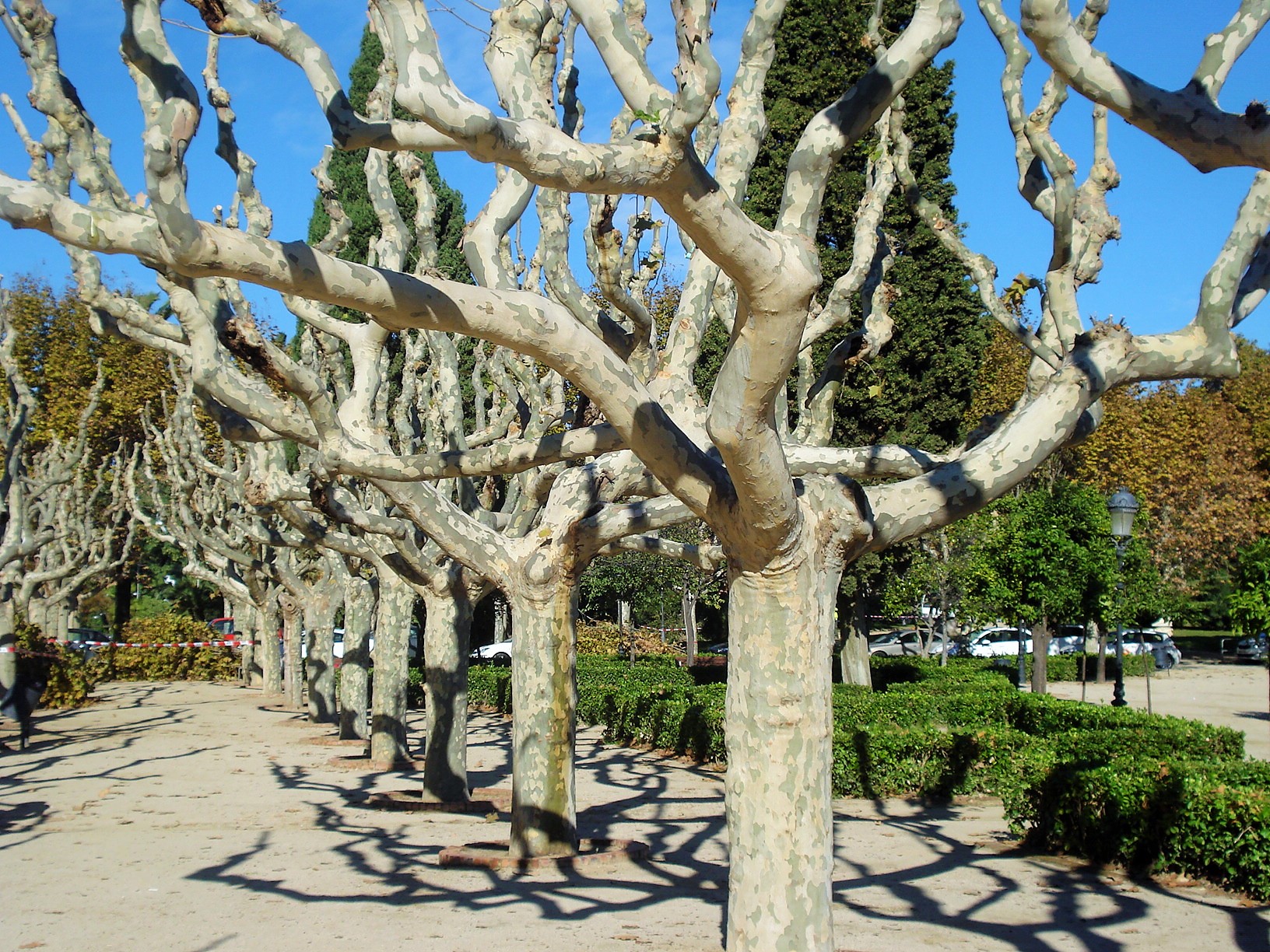
The gardens by the Parliament and the Zoo are the most formal part of the Ciutadella, with neatly trimmed hedges, rows of plane trees, roses borders and a fountain.

DSC08076 DSC08050 DSC08051 DSC08052 DSC08053 DSC08054 DSC08058 DSC08059 DSC08063 DSC08066 DSC08067 DSC08068 DSC08070 DSC08071 DSC08072 DSC08073


Jardines de Cuenca: A Cliffhanging Garden in Ronda, Spain

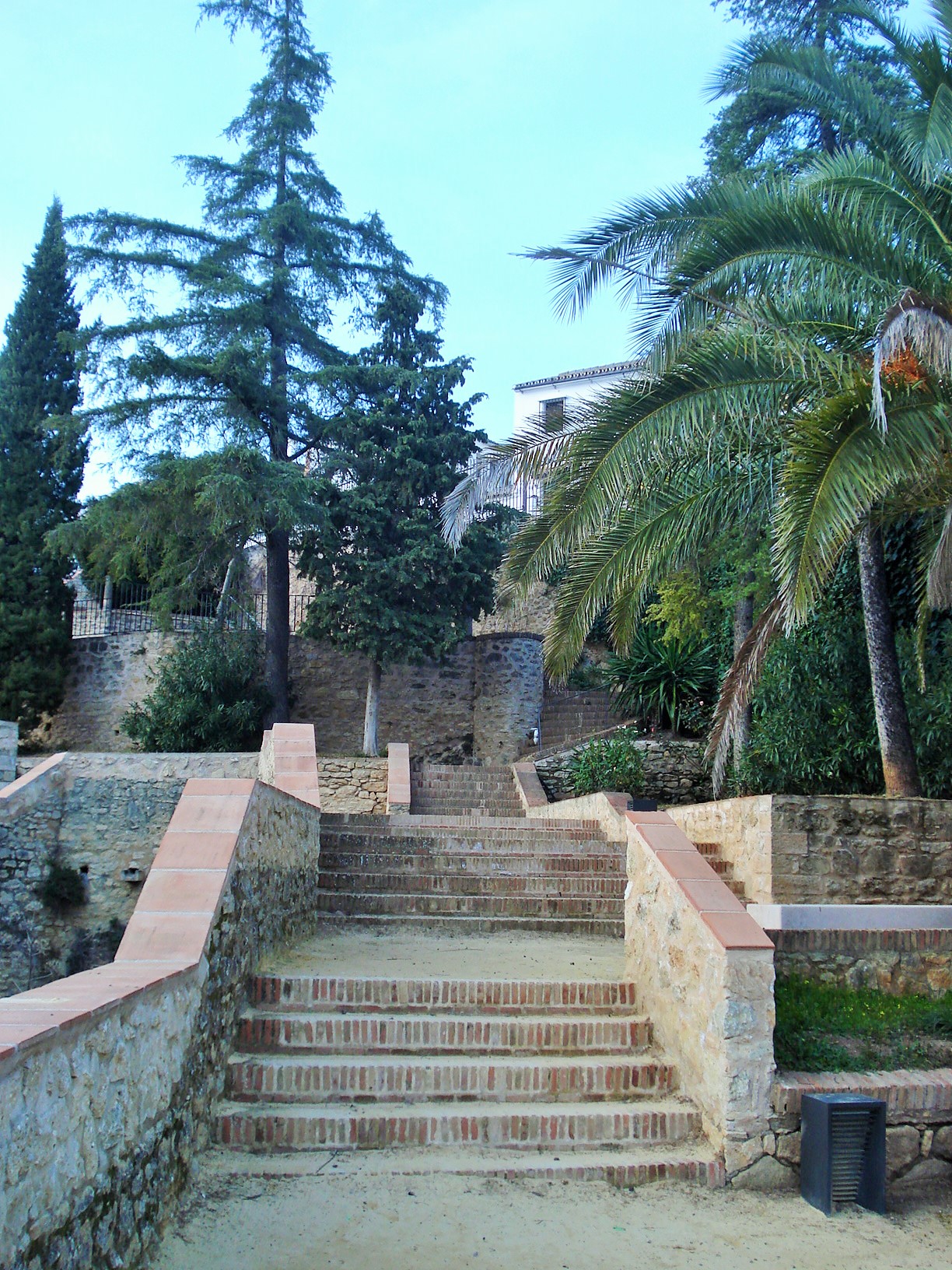
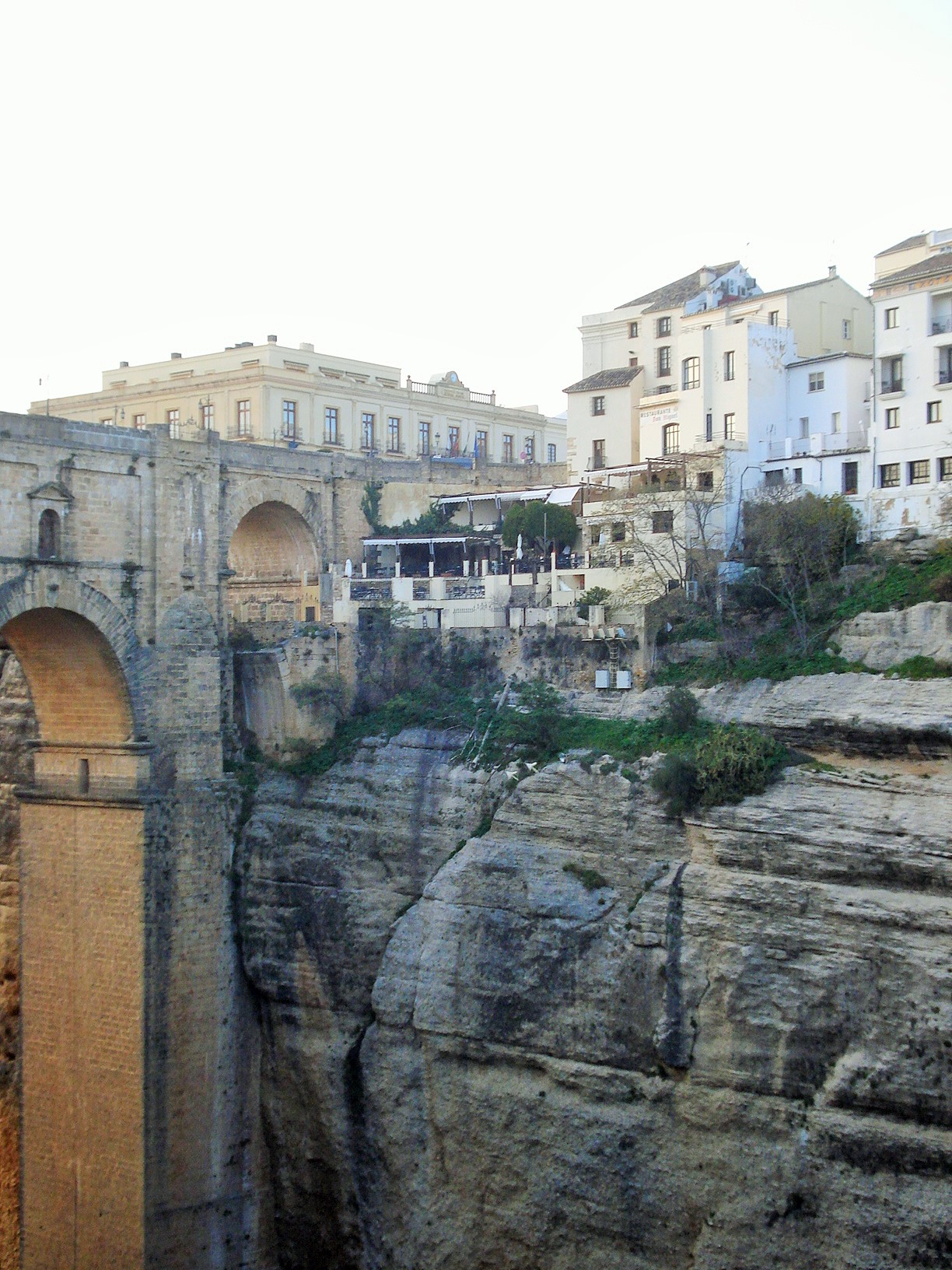
Ronda is one of the “white villages” of Andalusia in southern Spain. It is most famous for the steep cliffs separating the two sides of town and the jaw dropping view they offer. Ronda also has one of the oldest bullfighting arenas and Ernest Hemingway and Orson Welles were frequent visitors. streets are actually named after them.

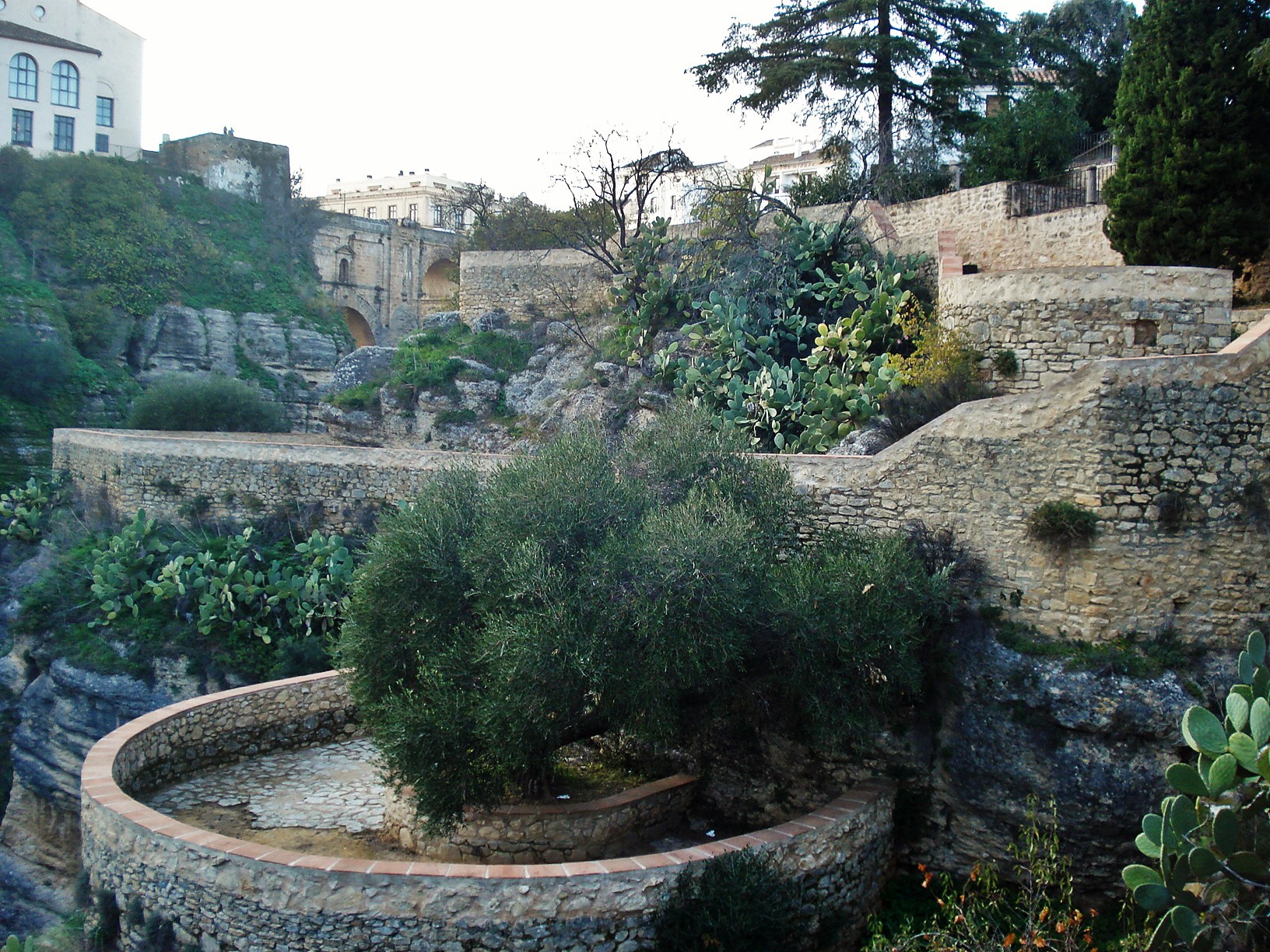
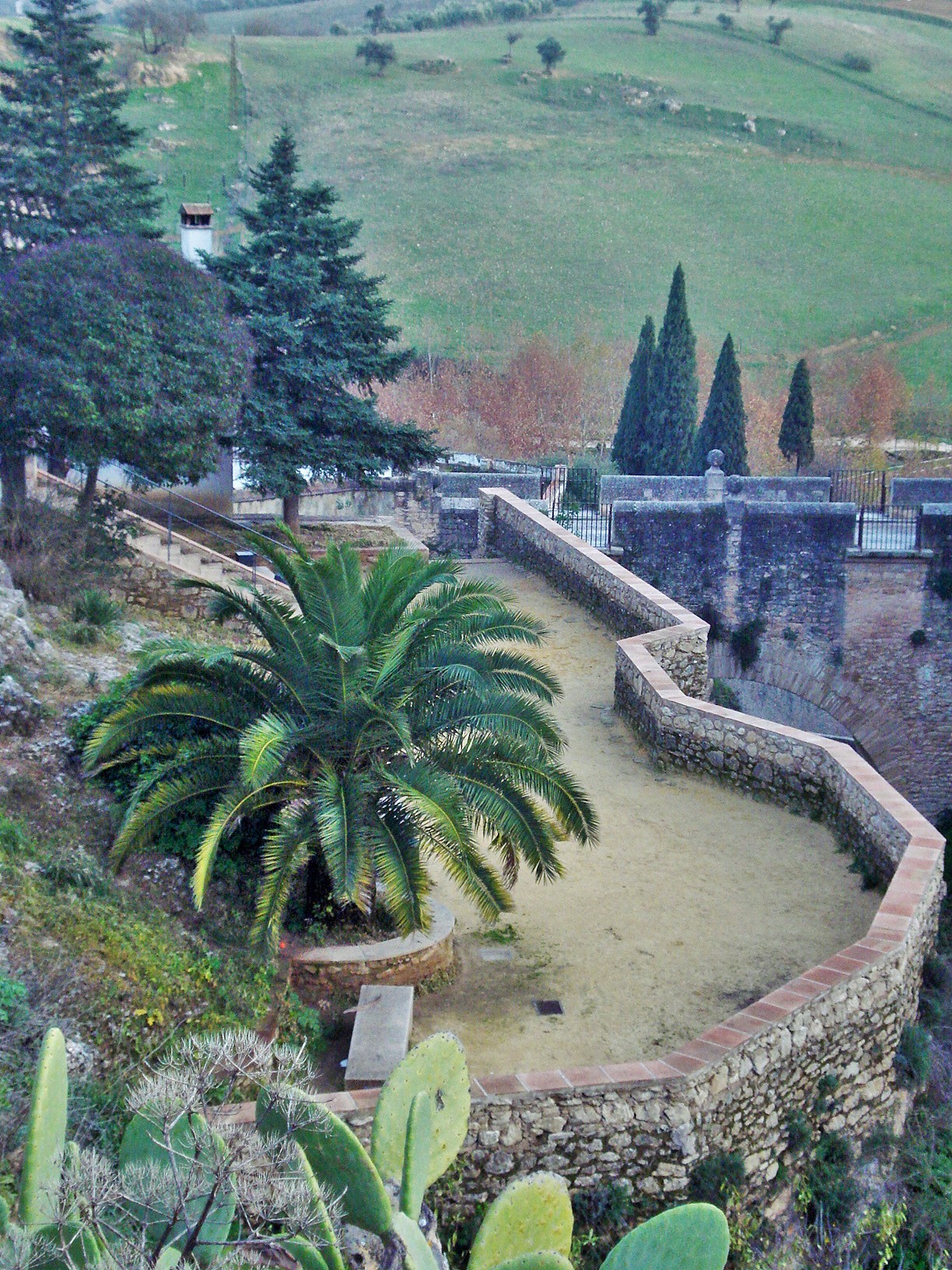
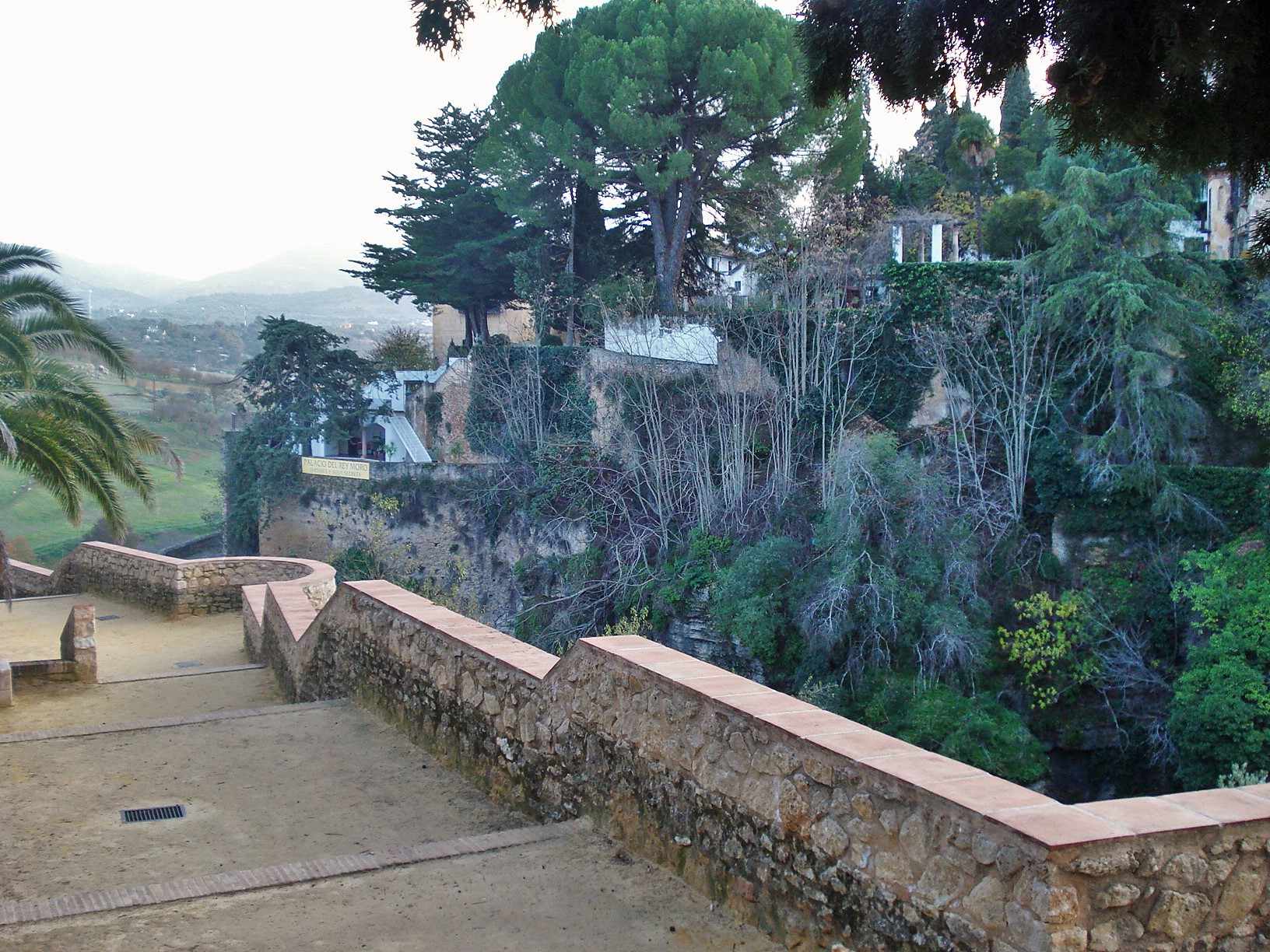
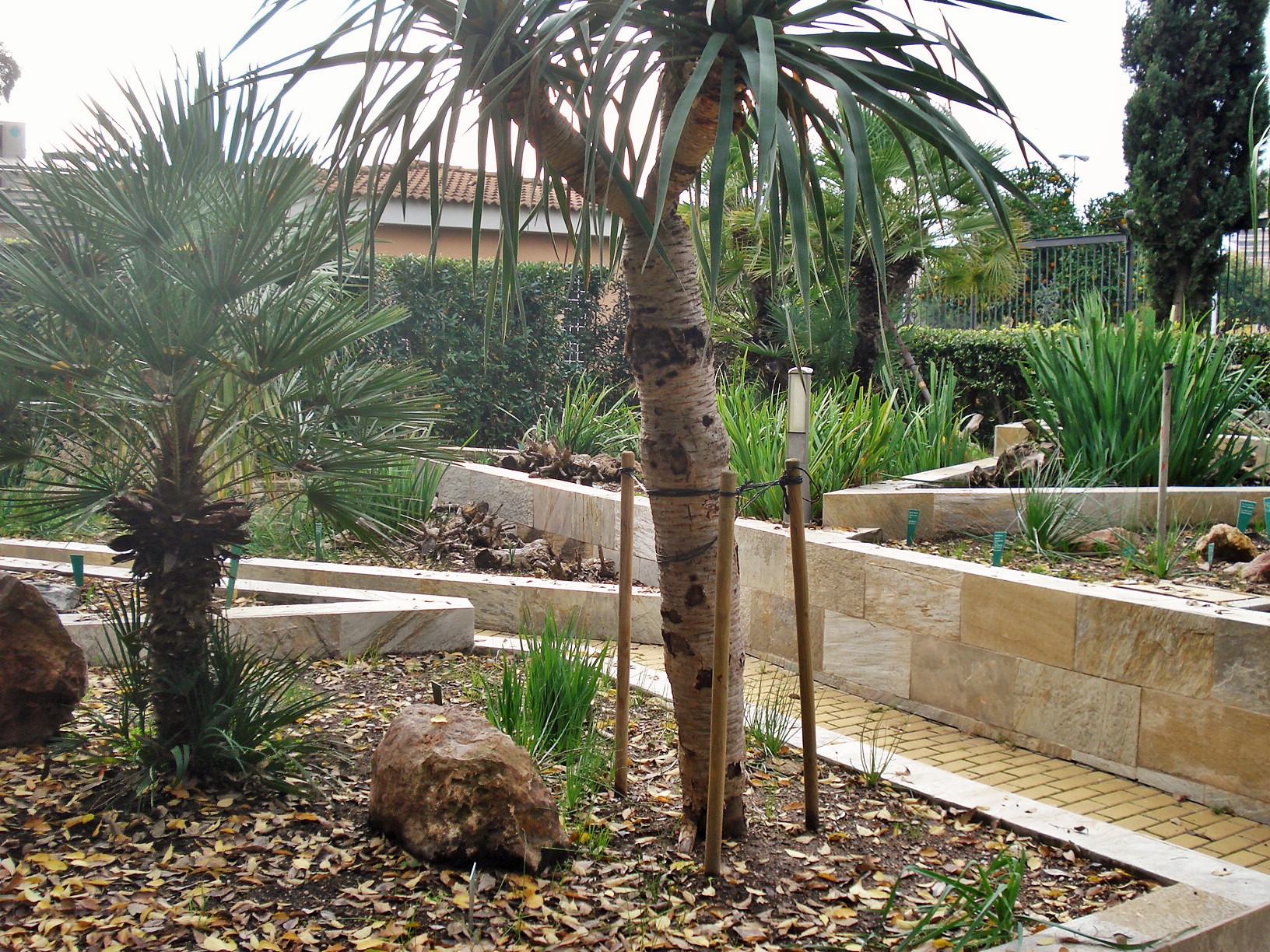
I visited Ronda in the winter, so I did not see the Jardines de Cuenca at their very best.  The season however in no way detracted from appreciating this unique site,  and the stunning views from this small garden literally hanging over the canyon. It is laid out as a series of small terraces, climbing up into the center and towards the main bridge, and planted with palm trees and succulents that are well adapted to the summer heat of southern Spain.

DSC00867 DSC00868 DSC00870 DSC00871 DSC00836 DSC00837 DSC00838 DSC00840 DSC00841 DSC00842 DSC00843 DSC00844 DSC00845 DSC00846 DSC00847 DSC00848 DSC00850 DSC00851 DSC00852 DSC00854


Cordoba Botanical Gardens: Sustainable Gardening & the Kitchen Garden

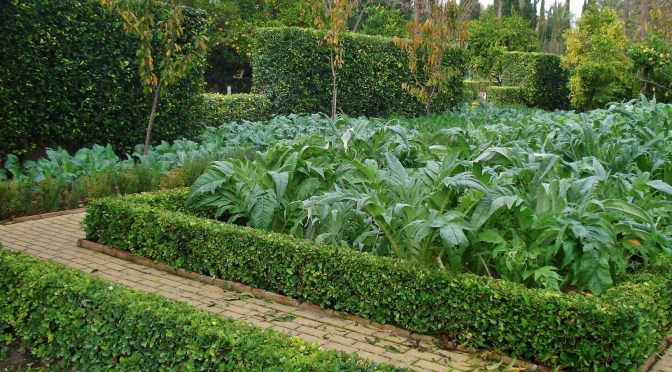
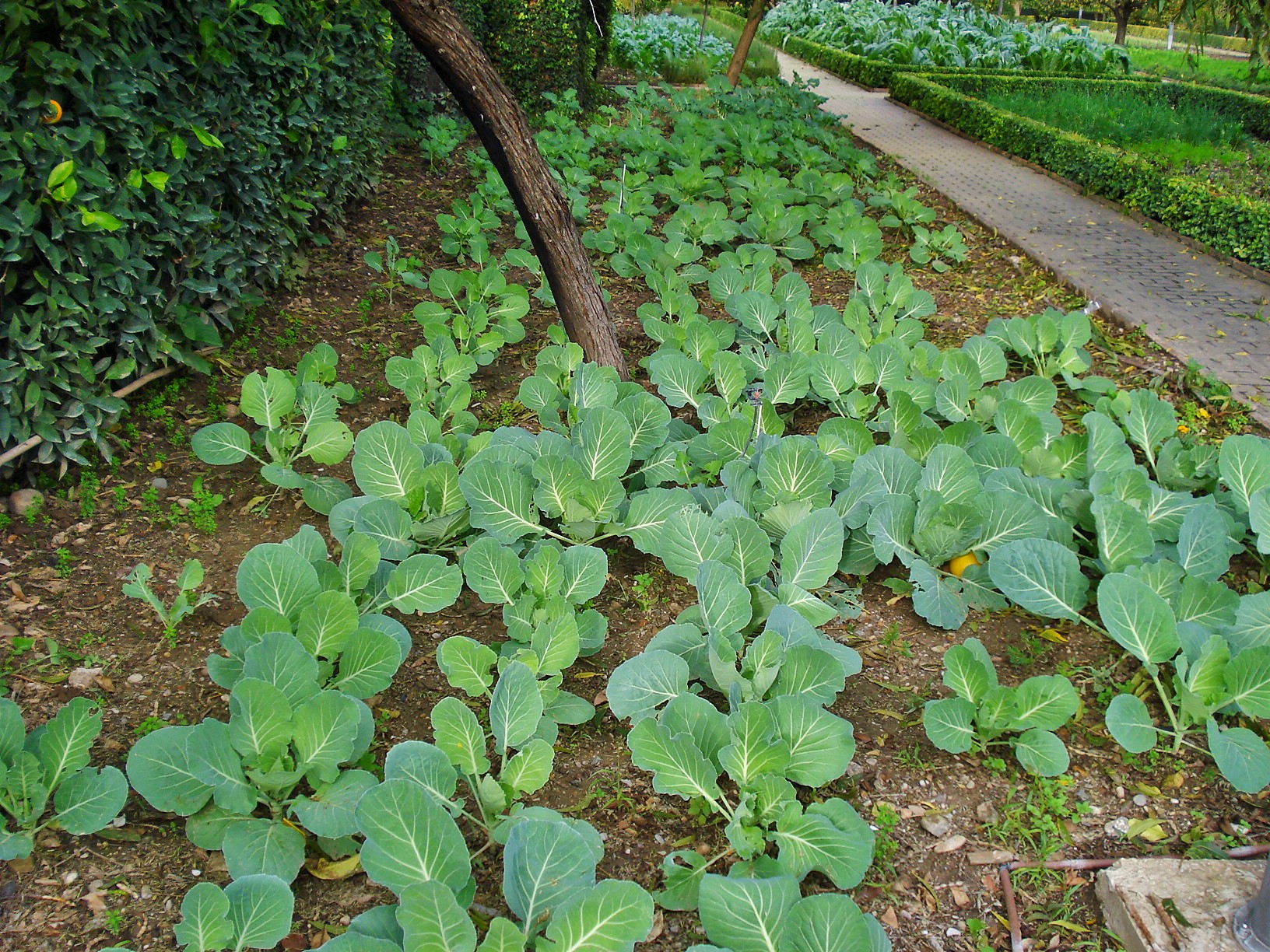
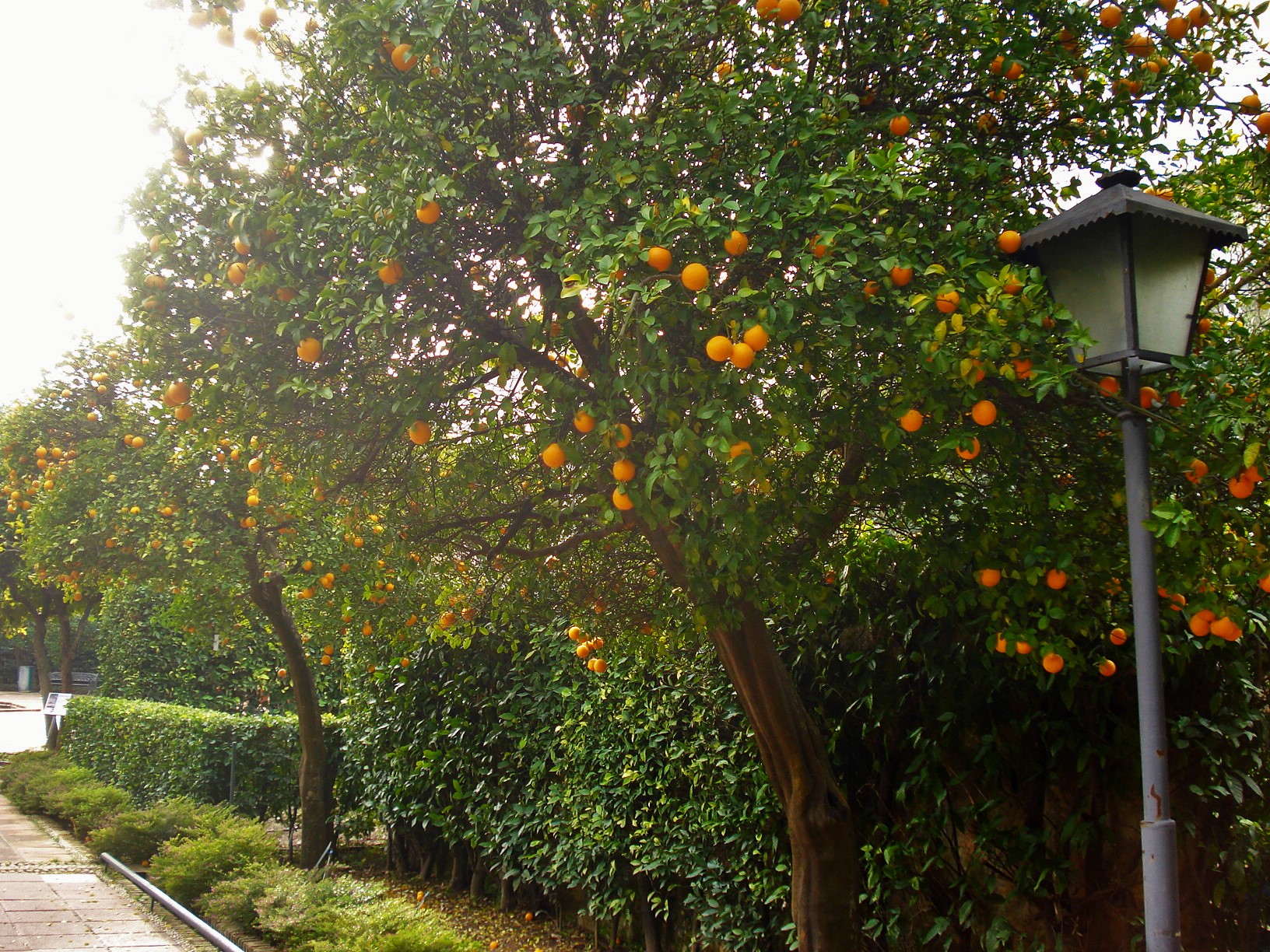
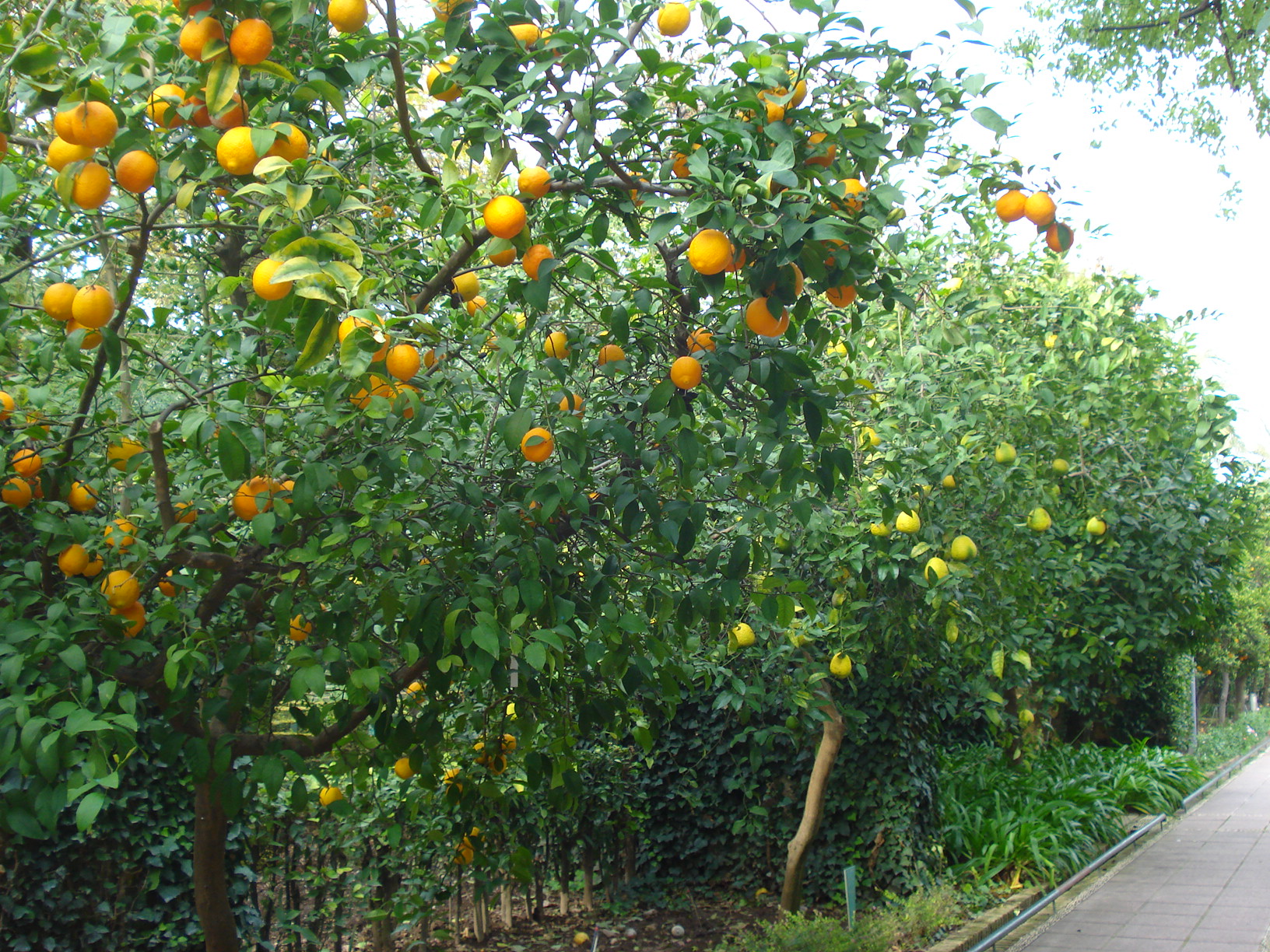
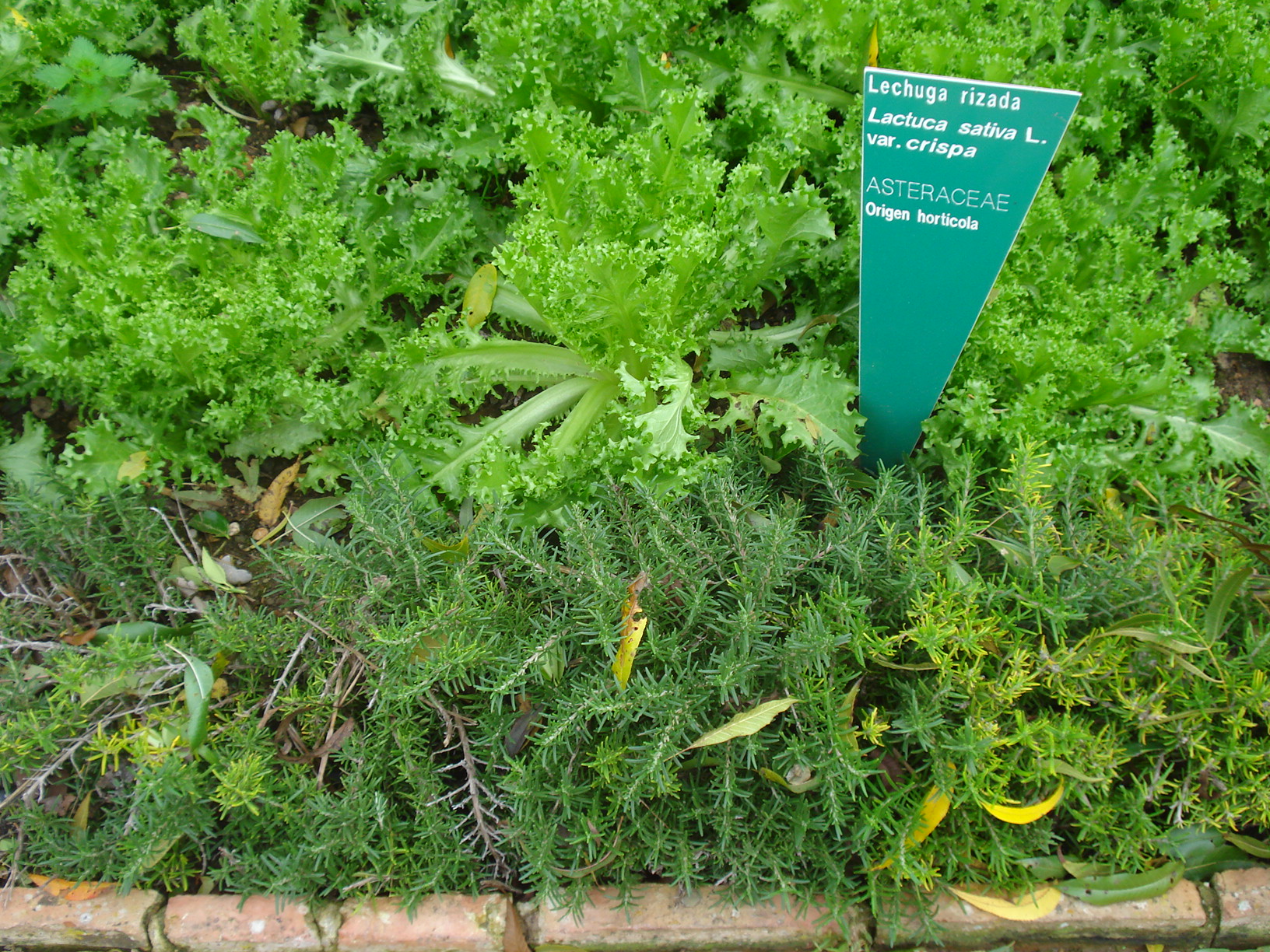
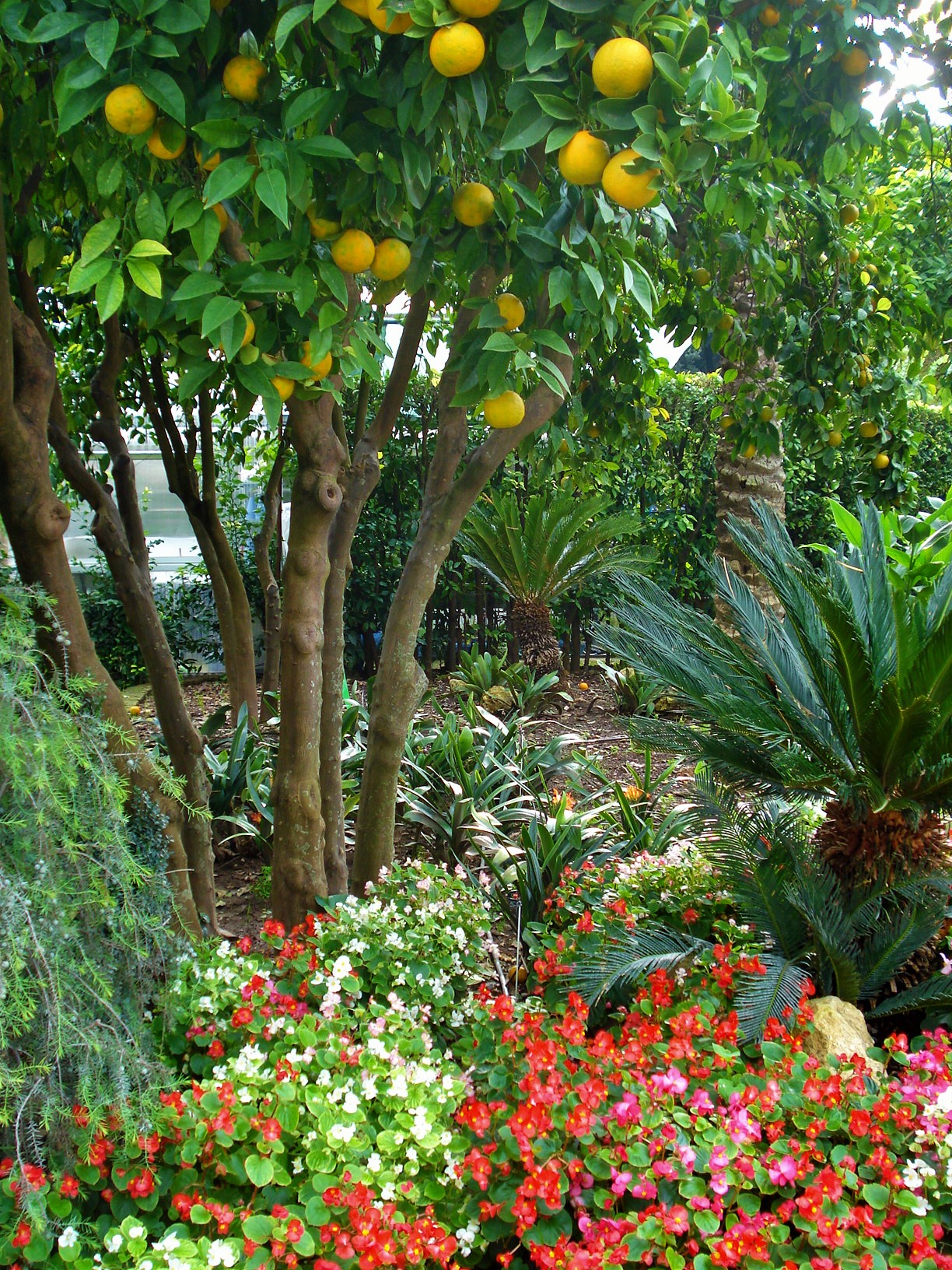
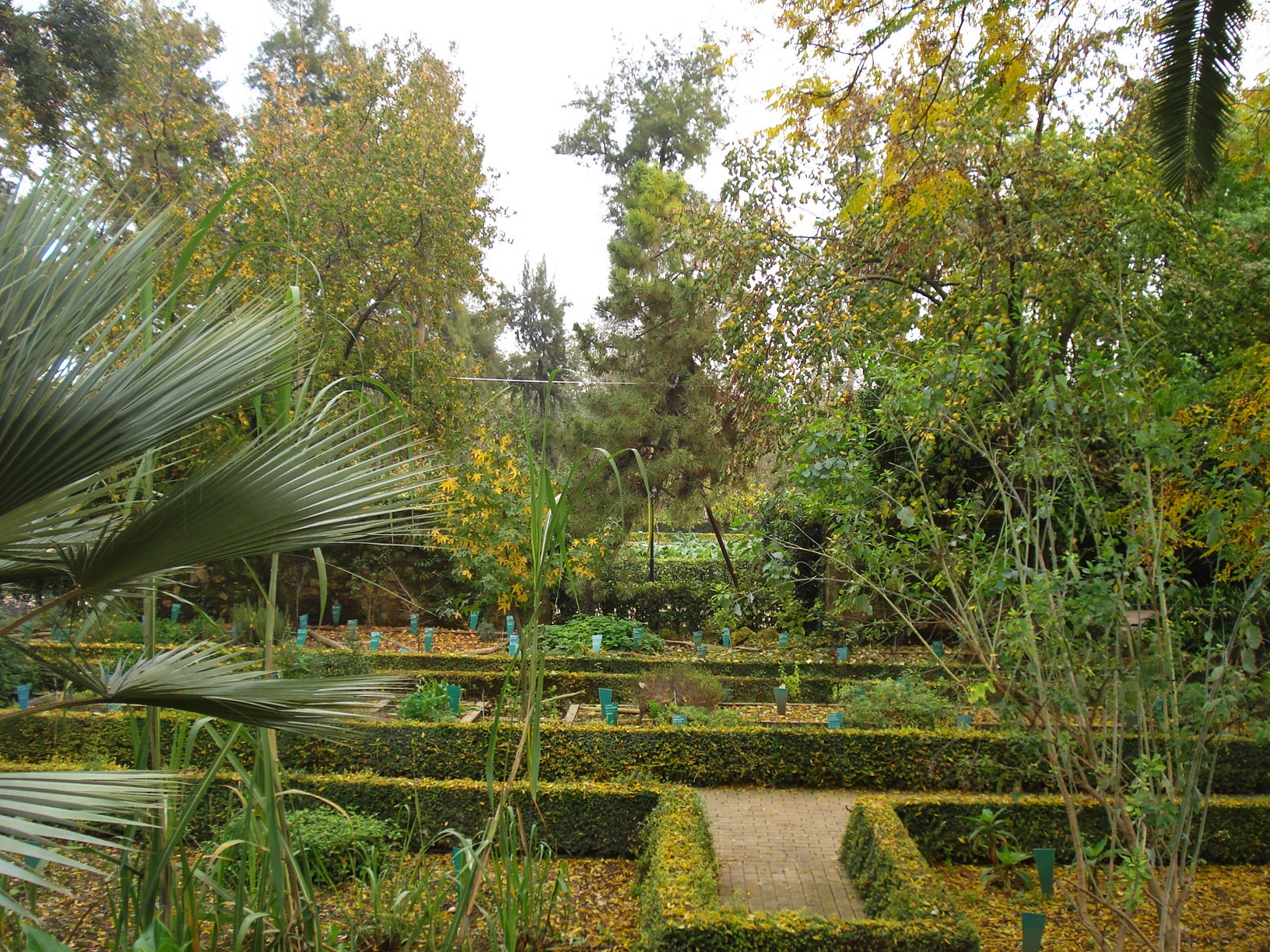
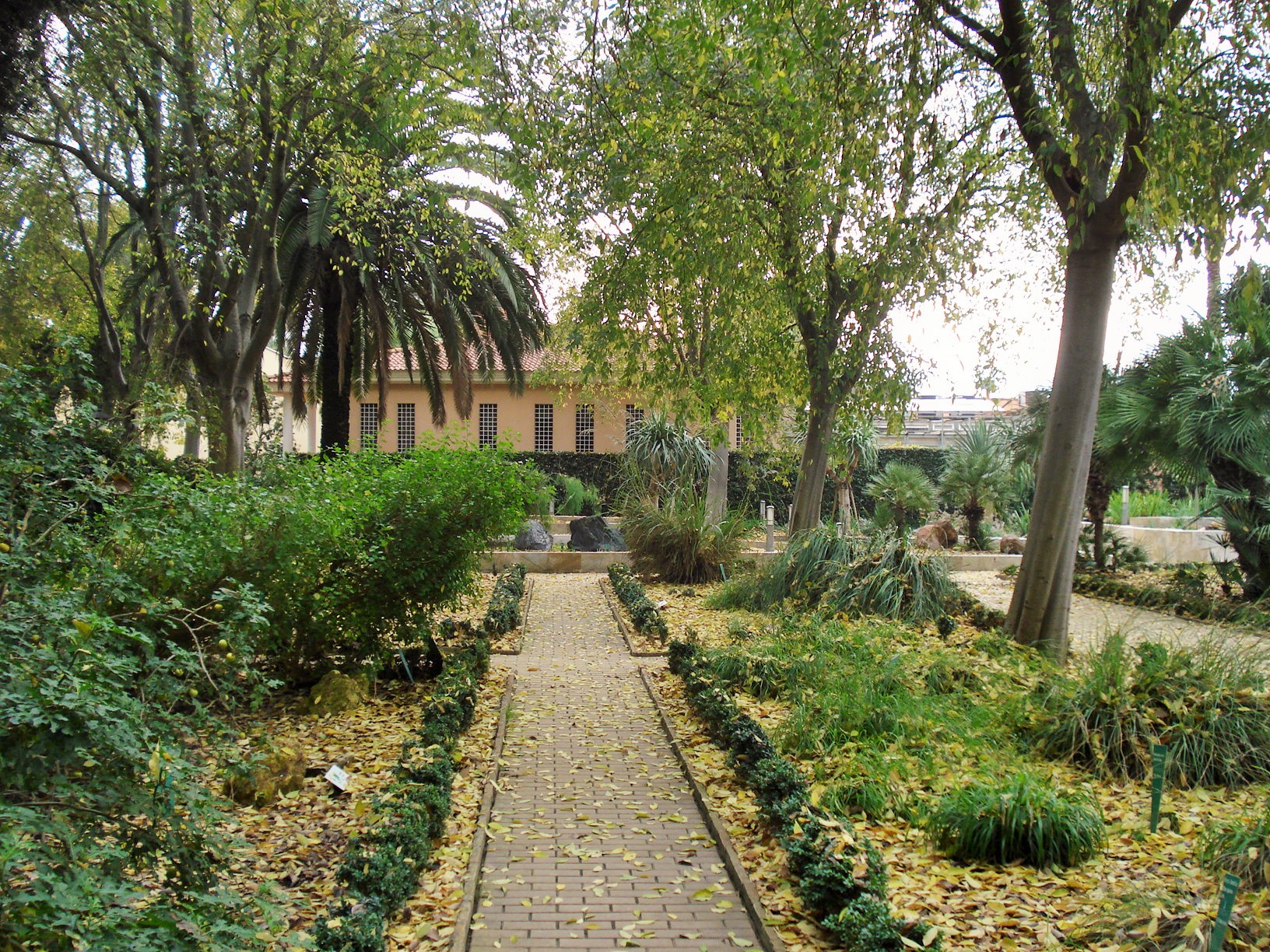
The Botanical Gardens in Cordoba, Spain opened in 1887 and were designed for primarily educational and scientific purposes. They are laid out along a wide central alley leading on one side to the Collections, species native to Spain arranged in borders edges by low growing rosemary or hackberry, and on the other side the Agricultural School, featured in this post, with a large collection of citrus trees as well as an extensive vegetable and kitchen garden. In the center are greenhouses dedicated to species from the Canary Islands, Balearic Islands and Andalusia, as well as a lovely area dedicated to the Andalusian patio.

In the School of Agriculture, the emphasis is on sustainability and diversity, with sustainability and organic gardening on the forefront. Plants grown are those for human or animal consumption as well as any plants offering benefits or use to people. Many different methods of cultivation are used and in those collection one can observe the different cycless of plants through the seasons.

DSC00143 DSC00142 DSC00141 DSC00140 DSC00139 DSC00160 DSC00159 DSC00158 DSC00157

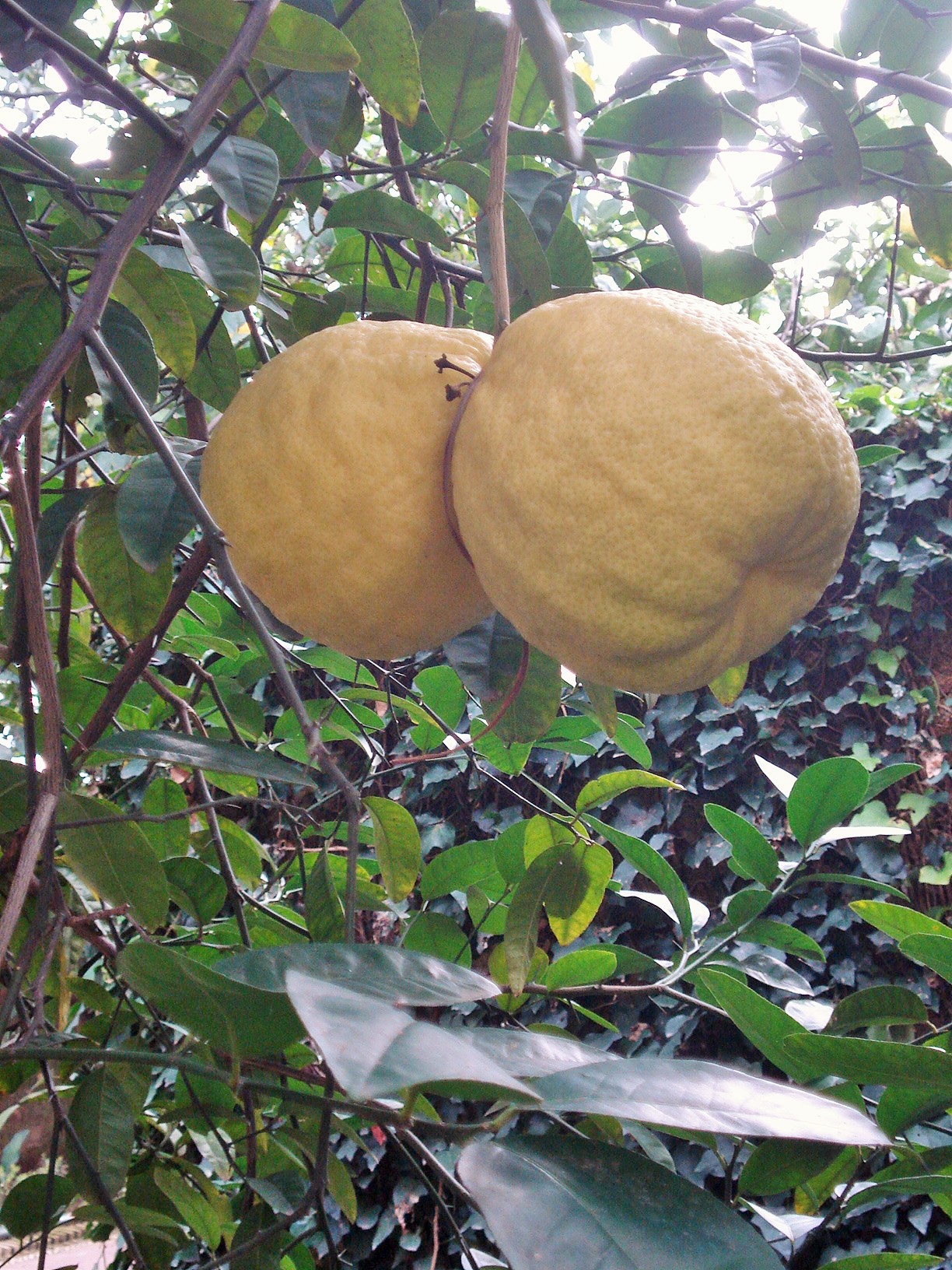
Citrus Medica
Citrus Medica

DSC00153 DSC00150 DSC00149 DSC00147 DSC00146 DSC00145 DSC00144

Cordoba Botanical Gardens: the Scientific Garden

The Botanical Gardens in Cordoba, Spain opened in 1887 and were designed for primarily educational and scientific purposes. They are laid out along a wide central alley leading on one side to the Collections, featured in this post, species native to Spain arranged in borders edges by low growing rosemary or hackberry, and on the other side the Agricultural School with a large collection of citrus trees as well as an extensive vegetable garden. In the center are greenhouses dedicated to species from the Canary Islands, Balearic Islands and Andalusia, as well as a lovely area dedicated to the Andalusian patio.

he Collections are arranged scientifically along a central alley, by species and variety. All the plants included in the collections are autochtone to Spain.

DSC00127 DSC00131 DSC00132 DSC00133 DSC00134 DSC00135 DSC00137 DSC00161 DSC00162 DSC00164 DSC00099 DSC00100 DSC00117 DSC00118 DSC00119 DSC00120 DSC00121 DSC00122 DSC00123 DSC00124

Abbaye of Daoulas in Brittany: Art in the Gardens

The romanesque style Abbaye of Daoulas in the Brittany region of France dates back to the 12th century. This site is of interest not only for the monastery itself but for a remarkable cloister unique in Brittany, large grounds with a pond, old washouse and integrating outdoor art exhibits, but also for its medicinal garden which has one of the largest collection of plants in Europe. I am writing about these in separate posts.

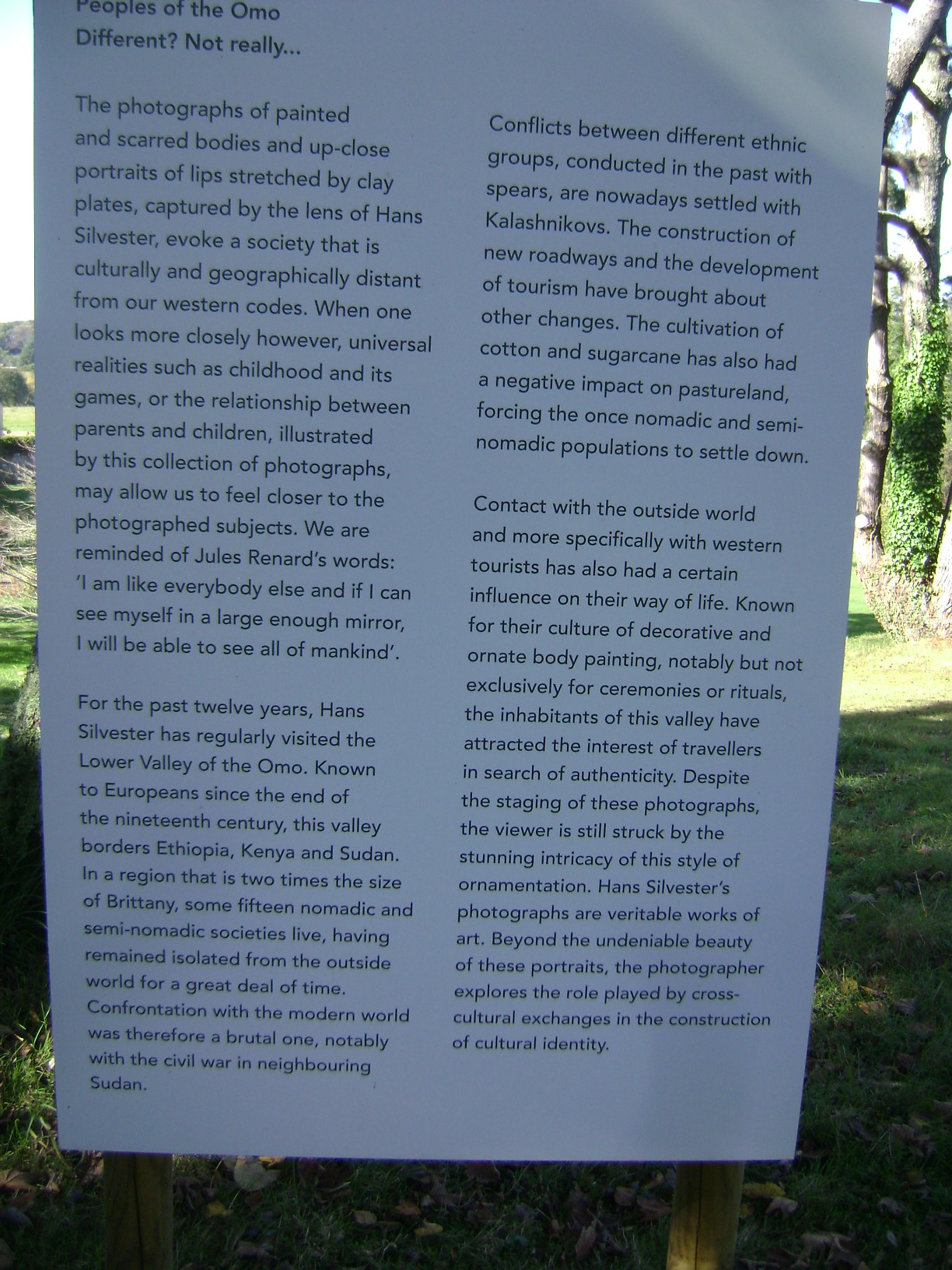
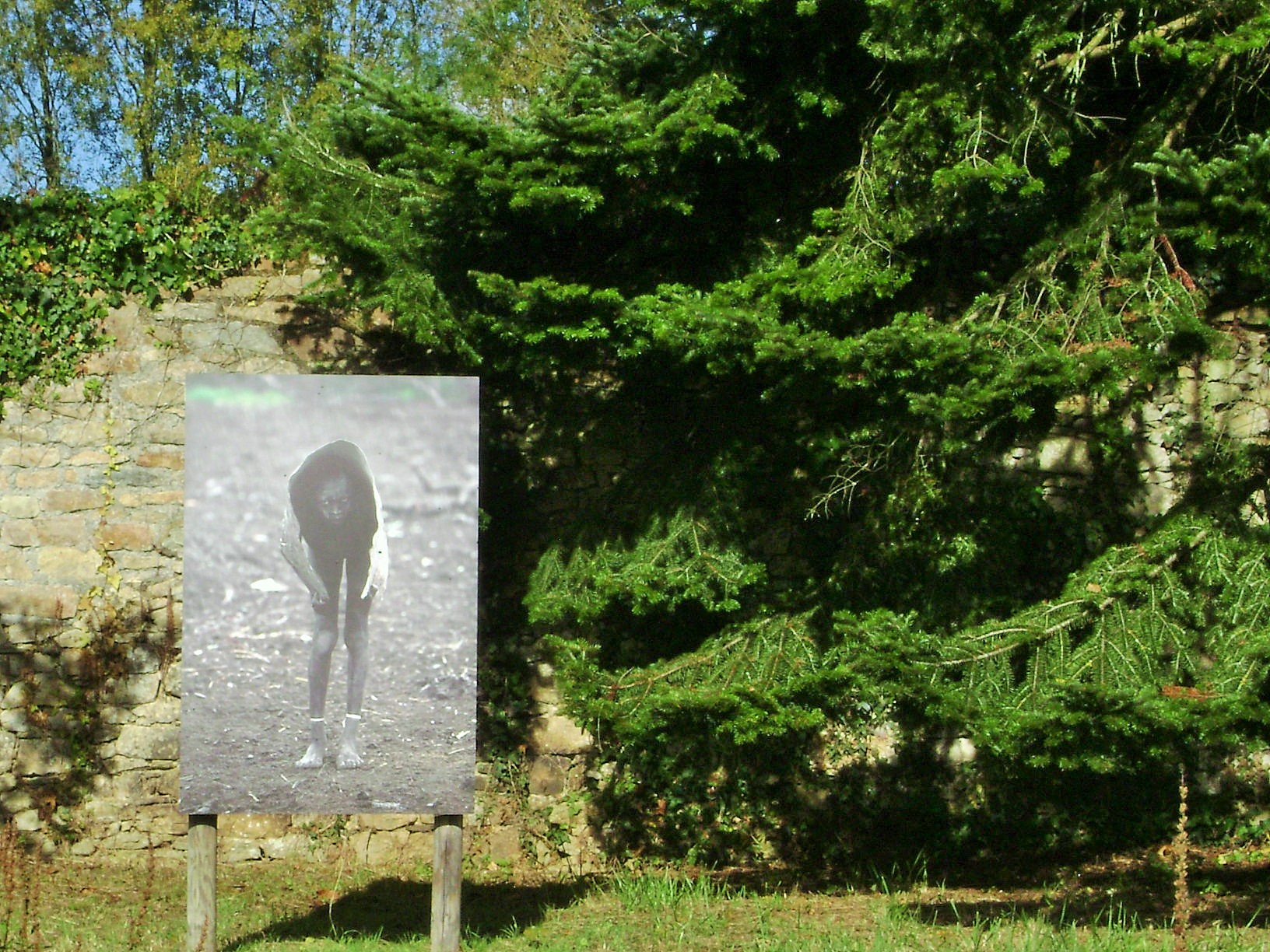
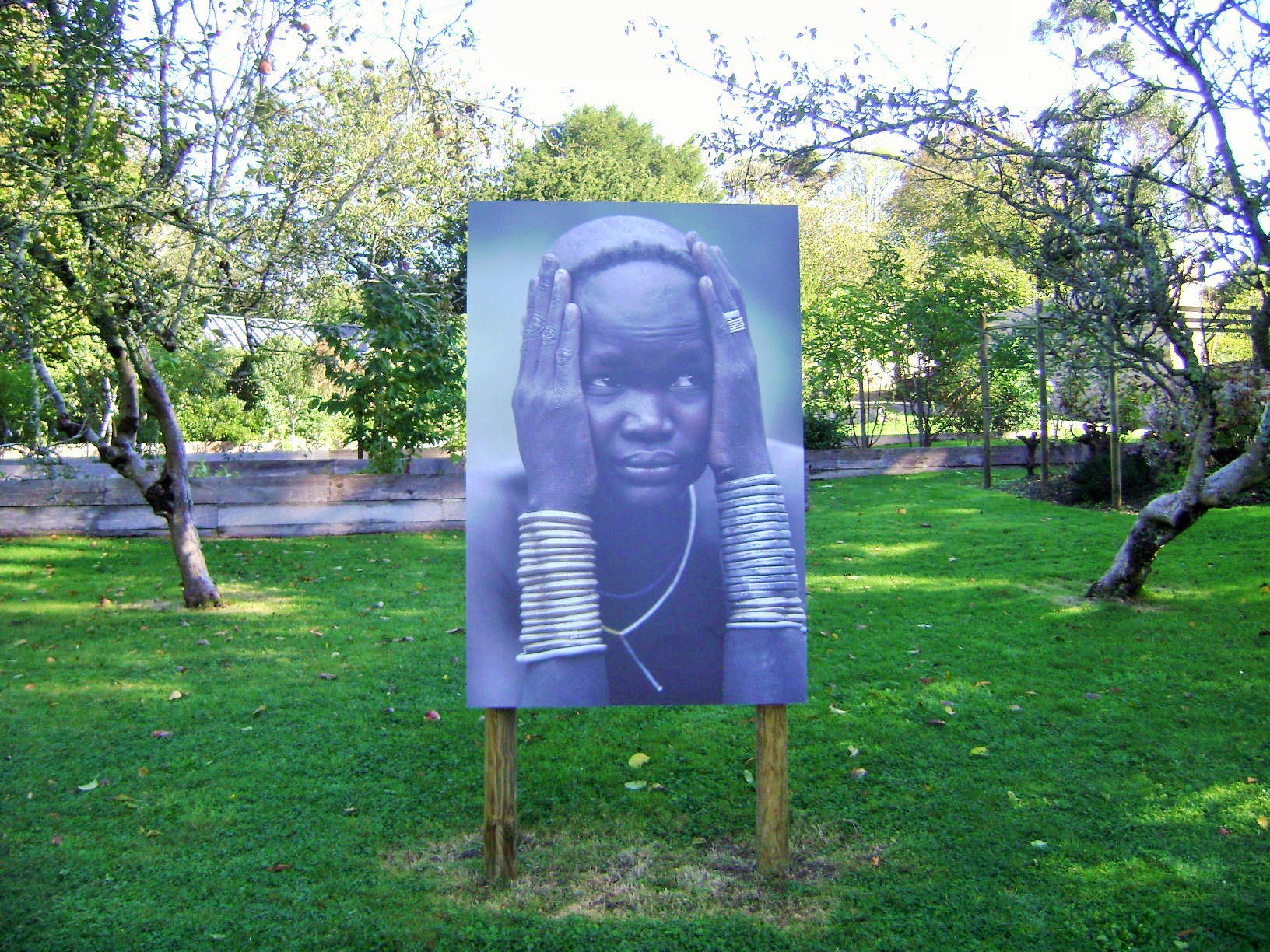
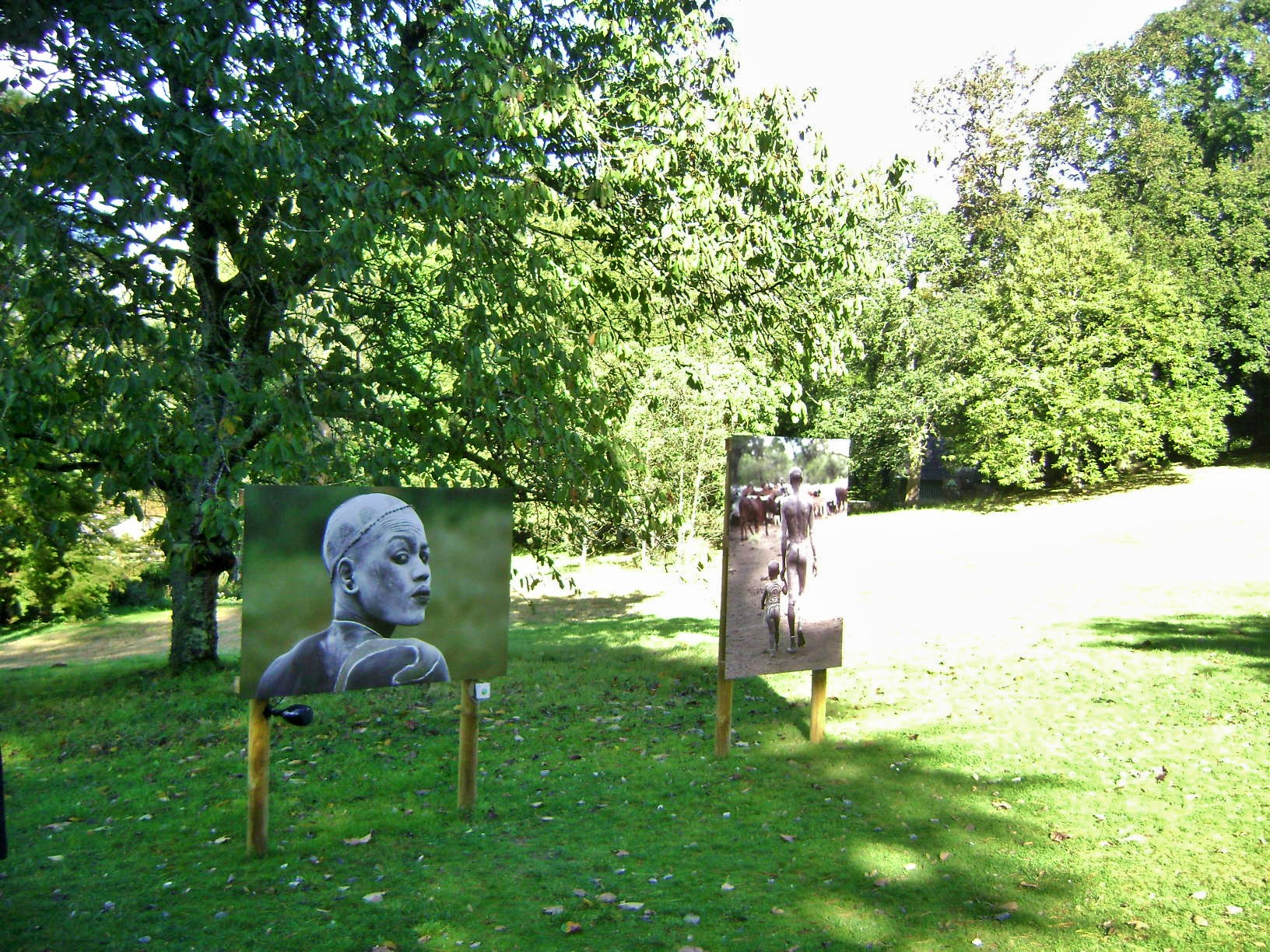
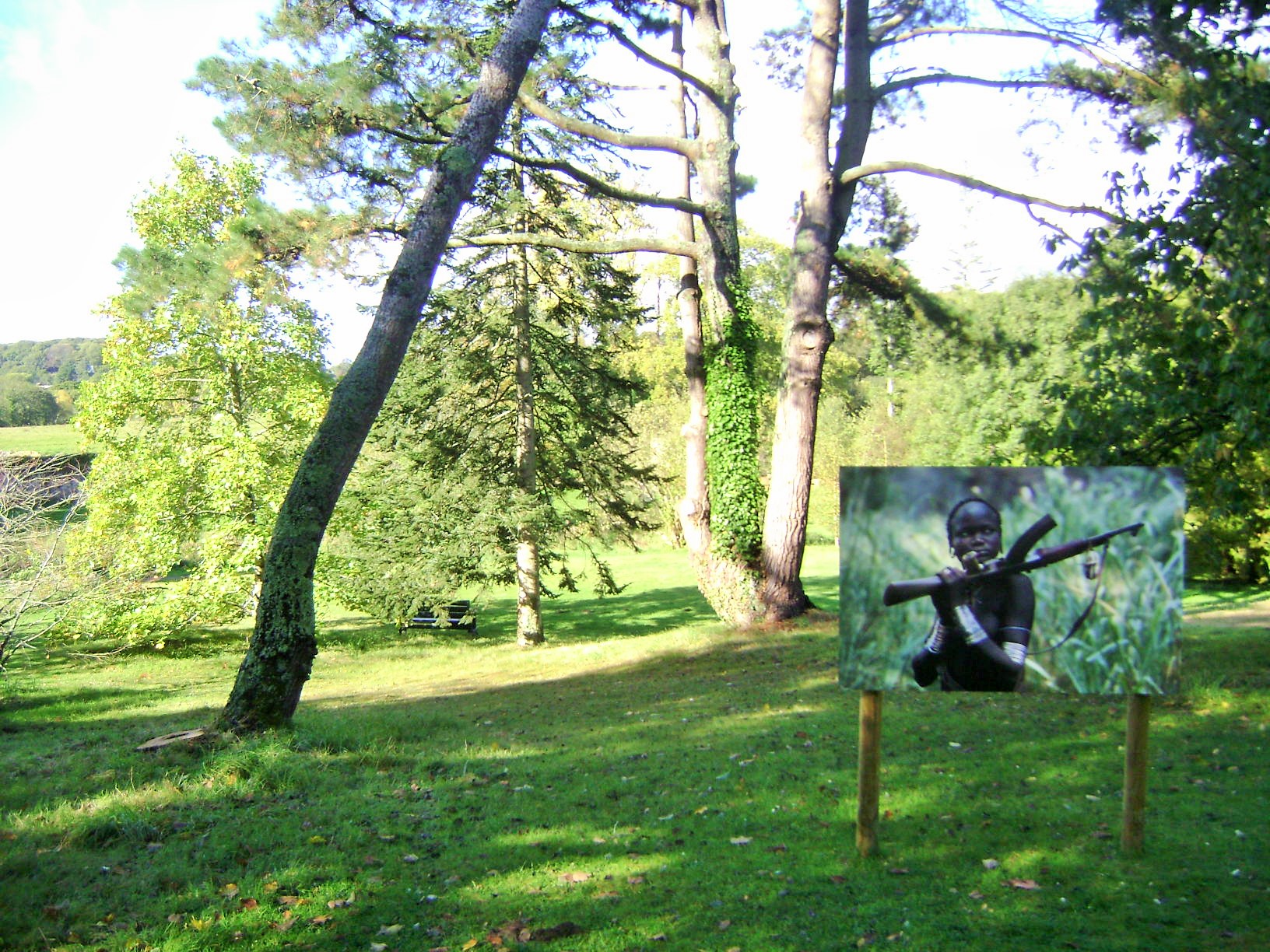
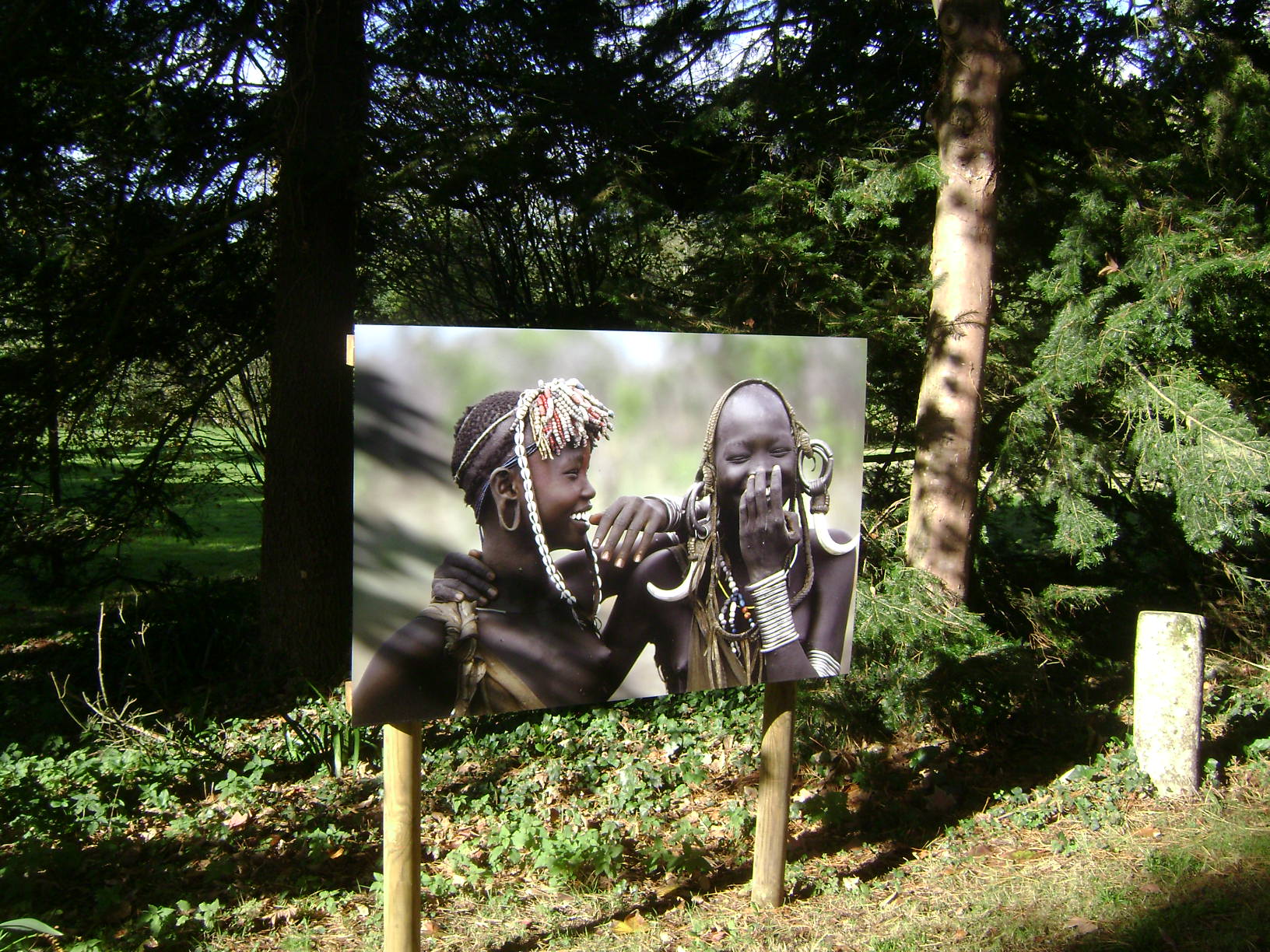
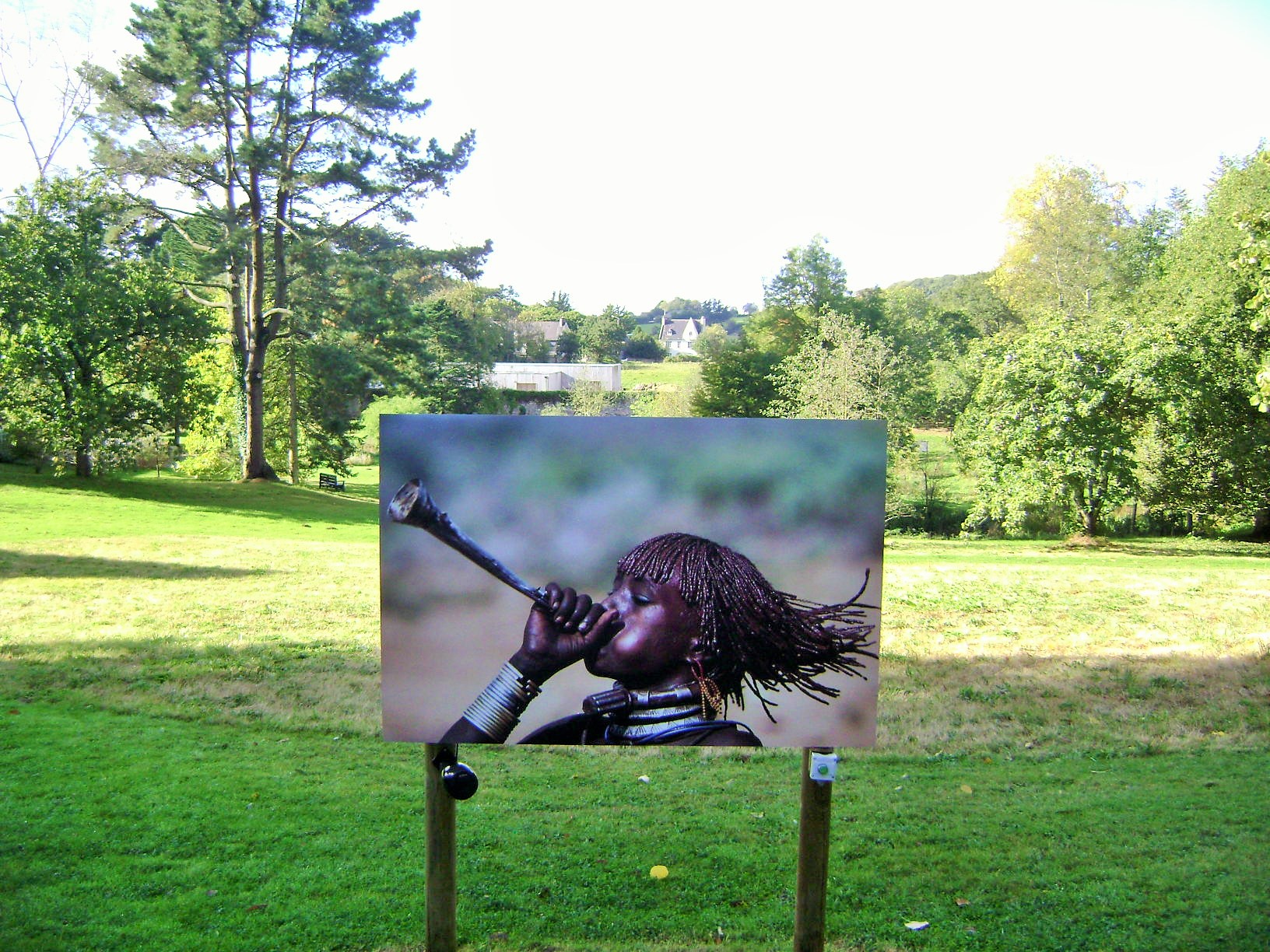
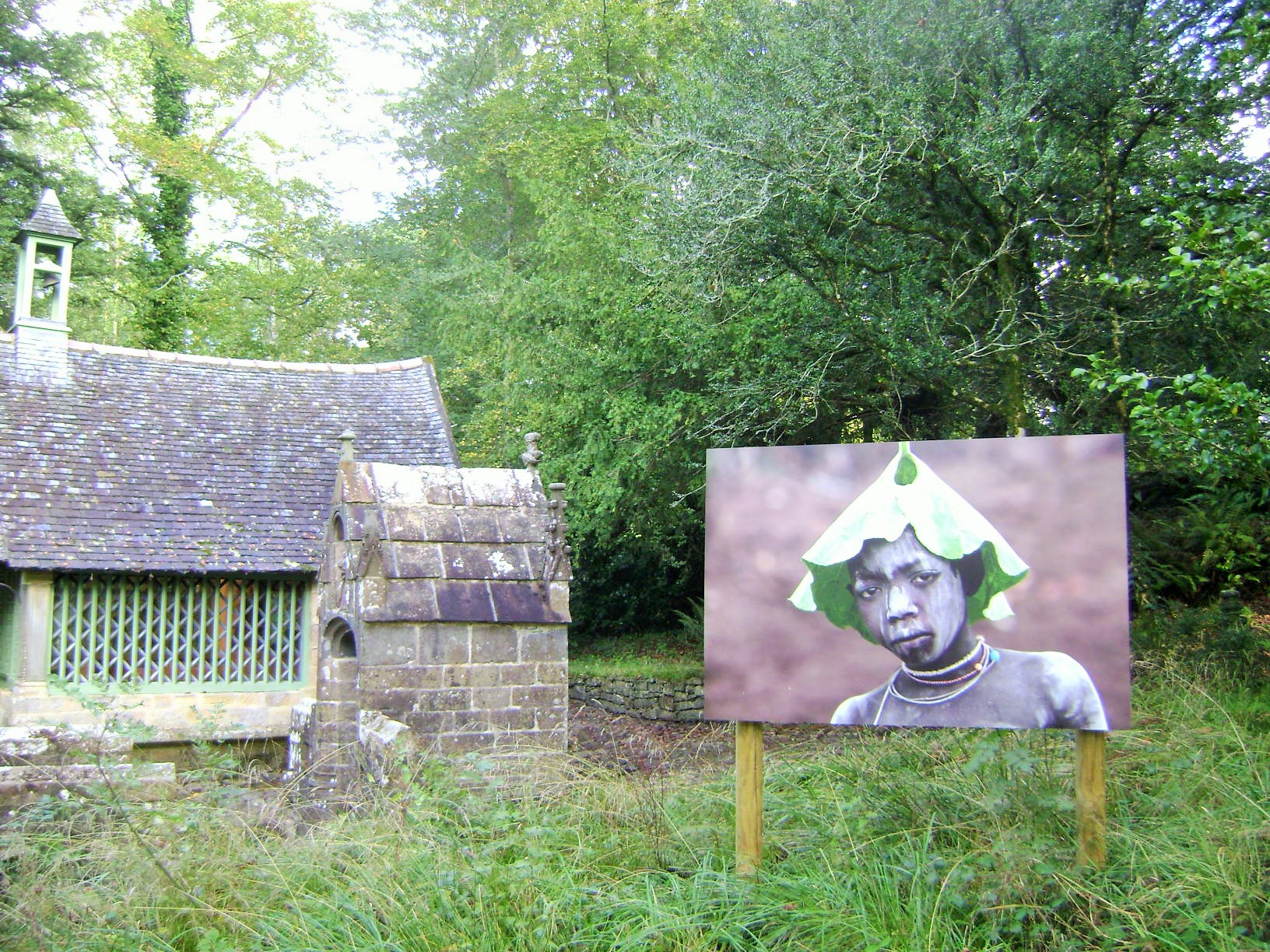
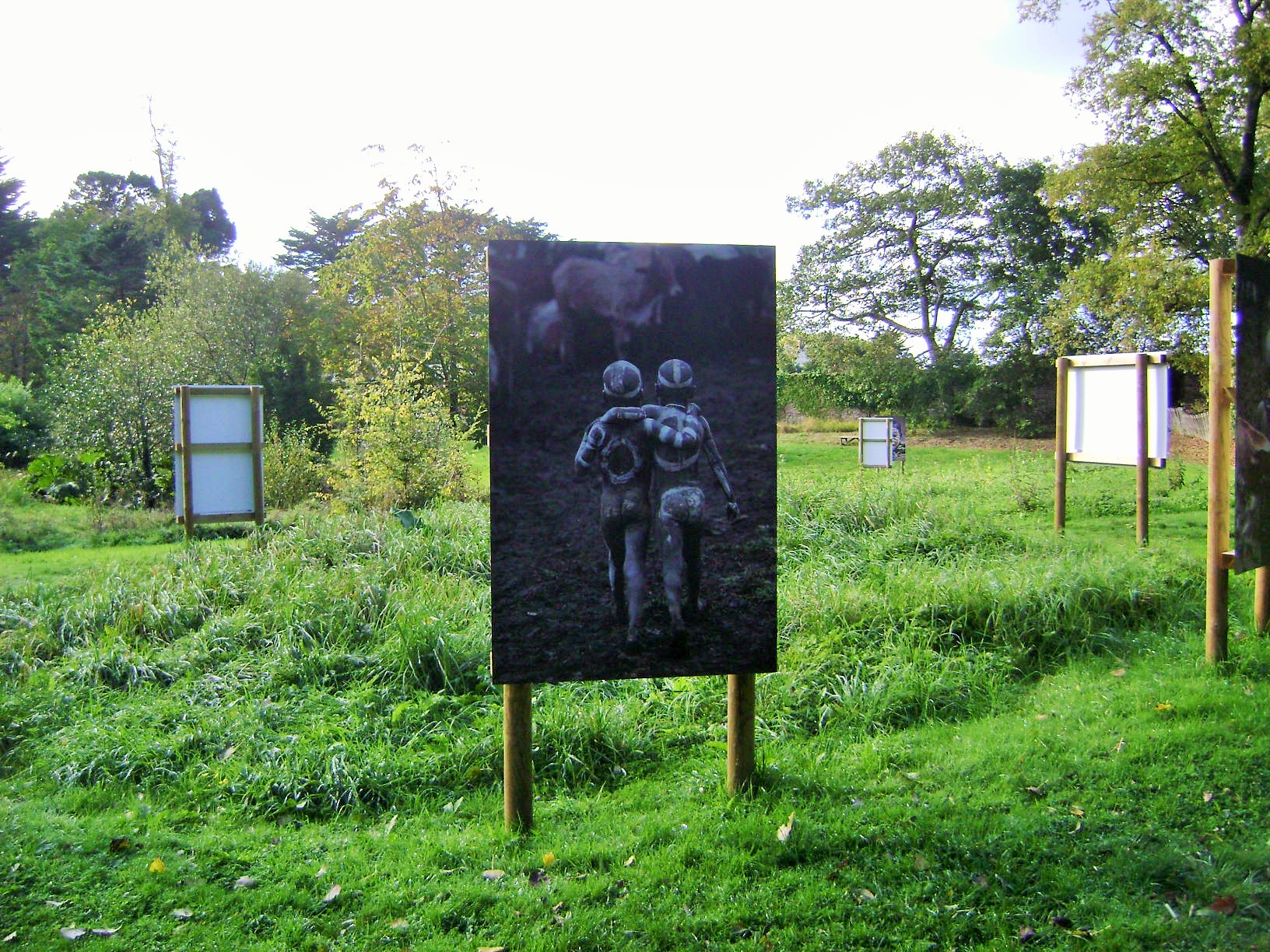
In this post, I am featuring the grounds and art exhibit.  The grounds of the abbaye form an unexpected background for large scale photos of  the Omi people by photographer Hans Sylvester. Showing people who are so strikingly different from us at first glance, he also captures a human commonality in everyday gestures and occupations.

DSC02336

DSC02200 DSC02201 DSC02203 DSC02204 DSC02205 DSC02335 DSC02160 DSC02161 DSC02163 DSC02164 DSC02168 DSC02171 DSC02172 DSC02174 DSC02177 DSC02195 DSC02197


A Travel & Garden Blog

Ambling & Rambling

Scattered thoughts and general musings

The Frustrated Gardener

The life and loves of a plantsman

NavasolaNature

Nature needs Nurture

Ravenscourt Gardens

Learning life's lessons in the garden!

Jean's Garden

Observations from a Maine gardener

Ramblin' through Dave's Garden

A Virginia garden through the seasons

Rambling in the Garden

.....and nurturing my soul

Whats Blooming

Gardens & Events at Historic Rosedale

Sunshinebright

Looking for the rays of sunshine I know are out there.

Deere Diary...

the life and times of a garden-loving, baking-loving, cat-loving West Country redhead

My Botanical Garden

garden and art

Travels with Mary

Storytelling Adventure